

The Pendlay row on Smith machine rails is a strict dead-stop row, and this guide walks you through setup, step-by-step form, loading, and progression. Every rep restarts from a complete stop, which makes the pull harder to cheat and easier to repeat.
Home gym lifters from first-year trainees to intermediate pullers can follow this on any all-in-one Smith machine. You will learn how it differs from bent-over rows, which muscles it works, when to add weight, and when to stop.
Quick Answer: The Pendlay row on Smith machine rails is a strict dead-stop row, pulling each rep from a complete stop at shin level up to the lower chest. Set the safety stops near the bottom of the bar travel, hinge until your torso is near parallel, and load the fixed bar path hard without a spotter.
Key Takeaways
- Dead stop, every rep: Each rep restarts from a complete stop, so momentum cannot carry the bar through the sticking point.
- Setup is the lift: Adjustable safety stops create a consistent floor-level start, and the fixed rails remove balance demands.
- Upper back emphasis: The dead-stop start shifts the work to the middle traps and rhomboids instead of letting a stretch reflex help.
- Load conservatively: Start lighter than your bent-over row and add weight only when torso angle and bar path stay unchanged.
- Know your stop signals: End the set when the lower back rounds, and skip the lift entirely during an active back injury.
What Is the Pendlay Row on a Smith Machine
The Pendlay row is a strict dead-stop row in which every rep restarts from a complete stop on the floor, a style popularized by coach Glenn Pendlay. On a Smith machine, the bar rides fixed rails, so the pull path stays identical from rep to rep.
- Dead stop: The bar settles to a full stop before each pull, so momentum cannot help you through the sticking point.
- Fixed bar path: The rails remove the balance work of a free barbell, letting you focus on driving the elbows back.
- Strict torso angle: You hinge once and hold near parallel, instead of rocking up and down with the bar.
Lifters who prefer continuous-tension pulling can use the standard smith machine row instead, which keeps the muscles under load through the whole rep.
How to Set Up the Smith Machine for Pendlay Rows
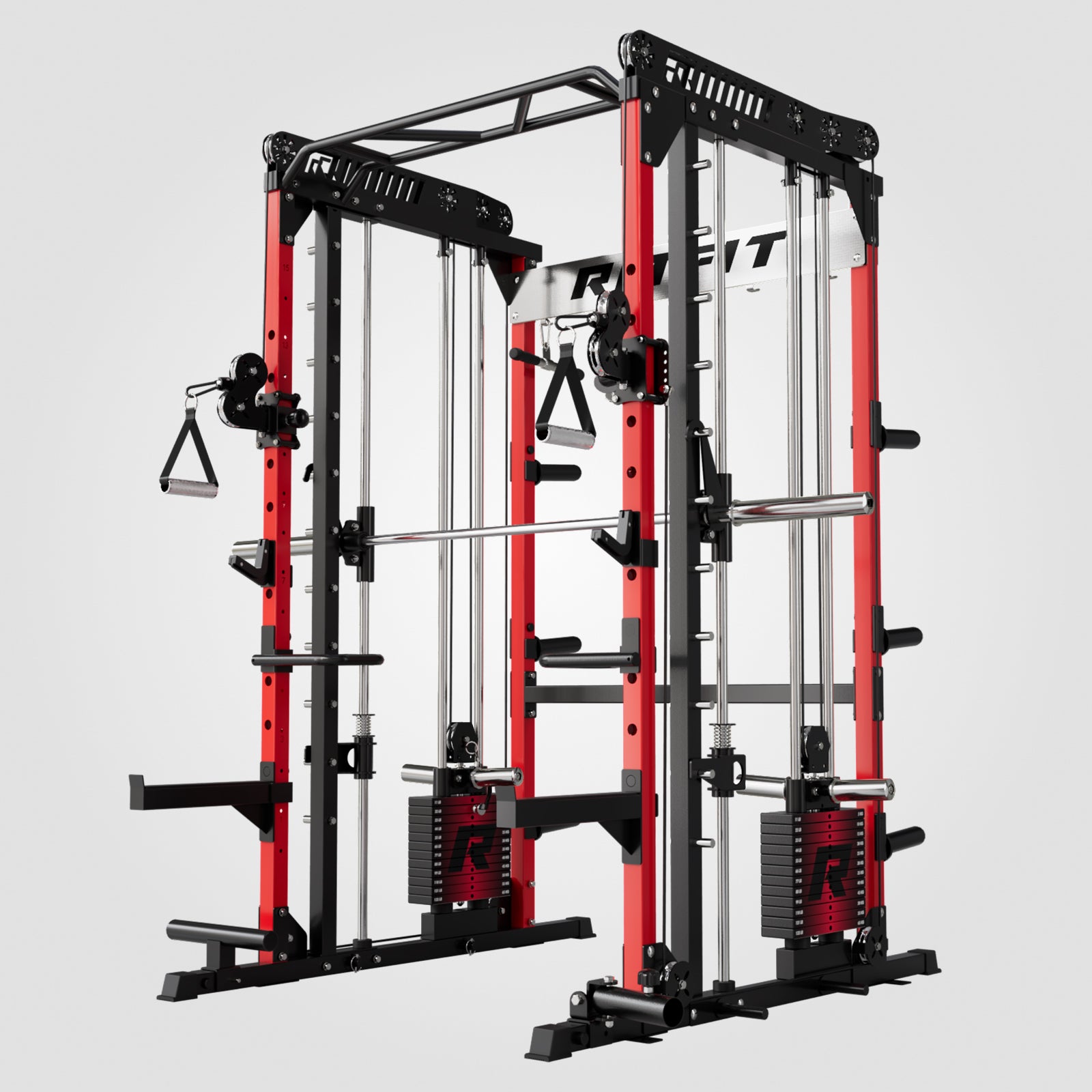
Setup for the Pendlay row on Smith machine rails comes down to three settings: bar height, foot position, and torso angle. The Smith machine provides a fixed bar path with adjustable safety stops, so each rep can start from the same floor-level spot without a spotter.
- Safety stops: Set the stops near the bottom of the bar travel range so the unloaded bar sits around mid-shin height.
- Stance: Place your feet under the bar about hip width apart, with the bar over your midfoot.
- Grip: Use a shoulder width grip with palms facing your shins, just outside your knees.
- Test run: Row the empty bar for a few reps to confirm the start height and torso angle feel repeatable.
If you are shopping for a unit to run dead-stop rows at home, start with the Smith Machine collection and compare safety stop range before you buy.
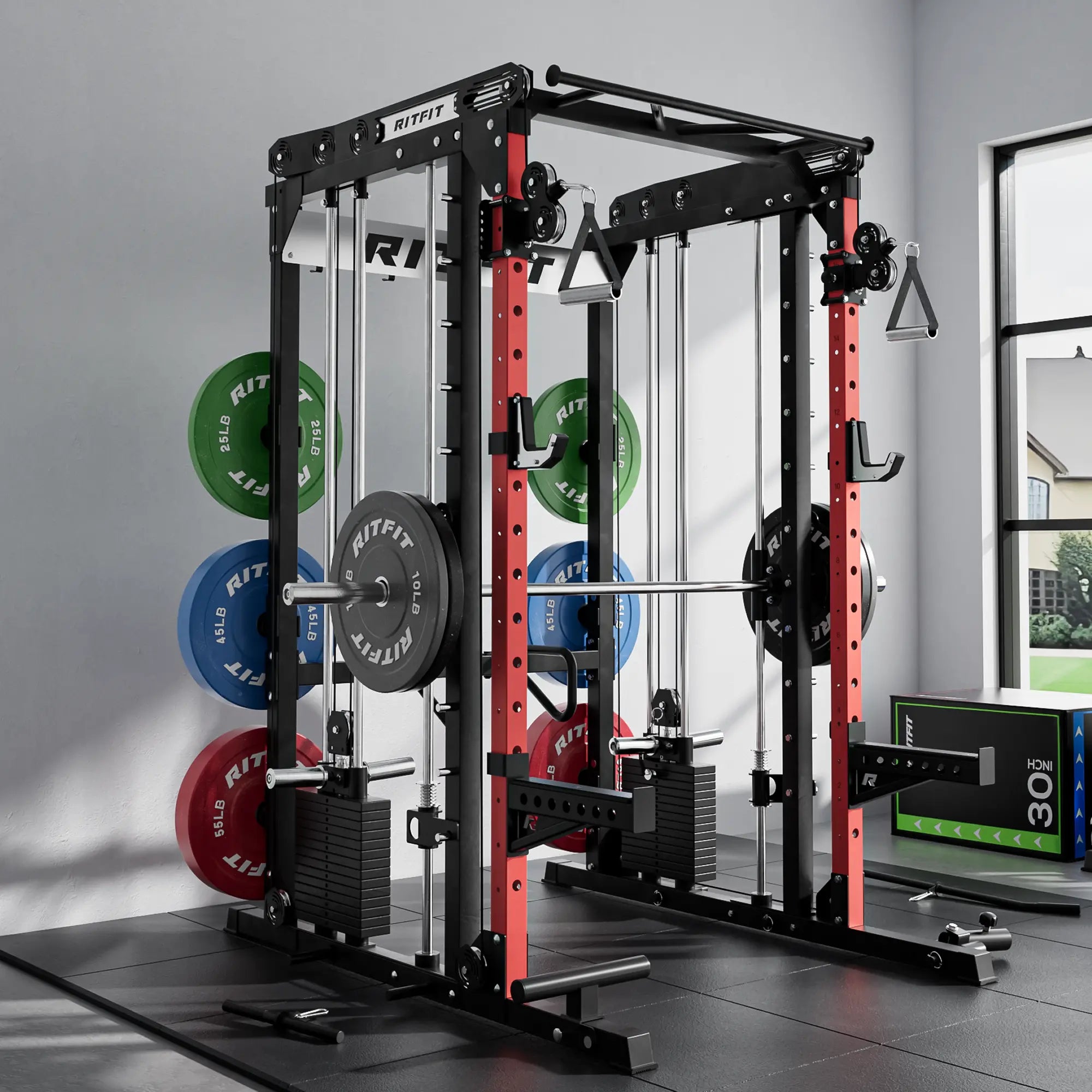
Few pieces of equipment in the home exercise industry are as comprehensive and versatile as this all-in-one gym system. The robust system provides a natural, centered bar path for compound lifts like squats, presses, and rows, and incorporates a dual cable crossover station with a full rack of precision-engineered attachments.
Tom Eskey, CF-L1, CPT, Home Gym Equipment Reviewer at Garage Gym Revisited, Garage Gym Revisited M1 review
How to Perform the Pendlay Row on a Smith Machine: Step-by-Step Form
Perform the Pendlay row on a Smith machine by pulling each dead-stop rep from shin level up to the lower chest. Six checkpoints keep the form strict.
- Step 1: Stand with your feet under the bar and push your hips back until your torso is near parallel to the floor.
- Step 2: Grip the bar just outside shoulder width and pull your shoulder blades down and back before you lift.
- Step 3: Brace your core and lock your torso angle in place, with your eyes on a spot just ahead of the bar.
- Step 4: Pull the bar toward your lower chest by driving your elbows back and up, keeping them close to your body.
- Step 5: Lower the bar under control until it rests on the stops in a complete stop.
- Step 6: Reset your breath and brace, then start the next pull from zero.
The dead-stop restart is what separates this lift from a touch-and-go row. If the bar never settles, you are training a different exercise.
Muscles Worked by the Smith Machine Pendlay Row
The muscles worked by the Smith machine Pendlay row are the latissimus dorsi, middle trapezius, and rhomboids, with support from the rear delts, biceps, and spinal erectors. The dead-stop start shifts extra work to the upper back, because each rep must overcome inertia without a stretch reflex to help.
- Latissimus dorsi: The main pulling engine that drives the elbows up and past the torso.
- Middle trapezius and rhomboids: Retract the shoulder blades at the top of each pull.
- Rear delts and biceps: Assist the pull and control the bar on the way down.
- Spinal erectors: Hold the near-parallel hinge isometrically through every set.
An EMG study found rowing tasks ranked highest for middle trapezius and rhomboid activity among the lat exercises tested.[1] Cited EMG work in the same paper recorded the one-arm row activating the middle trapezius to 79% of maximum, and lower trapezius recruitment reached 74% of maximum during shoulder horizontal extension.
Pendlay Row vs Bent-Over Row on a Smith Machine
The Pendlay row is a dead-stop lift where every rep restarts from the floor, while the bent-over row on a Smith machine keeps continuous tension through a floating rep cycle. The table below shows where each one fits a home back day.
| Feature | Pendlay Row | Bent-Over Smith Row |
|---|---|---|
| Start position | Dead stop at shin level on the stops | Bar floats between reps |
| Momentum | None, force starts from zero | Stretch reflex assists each rep |
| Torso angle | Locked near parallel | Can rise slightly as reps fatigue |
| Tension type | Starts and stops each rep | Continuous through the set |
| Best for | Strict strength and upper back emphasis | Higher volume and time under tension |
Comparison reflects standard coaching descriptions of the two lifts, not laboratory measurements.
To see the floating version in detail, read the full bent-over row on a Smith machine guide.
How to Choose Your Weight
Choose a starting weight you could row for ten strict dead-stop reps, which usually sits well below your bent-over row working weight. Because every rep starts cold from the floor, form breaks faster here than in floating row variations.
- Start lighter: Expect to use less load than your bent-over Smith row, often by a noticeable margin.
- Check the stop: If the bar will not settle fully between reps, the weight is too heavy for strict form.
- Progress in small jumps: Small plate steps keep the torso angle honest as the load climbs.
Row the empty bar first, then add plates in small steps until the last rep of a set looks like the first.
Sets, Reps, and Progression: When to Add Weight
Most lifters run 3 to 4 sets of 5 to 8 dead-stop reps on the Smith machine Pendlay row, once or twice per week inside a back day. Add weight only after the torso angle and bar path stay unchanged across every set.
- Strength focus: 4 to 5 sets of 3 to 5 reps with longer rest between sets.
- Hypertrophy focus: 3 to 4 sets of 8 to 10 reps, ending each set before the lower back rounds.
- Progression rule: Add the smallest available increment when every rep looks identical, and hold the load if form drifts.
Watch how smith machine pulling movements fit into a complete training session in the video below.
3 Smith Machine Pendlay Row Alternatives
Three alternatives cover the same horizontal pull when you want continuous tension, less lower back demand, or a bodyweight option. Each one still trains the mid back without needing a free barbell.
- Bent-over Smith row: The floating version of the same pull, better for higher volume and time under tension.
- Seal row: A chest-supported dead-stop alternative that takes the lower back almost entirely out of the equation, as covered in our seal rows guide.
- Inverted row: A bodyweight option under the bar that scales by foot position, covered in the inverted row guide.
If you only have straps or a suspension trainer, research suggests varied upper-body setups can still provide adequate loads and muscle activation for the pulling pattern.[2]
Common Mistakes in the Smith Machine Pendlay Row
The most common mistakes are rounding the lower back under load, letting the torso angle drift upward, and pulling before the bar settles into a complete stop. Each one quietly converts the strict dead-stop pull into a sloppier, riskier version.
- Rounding the lower back: Once the brace goes, the spine takes load it was never positioned to handle.
- Torso angle drift: Standing taller rep by rep shrinks the range and turns the pull into an upright row pattern.
- Bouncing the bar: Skipping the dead stop removes the exact stimulus the lift is designed to create.
- Loading too heavy from a cold start: A heavy standing start is where strict form breaks first.
- Loose scapular control: A 2025 HD-sEMG analysis of 14 resistance-trained men reported that fixing the scapulae during 8-rep-max rows raised eccentric latissimus dorsi excitation with an effect size of 0.85 and eccentric middle trapezius excitation with an effect size of 0.67 and both fixed and free setups stayed effective.
Film a set from the side every few weeks, since a drifting torso angle is much easier to see than to feel.
When to Stop: Pain Signals and Safety Limits
Stop the set when your lower back rounds, when sharp or radiating pain appears, or when your torso angle breaks down. Injury signals end the session.
- End the set: Form breakdown, stalling bar speed, or a brace you cannot hold for another rep.
- End the exercise: Sharp, radiating, or persistent pain in the lower back during or after the set.
- Skip the lift: An active back injury is a reason to leave dead-stop pulls out until you are cleared.
A feasibility study found periodized resistance training was tolerable for people with persistent non-specific low back pain, so structured progressive pulling can still have a place with professional clearance.[3] Check with a qualified professional before returning to heavy rows after any back issue.
Is the RitFit M1 PRO a Good Pendlay Row Machine?
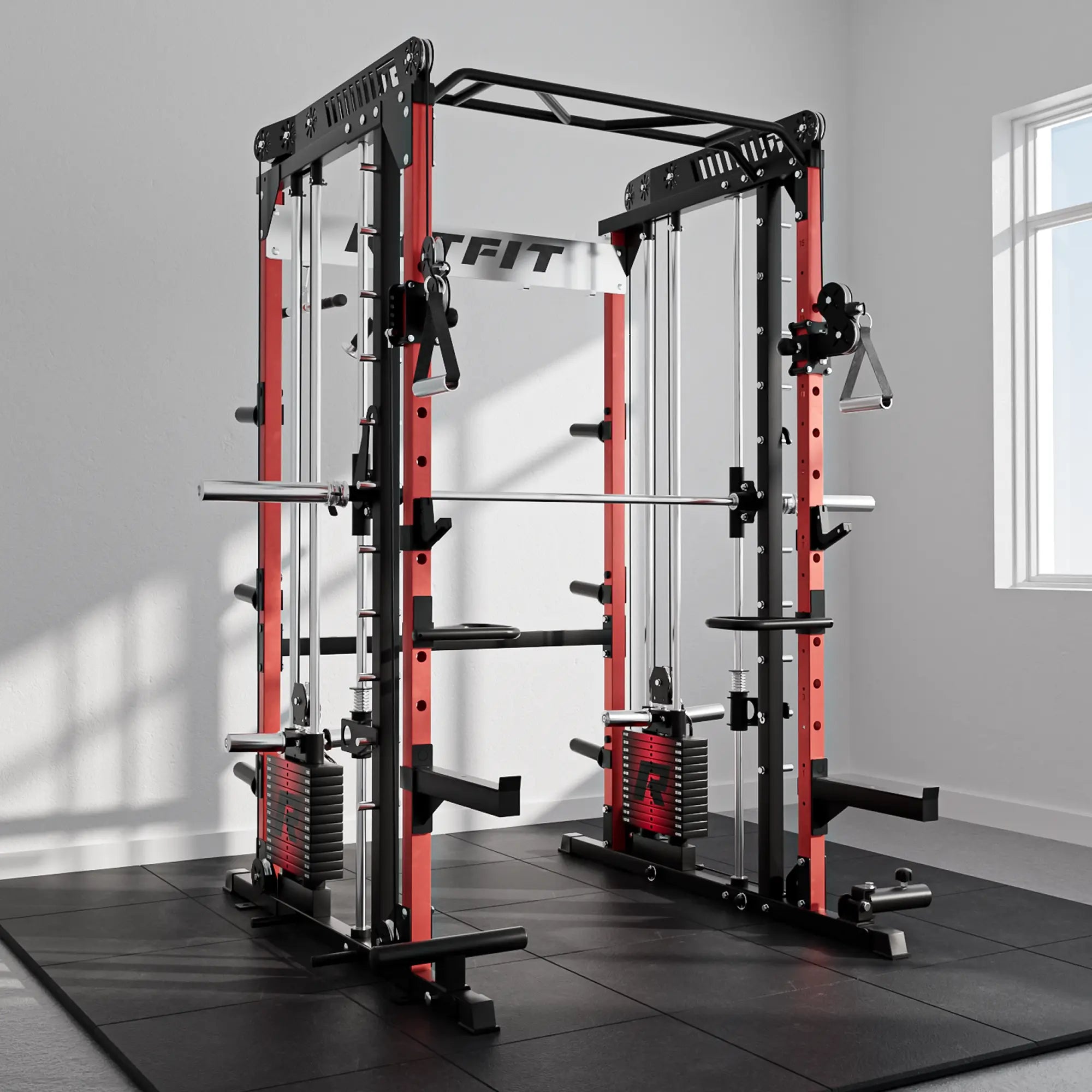
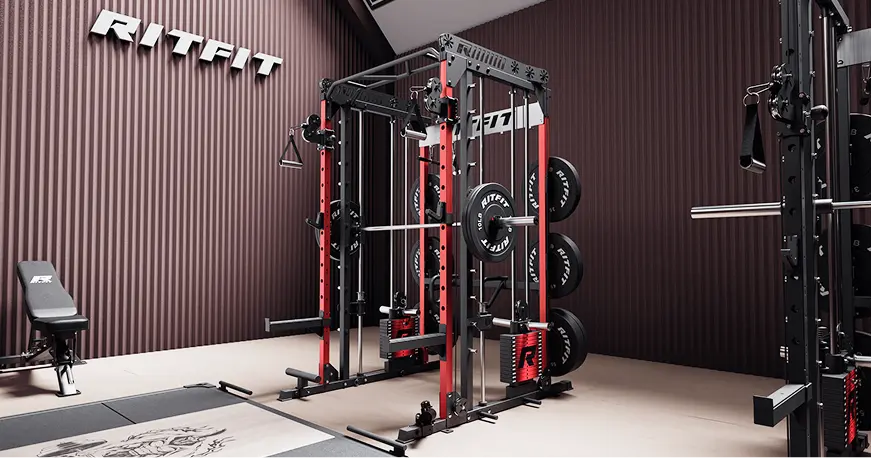
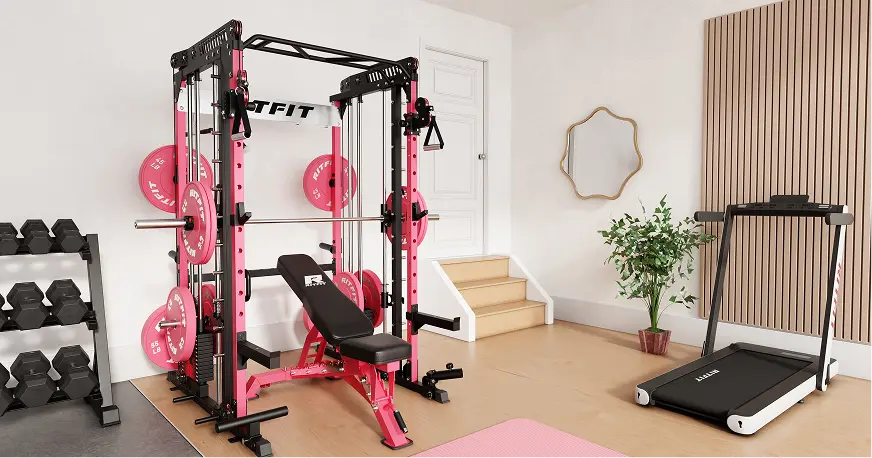
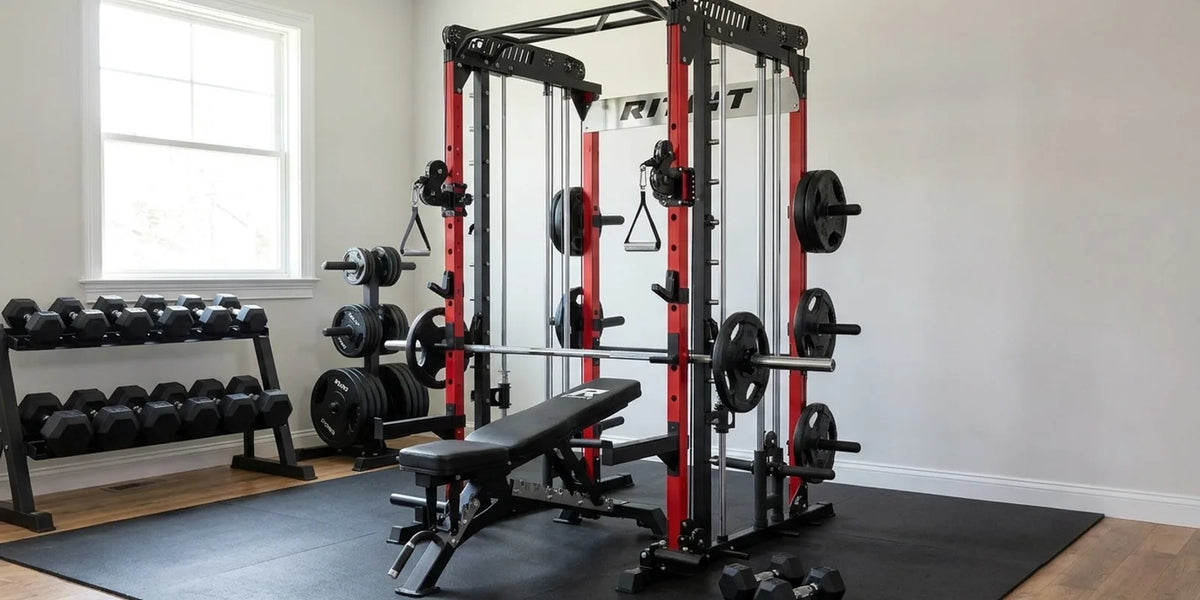
The RitFit M1 PRO is a strong platform for Pendlay rows because its fixed bar path and adjustable safety stops create the repeatable dead-stop start this lift depends on. The same station then covers the rest of a home back day without extra equipment.
- Repeatable pulls: The centered bar path keeps every rep on the same line, which is exactly what a strict dead-stop row rewards.
- No-spotter safety: Adjustable safety stops catch the bar if a heavy pull stalls mid-rep.
- All-in-one range: A cable crossover station and squat rack turn one machine into a complete garage gym system.
- Step-up option: Lifters chasing heavier dead-stop rows can look at the RitFit M3 Pro, while the RitFit PSR05 2.0 Multifunctional Smith Machine covers the same work in a proven rack format.
"Extremely happy with my M1 pro smith machine, the weight stacks is a must! So much to do especially for someone who is barely starting a fitness journey."
FRANCISCO, Verified Buyer, RitFit M1 PRO Smith Machine Weight Stack Home Gym Package
FAQs About Pendlay Rows on the Smith Machine
Is the Pendlay row harder than a regular barbell row?
Yes, most lifters find it harder because every rep starts from a dead stop on the floor. Momentum cannot carry you through the sticking point, so your lats, traps, and rear delts must generate force from zero. Expect to use lighter weights than bent-over rows.
Can you do a Pendlay row on a Smith machine?
Yes. The fixed bar path removes balance demands, and adjustable safety stops let you set the bar height for a consistent floor-level start. Set the stops near the bottom of the travel range, hinge to near parallel, and pull each rep from a complete stop.
What muscles does the Pendlay row work?
The Pendlay row primarily targets the latissimus dorsi, middle trapezius, and rhomboids, with support from the rear delts, biceps, and spinal erectors. The dead-stop requirement shifts more work to the upper back, because each rep must overcome inertia without any stretch reflex to help.
How heavy should I go on Pendlay rows?
Start lighter than your bent-over row, roughly the weight you could row for ten strict reps. Because every rep starts cold from the floor, form breaks fast when the load climbs. Add weight only after you can keep the torso angle and bar path unchanged.
Are Pendlay rows bad for your lower back?
No, not inherently, but the near-parallel torso places steady demand on the spinal erectors. Keep the brace tight, stop the set when your lower back starts rounding, and skip the lift entirely if you have an active back injury. Check with a professional if pain persists.
What are good alternatives and when should I stop?
Good alternatives include the bent-over Smith row for continuous tension, the chest-supported seal row for a lower back friendly dead stop, and the inverted row for a bodyweight option. Stop the set when your lower back rounds, when sharp or radiating pain appears, or when your torso angle breaks down on consecutive reps.
Conclusion
The Pendlay row on a Smith machine turns a strict dead-stop pull into a no-spotter home exercise: set the stops low, hinge to near parallel, and pull every rep from a complete stop. Start lighter than your bent-over row, add weight only when form holds, and respect the stop signals.
Set up your first session this week with 3 sets of 5 reps on the empty bar, then build from there. For current deals on racks and plates, check the RitFit discount guide before you order.
Disclaimer
This guide shares general strength training information and does not replace medical advice. Consult a qualified health professional before starting a new program, especially with a history of back injury.
References
1. Lehman GJ, Buchan DD, Lundy A, Myers N, Nalborczyk A. Variations in muscle activation levels during traditional latissimus dorsi weight training exercises: An experimental study. Dyn Med. 2004;3(1):4. doi:10.1186/1476-5918-3-4. PMCID: PMC449729
2. Vural F, Erman B, Ranisavljev I, et al. Can different variations of suspension exercises provide adequate loads and muscle activations for upper body training?. PLoS One. 2023;18(9):e0291608. doi:10.1371/journal.pone.0291608. PMCID: PMC10516423
3. Tjøsvoll SO, Mork PJ, Iversen VM, Rise MB, Fimland MS. Periodized resistance training for persistent non-specific low back pain: a mixed methods feasibility study. BMC Sports Sci Med Rehabil. 2020;12:30. doi:10.1186/s13102-020-00181-0. PMCID: PMC7206666