








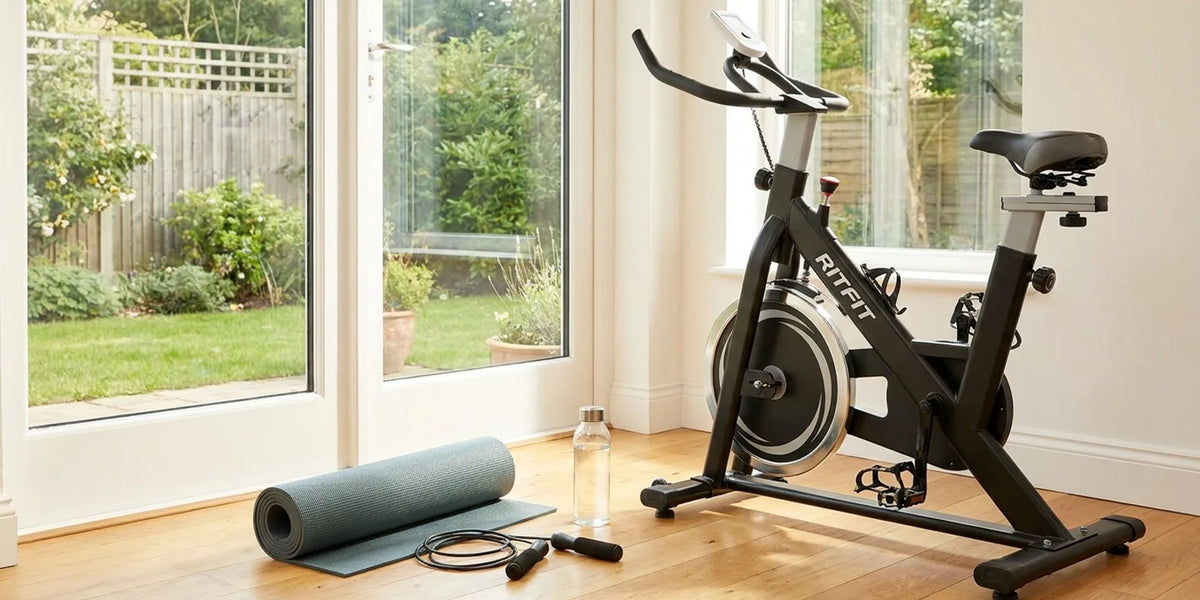
Home-based cardio works. Meta-analyses of home exercise programs show measurable gains in cardiorespiratory fitness without a gym, and the exercises that produce those results require nothing more than floor space and consistent effort.
This guide covers the key principles behind cardiovascular endurance, the best no-equipment exercises to build it, and a beginner-friendly weekly plan you can start this week.
Table of Contents
Key Takeaways
- Home Cardio Is Effective: A 2026 systematic review found that unsupervised home-based exercise programs improved VO2peak by a pooled mean difference of 2.70 mL·kg⁻¹·min⁻¹, confirming that gym access is not a requirement for cardiovascular gains.
- HIIT Translates Well to Home Settings: A 2023 meta-analysis found home-based HIIT produced similar cardiorespiratory fitness improvements to supervised gym-based HIIT, making interval training one of the most efficient formats for home exercisers.
- Progressive Overload Is the Key Variable: The same 2026 review identified adherence to progressive overload as the main factor separating home programs that improved fitness from those that did not.
- No Equipment Required: Jumping jacks, burpees, mountain climbers, and high knees elevate heart rate effectively when structured into timed intervals, no cardio machine needed.
- Results Within 12 Weeks: A 12-week trial found that home HIIT and moderate continuous training produced similar cardiovascular improvements that were still present at a 3-month follow-up.
What Is Cardiovascular Endurance?
Cardiovascular endurance is your body's ability to sustain aerobic activity over time, driven by how efficiently your heart, lungs, and muscles work together to deliver and use oxygen. Scientists measure it as VO2max or VO2peak, the maximum volume of oxygen your body can consume per kilogram of bodyweight per minute.
Higher cardiovascular endurance means you fatigue more slowly during sustained effort, whether that is running, cycling, or completing soccer conditioning drills for beginners. It is one of the strongest predictors of long-term health outcomes across all age groups.
What the Research Says About Home-Based Cardio
Controlled research on home exercise programs shows consistent, meaningful improvements in cardiorespiratory fitness, even without supervision or equipment.
Meta-Analysis Findings on VO2 Peak
A 2026 systematic review with meta-analysis found that home-based exercise programs improved VO2peak by a pooled mean difference of 2.70 mL·kg⁻¹·min⁻¹ (95% CI: 1.78 to 3.62) compared to control groups.[1] Adherence to progressive overload was the key moderating factor separating effective programs from ineffective ones.
Home HIIT vs Lab HIIT: Is There a Difference?
A 2023 meta-analysis found that home-based HIIT improved cardiorespiratory fitness with a standardized mean difference of 0.61 (95% CI: 0.21 to 1.02) compared to no exercise, with no statistically significant difference versus supervised, lab-based HIIT.[2] This finding directly supports using home interval training as a primary method rather than a compromise.
Best Home Exercises to Build Cardiovascular Endurance
These exercises require no equipment and reliably elevate heart rate into aerobic training zones when performed at the right intensity and duration.
No-Equipment Cardio Moves
The most effective no-equipment cardio exercises are: Jumping jacks (full-body, low coordination barrier), High knees (drives heart rate quickly, builds hip flexor endurance), Burpees (combines upper body, lower body, and explosive push-off), Mountain climbers (sustained core engagement with aerobic demand), and Jump rope simulation (mimics rope skipping without equipment). All five can be built into timed intervals using the HIIT structure below.
HIIT Structure for Home Workouts
A standard beginner HIIT round is 20 seconds of maximum effort followed by 40 seconds of rest, repeated 6 to 8 times per exercise. The same strength training principles for soccer apply here: short, intense bursts with full recovery between rounds produce the best cardiovascular adaptation.
The video above demonstrates a structured 15-minute home HIIT session using bodyweight only, suitable for beginners building their first cardio base.
A 12-week randomized trial found that home HIIT and traditional moderate-intensity continuous training produced comparable cardiorespiratory fitness gains, with both groups maintaining improvements at a 3-month follow-up.[3] This means beginners can choose based on preference rather than effectiveness.
How to Apply Progressive Overload at Home
Progressive overload means systematically increasing the demand placed on your cardiovascular system so it must adapt and grow stronger. Without it, your fitness plateaus after the initial adaptation phase.
Practical home cardio progressions include: adding one extra interval round per week, reducing rest time by 5 seconds every two weeks, increasing the speed or intensity of each movement, or adding a new, more demanding exercise to replace an easier one. Using these progressions ensures your soccer passing improvement training stays effective alongside your cardio work.
A Beginner Weekly Home Cardio Plan
Beginners benefit most from 3 sessions per week with at least one rest day between sessions, giving the cardiovascular system time to adapt. Each session should last 20 to 30 minutes, combining a warm-up, the HIIT block, and a cool-down.
| Day | Session | Focus |
|---|---|---|
| Monday | 20 min HIIT (jumping jacks, high knees, mountain climbers) | Aerobic base |
| Tuesday | Rest or light walk | Recovery |
| Wednesday | 25 min HIIT (burpees, jump rope sim, high knees) | Intensity build |
| Thursday | Rest or light walk | Recovery |
| Friday | 30 min steady-state (brisk walking, stair stepping) | Aerobic volume |
| Saturday | Optional: active recreation or beginner soccer drills | Active rest |
| Sunday | Full rest | Recovery |
Add one extra HIIT round per week every two weeks to maintain the progressive overload principle that drives ongoing cardiovascular adaptation.
How Long Before You See Results?
Most beginners notice improved breathing efficiency and reduced perceived effort within 3 to 4 weeks of consistent training. Measurable VO2peak improvements typically emerge after 8 to 12 weeks of progressive home cardio, according to the research reviewed above.
The main predictor of results is consistency. Pairing your cardio routine with appropriate home gym equipment or even basic cardio equipment can make sessions more structured and trackable over time.
FAQs About Improving Cardiovascular Endurance at Home
How long does it take to improve cardiovascular endurance at home?
Research suggests measurable gains in cardiorespiratory fitness are possible within 12 weeks of consistent home exercise. A 2026 meta-analysis found that home-based programs produced significant VO2peak improvements, though the timeline varies based on starting fitness level and how consistently training principles like progressive overload are applied.
Is HIIT better than steady-state cardio for building endurance at home?
Both approaches are effective for building cardiovascular endurance at home. A 2023 meta-analysis found home-based HIIT produced significant improvements over no exercise, with no statistically significant difference compared to supervised gym HIIT. Moderate continuous training produced similar results in a 12-week trial, so the best format is the one you can sustain consistently.
Can you build cardiovascular endurance without equipment?
Yes. Exercises like jumping jacks, burpees, mountain climbers, and high knees use bodyweight to elevate heart rate effectively. Structuring these into intervals with controlled rest periods mimics the physiological demands of HIIT, which research has shown to improve cardiorespiratory fitness without any gym machinery.
What is progressive overload and how does it apply to home cardio?
Progressive overload means gradually increasing workout demand over time to force ongoing adaptation. In home cardio, this means adding interval rounds, reducing rest periods, or increasing movement speed week by week. A 2026 meta-analysis identified adherence to progressive overload as a key factor in whether home exercise programs improved cardiorespiratory fitness.
How many days per week should beginners do cardio at home?
Most exercise guidelines recommend at least 150 minutes of moderate-intensity cardio per week, which translates to about 3 to 5 sessions for beginners. Starting with 3 shorter sessions and adding one more session every two weeks is a practical way to build consistency without overwhelming recovery capacity early in training.
Conclusion
Improving cardiovascular endurance at home is fully achievable with bodyweight exercises, a consistent schedule, and progressive overload. Research confirms that home-based programs, including HIIT, produce meaningful gains in cardiorespiratory fitness within 12 weeks.
Start with 3 sessions per week, add one round or reduce one rest period every two weeks, and track how your perceived effort changes as your fitness builds.
Disclaimer
This article is for informational and educational purposes only and does not constitute medical or clinical advice. Consult a qualified healthcare professional before beginning any new exercise program, particularly if you have a pre-existing cardiovascular condition.
References
1. Manresa-Rocamora A, Sarabia JM, et al. Effect of Home-Based Exercise and Influence of Training Principles on Cardiorespiratory Fitness in Sedentary Healthy People and Patients With Cardiovascular Disease: A Systematic Review With Meta-Analysis. Eur J Sport Sci. 2026;26(5):e70158. https://pmc.ncbi.nlm.nih.gov/articles/PMC13051912/
2. Tsuji K, Tsuchiya Y, Ueda H, et al. Home-based high-intensity interval training improves cardiorespiratory fitness: a systematic review and meta-analysis. BMC Sports Sci Med Rehabil. 2023;15:166. https://pmc.ncbi.nlm.nih.gov/articles/PMC10696712/
3. Hesketh K, Jones H, Kinnafick F, et al. Home-Based HIIT and Traditional MICT Prescriptions Improve Cardiorespiratory Fitness to a Similar Extent Within an Exercise Referral Scheme for At-Risk Individuals. Front Physiol. 2021;12:750283. https://pmc.ncbi.nlm.nih.gov/articles/PMC8631444/




