If you cannot do a single pull up yet, that is completely normal, and it is fixable. This guide gives complete beginners a clear path from zero to your first unassisted rep.
You will learn what a pull up demands, the foundation moves that build pulling strength, and how negatives, bands, and machines bridge the gap with a simple weekly plan.
Table of Contents
Key Takeaways
- Start where you are: Being unable to pull up means you lack pulling strength, not talent, and that gap closes with training.
- Build a base first: Dead hangs, scapular pull ups, rows, and lat pulldowns develop the back and grip strength a pull up needs.
- Use the bridge tools: Negatives, band assistance, and an assisted machine let you train the full motion before you can lift your full body weight.
- Train two to three times weekly: Frequent, progressive practice drives the early neural gains that lead to your first rep.
- Be patient and consistent: Timelines vary widely, so focus on steady progress rather than a fixed deadline.
What a Pull Up Actually Demands
A pull up is harder than it looks because it asks you to lift your entire body weight using mostly your back and arms. The pull up is a multi joint, closed chain movement that mainly activates the latissimus dorsi and biceps brachii, with the trapezius and other muscles stabilizing the shoulder blades.[1]
- Prime movers: Your lats and biceps do most of the pulling, so weak or untrained back muscles are the usual reason beginners stall.
- Stabilizers: The traps and scapular muscles control your shoulder blades, which is why learning to set your scapula comes before learning to pull.
- Grip and core: Your hands must hold your full weight while your core keeps the body from swinging, and both are common weak links early on.
The takeaway is simple, you are not failing because something is wrong with you. You simply have not yet built the specific strength this movement requires.
Step 1, Build the Foundation Before You Pull
Before chasing a full pull up, build the base strength that makes one possible. These foundation moves train your back, grip, and scapular control so the bar feels lighter when you finally attempt it.
- Dead hang: Simply hang from the bar with straight arms to build grip endurance and shoulder stability, working up your total hang time across sessions.
- Scapular pull ups: From a hang, pull your shoulder blades down and back without bending your elbows, teaching the scapular control that initiates every pull up.
- Inverted rows: Pull your chest toward a fixed bar while your feet stay on the floor, an easier horizontal pull that builds the same back muscles.
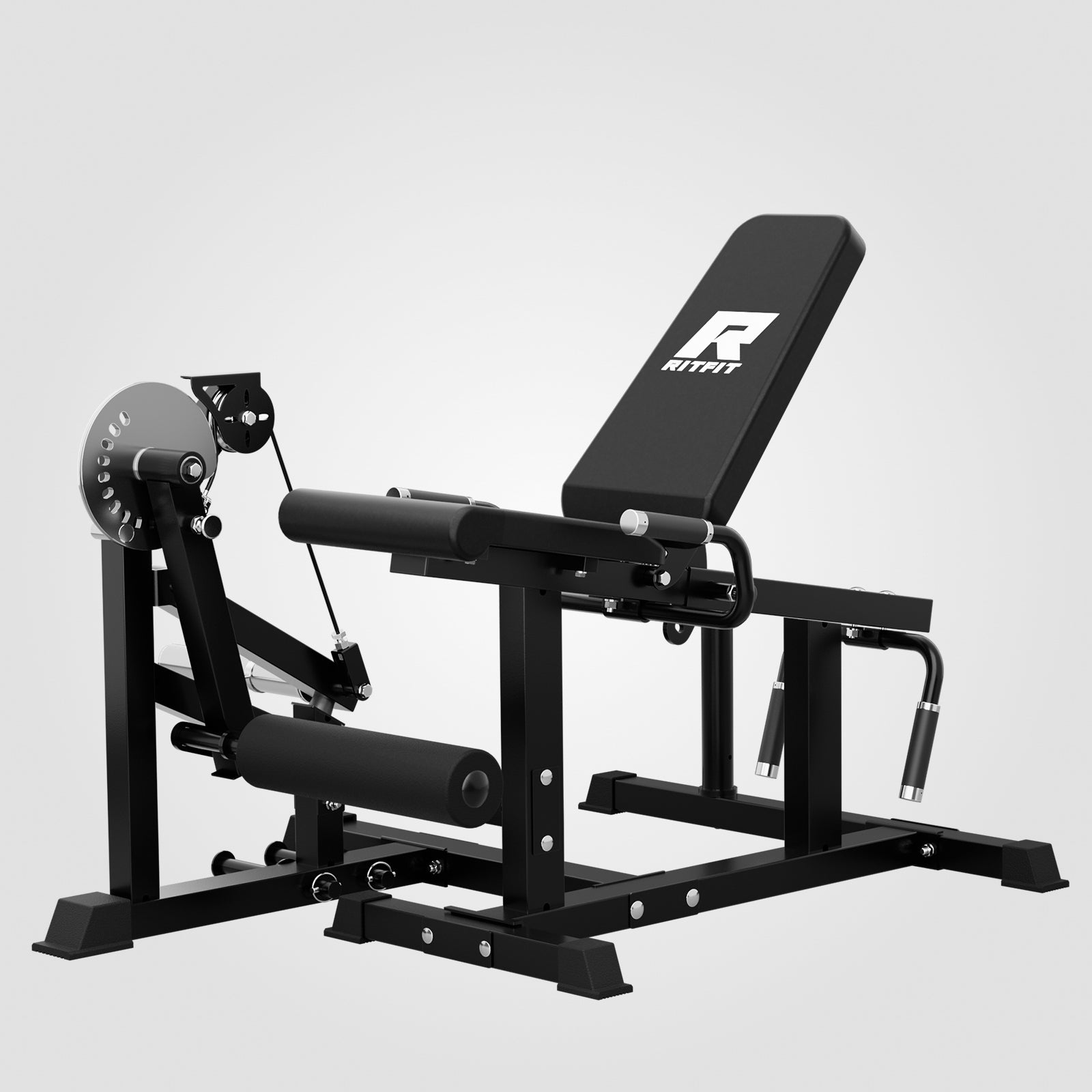
- Lat pulldown: This machine lets you practice the vertical pulling pattern with adjustable load, scaling down as needed while you get stronger.
Lat pulldown training is a proven bridge for this stage. An eight week study of 34 recreationally active male college students found that lat pull down training improved pull up endurance.[2]
If you train without a gym, you can also train for a pull up at home using a bar and bands.
Step 2, Bridge the Gap With Assisted Methods
Assisted methods are not cheating, they are how nearly everyone earns their first pull up. Each one reduces the load so you can practice the real movement with good form while still building strength.
- Negative pull ups: Jump or step to the top position, then lower yourself as slowly as possible, training the same muscles under control to extend your lowering time over weeks.
- Band assisted pull ups: Loop a pull up resistance band on the bar and place a foot or knee in it to offset part of your weight, then switch to a thinner band as you progress.
- Assisted pull up machine: A counterweighted machine supports a set amount of your body weight, which you reduce gradually to shift more load onto your own muscles.
- Chin ups: The underhand grip recruits more biceps and is often easier, so the chin up can be a useful stepping stone.
A pull up assist band set makes the band method easy to scale at home. A study of 15 trained adults found that traditional, suspension device, and towel pull up variations all produced muscle activation above the threshold linked to strength and hypertrophy gains, which means varied practice still trains the right muscles.[1]
The video above walks through the same assisted progressions and form cues you can apply to your own sessions.
“Focus on building your strength in lowering from the bar or holding yourself in a position either above or below the bar. This will carry over to your ability to pull up to the bar eventually. As you build your eccentric and isometric strength, your concentric pulling strength will follow along.”
— Jeff Cavaliere, MSPT, CSCS, Physical Therapist & Strength Coach, former Head PT for the NY Mets, Athlean-X, 《You CAN Do More Pullups (JUST DO THIS!)》
Step 3, A Realistic Beginner Progression Plan
A good plan blends foundation work and assisted pulling two to three times per week. The structure below gives you a starting template you can adjust to your own strength and recovery.
- Frequency: Train pulling movements two to three times weekly, leaving at least one rest day between hard sessions so your muscles recover.
- Each session: Begin with dead hangs and scapular pull ups, then do your main work of negatives or band assisted reps, and finish with rows.
- Sets and reps: Aim for three to four sets of three to six quality reps on your main pulling exercise, stopping before form breaks down.
- When to advance: Progress by lengthening dead hangs, slowing negatives, or moving to a thinner band once your current work feels controlled.
Steady progression like this works. An eight week study of 30 physically inactive men found that pull up based programs paired with supplemental forearm or core training improved maximum reps, grip strength, and dead hang time, with early gains attributed largely to neural adaptations rather than muscle size.[3]
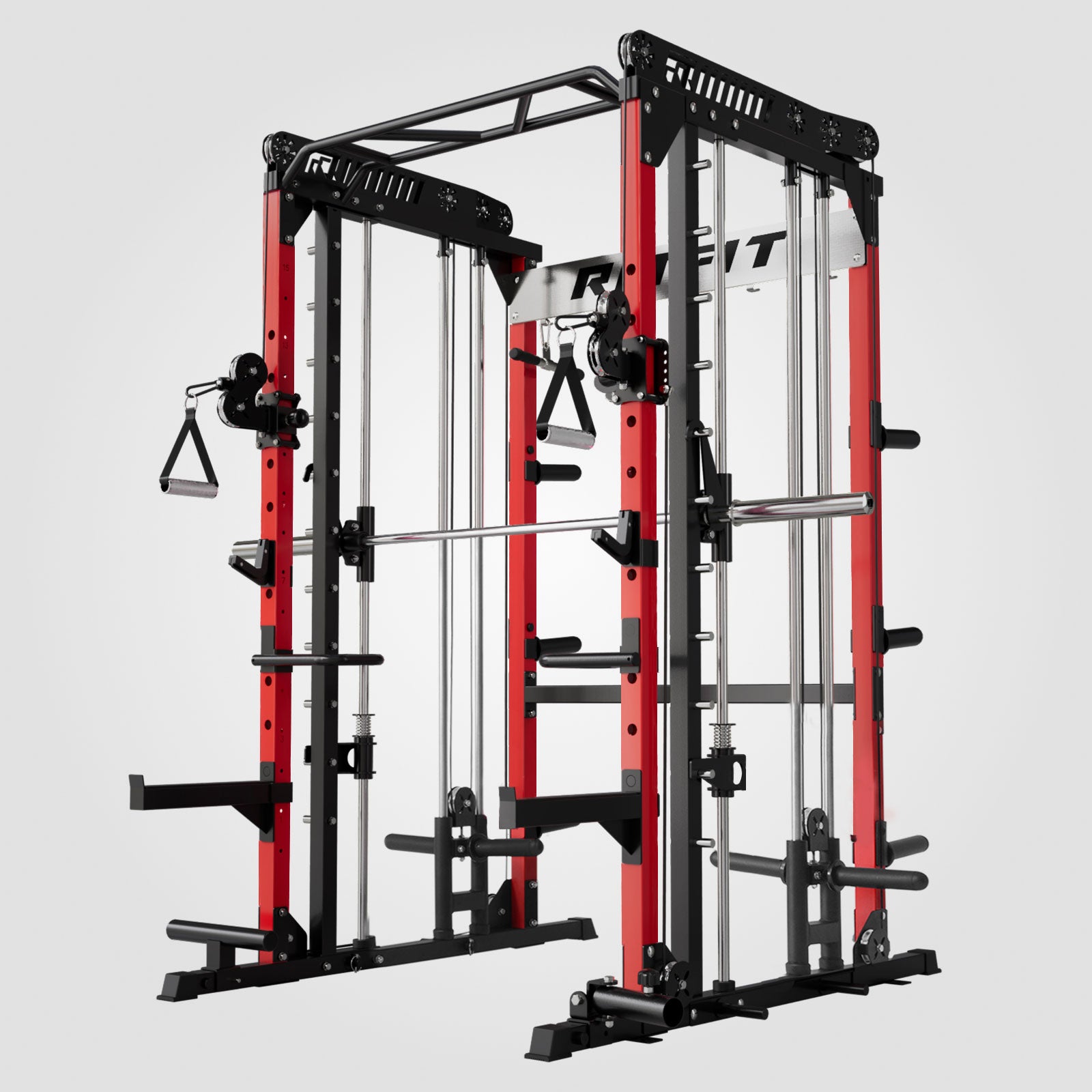
A stable bar helps, so a power cage with a pull up bar gives you a reliable place to train.
Common Mistakes That Keep You Stuck
Most stalled beginners are making one of a few fixable errors. Spotting them early saves weeks of frustration and keeps your progress moving.
- Skipping the foundation: Jumping straight to bar attempts without building back and grip strength leaves you swinging with no real progress.
- Letting grip fail first: Grip is a common limiting factor, so if your hands give out before your back, add dead hangs and reduce grip fatigue.
- Ignoring the core: A loose midsection leaks energy and causes swinging, so brace your core to better use your primary pulling muscles.
- Training too rarely: Practicing once a week is rarely enough stimulus, so aim for two to three sessions to build momentum.
Researchers note that grip is a common limiting factor and that better core stability helps beginners use their pulling muscles more effectively.[3] If you want a smoother entry point, pull ups on a Smith machine offer a guided bar path while you build confidence.
How Long Until Your First Pull Up
There is no fixed timeline because starting strength, body weight, and consistency all matter. Many beginners reach their first rep within roughly two to four months of regular pulling practice.
- Stay consistent: Frequent practice matters more than any single hard session, since the early gains come largely from neural adaptation.
- Track small wins: Longer hangs, slower negatives, and a thinner band are all signs you are getting closer, even before the first full rep.
- Break plateaus: If progress stalls, vary your assistance, add a rest day, or revisit foundation work to address the weakest link.
Trust the process and keep showing up, because consistent effort is what turns a string of assisted reps into your first unassisted pull up.
FAQs About Starting Pull Ups
Can a complete beginner learn to do a pull up?
Yes, almost any healthy beginner can build to a first pull up with consistent training. Start by strengthening your back and grip with dead hangs, scapular pulls, and rows, then bridge the gap using negatives and band assisted reps. Train two to three times per week and progress gradually.
How long does it take to get your first pull up?
Timelines vary widely with starting strength, body weight, and consistency, so there is no fixed number. Many beginners reach their first rep within roughly two to four months of training pulling movements two to three times per week. Early strength gains come largely from neural adaptations, which is why steady practice matters.
Are negative pull ups good for beginners?
Yes, negatives are one of the most effective tools for beginners who cannot pull up yet. You jump or step to the top position, then lower yourself as slowly as possible, which trains the same muscles under control. Aim to lengthen your lowering time gradually across sessions to build strength.
Do resistance bands help you do pull ups?
Yes, looping a resistance band on the bar and placing a foot or knee in it reduces how much of your body weight you must lift. This lets you practice the full pulling motion with good form while still building strength. As you get stronger, switch to a thinner band that gives less help.
What exercises should beginners do before attempting a pull up?
Start with dead hangs to build grip and shoulder stability, then add scapular pull ups to learn shoulder blade control. Inverted rows and lat pulldowns train the same back muscles a pull up uses, with adjustable difficulty. Practice these consistently before moving to negatives and band assisted reps.
Conclusion
Starting pull ups from zero is a matter of building the right strength in the right order. Lay a foundation with hangs, scapular pulls, and rows, then bridge the gap with negatives, bands, and machines.
Train two to three times weekly, progress gradually, and stay patient, and your first unassisted rep will come. Pick one foundation move and one assisted method, and begin this week.
Disclaimer
This article is for general fitness and informational purposes only and does not replace personalized coaching or medical advice. Consult a qualified professional before starting a new training program, especially if you have any existing health concerns.
References
1. Snarr RL, Hallmark AV, Casey JC, Esco MR. Electromyographical Comparison of a Traditional, Suspension Device, and Towel Pull-Up. Journal of Human Kinetics. 2017;58:5-13. https://pmc.ncbi.nlm.nih.gov/articles/PMC5548150/
2. Li Q, Yan J, Qiao M, et al. Eight-week lat pull-down resistance training with joint instability leads to superior pull-up endurance performance and reduced antagonist coactivation in recreationally active male college students. European Journal of Sport Science. 2025;25(1):e12243. https://pmc.ncbi.nlm.nih.gov/articles/PMC11667758/
3. Sepehri Rahnama H, Ganji S, Vadasz K, Prokai J. Comparative Effects of Core Versus Forearm Training on Pull-Up Repetition Performance in Physically Inactive Males. Sports (Basel). 2025;13(12). https://pmc.ncbi.nlm.nih.gov/articles/PMC12736907/