Staying motivated to work out is one of the most common reasons people quit a fitness routine, but it is rarely a character flaw.
Motivation fades when a plan depends on willpower, results feel slow, or a workout does not fit real life.
Consistency is built with structure, and this guide explains how to start on low-energy days, build habits, and get back on track after a missed workout.
You can apply these steps whether you train at home or in a gym.
Quick Answer: To stay motivated to work out, stop relying on willpower and build a system instead. Schedule workouts at the same time each day, start with a short ten-minute session, choose exercises you enjoy, track small wins, and keep your equipment ready because consistency builds slowly and one missed day never erases progress.
Key Takeaways
- Motivation is built, not found: Relying on feeling like it is the fastest way to quit, and a repeatable system beats willpower for long-term consistency.
- Habits form over weeks, not days: Habit formation research links repeated consistent practice to measurably stronger exercise habits in about twelve weeks.
- Start smaller than you want: A ten-minute session on a hard day keeps the streak alive and often turns into a full workout anyway.
- Enjoyment predicts adherence: Exercising for reasons you value and enjoy is linked to stronger long-term sticking power than training mainly under external pressure.
- One missed day is not a failure: Getting back on your next scheduled session is what protects a routine, not perfect attendance.
Why Motivation to Work Out Fades (And Why It's Not a Willpower Problem)
Motivation to work out fades for almost everyone because it is tied to momentum, not character, and most routines collapse when results are slow and the plan depends on willpower. Research indicates that more than half of people who begin a regular exercise program stop within the first three to six months, with dropout highest when training is unsupervised.[1]
- Motivation follows action, not the reverse: Waiting for the mood to strike keeps you stuck, and starting a small session usually generates the feeling you were waiting for.
- Results take longer than the honeymoon: Early workouts feel exciting, but visible changes can take weeks, which is exactly when many people quit.
- External pressure wears out: Exercising mainly for a deadline or an obligation rarely survives contact with a busy week.
- Friction kills routines: If gear is packed away or the gym is far, every workout starts with a battle before you even move.
The solution is not more willpower, it is a system that makes showing up the path of least resistance. The rest of this guide focuses on habit, environment, and tracking, and our Home Gym Guide walks through the essentials if you are building a new space.
How to Start Working Out When You Don't Feel Like It
When you do not feel like working out, the fix is to shrink the workout until starting feels easy, then let momentum carry you. A practical rule is to commit to ten minutes, because beginning the session solves most of the motivation problem.
- Shrink the session: Ten minutes of movement on a low-energy day keeps the streak alive and often turns into a full workout once you warm up.
- Lower the barrier to entry: Set out clothes the night before, keep a mat or bench ready, and remove the steps between you and the first rep.
- Use the five-minute rule: Promise yourself you will stop after five minutes if you truly hate it, and almost nobody actually stops.
- Stack it onto an existing habit: Attach your workout to something you already do, like morning coffee, a commute, or the kids' bedtime.
"Don't wait until you feel like it. Just start. The action creates the feeling. Every rep builds it... most habits don't fail because you're lazy. They fail because the setup is too hard to repeat."
Arnold Schwarzenegger, Seven-time Mr. Olympia and Fitness Advocate, Arnold's Pump Club
How to Build a Workout Habit That Actually Sticks
A workout becomes a habit when it repeats in the same context until it no longer needs conscious effort, which usually takes several weeks of consistent practice. A meta-analysis of habit formation interventions found these approaches significantly increased physical activity habit strength compared with control groups.[2]
Exercising for intrinsic reasons, like enjoyment and personal meaning, is also linked to better long-term adherence than training mainly for external rewards.[3]
- Pick a cue and a place: Repeat the same time, the same corner, and the same playlist so the environment itself triggers the workout.
- Choose a repeatable plan: A simple structured program removes decision fatigue, and a set format like the What Is 5x5 Workout gives you exact moves and weights to follow.
- Make it automatic, not aspirational: Write the session into your calendar like a meeting instead of waiting for inspiration to arrive.
- Monitor yourself: Self-tracking is a common ingredient in effective habit formation, and it gives you proof of progress on low days.
Set Up Your Home Gym So Showing Up Is Easy
A home gym keeps you consistent by removing travel, gym hours, and packed crowds, which makes starting a session the default instead of a decision. The goal is a clear, ready space where equipment stays visible and set up for the moves you do most.
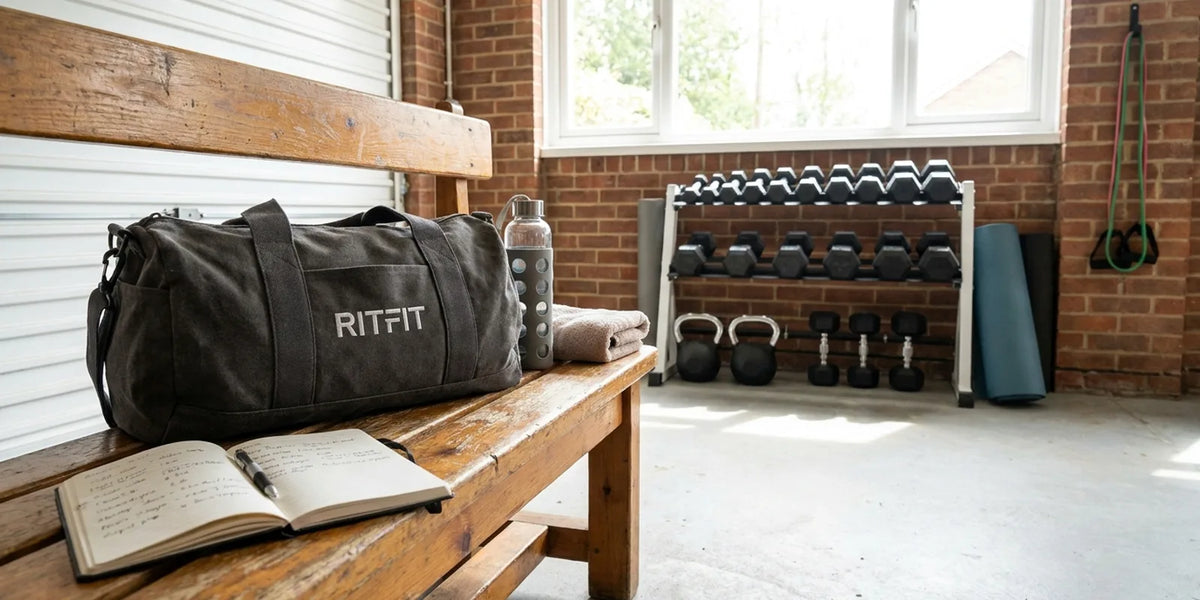
- Dedicate a clear space: A mat on the floor in a corner of the garage or bedroom signals your brain that it is time to train.
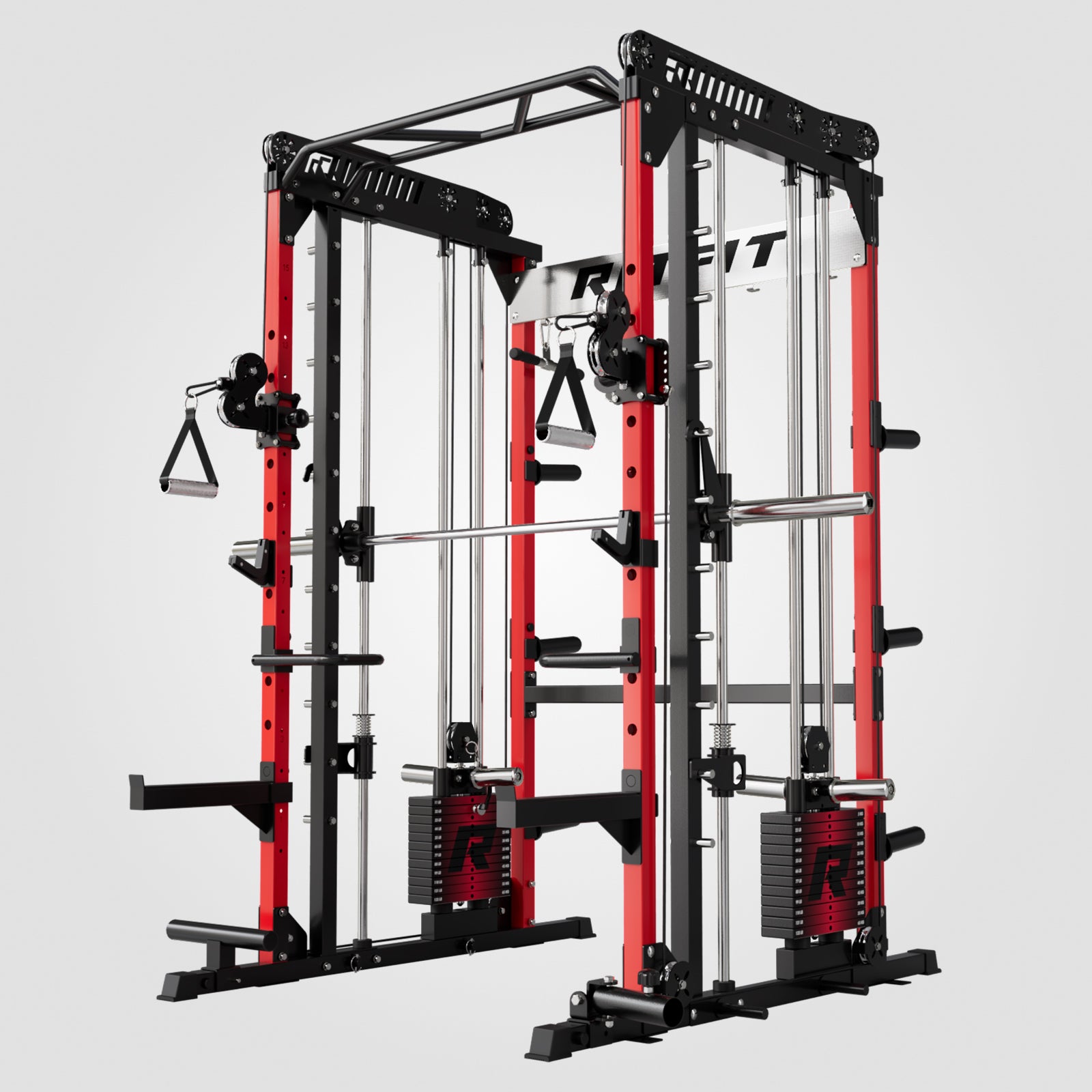
- Keep equipment visible and ready: A bench, dumbbells, or an all-in-one RitFit M1 Smith Machine ready to use means no setup before the first set.
- Match gear to your workouts: Start with the pieces that serve the sessions you actually enjoy, then add as you progress, and browse Functional Training Equipment for ideas.
- Plan for space and light: A ventilated, well-lit area with room to move reduces the mental effort of starting.
You do not need a full room to get the benefit. Even a corner with a mat and a few pieces of gear removes the biggest barriers to showing up, and a Bench Workout can round out a full-body plan in a small footprint.
How to Make Workouts You Actually Enjoy
You are far more likely to repeat a workout you enjoy, because enjoyment is one of the strongest predictors of whether people keep exercising over the long term. Experiment with formats until training feels like something you look forward to rather than a chore.
- Match the format to your taste: Some people love a fast interval session like the What Is A Tabata Workout, while others prefer steady strength work or group classes.
- Use music or a podcast you love: Reserve your favorite show or playlist for training so the session becomes the treat.
- Rotate movements to beat boredom: Varying sessions, like a Metcon Workouts Guide style circuit one day and a strength day the next, keeps your body guessing and your mind engaged.
- Find company: One 2024 study reported that people who talked about their exercise plans with peers sustained activity better than those relying on self-motivation alone.
Track Your Progress and Reward Small Wins
Tracking progress keeps you motivated because it makes slow gains visible, and rewarding yourself at milestones turns effort into something you look forward to. Keep the system simple, a notebook, an app, or a calendar, and review it on the days you want to quit.
- Track reps, weight, or time: Watching numbers climb is concrete proof that the work is paying off, even when the mirror disagrees.
- Log how you feel: Energy and mood improvements often show up before visible changes, and they are worth capturing.
- Reward the process, not just results: A treat after a week of sessions, a new playlist, or a rest day keeps motivation alive between milestones.
- Celebrate consistency itself: The streak, not the scale, is the metric that best predicts whether you keep going.
How to Get Back on Track After a Missed Workout
After a missed workout, the fastest way back is to resume your next scheduled session at full strength instead of doubling down or punishing yourself. A single skipped day does not erase progress, but guilt often triggers a longer break.
- Treat one miss as recovery, not failure: Rest days are part of progress, and a skipped session is just an unplanned rest day.
- Do not overcorrect: Trying to make up the missed work with a marathon session raises the risk of burnout and injury.
- Reset the streak small: On the first session back, start light and short to rebuild confidence.
- Reconnect with your why: Remember the reason you started, more energy, less stress, or playing with your kids, and let it pull you back in.
- Make it easy tomorrow: Set out gear and schedule the next session before the day ends, and a short efficient format like the What Is A HIIT Workout is a great way back after a break.
FAQs About Staying Motivated to Work Out
Why do I lose motivation to work out
Most people do not lose motivation because they are lazy.
It fades when a routine depends on willpower instead of structure, or the workout does not fit real life.
Research indicates that more than half of beginners stop within a few months, so this experience is common and fixable with habit, scheduling and small wins.
How long does it take to build a workout habit
There is no fixed number, but habit research shows meaningful gains appear over several weeks to a few months of consistent practice.
A meta-analysis found habit formation interventions significantly strengthened exercise habits over about twelve weeks.
Focus on repeating a small routine at the same time each day.
What should I do if I miss a workout
Miss one workout and do not panic, and do not let one miss become two.
A single missed session barely affects progress, while guilt often triggers a relapse.
Just resume your next scheduled session as if nothing happened.
Treat a skipped workout as recovery rather than failure.
Should I work out every day to stay consistent
No.
Daily training is not required for consistency, and training hard every day can lead to fatigue, burnout and injury.
Most adults benefit from three to five workout days plus rest or active recovery such as walking.
Planning rest into your week keeps you fresh, which protects long-term consistency.
How do I stay motivated to work out at home
Home workouts become easier to repeat when the environment removes friction.
Keep a clear space, have equipment ready, and schedule sessions at the same time each day.
Short formats like HIIT or a full-body circuit fit busy schedules.
Tracking small wins and following a structured program keep home training consistent.
Conclusion
Staying motivated to work out is less about waiting for the right mood and more about building a system you can repeat on your worst days. Schedule your sessions, start small, make the workout enjoyable, track progress, and treat missed days as recovery instead of failure.
Start tonight by writing down one time and one place for your next session. When you want to save on building your home gym, check our RitFit discount guide before you buy.
Disclaimer
This article is for general information and educational purposes only and is not a substitute for medical or professional fitness advice. Consult a qualified healthcare provider before starting a new exercise program, especially if you have an existing condition or injury.
References
1. Shin YA, Kim KB. The Importance of Individual Choice and Intention in Exercise Adherence and Weight Management. J Obes Metab Syndr. 2021;30(4):317-319. doi:10.7570/jomes21092. PMCID: PMC8735821
2. Ma H, Wang A, Pei R, Piao M. Effects of habit formation interventions on physical activity habit strength: meta-analysis and meta-regression. Int J Behav Nutr Phys Act. 2023;20(1):109. doi:10.1186/s12966-023-01493-3. PMCID: PMC10498635
3. Teixeira PJ, Carraça EV, Markland D, Silva MN, Ryan RM. Exercise, physical activity, and self-determination theory: a systematic review. Int J Behav Nutr Phys Act. 2012;9:78. doi:10.1186/1479-5868-9-78. PMCID: PMC3441783