A rack mounted leg extension is a compact attachment that mounts onto your power rack uprights and adds machine-style seated leg extensions and leg curls, so you can isolate your quads and hamstrings without buying a standalone machine. If you already own a power rack, it is one of the most space-efficient ways to add machine leg work at home.
This guide covers what it is, which racks it fits, how to install it, and how it compares to a standalone leg machine on space and cost, plus setup steps, quad-building technique, and common mistakes.
Quick Answer: A rack mounted leg extension is a power rack attachment that adds a seat, thigh pad, and ankle roller to the uprights so you can perform seated leg extensions and leg curls using plates you own. It takes up far less floor space than a standalone machine and typically costs less, while still isolating the quads and hamstrings at home.
Key Takeaways
- Space saver: A rack mounted leg extension adds machine leg work using the uprights of a rack you already own, with a fraction of the floor footprint of a standalone machine.
- Cost effective: Rack-attached leg extensions typically run from about $300 to $1,000, while standalone machines start around $250 and commercial units can exceed $5,000.
- Dual function: Most attachments work as both a leg extension and a leg curl station, so you can hit quads and hamstrings with one add-on.
- Compatibility matters: Many attachments fit racks with 3x3 inch uprights and one-inch pin holes, so check your rack spec before buying.
- Load carefully: The attachment loads a single point on the upright, so stay within the manufacturer weight rating rather than stacking heavy plates.
What Is a Rack Mounted Leg Extension Attachment?
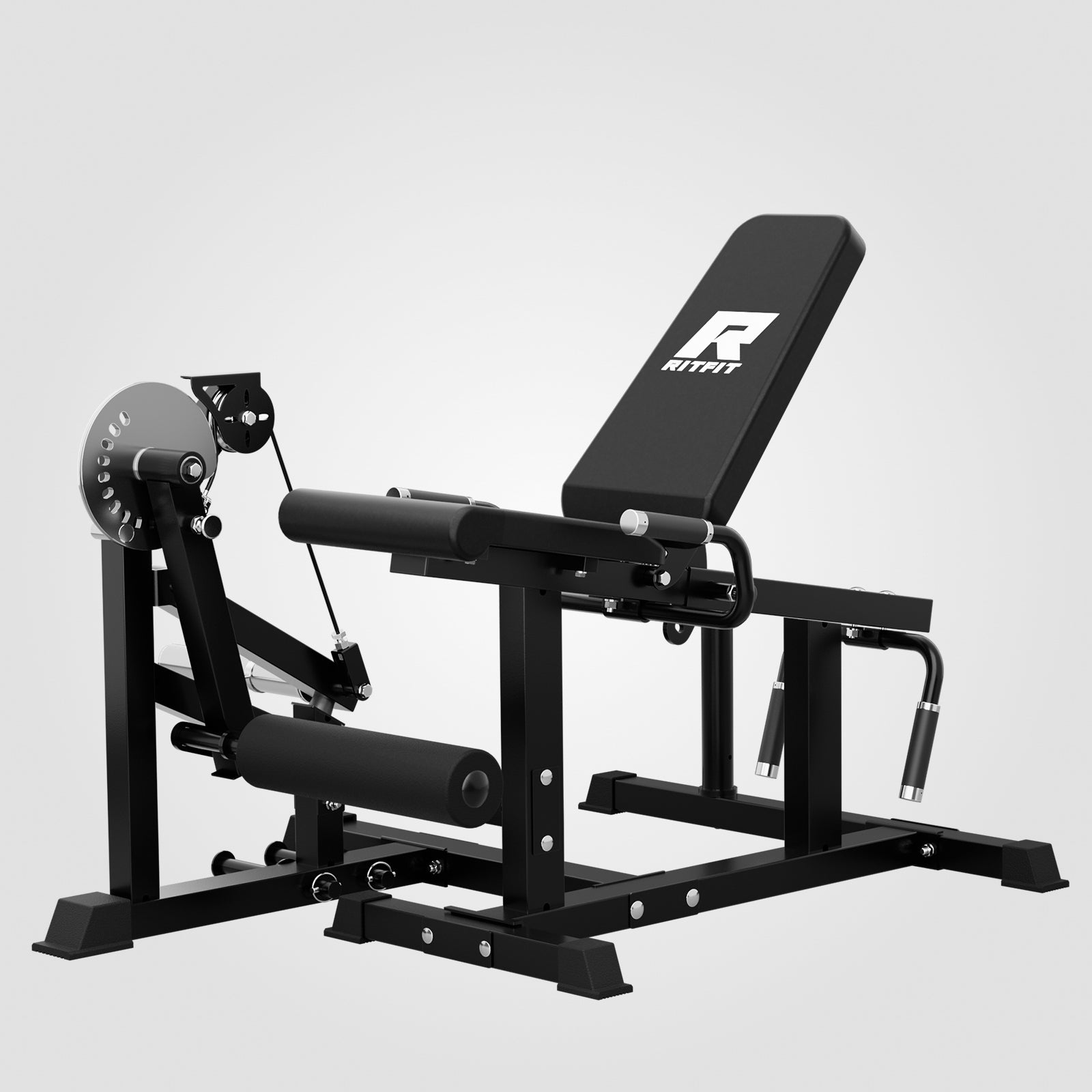
A rack mounted leg extension is a power rack attachment that slides into or mounts onto the uprights to add a padded seat, thigh pad, and ankle roller. You load weight plates onto a short lever arm, sit down, and extend your knees against the pad, which isolates the quadriceps in the same way a standalone leg extension machine does.
- Seated leg extension: The classic movement targets the quads through knee extension while your hips stay braced against the pad.
- Leg curl: Many models let you reposition the pad or stand to curl your heels toward your glutes, hitting the hamstrings.
- Plate loaded: Resistance comes from plates you already own rather than a weight stack, which keeps the attachment compact and affordable.
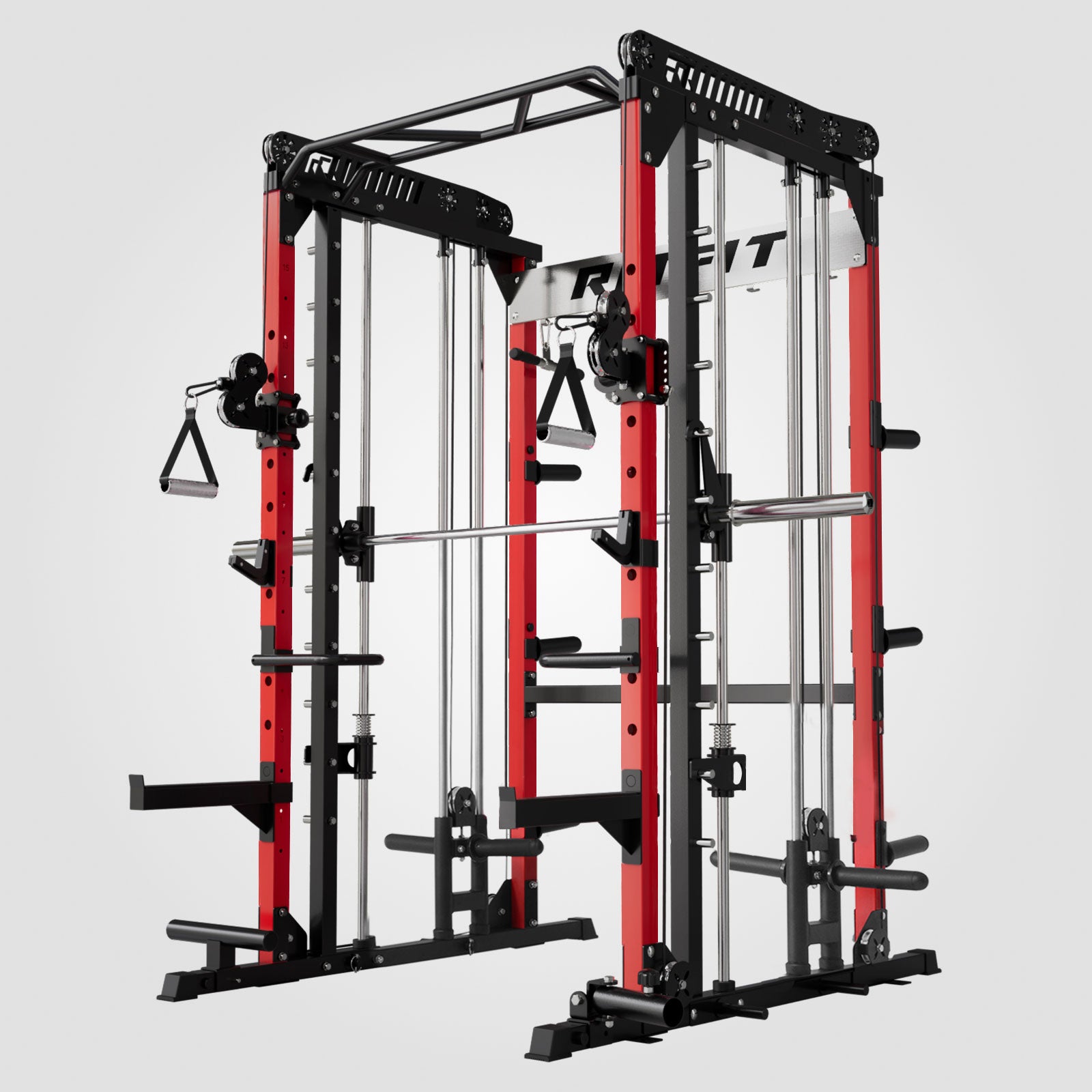
Because the attachment uses your existing rack for support, it suits racks package setups where floor space is already spoken for by the cage itself. It is a fit-first option for the Rack Attachments collection rather than a replacement for a full leg machine.
Why Add a Leg Extension to Your Power Rack?
Adding a leg extension to your power rack gives you machine-style quad isolation without dedicating several square feet of floor to a bulky standalone machine. It is a smart buy for home gym owners who want direct quad and hamstring work but do not want to manage another large piece of equipment.
- Targeted isolation: Leg extensions focus load on the quads, which is useful after compound work like squats.
- Compact footprint: The attachment stores on the rack when not in use, unlike a standalone machine that stays in the middle of the room.
- Fits a budget build: Because you already own the rack and plates, the add-on is one of the cheaper ways to get machine leg work.
Keep in mind that an EMG comparison found free-weight squat variations activate the quadriceps and posterior chain more than machine isolation, so treat the attachment as a supplement to compound lower-body lifts rather than a replacement [1]. For more on the movement itself, read about the top leg extension benefits.
"Strengthening the muscles around the knee is the way to go to get rid of some of this knee pain. A lot of us are probably using the wrong exercises and focusing on the wrong muscles."
Jeff Cavaliere, MSPT, CSCS, Physical Therapist and Strength Coach, former Head Physical Therapist for the NY Mets, Athlean-X
Which Power Racks Fit a Leg Extension Rack Attachment?
Compatibility comes down to the upright dimension and hole pattern of your rack, because the attachment has to lock into the upright holes at a height that aligns the pivot with your knees. Many rack-mounted leg extension attachments fit racks with 3x3 inch uprights and one-inch pin holes, and load capacity depends on a single mounting point.
- Upright size: Measure your upright width; 3x3 inch uprights are the most common target for rack attachments.
- Hole spacing and size: Confirm the pin hole diameter and the distance between holes line up with the attachment bracket.
- Mounting point: Because the whole load hangs from one bracket position, a sturdy rack that is bolted down gives the most stable base.
If you own a rack from the racks package lineup, check the upright spec against the attachment before ordering. When the seat aligns your knee to the pivot and your foot pad sits in the right spot, you get a smooth range of motion rather than an awkward angle.
How to Install a Leg Extension Attachment on a Power Rack
Installing a leg extension attachment takes minutes once you know your upright spec. You slide the bracket into the upright holes at the height that lines the pivot with your knees, then secure it with the pins or hardware that come with the attachment.
- Mount the bracket: Slide the bracket into the uprights and set the height so the seat and thigh pad support you in a seated position.
- Align the pivot: Adjust the seat so your knee lines up with the pivot point of the lever arm for a clean range of motion.
- Load the plates: Add plates to the lever arm using the same plates you use for your barbell work.
- Test the range: Run a few unweighted reps to confirm the pad tracks smoothly before adding load.
For a dedicated standalone option that skips rack compatibility entirely, the RitFit LEM2 leg extension rack attachment is built specifically for the M2 rack, while the RitFit PLC01 leg extension curl machine is a freestanding machine that does not depend on upright compatibility.
Rack Mounted Leg Extension vs Standalone Leg Extension Machine
The main trade-off is floor space and price against adjustability and feel. A rack attachment takes less space and is usually cheaper because it builds on a rack you already own, while a standalone machine offers more adjustment and a smoother ride but costs more and needs more room.
| Factor | Rack Mounted Attachment | Standalone Leg Machine |
|---|---|---|
| Floor space | Stores on the rack, minimal footprint | Needs several square feet of open floor |
| Typical price | About $300 to $1,000 | From around $250 up to over $5,000 |
| Needs an existing rack | Yes, must fit your uprights | No, fully self-supporting |
| Adjustability | Seat and pad adjustments on most models | More seat, pad, and lever adjustments |
| Best for | Space-conscious home gym owners with a rack | Dedicated leg stations and serious quad focus |
Price ranges are general industry overviews, not statistical averages. Rack-attached units typically run $300 to $1,000, while standalone machines start near $250 and commercial units can exceed $5,000.
If space and budget are tight and you already own a compatible rack, an attachment like the LEM2 is the cost-effective path. If you want a dedicated station with no dependency on your rack, the Mustang Pro leg extension curl machine or the PLC01 give you a freestanding option from the Leg Machine collection.
How to Use a Rack Mounted Leg Extension for Better Quads
To build quads on a rack mounted leg extension, sit so your knees align with the pivot, brace your hips against the thigh pad, and extend your knees smoothly without locking out hard or swinging the weight. Control the eccentric on the way down, because machine resistance keeps tension through the whole range.
- Set the seat: Adjust so your knee sits level with the pivot and the ankle pad rests just above the foot.
- Control the descent: Lower the weight in about two seconds instead of letting it drop.
- Start light: Machine-style leg work adds load beyond your body weight, so begin with a light weight and add plates in small steps.
- Add curls: Reposition the attachment or stand to perform leg curls for the hamstrings on the same station.
Because a study determined total leg press load as plates plus the sled weight, remember that machine resistance includes the equipment itself, so start conservative on any plate-loaded leg station [2].
Likewise, one program used an inclined leg press with a starting weight under 60 lb, which is a sensible reminder to begin light on lower-body machines [3].
Watch the technique in action below.
Common Mistakes and Safety Tips
The most common mistakes on a rack mounted leg extension are overloading the single mounting point, setting the seat too far from the pivot, and bouncing the weight at the bottom of the rep. Avoid them by respecting the weight rating, aligning the knee to the pivot, and moving through a controlled range of motion.
- Do not overload: The attachment hangs from one bracket, so stay within the manufacturer rating and avoid piling on heavy plates.
- Secure the rack: A rack that is bolted down or weighted at the base keeps the attachment stable under load.
- Skip the lockout slam: Extend your knees under control and stop just short of a hard mechanical lockout.
- Warm up the knees: A few light sets and some leg swings prepare the knee joint before you push to heavier working sets.
For more guidance on building a home leg day around a rack, see the best leg extension curl machine for beginners and the leg press vs squat rack comparison, and review best leg extension curl machine for home gyms for setup ideas.
FAQs About Rack Mounted Leg Extensions
What is a rack mounted leg extension?
A rack mounted leg extension is an attachment that mounts onto the uprights of a power rack for seated leg extensions and leg curls. It uses your existing rack for support and adds a seat, thigh pad, and ankle roller, so you can isolate the quads and hamstrings without owning a standalone machine.
Does a leg extension rack attachment fit any power rack?
No, compatibility depends on the rack.
Many attachments are built for racks with three by three inch uprights and one inch pin holes.
Always confirm your rack's upright dimension and hole spacing against the attachment spec before buying, because a single mounting point must carry the full load.
How much weight can a rack mounted leg extension hold?
Load capacity varies by model, but typical home attachments support around 250 lb of plate weight plus your body weight. Because the attachment loads a single point on the upright, stay within the manufacturer rating and avoid stacking heavy plates beyond the spec.
Can you do leg curls on a rack mounted leg extension?
Yes, most rack mounted leg extension attachments double as leg curl stations.
Seated extensions work the quads, while a standing or lying curl position works the hamstrings.
Some models adjust the pad angle and seat height so you can switch between both movements easily.
Is a rack mounted leg extension better than a standalone leg machine?
It depends on your space and budget.
A rack attachment takes less floor space and is usually cheaper because it builds on a rack you already own.
A standalone machine offers more adjustment and a smoother feel but costs more and needs more room.
How do you install a leg extension attachment on a power rack?
You slide the attachment bracket into the uprights at your preferred height and secure it with the included pins or hardware. Set the seat and thigh pad so your knees align with the pivot point, load the plates, and test the range of motion before training.
Conclusion
A rack mounted leg extension is a smart, space-saving way to add machine-style quad and hamstring isolation to a home gym when you already own a power rack. It costs less than a standalone machine, folds into the rack's footprint, and switches between leg extensions and leg curls with one add-on.
Check your upright spec first, align the bracket so your knees line up with the pivot, and start with a light load before building up. Visit RitFit sales to see current deals on rack attachments and leg stations.
Disclaimer
This article is for general information only and is not medical or training advice. Consult a qualified professional before starting a new exercise program, especially if you have a history of knee, hip, or lower-back issues, and always follow the weight capacity and installation instructions for your specific rack attachment.
References
1. Bautista D, Durke D, Cotter JA, Escobar KA, Schick EE. A Comparison of Muscle Activation Among the Front Squat, Overhead Squat, Back Extension and Plank. Int J Exerc Sci. 2020;13(1):714-722. doi:10.70252/BTUH3630. PMCID: PMC7241624
2. Effects of Different Types of Lower Body Resistance Exercise on Upper-body Strength in Men and Women, with Special Reference to Anabolic Hormones. Int J Exerc Sci. 2021;14(3):1052-1069. PMCID: PMC8439705
3. Bray NW, Jakobi JM, et al. Practical Implications for Strength and Conditioning of Older Pre-Frail Females. J Frailty Aging. 2020;9(2):118-121. PMCID: PMC12275756