Yes, you can do shrimp squats on a Smith machine, and the guided bar turns one of bodyweight training's hardest single-leg squats into a skill you can actually practice. The shrimp squat folds the free knee behind you while the working leg squats deep, and the Smith machine supplies the adjustable balance support the movement is famous for lacking.
This guide covers bar height, both rear-leg setups, a three-level progression, and set and rep schemes for strength and muscle. Train inside your current range of motion and stop whenever the knee or hip complains.
Quick Answer: Shrimp squats on a Smith machine work because the guided bar becomes an adjustable-height balance aid while the free knee folds behind you. Set the bar around hip height, use a light hand rest for balance, and let the working leg lift every rep.
Key Takeaways
- Balance solved: The Smith machine turns the hardest part of the shrimp squat into a dial you control with light hand pressure on the bar.
- Two setups: Hold the free ankle behind you for the full shrimp, or hook the rear foot on a low bench for a scaled version that still builds single-leg strength.
- Quad-dominant: The deep knee bend makes the working quadriceps the main driver, with glutes, adductors, hamstrings, calves, and core supporting.
- Progression ladder: Trainer guidance places shrimp squats after split squats and Bulgarian split squats feel comfortable for sets of five to eight reps.
- Load carefully: External load multiplies knee demand quickly, so add a vest or bar weight only after bodyweight reps look clean.
Can You Really Do Shrimp Squats on a Smith Machine?
Shrimp squats on a Smith machine work because the guided bar supplies the adjustable balance support that the free-weight version lacks. The free knee folds behind you exactly as it does on the floor, so the working leg still does all of the lifting. The bar only steadies you, and your hands can let go as balance improves.
The free-standing shrimp squat usually fails on balance before strength ever becomes the limit. With the bar set at hip height, a light fingertip rest keeps your center of mass stacked over the standing foot while you build the motor pattern.
- Balance dial: Light hand pressure on the bar offsets wobble while your proprioception catches up to the movement.
- Depth control: The bar gives you a reference point for sitting back, so you can own a partial range before chasing the full knee-to-floor touch.
- Load carrier: Once bodyweight reps look clean, the same guided bar can hold light external load.
Because the bar rides its guided path, the shrimp squat becomes repeatable practice instead of a balancing act. You end up chasing clean reps instead of lucky ones.
"I love Smith machine front squats. I do them with a medium stance and my toes pointed outward. By doing so, I'm really trying to focus on the outer sweep. I do these very deep, as deep as I can go. The Smith machine allows you to position yourself underneath and take the glutes and hips out of it and really focus on your quads without worrying about balancing."
Jay Cutler, Four-time Mr. Olympia, Cutler Nutrition, Jay Cutler Answers 10 Questions About His Quad Training
How Shrimp Squats Differ from Pistol Squats, Sissy Squats, and Bulgarian Split Squats
A shrimp squat folds the free knee behind you, while a pistol squat extends it forward and a Bulgarian split squat parks the rear foot on a bench. The rear-knee fold is the defining difference, and it shifts the challenge toward knee flexion and quad strength instead of hamstring flexibility.
| Movement | Free leg position | What limits you most | Role of the Smith machine bar |
|---|---|---|---|
| Shrimp squat | Knee folded behind you, ankle held | Knee flexion and quad strength | Light hand support for balance |
| Pistol squat | Leg extended straight in front | Hamstring and hip flexion mobility | Support for balance and depth |
| Sissy squat | Legs together, knees travel forward as the torso leans back | Quad strength at long leverage | A fixed point to hold while the knees travel |
| Bulgarian split squat | Rear foot elevated on a bench | Single-leg drive and stability | External load while the rear foot stays put |
Each row describes the standard coaching version of that single-leg variation.
Our guide to how to do a pistol squat covers the extended-leg version in depth, and Smith machine Bulgarian split squats cover the rear-foot-elevated option. Pistol squats on a Smith machine follow the same assist logic used here, but the free leg stays in front instead of folding behind you.
The sissy squat is a different animal entirely. The torso leans back while the knees travel forward, loading the quads through a long lever instead of a deep sit.
None of these variations replace the shrimp squat, because each trains single-leg strength under a different constraint.
What Muscles Do Smith Machine Shrimp Squats Work?
Shrimp squats are quad-dominant because the working leg bends deep under load while the free leg stays passive behind you. The glutes drive the ascent, the hamstrings and adductors steady the knee, the calves anchor the standing foot, and the core keeps your torso tall.
- Quadriceps: The deep knee bend under load makes the front thigh the main driver, which is why lifters describe the shrimp as a quad builder.
- Glutes: Deep hip flexion at the bottom asks the glutes to extend the hip out of the hole, and Smith machine glute exercises pair well on the same day.
- Hamstrings and adductors: Both muscle groups stabilize the working knee through the range of motion.
- Calves and foot: The standing foot works through ankle dorsiflexion and constant small balance corrections.
- Core: Bracing keeps the torso upright and stops the lift from folding into a forward lean.
A 2008 biomechanical study of 10 participants measured single-limb squats at 60 degrees of knee flexion and recorded higher knee extensor moments and rectus femoris activity as the decline angle increased, alongside lower ankle moments [1]. In practical terms, the more the shin travels forward and the deeper you sit, the more the quadriceps pay for the rep.
How to Do Shrimp Squats on a Smith Machine Step by Step
Set the bar around hip height, stand on one leg with the free knee folded behind you, and lower until the back knee touches or nearly touches the floor. Keep the torso tall and drive up through the whole standing foot with the rear leg passive.
- Step 1: Unrack the empty bar at hip height and stand with your working foot under the bar and your side or front facing the rack.
- Step 2: Choose your rear leg style, either grab the free ankle behind you for the full shrimp or hook the free foot on a low bench for the scaled version.
- Step 3: Rest two or three fingertips on the bar for balance, brace your core, and squat down with the torso upright until the back knee taps the floor near the front heel.
- Step 4: Push through the whole standing foot and rise without pulling with the rear leg, which rides along passively.
- Step 5: Reset your balance at the top, complete the set on one side, then switch legs.
One coaching guide lays out the same cues for the floor version and adds a useful bottom-position detail: the back knee should land close to the front heel so your weight stays over the foot. The Smith machine version keeps that detail intact.
If the bilateral pattern is still new, build clean reps in our Smith machine squat form guide before stacking the single-leg challenge on top.
Set the Smith Machine Bar Height for Shrimp Squats
Set the Smith bar around hip height so your fingertips touch it at the top of the squat while your torso stays upright. A higher bar gives more assist, a lower bar gives less, and you can ratchet the help down notch by notch as balance improves.
- Bar height: Start at hip height and move the hooks down one notch whenever the set stops feeling wobbly.
- Hand pressure: Rest fingertips for balance and nothing more, if you can haul yourself up with your arms, the bar is doing work the leg should own.
- Safety stops: Set the safeties or hook height just below your lowest comfortable depth so a failed rep lands softly.
- Foot position: Keep the working foot under the bar with the weight spread across the midfoot.
A 2024 clinical commentary in the International Journal of Sports Physical Therapy explains that squat joint loading and muscular demands shift with stance width, foot rotation, trunk position, tibia position, and depth [2]. Small setup changes on the Smith machine therefore change what the shrimp squat asks of your knees and hips.
Any model in the Smith machine collection gives you adjustable hook heights to tune that assistance. Clean bilateral work also doubles as a warm-up for the single-leg sets.
Progress from Bench Support to the Full Shrimp Squat
Most lifters earn the full shrimp squat by climbing three levels: slightly bent rear leg, rear knee folded past 90 degrees, and ankle held to the butt. Each level removes a little help from the Smith machine bar until the hands float.
- Level 1: Rear knee softly bent, fingertips on the bar, stop when the back knee taps the floor.
- Level 2: Rear knee folded past 90 degrees with one hand holding the ankle, keep the bar for balance only.
- Level 3: Full shrimp with the ankle pulled to the butt and no hand contact on the bar.
One coaching guide recommends owning sets of 5 to 8 reps of narrow-stance split squats, Bulgarian split squats, or heel-touch step-downs from a knee-high surface before level 1. That base builds the unilateral strength and ankle control the shrimp demands.
Adjacent single-leg skills like skater squats round out the same balance qualities on days when the shrimp squat pattern feels stale.
Programming, Reps, Sets, and When to Add Load
Train shrimp squats as skill practice on two days per week before you chase heavy loading. When the pattern is clean, one training guide recommends 4 sets of 4 to 6 reps per leg for strength and 3 to 4 sets of 8 to 10 reps per leg for muscle.
- Skill days: Two sessions a week, low fatigue, and end the set the moment balance breaks down.
- Strength block: 4 sets of 4 to 6 reps per leg with about two minutes of rest.
- Muscle block: 3 to 4 sets of 8 to 10 reps per leg with about 90 seconds of rest.
- When to add load: Remove bar assistance first, then add a light vest or plates only when bodyweight reps look clean.
Single-leg decline squat research measured the cost of external load directly: with a 10 kg backpack the knee moment was 23% higher than unloaded [3]. The same work reports that beyond 60 degrees of knee flexion the patellofemoral joint force rises more steeply than patellar tendon force, so own the depth before the weight.
The companion collection of Smith machine leg workouts slots the shrimp squat into full lower-body sessions.
Common Mistakes and Fixes for Smith Machine Shrimp Squats
The four mistakes that wreck shrimp squats are excess forward lean, bouncing the back knee off the floor, pulling with the rear leg, and grinding reps after balance is gone. Every one of them is fixable with a cue and a lighter set.
- Too much forward lean: Keep the chest tall and think about dropping the knee down instead of hinging forward.
- Bouncing the knee: Control the eccentric phase and tap the floor lightly, then rise without rebounding off the ground.
- Pulling with the rear leg: Keep the free leg passive so the working leg owns the tension.
- Chasing reps past balance: End the set when the wobble starts, since balance failure teaches a sloppy pattern.
Filming one set from the side is the fastest check on torso angle and depth consistency.
When to Stop or Scale Back
Stop the set when sharp knee or hip pain appears, when balance breaks before strength does, or when the back knee slams the floor instead of tapping it. Deep knee flexion under load is demanding by design, so build range of motion gradually and keep reps crisp.
- Pain, not effort: Muscle burn is fine, joint pain is a stop sign.
- Depth regression: If the knee cannot tap the floor softly, raise the floor target or return to the bench version.
- Form drift: When the torso collapses or the heel lifts, rack the bar and finish with a scaled variation.
Lifters with a history of knee, hip, or ankle trouble should get a qualified clinician's input before deep single-leg work.
Does a RitFit Smith Machine Work for Shrimp Squats?
A RitFit Smith machine works for shrimp squat practice because the guided bar gives you adjustable balance support while the rear knee folds behind you. The machine supplies help exactly where the free-standing shrimp squat falls apart, which is balance near the bottom.
Why the RitFit P9 Suits Shrimp Squats
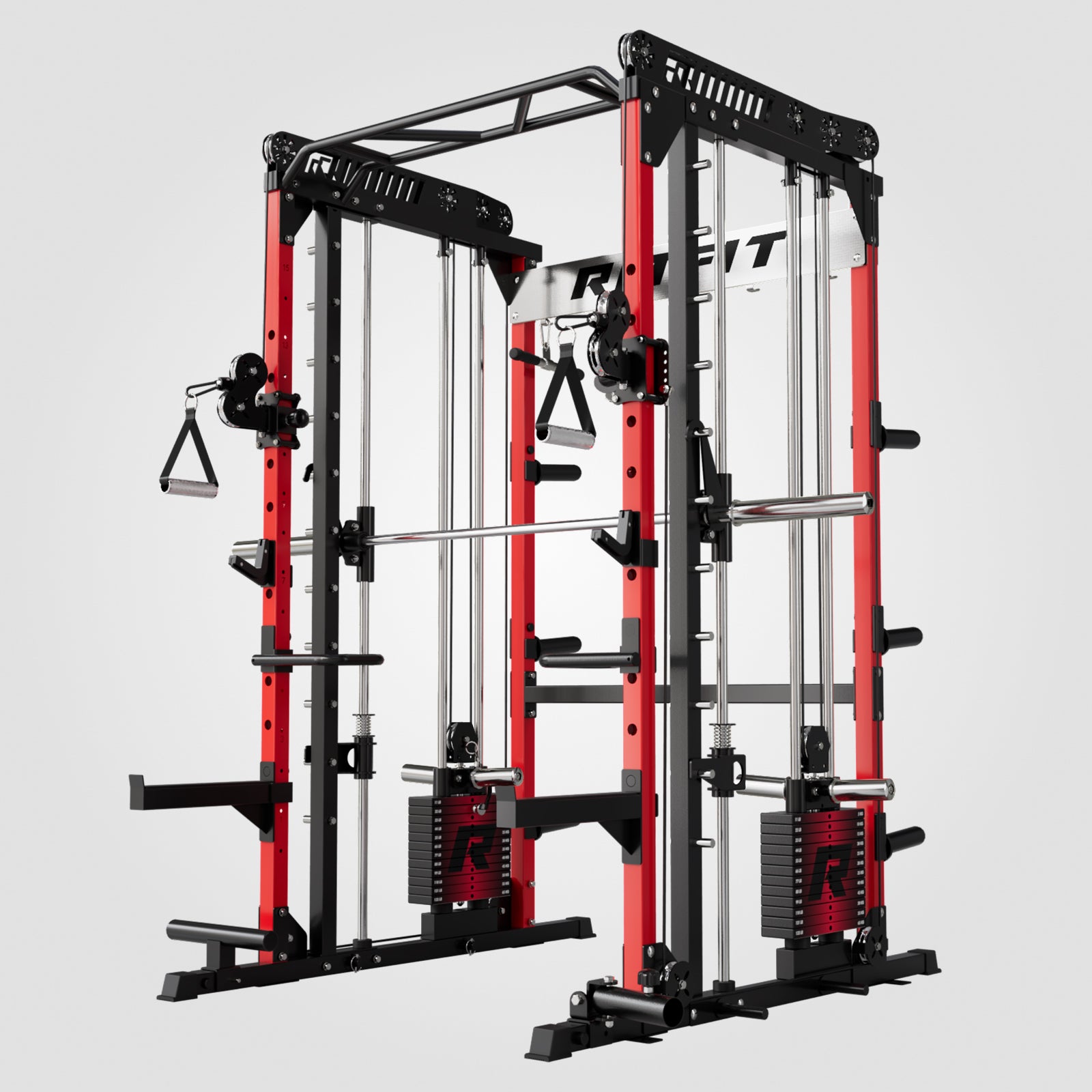
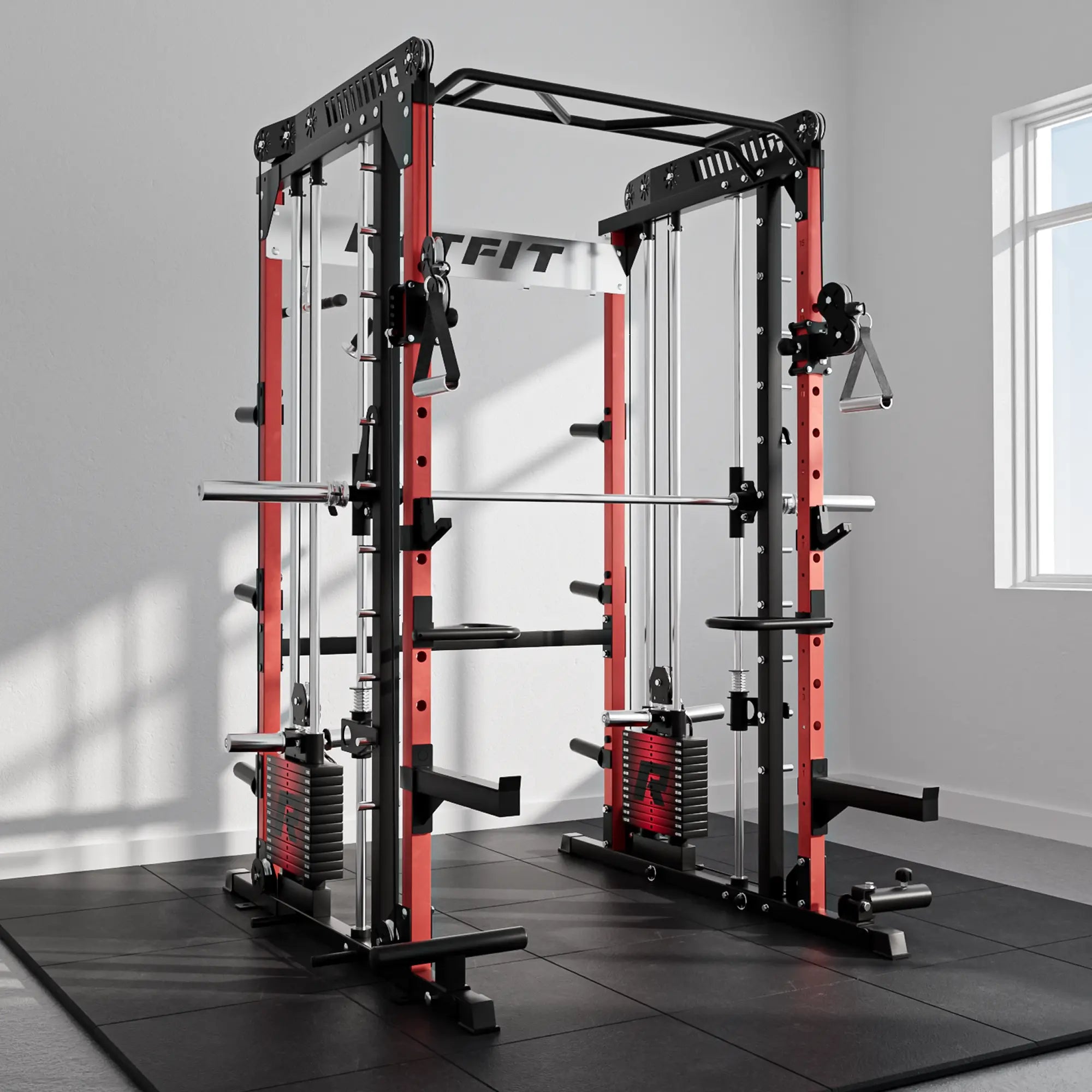
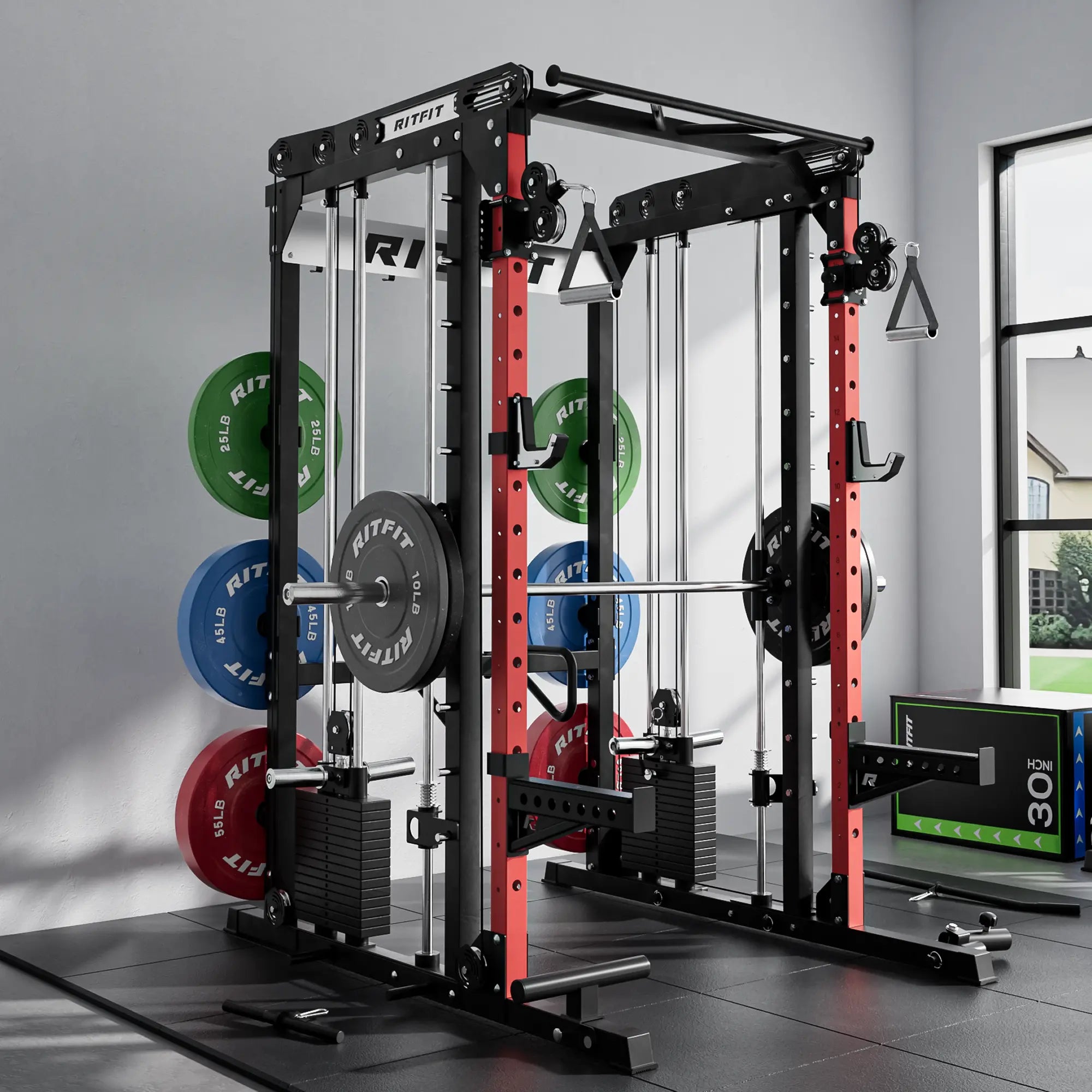
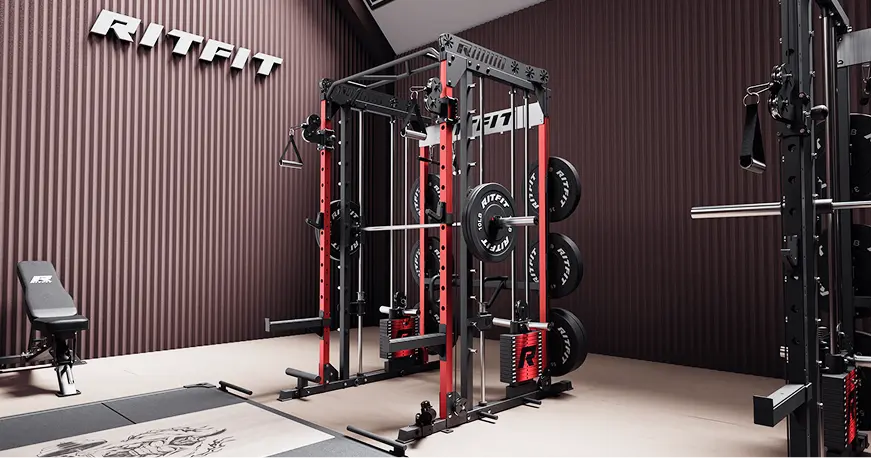
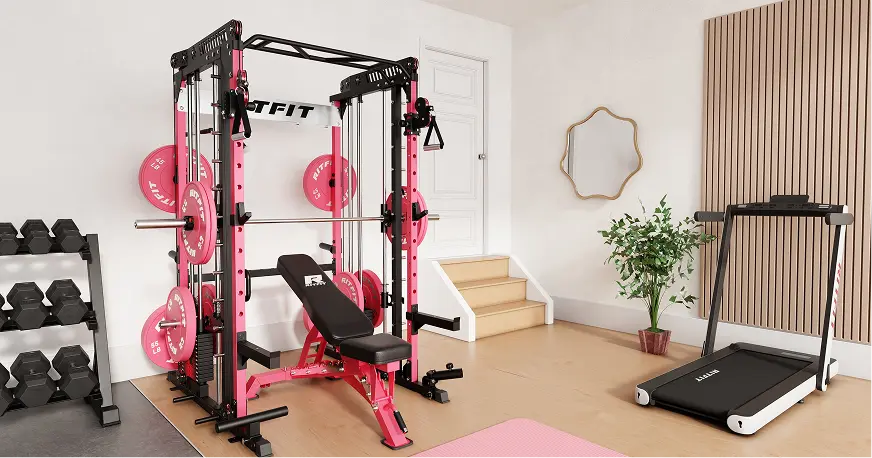
RitFit lists the P9 as a modular power cage that combines the 3D Smith machine with an adjustable dual cable system, and the RitFit P9 puts that guided bar at the center of the station. The shrimp squat borrows the bar for balance while the working leg keeps every ounce of the work.
- Versatility: One rack covers shrimp squats, bilateral Smith squats, and cable accessory work on a single footprint, which suits garage gyms where one station has to do everything.
- Balance support: The guided bar path covers the hardest part of the shrimp squat while your legs build the strength and control.
- Room to grow: When bodyweight shrimp squats get easy, the cage and bar hold the external load that keeps the movement progressing.
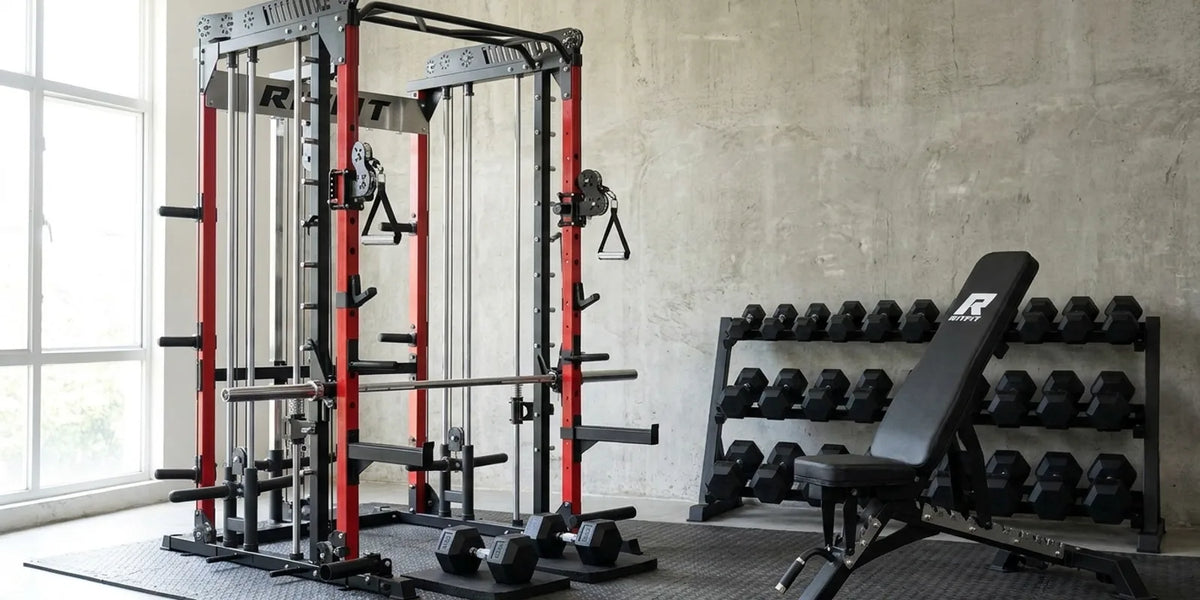
If you want a simpler starting point, the M1 Multi-Functional Home Gym Smith Machine supports the same balance-assisted shrimp squat work in an all-in-one package.
FAQs About Shrimp Squats on a Smith Machine
Can you do shrimp squats on a Smith machine?
Yes, the Smith machine is one of the best places to learn shrimp squats because its guided bar gives you adjustable hand support while the free knee folds behind you. Set the bar at hip height, use light hand pressure for balance, and keep the working leg doing all the lifting.
What is the difference between a shrimp squat and a pistol squat?
A pistol squat extends the free leg straight in front of you, while a shrimp squat folds that knee behind you and often holds the ankle. The shrimp demands more knee flexion and quad strength and less hamstring flexibility than the pistol, so the two feel very different even though both are single-leg squats.
What muscles do shrimp squats work?
Shrimp squats are quad-dominant because the working leg bends deeply under load. The glutes drive you out of the bottom, the hamstrings and adductors stabilize the knee, the calves control ankle balance on the standing foot, and the core keeps your torso upright through the whole range of motion.
How high should the Smith machine bar be for shrimp squats?
Set the bar around hip height so a light hand rest gives balance without letting you haul yourself up. The right notch is the one where your fingertips touch the bar at the top of the squat while your torso stays upright, and you can lower the bar as your balance improves.
Should my knee touch the floor on a shrimp squat?
A light tap of the back knee on the floor is fine and gives you a clear depth target, but never bounce it off the ground. If your hip mobility is limited, stop just short of the floor, keep tension in the working leg, and build depth gradually over several weeks.
Are shrimp squats harder than Bulgarian split squats?
For most lifters, yes. The Bulgarian split squat keeps the rear foot supported on a bench, while the shrimp squat balances on one leg with the rear knee folding behind you. Trainers often treat the shrimp as the next step after Bulgarian split squats feel comfortable for sets of five to eight reps.
How often should I train shrimp squats?
Two focused sessions per week is enough for most people learning the movement. Treat each session as skill practice with low fatigue, stop the set when balance breaks down before strength does, and leave at least two recovery days between sessions since the working knee and ankle take a real beating.
Conclusion
Shrimp squats on a Smith machine are a legitimate way to earn one of the hardest bodyweight leg exercises without months of balance failures. Own each level, keep the rear leg passive, and let the bar fade out of the movement as control improves.
Start this week with bench-supported sets, film one working set to check your torso angle, and stack clean reps before load. When the shrimp squat is yours, browse the RitFit discount guide for the next home gym upgrade.
Disclaimer
This article is general training information, not medical advice, diagnosis, or treatment for any condition. Consult a qualified physician or physical therapist before starting shrimp squats if you have knee, hip, or ankle issues, and stop any exercise that causes sharp pain.
References
1. Richards J, Thewlis D, Selfe J, Cunningham A, Hayes C. A biomechanical investigation of a single-limb squat: implications for lower extremity rehabilitation exercise. J Athl Train. 2008;43(5):477-82. doi:10.4085/1062-6050-43.5.477. PMCID: PMC2547867
2. Straub RK, Powers CM. A Biomechanical Review of the Squat Exercise: Implications for Clinical Practice. Int J Sports Phys Ther. 2024;19(4):490-501. doi:10.26603/001c.94600. PMCID: PMC10987311
3. Zwerver J, Bredeweg SW, Hof AL. Biomechanical analysis of the single-leg decline squat. Br J Sports Med. 2007;41(4):264-8; discussion 268. doi:10.1136/bjsm.2006.032482. PMCID: PMC2658963