








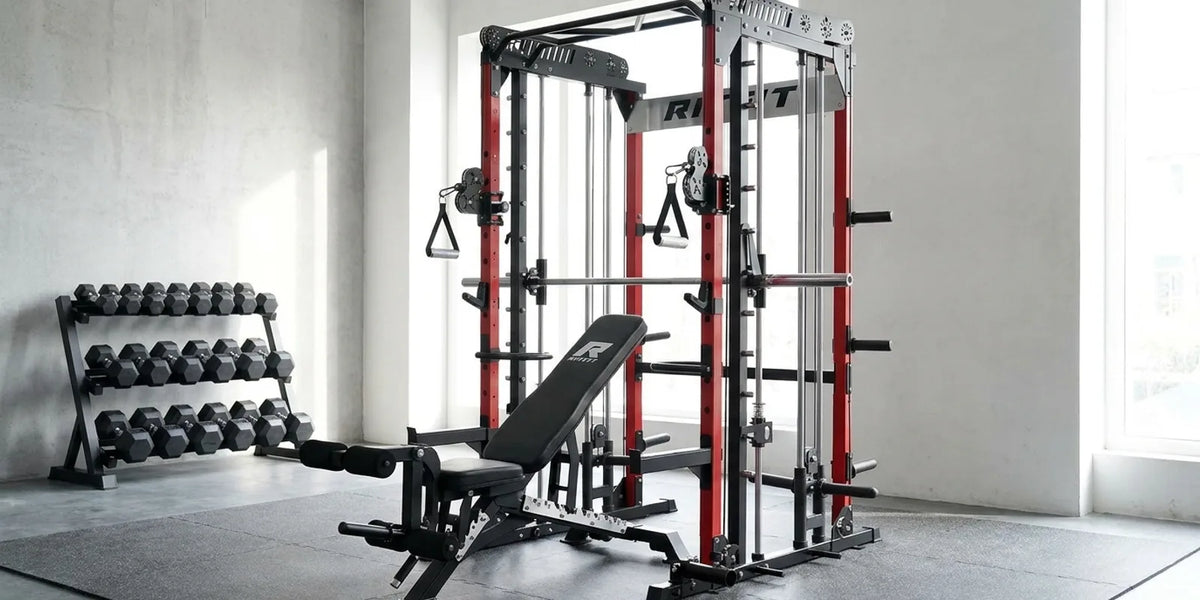
A sissy squat on a Smith machine is a quad isolation exercise that needs no sissy stand. The locked bar holds your hips in place while you lean back and drive the knees forward, leaving the quadriceps to do the work.
This guide walks through bar setup, step-by-step sissy squat form, muscles worked, load selection, and weekly programming. It also covers the mistakes that steal quad work and the knee signals that mean it is time to stop.
Quick Answer: The Smith machine sissy squat is performed by locking the bar at hip height, bracing it across the front of the hips, and leaning back while the knees travel forward over the toes. The fixed bar path removes balance demands and isolates the quads, so light loads with slow reps keep the movement knee friendly.
Key Takeaways
- Bar Lock Height: Lock the bar at hip height so the hips stay braced through the entire lean-back range.
- Muscles Worked: The quadriceps are the prime movers, while the calves and core stabilize and the glutes stay quiet.
- Loading Rule: Master bodyweight reps first, then add the empty bar, and progress only when every rep stays smooth.
- Programming: Two to four sets of six to ten slow reps, once or twice a week at the end of leg day.
- Stop Signals: Sharp pain, swelling, or lingering knee ache means stop the set and regroup with a lighter variation.
Understand What the Lean-Back Squat Trains
The Smith machine sissy squat is a quad isolation movement that loads the quadriceps through deep knee flexion while the hips stay extended. That position makes it a natural home gym leg day finisher, and biomechanics research maps exactly how the knee demand works. Calves, core, and the front of the lower legs brace the position.
The quadriceps extend the knee, and this movement keeps them under tension from the bottom stretch to the top. Because the hips never hinge, the glutes and hamstrings stay secondary and the quads finish the set first.
- Quadriceps: the prime movers that extend the knee through the full range of motion.
- Calves and tibialis anterior: stabilize the ankle as the knees travel forward.
- Core and hip flexors: hold the torso and hips as one rigid line during the lean-back squat.
- Glutes and hamstrings: assist lightly because the hips stay extended instead of hinging.
Squatting with a more upright trunk increases the knee flexion moment while decreasing the hip flexion moment, and a 2024 review maps the balance point at a trunk-tibia angle of -8 degrees with a 1.0 hip to knee demand ratio[1]. Push the tibia about 10 degrees past the trunk and the squat takes on a knee extensor bias, which is exactly the position a lean-back squat creates.
Electromyography work shows lower-extremity muscle activity changes with squat style[2], and knee flexion angle with ground conditions alters activation in the squat position[3]. In practice, foot stance and depth decide how hard the quads work.
Set the Bar to Hip Height and Lock It
The Smith machine sissy squat starts with the bar locked at roughly hip height so the hips brace against it through the whole lean-back. This hip-height setup works as a sissy squat without a stand and suits any home gym with a fixed bar path. Hook position varies with leg length, so test empty reps before adding load.
- Step 1: Set the lock height. Position the bar at hip height on the uprights, and the exact hook depends on leg length and the machine spacing.
- Step 2: Take your stance. Stand facing away from the bar with feet at shoulder width and the toes turned slightly out.
- Step 3: Brace against the bar. Rest the bar across the front of the hips and hold it lightly with both hands.
- Step 4: Unrack and settle. Stand tall, keep the ribs down, and confirm the bar sits on the hips rather than the lower spine.
Two machine details decide the feel of this setup. Bar lock height sets where the hips brace, and guide rod spacing decides how wide the stance can get before the frame gets in the way.
The RitFit M1 PRO smith machine is a natural fit here because its upright lock points let short and tall lifters pin the bar exactly at hip height. The same hip-height anchor carries over to the multifunctional smith machine and the M3 power rack with cable crossover, all part of the Smith machine collection.
Whatever machine you use, the bar must sit on the front of the hips. A bar that creeps toward the lower spine changes both the movement and the comfort of it.
"I love Smith machine front squats. I do them with a medium stance and my toes pointed outward. By doing so, I'm really trying to focus on the outer sweep. I do these very deep, as deep as I can go. The Smith machine allows you to position yourself underneath and take the glutes and hips out of it and really focus on your quads without worrying about balancing."
Jay Cutler, Four-time Mr. Olympia, Cutler Nutrition, Jay Cutler Answers 10 Questions About His Quad Training
Run the Sissy Squat Rep by Rep
Correct sissy squat form on a Smith machine keeps the hips locked under the bar while the knees travel forward and the torso leans back as one unit. The descent is controlled and the drive up comes from the quads. Every rep should look like the last one, whether you train in a big gym or a one-rack home gym.
- Step 1: Lean back as one piece. Keep the hips pinned to the bar and let the torso and thighs move together.
- Step 2: Send the knees forward. Bend the knees while they travel over the toes and the heels stay light.
- Step 3: Reach your depth. Lower until the knees reach a comfortable flexion, typically well past the depth of a parallel squat.
- Step 4: Drive up with the quads. Extend the knees smoothly and stop just short of a hard lockout.
Own the eccentric on the way down and pause for a beat at the bottom. If the bar slips toward the lower spine, reset instead of muscling through the set.
Correct the Common Mistakes That Steal Quad Work
Common mistakes in the Smith machine sissy squat come from letting the hips drift, rushing the depth, and loading before the knees are ready. Each one shifts work away from the quads. Small fixes keep the tension where it belongs on leg day.
- Hips drifting forward: the moment the hips leave the bar, the quads lose tension and the lower back takes over.
- Bouncing out of the bottom: rebound reps cut the eccentric short and irritate the knees more than controlled reps do.
- Hard knee lockout: finishing with a snap at the top jolts the joints and adds nothing to quad growth.
- Arm pulling: hauling on the bar turns a leg movement into an arm movement, so keep the hands a light guide.
- Adding load too early: the lean-back position punishes ego loading, and bodyweight reps build the range first.
When to Stop for Knee Pain
Mild quad burn is normal and part of the training effect. Sharp pain in the knee is a stop sign, and the next section covers what to do about it.
Choose Your Starting Weight and Progress
The right starting load for a Smith machine sissy squat is bodyweight alone, mastered for a few weeks before any plate goes on the bar. Most home gym lifters end up using less weight than they expect. Smooth reps beat heavy ones every time.
- Stage 1, bodyweight: two to four sets of six to ten reps until balance and depth feel automatic.
- Stage 2, empty bar: the bar already adds a fixed load, so treat it like a new exercise for the first sessions.
- Stage 3, small plates: add the smallest plates available and keep the reps in the six to ten range.
If you are building the whole setup at once, the M1 smith machine home gym package and the BPC06 all-in-one smith machine home gym package bundle the machine with the plates and bench that cover this movement and the rest of leg day.
"Super fast shipping! Awesome quality machine! Definitely requires two people to put together it's very well built and heavy! Didn't take long to put together but labeling each piece would be helpful for newbies. Loving this machine so far!!"
Betsy W. Verified Buyer, RitFit BUFFALO Smith Machine Home Gym Package with Lat Pull Down and Cable Crossover
When to Add More Weight
Add load only when every rep stays smooth through the full range of motion and no knee ache lingers. If the last set slows down or the form bends, the weight is already too much.
Program It Into Your Leg Day
The sissy squat works best as a quad finisher near the end of leg day, for two to four sets of six to ten reps once or twice a week. Heavy squats come first while the legs are fresh. The finisher then adds quadriceps hypertrophy volume without demanding much setup.
Pair the movement with a compound squat earlier in the session and the pair covers both heavy loading and quad isolation. If you train legs twice a week, place the sissy squat in only one of the sessions at first.
Training research in recreationally trained women has compared squat variations for strength and quadriceps hypertrophy adaptations[4]. The practical read is simple, variation supports growth, but the sissy squat is an accessory rather than the main lift.
Leave at least two days between hard quad sessions and cut the volume if the knees feel cranky. Sets and reps here are training parameters to adjust, not rules carved in stone.
For the standard barbell pattern that anchors the first half of leg day, follow the Smith machine squat form guide before you load the bar.
Swap the Movement When Your Knees Object
When knee discomfort shows up, swap the sissy squat for quad movements that keep the knees happier, such as a hack squat, a leg press, or a split squat. Stop if you feel sharp pain or swelling. Home gym lifters have solid machine options for exactly this situation.
The lean-back squat puts the knees in deep flexion on purpose, which is productive but demanding. Scaling down or swapping keeps the quad stimulus while the knees rebuild their tolerance.
- Hack squat and leg press: the 3-in-1 leg press and hack squat machine and the Gazelle Pro leg press and hack squat machine load the quads with a supported back.
- Split squats: a dumbbell or barbell split squat trains one leg at a time with less deep knee flexion.
- Leg extension: an isolation option that keeps tension on the quads through a shorter range of motion.
If you train at home without a sissy stand, the sissy squat alternatives without a stand guide lists options that fit a small garage gym. Pick the variation that keeps reps pain free and build back gradually.
FAQs About Sissy Squats on a Smith Machine
Can you do a sissy squat on a Smith machine?
Yes. The Smith machine sissy squat works well because the fixed bar anchors your hips at a set height while you lean back and drive the knees forward. Lock the bar around hip height, keep the load light, and treat the movement as a quad finisher rather than a max strength lift.
Where should the bar be for a Smith machine sissy squat?
Lock the bar at roughly hip height so it sits across the front of your hips and holds them in place as you lean back. Exact hook position varies with leg length, so test one slow rep before adding any load. The bar should never press on your lower spine.
What muscles does the Smith machine sissy squat work?
The movement is a quad isolation exercise. The quadriceps do nearly all of the lifting as the knees extend, while the calves, core, and tibialis anterior stabilize the position. Glutes and hamstrings stay quiet because the hips stay extended instead of hinging.
Do you need a stand or bench for sissy squats?
No. A Smith machine lets you do the sissy squat without a stand because the locked bar holds your hips the way a sissy squat stand or ankle pad would. A bodyweight version also works at home using a door frame or a sturdy post for balance.
Is the sissy squat bad for your knees?
Not for healthy knees when you progress slowly. The deep knee flexion loads the knees more than a parallel squat, so start with bodyweight only, keep the range pain free, and stop if you feel sharp pain or swelling during or after a set.
How much weight should you use on a Smith machine sissy squat?
Start with bodyweight alone for the first few weeks, then add the empty bar or very small plates. The lift punishes ego loading, so most lifters stay in the two to four set range of six to ten controlled reps and add load only when every rep stays smooth.
How often should you do sissy squats on a Smith machine?
Once or twice a week works for most home gym lifters. Place the movement near the end of leg day as a quad finisher, leave at least two days between hard sessions, and cut the volume if your knees feel cranky the next day.
Conclusion
The sissy squat on a smith machine turns any fixed-bar rack into a quad isolation station, no stand required. Lock the bar at hip height, keep the load honest, and let slow reps do the work.
Start bodyweight, add load only when reps stay smooth, and pair the movement with heavy squats earlier in leg day. When you are ready to build the full setup, check the RitFit discount guide for current offers.
Disclaimer
This article is general fitness information and is not medical advice or a rehabilitation program. Stop any exercise that causes sharp pain and consult a qualified healthcare professional before training with existing knee injuries.
References
1. Straub RK, Powers CM. A Biomechanical Review of the Squat Exercise: Implications for Clinical Practice. Int J Sports Phys Ther. 2024;19(4):490-501. doi:10.26603/001c.94600. PMCID: PMC10987311
2. Nishiwaki GA, Urabe Y, Tanaka K. EMG Analysis of Lower Extremity Muscles in Three Different Squat Exercises. J Jpn Phys Ther Assoc. 2006;9(1):21-6. doi:10.1298/jjpta.9.21. PMCID: PMC4316497
3. Han D, Nam S, Song J, Lee W, Kang T. The effect of knee flexion angles and ground conditions on the muscle activation of the lower extremity in the squat position. J Phys Ther Sci. 2017;29(10):1852-1855. doi:10.1589/jpts.29.1852. PMCID: PMC5684026
4. Enes A, Oneda G, Leonel DF, et al. The effects of squat variations on strength and quadriceps hypertrophy adaptations in recreationally trained females. Eur J Sport Sci. 2024;24(1):6-15. doi:10.1002/ejsc.12042. PMCID: PMC11235860





