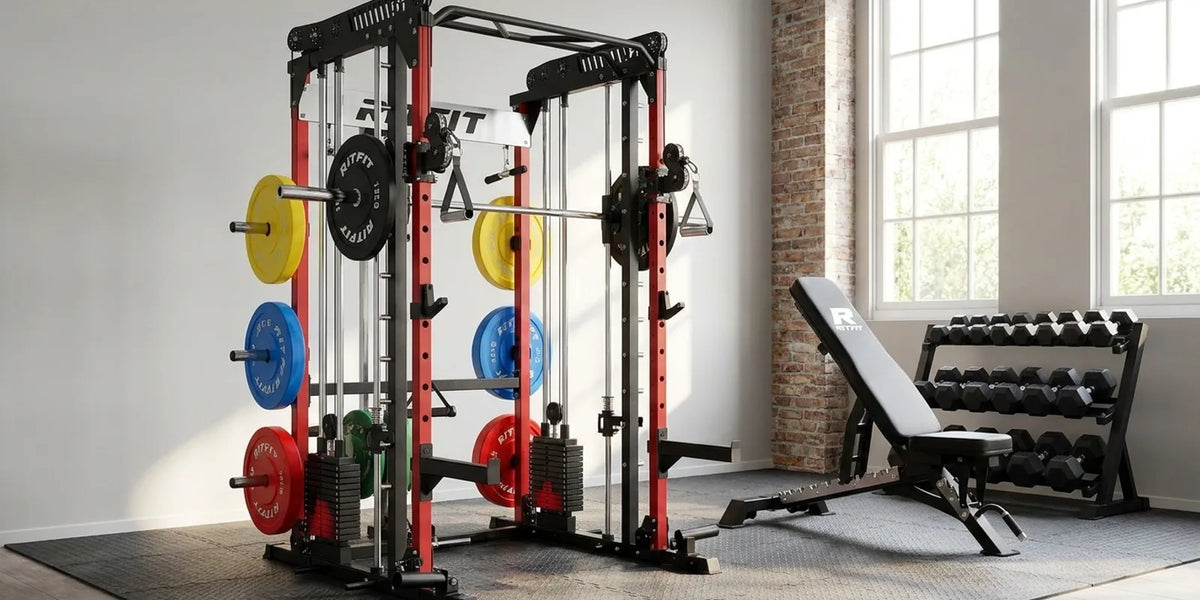
A selectorized machine is a strength machine built around a weight stack that you adjust with a selector pin. This guide explains how the pin, stack, cables, and pulleys work, compares selectorized machines with plate-loaded, cable, and functional trainer systems, and covers the space and budget questions home gym buyers ask.
You will learn what separates the machine types, who each design fits best, and which RitFit machines run on a selectorized weight stack. Use the comparison table to match the machine type to your training style before you buy.
Quick Answer: A selectorized machine is a weight stack machine where you set the load by inserting a selector pin into a pre-loaded stack of plates, so weight changes take seconds and the guided path keeps every repetition stable. It suits home gym owners who want safe solo training, fast transitions, and dozens of exercises from one compact footprint.
Key Takeaways
- Definition: A selectorized machine sets resistance with a pin on a pre-loaded weight stack, so load changes take seconds without loading plates.
- Mechanism: Guide rods, cables, and pulleys keep the stack moving on a fixed path of motion that lowers the balance demand of every set.
- Comparison: Plate-loaded machines win on expandable top load, selectorized machines win on speed and simplicity, and functional trainers win on movement variety.
- Evidence: Controlled comparisons show machine-based training builds muscle and strength at rates comparable to free-weight training.
- Planning: Check floor space, ceiling height, and stack capacity before buying, and leave room for a bench and full cable travel.
What Is a Selectorized Machine?
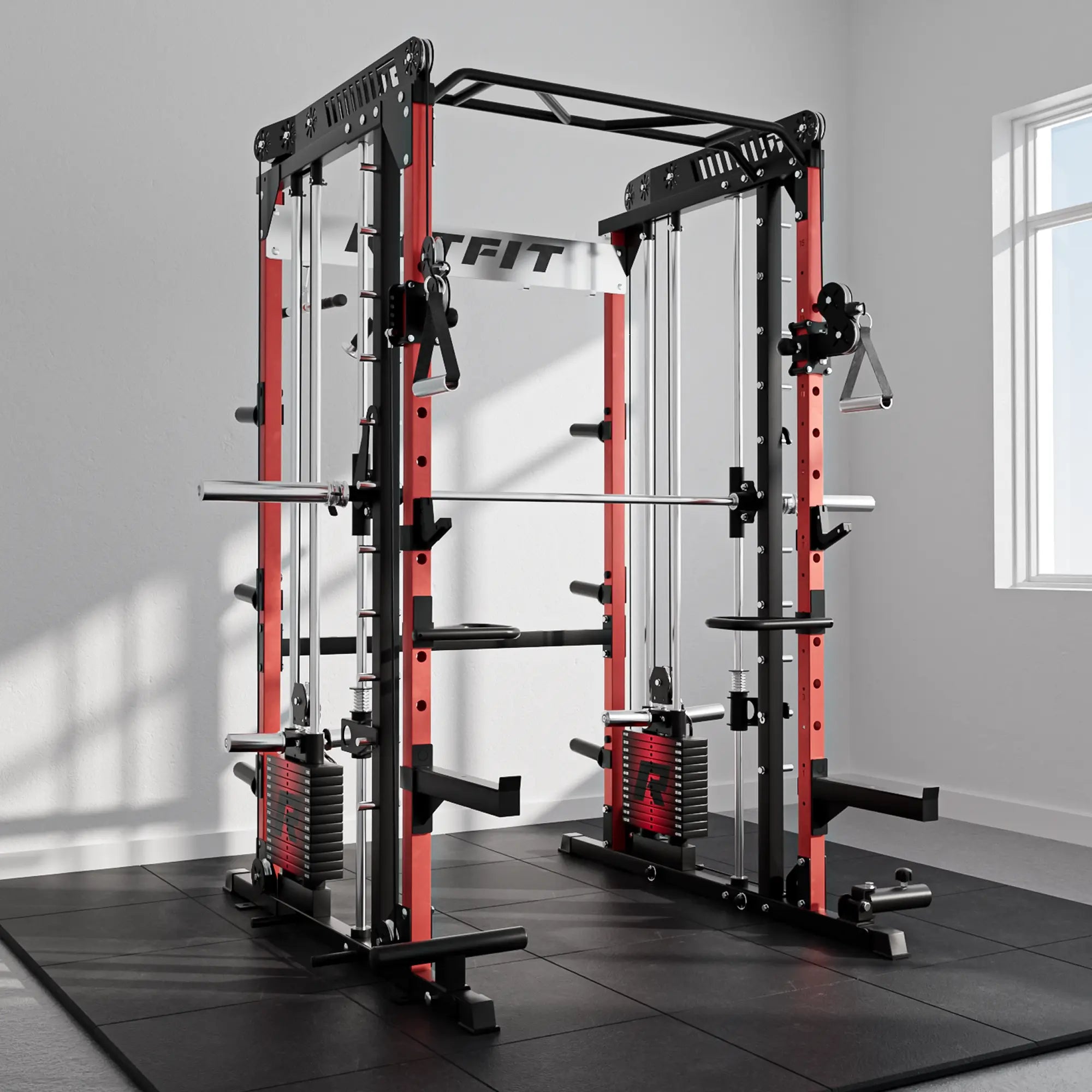
A selectorized machine is a strength training machine that gets its resistance from a pre-built weight stack instead of hand-loaded plates. You set the load with a selector pin, so weight changes take seconds. The design shows up in lat pulldowns, chest presses, leg machines, and all-in-one home gym systems where a numbered stack sits behind the movement arm.
- The weight stack: A column of identical plates rides on vertical guide rods, and each plate below the pin adds a fixed amount of resistance to the movement.
- The selector pin: The pin passes through the stack at the height you choose, so only the plates below it travel with the cable.
- The cable and pulley system: Cables route the stack force to a handle, bar, or pad, and pulley ratio settings change how the load feels.
- The guided movement path: The machine controls the direction of the load, which removes most of the balance demand compared with free weights.
This category sits alongside the other strength equipment families covered in our guide to the types of workout machines and equipment, and the rest of this article focuses on what makes the selectorized design different.
How Does a Selectorized Machine Work?
A selectorized machine works by lifting part of a weight stack through a cable and pulley network. The selector pin decides how much of the stack travels with each repetition, and moving it up or down changes the load in seconds.
- Load selection: Set the pin high for a light warm-up set, then drop it one hole for your working weight without leaving the machine.
- Guide rods and bushings: The stack slides on vertical guide rods with bushings or bearings, which keeps friction low and the feel even from the first rep to the last.
- Pulley ratio: A 2:1 pulley ratio is common on functional trainer style stacks, so the handle travels twice the distance of the stack and the load feels lighter and smoother.
- Increment control: Small top plates let you make fine load jumps, which matters for isolation work like cable lateral raises where big jumps break the set.
- Fixed path of motion: Press stations and leg machines lock the movement into a fixed path of motion, so the machine handles stability and you focus on effort.
Cable routing and stack height also decide how smooth the first inch of each pull feels, which is why bearing quality and pulley size separate budget stacks from commercial ones.
How Does a Selectorized Machine Compare to Plate-Loaded, Cable, and Functional Trainer Systems?
A selectorized machine changes load with a pin and keeps each exercise on a fixed path. Plate-loaded machines take hand-loaded plates, and functional trainers run two adjustable pulleys for the widest movement variety. The right choice depends on how much you value speed, movement freedom, and expandable load.
| Machine type | How you set the load | Movement path | Best suited for |
|---|---|---|---|
| Selectorized machine | Selector pin on a pre-built weight stack | Fixed, guided | Fast transitions, solo training, beginners |
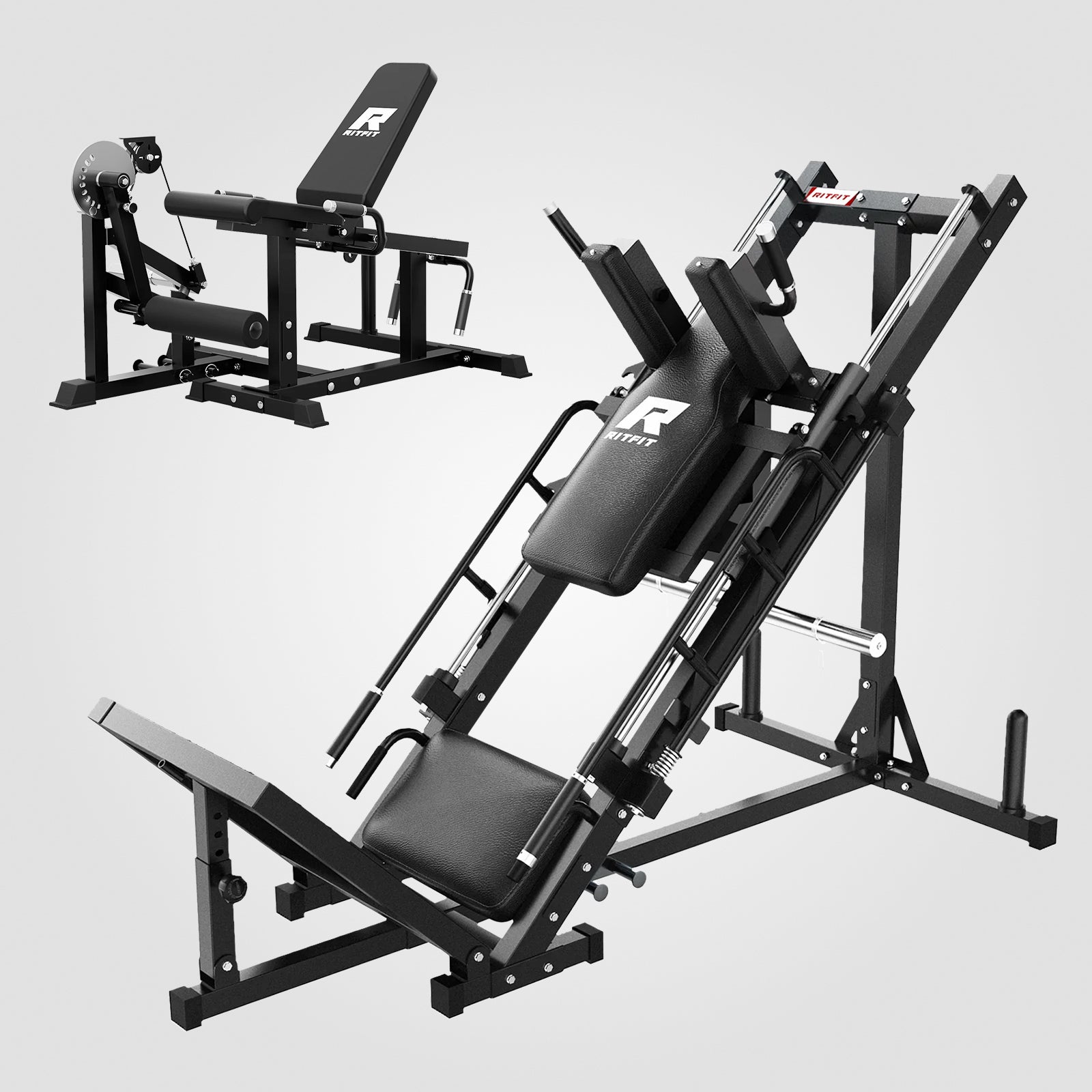
| Plate-loaded machine | Olympic plates loaded by hand | Fixed or guided | Heavy progressive overload, expandable top load |
| Cable machine | Stack or plates driving adjustable pulleys | Free, multi-angle | Isolation work, small footprints, constant tension |
| Functional trainer | Two weight stacks on dual adjustable pulleys | Free, widest angle variety | Movement variety, multi-angle cable work, shared gyms |
Comparison at the equipment type level. Individual machines vary by brand and model.
The practical difference shows up between sets. A selectorized stack changes load in the time it takes to stand up, while a plate-loaded machine needs plates carried and collared, so plate-loaded training suits lifters who already own plates and want unlimited top-end load.
Movement freedom is the other axis. Cable machines and functional trainers let the handle travel wherever your joints guide it.
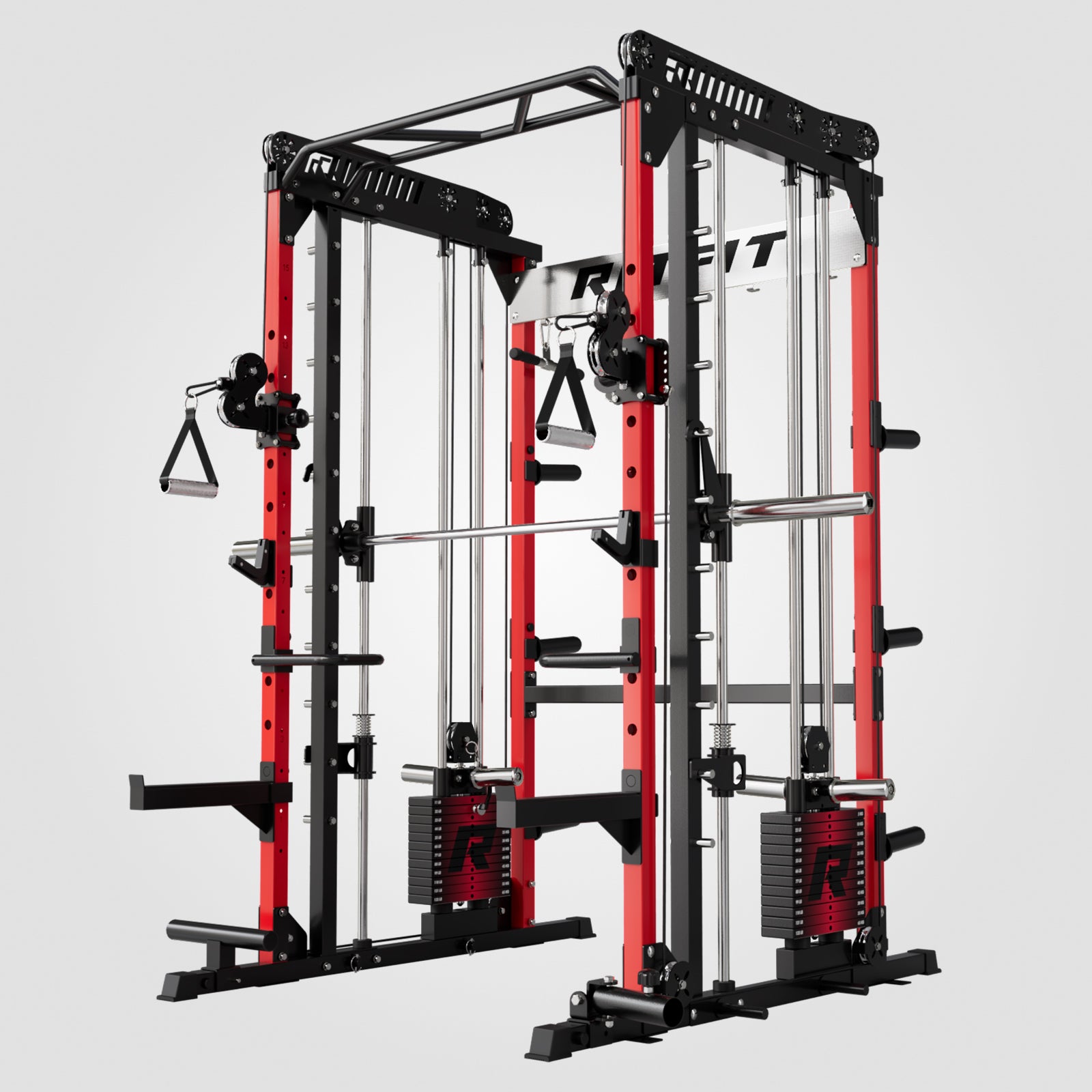
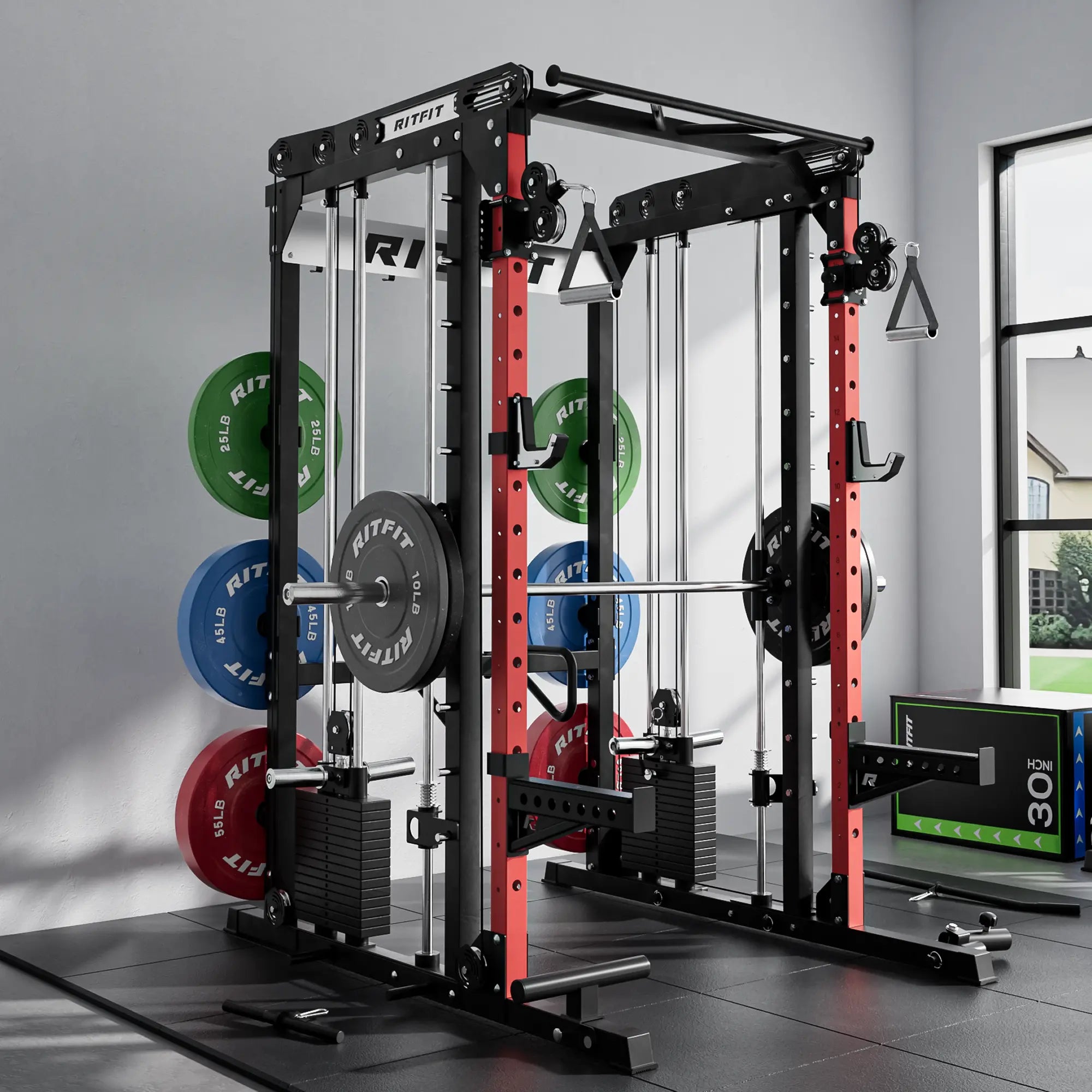
Selectorized press stations and Smith machines keep the load on rails, which cuts balance demand but fixes the groove. Hybrid all-in-one racks blend both worlds by pairing a guided bar with dual cable columns and weight stacks.
The trade-off between hand-loaded plates and pin-loaded stacks is exactly what our comparison of plate-loaded versus weight stack Smith machines walks through in detail.
"Really solid product especially for the price. Some minor bends in the smith bars that don't affect functionality much. Fit perfectly in my space when I flipped the pullup bar upside down. Just need to buy myself some more floor mats and get some attachment storage."
Mason N. Verified Buyer, RitFit M1 PRO Multi-Functional Smith Machine with Cable Crossover System and Squat Rack for Home Gym
What Are the Pros and Cons of Selectorized Machines?
Selectorized machines trade movement freedom for speed, safety, and simplicity, and most home gym buyers find that trade worthwhile for guided strength work. A 2023 systematic review and meta-analysis of 13 studies with 1016 participants found no significant differences in hypertrophy or strength outcomes between machine-based and free-weight training when the two were compared directly.[1]
- Fast weight changes: The pin changes the load in seconds, which keeps rest periods honest and makes drop sets practical when you train alone.
- Solo training safety: The stack stops where you set it and the guided path removes the balance demand, so you can push a set close to failure without a spotter.
- Low learning curve: Beginners get a productive session on day one because the machine teaches the movement while the stack handles stability.
- Compact handling: No plates to carry or store around the bench, and one stack serves many exercises through cable attachments.
- Fixed path of motion: The guided bar or handle dictates the groove, so lifters with unusual limb lengths may feel less natural positioning than on free weights.
- Training specificity: In one 8-week training study with 120 men, machine-based leg press training significantly increased leg press 1-repetition maximum while squat training also improved jump performance, so gains largely follow the movement you train.[2]
- Load ceiling: A stack has a fixed maximum, so very strong lifters may outgrow the top load on compact home models.
- Upfront cost: Selectorized stacks cost more to build than plate horns, so the entry price runs higher than a comparable plate-loaded unit.
Match the design to the job, guided stacks for fast, safe everyday training, plate-loaded or free-weight work for maximum load and movement freedom.
Who Should Use a Selectorized Machine?
A selectorized machine fits beginners, solo home gym users, and anyone who wants guided strength work with fast weight changes. The fixed path of motion and pin-based loading remove most of the setup and spotting problems that slow new lifters down.
- First-year beginners: The guided path teaches the movement while the stack handles stability, so new lifters train productively without learning bar control first.
- Solo home gym owners: Safety stops and the fixed groove make close-to-failure sets realistic without a training partner.
- Busy professionals and parents: Pin changes take seconds, so a full session fits a lunch break or the gap between school pickups.
- Shared family gyms: Households with mixed experience levels switch loads instantly, which keeps one machine useful for everyone.
- Returning lifters: The stable movement path and easy load control make rebuilding the training habit smoother and less intimidating.
A 10-week randomized trial in 36 novice men found similar gains in muscle size, strength, and functional ability whether participants trained on machines only, free weights only, or switched from machines to free weights, so equipment choice can follow personal preference.[3]
"I want people doing progressive resistance training two to three times per week with weights, machines or bands, because strong muscles create strong bones."
Susan Bukata, MD, Chair, Department of Orthopedic Surgery, UC San Diego, The Stair Habit Doctors Say Could Help Prevent Bone Loss
How Much Space and Budget Do You Need for a Selectorized Machine at Home?
A selectorized machine needs clear floor area for the frame, a bench, and full cable travel, plus enough ceiling height for overhead presses and lat pulldowns. Measure both before you buy, and budget for floor protection and any upgrades you add later.
- Measure the floor: Map the usable area of your garage, basement, or spare room, then compare it with the listed footprint and add working clearance around the machine.
- Check ceiling height: Overhead pressing and lat pulldowns need vertical room, so low basements favor compact stacks and shorter uprights.
- Plan for sharing: If several people will use the gym, fast pin changes matter more than raw maximum load.
- Think in upgrades: Stack add-ons and cable attachments extend one machine over time, so a modular platform grows with your training instead of being replaced.
- Value over price: Compare what one selectorized station replaces in floor space and training variety, since the alternative is often several plate-loaded units plus a plate tree.
If your ceiling is the limiting factor, verify the machine height against your room before ordering, since overhead work is where low ceilings bite first.
Which RitFit Machines Use a Selectorized Weight Stack?
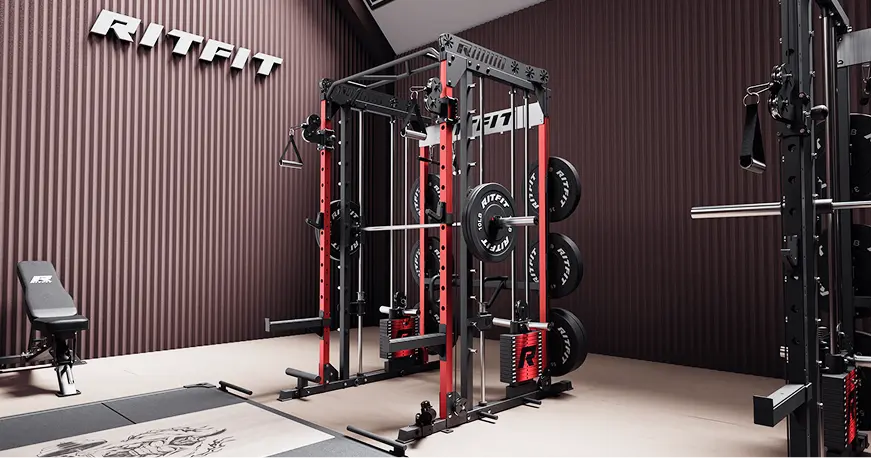
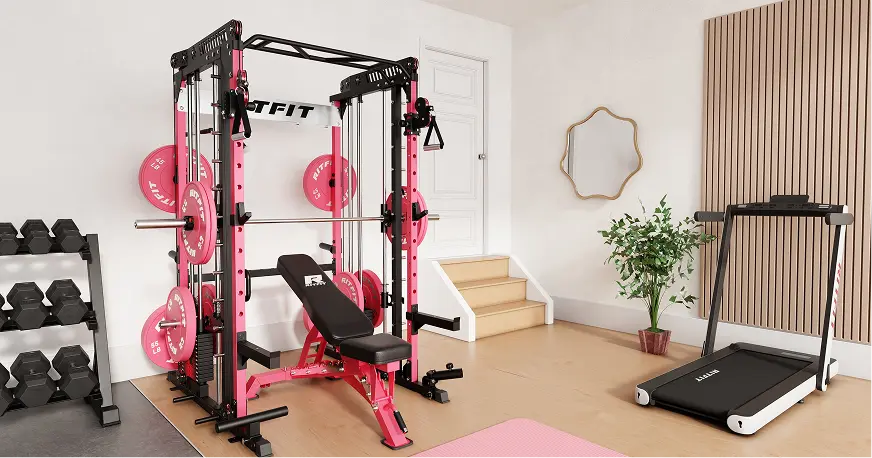
RitFit builds selectorized weight stack options across its Smith machine line, including a model that ships with dual stacks and others that accept stack add-ons later. Choosing between them comes down to whether you want stacks out of the box or a guided bar platform you can upgrade over time.
Choose the RitFit BPC06 for Stacks Out of the Box
The RitFit BPC06 all-in-one Smith machine pairs a guided bar with cable columns and dual 260 lb weight stacks, so beginners and shared home gyms can start training without buying plates.
"This machine is a solid all in one. The 1:1 ratio is nice, the pulleys feel smooth and the attachments that it comes with adds variety to the number of workouts you can do with it."
wisdom w. Verified Buyer, RitFit BPC06 All-In-One Smith Machine with Weight Stacks
Choose the RitFit M1 PRO for a Guided Bar and an Upgrade Path
The RitFit M1 PRO multi-functional Smith machine centers on a guided bar and a cable crossover system, and the optional weight stack set adds 264 lbs of selectorized resistance when you want to leave plate loading behind.
"Extremely happy with my M1 pro smith machine, the weight stacks is a must! So much to do especially for someone who is barely starting a fitness journey."
FRANCISCO, Verified Buyer, RitFit M1 PRO Smith Machine Weight Stack Home Gym Package
Choose the RitFit M2 and M2 3D for a Modular Platform
The RitFit M2 and M2 3D modular home gym platforms accept a weight stack set rated at 286 lbs, which gives growing lifters room to progress on cable work while the guided bar handles heavy presses and squats.
Each of these platforms also takes cable attachments for rows, pulldowns, and presses, and our picks for Smith machines with weight stack options compare the setups in more depth.
"Best Piece of equipment that I've ever owned. Very smooth!"
Jacob S. Verified Buyer, RitFit M2 Multi-Functional Modular Home Gym Smith Machine Tailored to All Fitness Levels
FAQs About Selectorized Machines
What is a selectorized machine?
A selectorized machine is a strength machine built around a pre-loaded weight stack, you choose the load by inserting a selector pin into the stack, which makes weight changes fast and precise without loading plates by hand. The stack travels on guide rods and connects to the handles through cables and pulleys, so the resistance path stays fixed and stable for every repetition.
What is the difference between a selectorized machine and a plate-loaded machine?
A selectorized machine sets the load with a pin on a fixed weight stack, while a plate-loaded machine takes Olympic plates that you load onto horns or a sled by hand. Selectorized machines change weight in seconds and suit quick transitions and shared home gyms, plate-loaded machines cost less to expand but need plate storage and more handling between sets.
Can you build muscle with a weight stack machine?
Yes, a 2023 pooled analysis of 13 studies with 1016 participants found no significant differences in muscle growth between machine-based and free-weight training when the two were compared directly. Progressive overload matters more than equipment type, so adding stack load over time on a selectorized machine builds muscle the same way added plates do on free weights.
Who should use a selectorized machine?
Selectorized machines suit beginners who want a guided fixed path, solo home gym users who train without a spotter, and busy lifters who want fast weight changes between sets. Older adults and returning lifters often prefer the stable movement path, and a 10-week randomized trial found novice men made similar strength gains on machines or free weights, so the choice can follow personal preference.
How much space does a selectorized machine need?
A selectorized machine needs clear floor space for the frame, a bench, and full cable travel, so measure your usable room area before buying. Compare the listed footprint of any machine with your floor plan, and check ceiling height for overhead presses and lat pulldowns, since many home gym machines are built for garages and basements with standard ceilings.
Are selectorized machines safe to use without a spotter?
Yes for most exercises, because the weight stack stops where you set the pin and the guided path keeps the load on track when you train close to fatigue. You can pick a load you control and many machines include safety stops and lockout points, though you should still keep good form and avoid loads you cannot handle safely.
How is a selectorized machine different from a functional trainer?
A functional trainer is a dual-cable system with two adjustable pulleys and weight stacks that trains movement patterns from many angles, while a single-stack selectorized machine usually locks each exercise into one fixed path. Many home gym systems combine both, pairing a guided Smith machine bar with selectorized stacks so you get fixed-path presses and squats plus adjustable cable work.
Conclusion
A selectorized machine gives home gym builders fast weight changes, a guided path of motion, and safe solo training from one compact station. Match the machine type to how you train, measure your space, and pick a stack capacity you can grow into.
When you are ready to build your setup, compare the RitFit selectorized options above and check current deals in the RitFit discount guide before you order.
Disclaimer
This article provides general fitness information and is not medical advice. Consult a qualified healthcare professional before starting a new training program, particularly if you have an injury or a health condition.
References
1. Haugen ME, Vårvik FT, Larsen S, Haugen AS, van den Tillaar R, Bjørnsen T. Effect of free-weight vs. machine-based strength training on maximal strength, hypertrophy and jump performance - a systematic review and meta-analysis. BMC Sports Sci Med Rehabil. 2023;15(1):103. doi:10.1186/s13102-023-00713-4. PMCID: PMC10426227
2. Wirth K, Keiner M, Hartmann H, Sander A, Mickel C. Effect of 8 weeks of free-weight and machine-based strength training on strength and power performance. J Hum Kinet. 2016;53:201-210. doi:10.1515/hukin-2016-0023. PMCID: PMC5260589
3. Aerenhouts D, D'Hondt E. Using Machines or Free Weights for Resistance Training in Novice Males? A Randomized Parallel Trial. Int J Environ Res Public Health. 2020;17(21). doi:10.3390/ijerph17217848. PMCID: PMC7662789