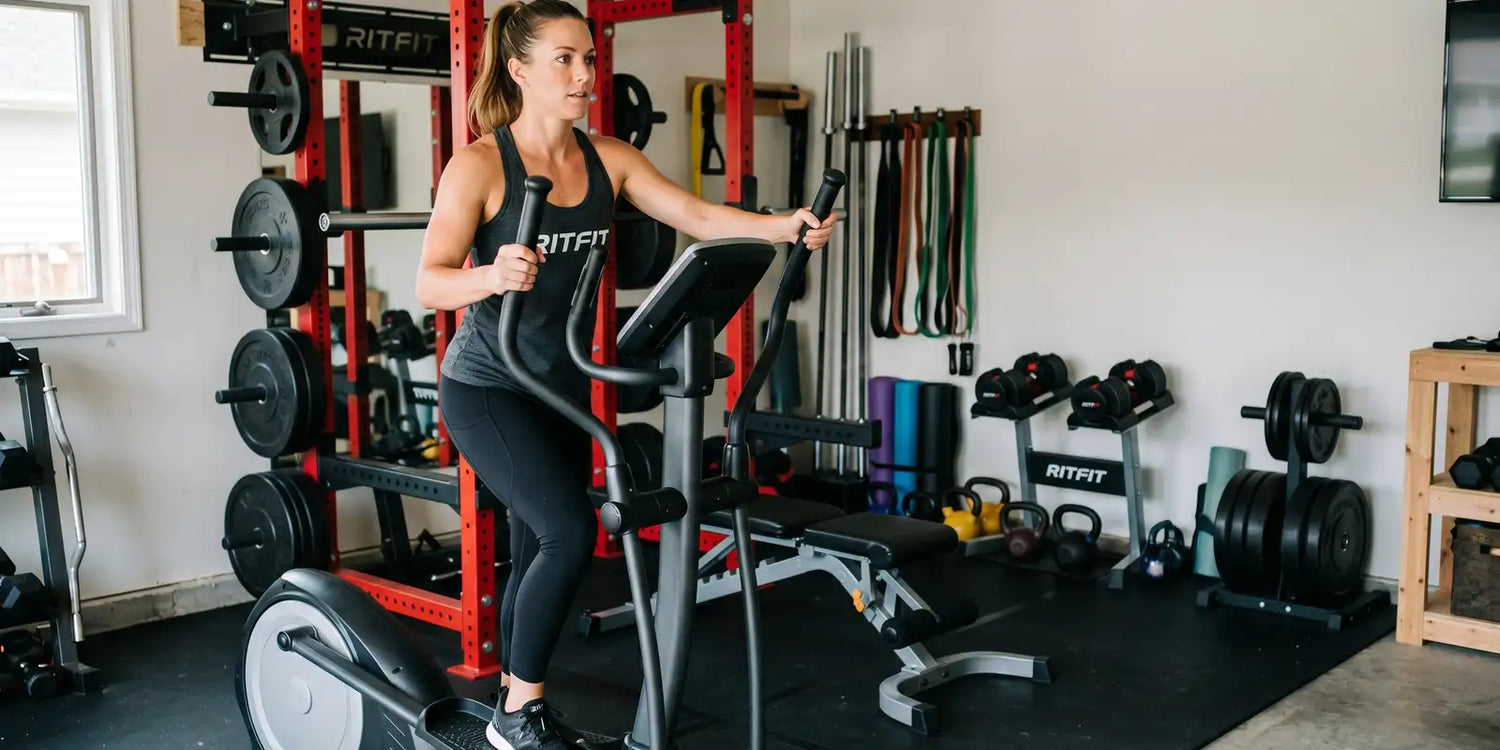
An elliptical workout is a low-impact cardio session performed on an elliptical machine, where your feet glide through a smooth oval path while moving handlebars work your upper body. This guide explains how the machine works, which muscles it trains, the real benefits, and how to start safely.
It is written for beginners and joint-conscious exercisers who want clear expectations before stepping on, plus a simple, effective way to build an elliptical routine at home or the gym.
Table of Contents
Key Takeaways
- Definition: An elliptical workout is low-impact cardio on a machine that combines moving pedals and handlebars for a full-body session.
- Muscles: It targets quads, glutes, hamstrings, and calves, plus chest, back, and arms when you actively use the handles.
- Joint-friendly: Your feet never leave the pedals, so it places less stress on knees, hips, and ankles than running.
- Calories: A moderate 30-minute session burns roughly 170 to 400 calories depending on body weight and intensity.
- Getting started: Beginners can start with 15 to 20 minutes at low resistance and progress with intervals, incline, and time.
What Is an Elliptical Machine?
An elliptical machine is a stationary cardio device that lets you stride in a smooth oval motion using foot pedals and, on most models, moving handlebars. It blends elements of a treadmill, stair climber, and cross-country skiing into one low-impact unit.
It is also called an elliptical trainer or cross-trainer, named for the oval path the flywheel keeps the pedals moving along.
- Foot pedals: Move in a continuous elliptical loop so your feet stay in contact throughout.
- Moving handlebars: Push and pull in sync with the legs to add upper-body work.
- Flywheel and resistance: Adjustable resistance, and often incline, let you change how hard the session feels.
Because of this versatility, an elliptical suits almost any fitness goal, from easy recovery cardio to harder interval training.
What Is an Elliptical Workout?
An elliptical workout is a cardio session where you power the gliding pedals and handlebars at a chosen resistance and pace to raise your heart rate. It can be steady-state, holding one comfortable effort, or interval-based, alternating harder bursts with recovery.
The defining feature is its low-impact feel, your feet never lift off the pedals, so the motion is fluid rather than pounding.
- Steady-state: A continuous, conversational pace, ideal for building base endurance.
- Interval style: Short high-effort surges followed by easier recovery, useful for fitness and time efficiency.
- Adjustable feel: Raising resistance or incline shifts effort and muscle emphasis without changing the smooth motion.
You can apply interval formats from broader cardio plans here, such as those in our best HIIT workouts for cardio or even a structured what a Tabata workout is protocol.
Which Muscles Does an Elliptical Work?
An elliptical works the major lower-body muscles while engaging the upper body and core when you use the moving handles. The legs do most of the work, but active arm involvement turns it into a true full-body cardio session.
In one trial of ten healthy adults, elliptical training produced greater quadriceps activity and greater quadriceps to hamstring coactivation than overground walking, treadmill walking, and stationary cycling[1].
Lower-body muscles
The pedal motion drives your quads, glutes, hamstrings, and calves, with higher incline shifting emphasis toward the glutes and hamstrings.
Upper-body muscles
Pushing and pulling the handlebars recruits your chest, back, shoulders, biceps, and triceps, though this work is optional if you let the arms rest.
Core and stabilizers
Your abdominal and back muscles stabilize your torso throughout, which supports posture and balance during the stride.
To round out lower-body training beyond cardio, see our guide to the best gym equipment for thighs.
What Are the Key Benefits of Elliptical Training?
The key benefits of elliptical training are low-impact, full-body cardio that is easy on the joints while still raising your heart rate. Because your feet stay on the pedals, it places less stress on knees, hips, and ankles than running.
A 12-week randomized controlled trial found that exercise training significantly reduced cardiometabolic risk in sedentary middle-aged adults, and the elliptical is commonly used as an endurance option within such combined programs[2].
- Joint-friendly: A smooth, weight-bearing motion that suits people managing knee, hip, or back discomfort.
- Full-body cardio: Optional arm work engages the upper body alongside the legs in one session.
- Bone support: You support your body weight while standing, so it counts as weight-bearing exercise.
- Scalable effort: Resistance and incline let you keep progressing as your fitness improves.
According to standard physical-activity guidelines cited by Cleveland Clinic, adults should aim for at least 150 minutes of moderate cardio per week, a target elliptical sessions help meet.
For joint-conscious or older exercisers, our overview of fitness accessories for seniors pairs well with low-impact machines.
How Many Calories Does an Elliptical Workout Burn?
An elliptical workout burns a meaningful number of calories that scales with your body weight, pace, and resistance. According to Cleveland Clinic, a 150-pound person doing a 30-minute moderate session burns about 170 calories, while higher intensities or heavier individuals can burn roughly 270 to 400 calories in 30 minutes.
A study comparing seven indoor cardio machines found that, in one trial of 30 recreationally active middle-aged men at high effort, the elliptical produced the third-highest energy expenditure and heart rate, behind the treadmill and stair climber[3].
- Body weight: Heavier exercisers burn more calories at the same effort.
- Intensity: Raising resistance, incline, or pace increases calorie burn.
- Active arms: Driving the handlebars recruits more muscle and lifts your heart rate.
To stack conditioning sessions efficiently, browse interval ideas in our HIIT routines for cardio equipment and the broader metcon workouts guide.
How Do You Do an Effective Elliptical Workout?
You do an effective elliptical workout by setting a low starting resistance, holding good upright posture, and building duration and intensity gradually. Beginners should start with 15 to 20 minutes at a steady, comfortable pace before adding intervals or incline.
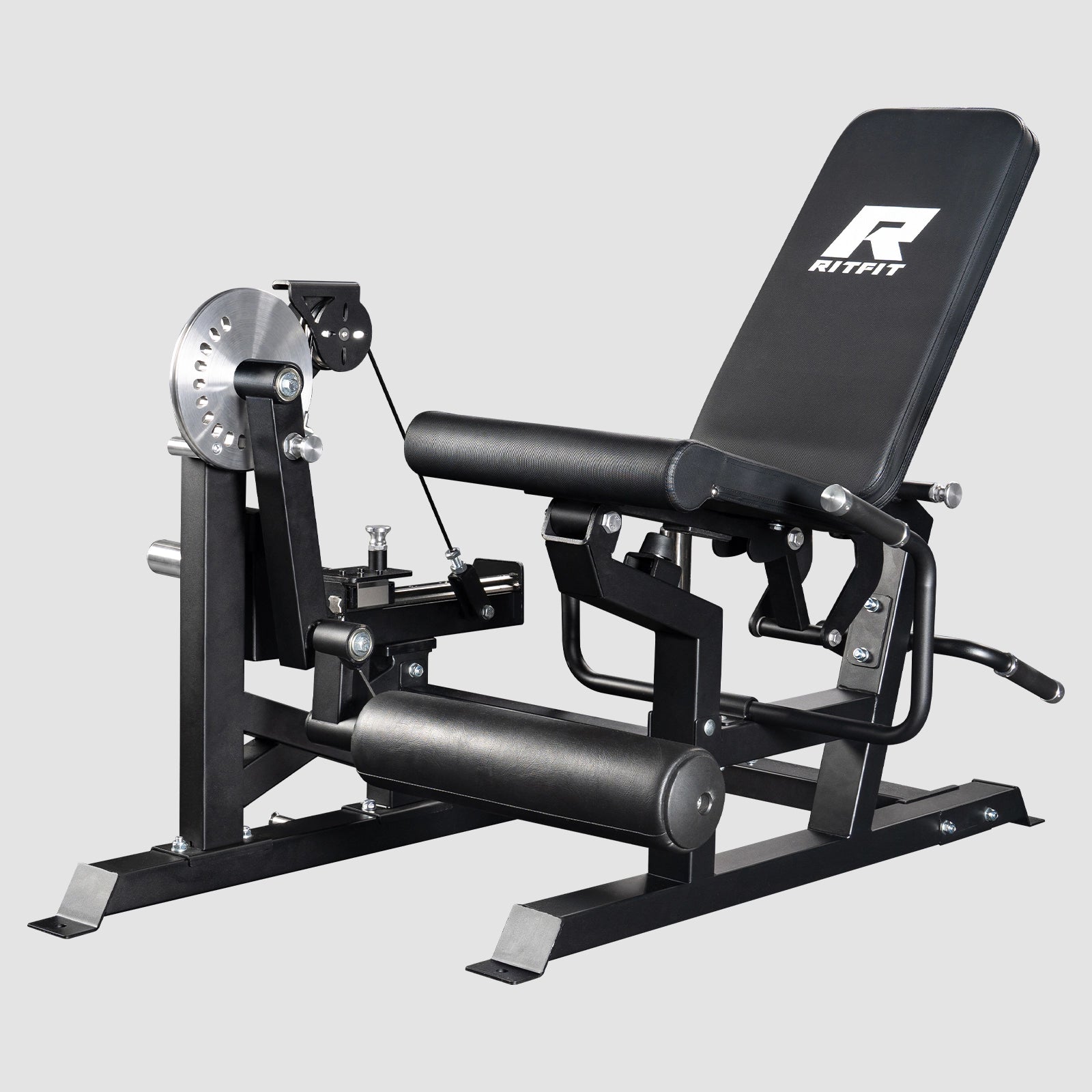
The video below demonstrates a multi-function lower-body machine and how to move smoothly through the stride.
Set resistance and incline
Begin at a zero or low incline with light resistance, then make small gradual increases in resistance, speed, and incline as you adapt.
Sample beginner interval
- Warm up: 5 minutes at an easy, steady pace.
- Work: 1 minute at higher resistance or faster cadence.
- Recover: 2 minutes at an easy pace, then repeat the cycle four to five times.
- Cool down: 5 minutes at a relaxed pace.
Frequency and progression
Aim for two to four sessions per week, increasing time first, then resistance or incline once a duration feels easy.
Common mistakes and when to stop
- Ghost riding: Letting momentum carry the pedals; instead push down and pull up actively through each stride.
- Leaning on the rails: Gripping the fixed bars for support reduces the workout, keep your torso tall.
- When to stop: Stop if you feel sharp joint pain, dizziness, or chest discomfort, and seek medical advice before continuing.
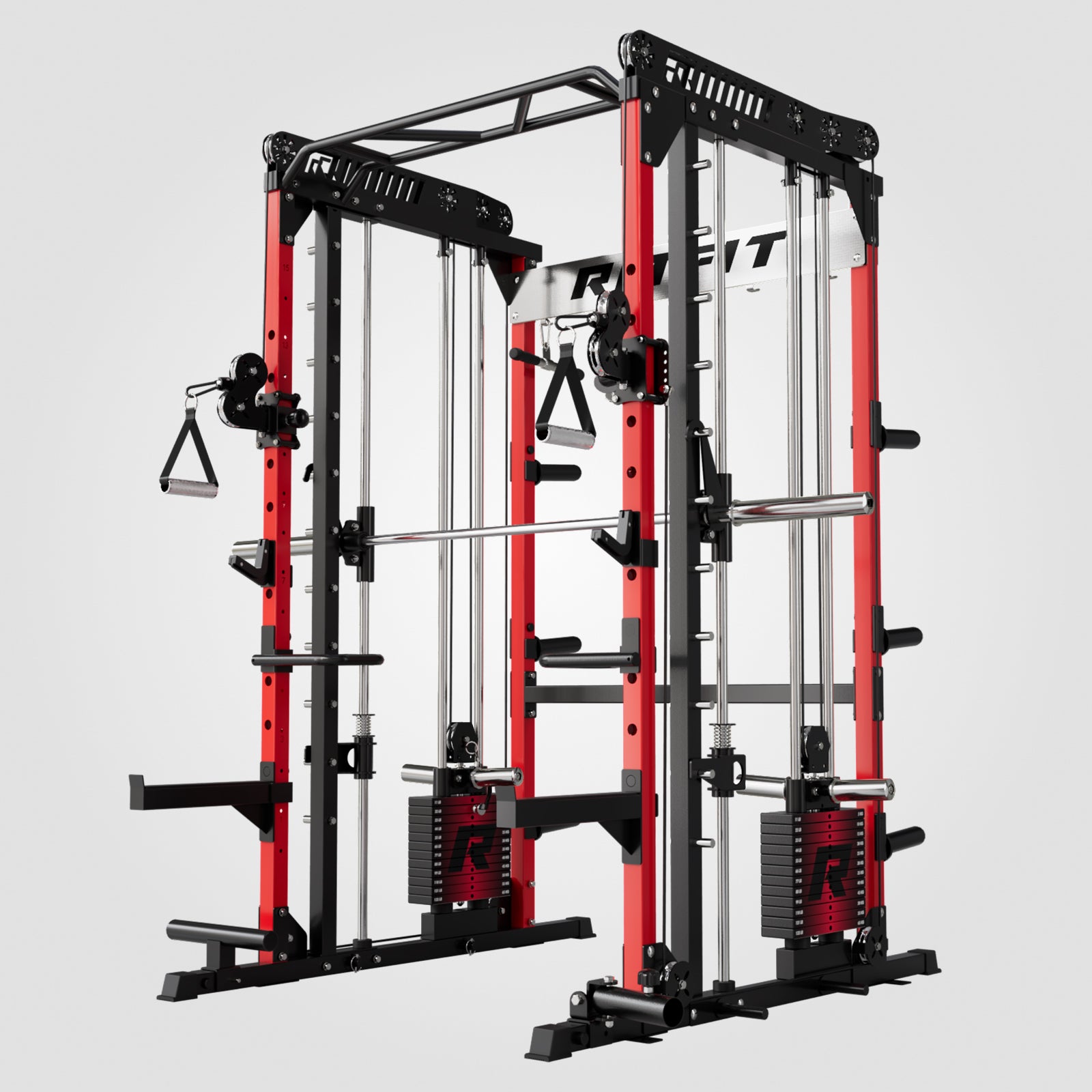
To complement cardio with strength, the RitFit M1 multi-functional home gym and our combo machine workouts help build a balanced routine.
Elliptical vs Treadmill: Which Is Right for You?
The right choice depends on your goals and joints, not on one machine being universally better. The treadmill tends to burn slightly more calories and fat at matched intensity, while the elliptical is lower impact and adds upper-body work.
Choose based on what your body and routine need most.
| Factor | Elliptical | Treadmill |
|---|---|---|
| Joint impact | Low, feet stay on pedals | Higher, repeated foot strike |
| Upper body | Engaged via moving handles | Minimal arm involvement |
| Calorie burn | High, slightly below treadmill | Often highest at matched effort |
| Best for | Sensitive joints, full-body cardio | Running goals, max calorie burn |
If you have knee, hip, or back discomfort, the elliptical is often the more comfortable steady-cardio option. To build a complete setup, explore our functional training equipment and CrossFit and conditioning equipment collections.
FAQs About Elliptical Workouts
Is the elliptical a good workout for beginners?
Yes. The elliptical is one of the most beginner-friendly cardio machines. Its smooth, low-impact gliding motion is easy on the joints, and you control the difficulty through resistance and incline. Start with 15 to 20 minutes at a steady, comfortable pace and gradually add time, resistance, or intervals as your fitness improves.
Does the elliptical help you lose belly fat?
An elliptical workout burns calories and supports a calorie deficit, which is what drives overall fat loss, but you cannot spot-reduce belly fat with any single machine. Combining regular elliptical cardio with a balanced diet and some strength training is the most effective approach for reducing total body fat over time.
How long should an elliptical workout be?
For general health, aim for sessions that add up to at least 150 minutes of moderate cardio per week, such as five 30-minute workouts. Beginners can start with 15 to 20 minutes and build up. Intervals or higher resistance let you get an effective session in less time when you are short on minutes.
Is the elliptical better than a treadmill?
Neither is universally better, it depends on your goals and joints. The treadmill generally burns slightly more calories and fat at matched intensity, while the elliptical is lower impact and adds upper-body work. If you have knee, hip, or back discomfort, the elliptical is often the more joint-friendly choice for steady cardio.
Which muscles does the elliptical work?
The elliptical primarily works your quads, glutes, hamstrings, and calves in the lower body, while your core stabilizes the movement. If your machine has moving handlebars, pushing and pulling also engages your chest, back, shoulders, biceps, and triceps, making it a true full-body cardio workout when used actively.
Conclusion
An elliptical workout offers smooth, low-impact, full-body cardio that suits beginners and anyone protecting their joints. It trains the legs, engages the arms and core through moving handles, and scales easily with resistance and incline.
Start with 15 to 20 minutes at an easy pace, focus on tall posture and active pedaling, then add intervals and time as you adapt. Pair it with strength work for a well-rounded routine.
Disclaimer
This article is for general educational purposes only and is not medical advice. Consult a qualified healthcare professional before starting a new exercise program, especially if you have an injury, joint condition, or other health concern.
References
1. Prosser LA, Stanley CJ, Norman TL, Park HS, Damiano DL. Comparison of elliptical training, stationary cycling, treadmill walking and overground walking. Gait Posture. 2011;33(2):244-250. https://pmc.ncbi.nlm.nih.gov/articles/PMC3299003/
2. Amaro-Gahete FJ, De-la-O A, Jurado-Fasoli L, Martinez-Tellez B, Ruiz JR, Castillo MJ. Exercise Training as a Treatment for Cardiometabolic Risk in Sedentary Adults: The FIT-AGEING Randomized Controlled Trial. J Clin Med. 2019;8(12):2097. https://pmc.ncbi.nlm.nih.gov/articles/PMC6947226/
3. Prieto-González P, Yagin FH. Energy expenditure, oxygen consumption, and heart rate while exercising on seven different indoor cardio machines at maximum and self-selected submaximal intensity. Front Sports Act Living. 2024;6:1313886. https://pmc.ncbi.nlm.nih.gov/articles/PMC10881809/