








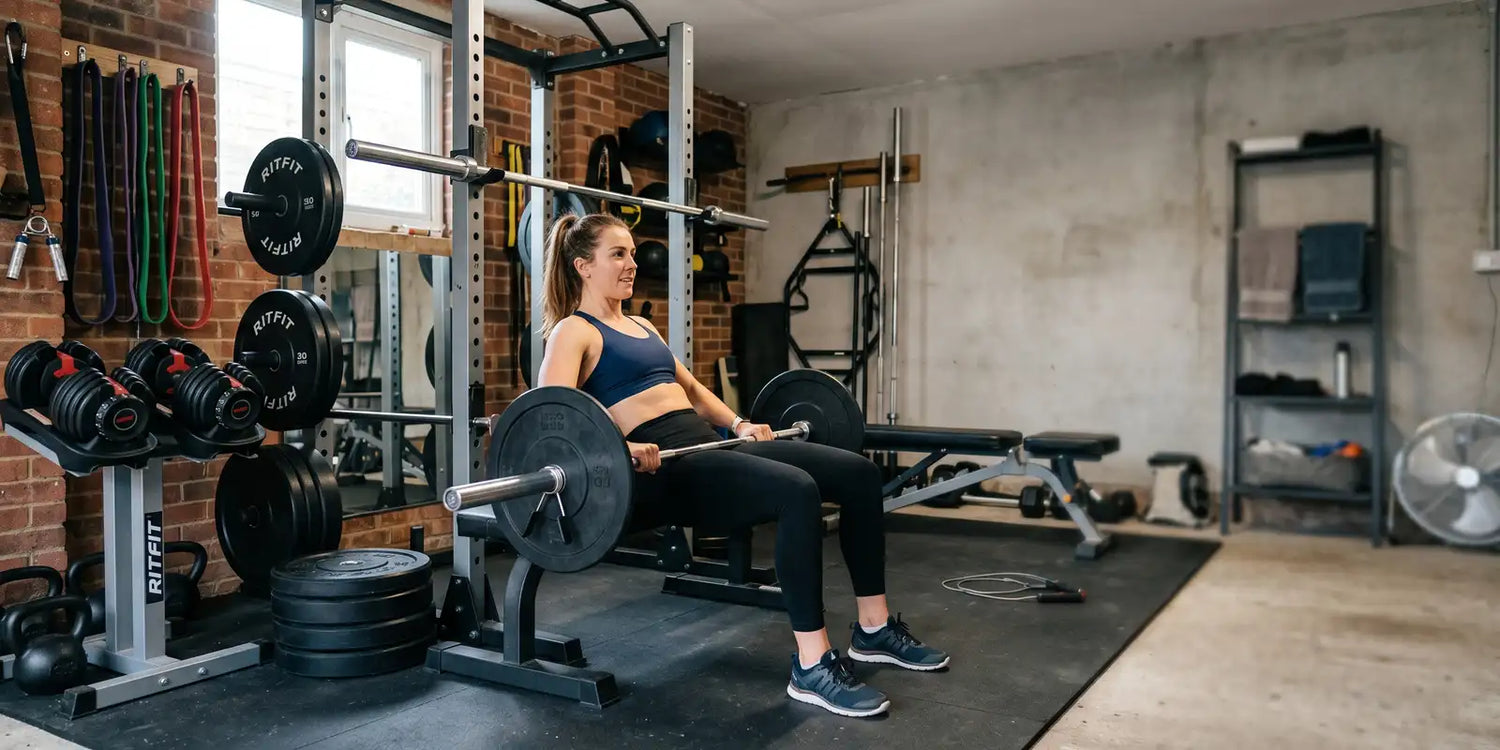
The workouts that make your booty bigger are loaded hip extension movements, led by hip thrusts, squats, deadlifts, lunges, and step-ups. Growth comes from training the gluteus maximus with progressive overload, not from spot tricks or quick fixes.
Beginners and intermediate lifters training at home or in the gym get exercise picks, set and rep ranges, progression rules, and the nutrition and recovery habits that turn training into visible size.
Quick Answer: The workouts that make your booty bigger are hip thrusts, squats, deadlifts, lunges, and step-ups, trained two to four times a week with 8 to 20 hard sets and steady progressive overload. Glute growth depends on adding challenge over time, not on any single move.
Key Takeaways
- Train the muscle: A bigger booty means a larger gluteus maximus, built through loaded hip extension and consistent progressive overload.
- Best movements: Hip thrusts, squats, deadlifts, lunges, and step-ups are the proven core of glute growth.
- Hip thrusts isolate, squats build broadly: Both grow glutes well, so most people should use both rather than pick one.
- Volume and progression matter most: Roughly 8 to 20 weekly sets, trained 2 to 4 times per week, with steady weight or rep increases.
- Fuel and rest: Enough protein, a small calorie surplus, and recovery days turn training into visible size.
What actually grows when your booty gets bigger?
When your booty gets bigger from training, the gluteus maximus is the muscle that grows, since it is the largest hip extensor and the main driver of glute shape. The gluteus medius and minimus add side roundness and stability.
A 2025 systematic review and meta analysis of 12 studies reported that resistance training produces a moderate effect on gluteus maximus hypertrophy, meaning glutes respond reliably to loaded hip extension over time.[1]
- Gluteus maximus: The big muscle that adds the most size and projection to the booty.
- Gluteus medius and minimus: Smaller side muscles that shape the upper curve and aid hip stability.
- Progressive overload: Gradually adding load or reps is the signal that drives the muscle to grow.
Glutes are not a difficult muscle group to grow. They answer to the same rules as any other muscle, so steady loading plus enough food and rest decide your result.
You cannot spot grow fat into a bigger booty, but you can build the muscle underneath it, which is what changes shape and size.
Which workouts make your booty bigger?
The workouts that make your booty bigger center on loaded hip extension movements, led by hip thrusts, squats, deadlifts, lunges, and step-ups. A systematic review of 16 studies found that step-up variations, deadlifts, hip thrust variations, lunges, and split squats all produce very high gluteus maximus activation above 60 percent of maximal contraction.[2]
A 2023 training study also found that hip thrusts and back squats produced similar gluteus muscle growth, so the best plan usually includes both rather than treating one as superior.[3]
Why is the hip thrust the most glute focused move?
The hip thrust loads the glutes hardest at full hip extension, the position where they contract most, which is why it is the top choice when growth is your main goal. Learn the setup in our guide to the barbell hip thrust and refine your form with how to hip thrust the right way.
How do squats build the glutes?
Squats taken to at least parallel depth or deeper stretch and load the glutes through a long range, building the lower body broadly alongside the booty. Deeper, controlled reps drive more glute development than shallow half squats.
What do deadlifts, lunges, and step-ups add?
Deadlifts train the glutes in a deep hip hinge, while lunges and step-ups add single leg work that improves balance and hits each side fully. Rotating these patterns rounds out complete development.
Where do bands and machines fit?
Bands and machines add accessory volume and a strong burn for the side glutes and finishers. You can gain muscle with resistance bands and learn what resistance bands help with before adding them.
- Hip thrust variations: Try the banded hip thrust, dumbbell hip thrust, and single-leg hip thrust as your level allows.
- Machine sessions: Follow a structured Smith machine hip thrust glute workout for guided loading.
Are squats, deadlifts, and leg press good for glutes?
Squats, deadlifts, and leg press are all good for glutes, and each one loads the gluteus maximus differently rather than replacing the others. Squats and deadlifts rank highest because they pair heavy load with a long hip range, while leg press adds volume with far less lower back demand.
- Squats: Yes. Depth drives the answer, since the glutes contribute most once the hips travel below parallel, so use a depth you can own on every rep.
- Deadlifts and Romanian deadlifts: Yes. Hinge based pulling loads the glutes hard in a stretched position, and the Romanian deadlift keeps that tension going without a floor pull.
- Leg press: Yes, with a caveat. A higher foot placement and a long, controlled range shift more work to the glutes, while a short, low press becomes a quad movement.
- Cable kickbacks: Yes, as a finisher. Cable kickbacks isolate the gluteus maximus with light load and a strong squeeze, so they add a targeted pump rather than the heavy tension that drives growth.
- Step-ups: Yes. Step-ups train one leg at a time through hip extension and sit among the highest activation moves, which makes them a strong home option when load is limited.
- Stairs and walking: Partly. Stairs and incline walking raise your heart rate and hit the glutes lightly, but the load rarely becomes heavy enough to drive much growth.
- Hip abduction machines: Yes, for the side glutes. These machines target the gluteus medius and minimus that shape the upper curve, so they pair well with hip thrusts and squats.
Judge every move by whether you can add weight or reps to it over months. A long exercise list does not grow glutes faster than a short list you keep progressing.
How do you choose the right weight for glute growth?
Choose a weight that lets you finish your target reps with one to two reps left in the tank while keeping clean form. The load should feel challenging by the last rep but never force your back to round or your knees to cave.
- Hip thrusts: Use a moderate to heavy load you can control for 8 to 15 reps with a brief squeeze at the top.
- Squats and deadlifts: Stay in the 5 to 10 rep range with heavier loads, prioritizing depth and a flat back.
- Lunges and band work: Use lighter loads for 12 to 20 reps to build volume without excess fatigue.
If form breaks down before you reach your rep target, the weight is too heavy, so drop it and rebuild from solid technique.
How should you program sets, reps, and frequency?
For glute growth, train the muscle 2 to 4 times per week and accumulate roughly 8 to 20 hard sets across the week. Spreading volume across multiple sessions lets you train each one fresh and recover between them.
- Weekly volume: Beginners start near 8 to 10 sets, then build toward the higher end over months.
- Rep ranges: Heavy hinge work at 5 to 10 reps, hip thrusts at 8 to 15, and lunges or bands at 12 to 20.
- Frequency: Leave at least one day between hard glute sessions so the muscle can repair and grow.
A simple plan is two glute focused sessions and one lighter accessory day, adjusting as your recovery and strength improve.
"10+ sets per muscle per week elicited greater hypertrophy than <10 sets. Thus, this would be a good starting point."
Brad Schoenfeld, PhD, Exercise Science Researcher specializing in Muscle Hypertrophy, CUNY Lehman College, Brad Schoenfeld Hypertrophy (BarBend)
How do you progress and know when to add weight?
You should add weight once you can complete all your target reps with clean form and one to two reps still in reserve. This rule, called progressive overload, is the signal that tells the muscle it needs to grow.
- Hit the top of the range: When you can do every set at the top rep target, add a small amount of weight next session.
- Add reps first: If you cannot add load yet, add a rep or a set before increasing weight.
- Track it: Log your sets, reps, and loads so you can see steady progress instead of guessing.
Progress in small steps so your joints and connective tissue adapt alongside the muscle, which lowers injury risk.
What are the best substitutions and home options?
You can swap nearly every glute exercise for a home friendly version using bodyweight, bands, or dumbbells. The key is matching the movement pattern, hip extension, deep squat, or single leg work, rather than copying the exact equipment.
- No barbell: Replace barbell hip thrusts with dumbbell or banded hip thrusts using resistance bands for added tension.
- Limited space: Use a bench or sturdy surface with a 2-in-1 hip thrust attachment to load the movement safely.
- Home rack option: A RitFit P3 power cage gives you a fixed bar path so hip thrusts and squats stay loadable in a garage or spare room.
- Travel or beginner: Glute bridges, walking lunges, and step-ups need almost no gear and still build the muscle.
Whatever you substitute, keep increasing the challenge over time through reps, tempo, or load so growth continues.
What nutrition and recovery let your glutes grow?
Muscle grows when training is paired with enough protein, sufficient total calories, and real recovery. Without these, even perfect workouts produce slow or stalled results because the body lacks the materials and rest to rebuild.
- Protein: Spread protein across meals to support muscle repair after hard sessions.
- Calories: A small surplus gives the body extra energy to add size, while severe deficits limit growth.
- Sleep and rest: Most muscle repair happens during sleep and off days, so prioritize both.
Consistency over weeks and months matters far more than any single meal or workout for building a bigger booty.
What common mistakes stall glute growth?
The most common mistakes are using too little load, skipping progression, and relying only on light bands without ever getting harder. These habits keep the muscle in a comfort zone where it has no reason to grow.
- Never progressing: Repeating the same weight and reps forever stalls growth, so add challenge over time.
- Partial range: Half squats and short hip thrusts reduce the stimulus, so use a full controlled range.
- Ignoring recovery: Training glutes hard every day blocks repair, so leave rest days between sessions.
If you feel sharp pain in your lower back, hips, or knees, stop the set, lower the weight, and seek professional advice before continuing.
How long until you see a bigger booty?
Most people see visible glute changes after a couple of months of consistent, progressive training combined with proper nutrition and recovery. Strength usually improves within the first few weeks, while noticeable size builds more gradually.
- Weeks 1 to 4: Expect better strength, control, and mind muscle connection before visible size.
- Months 2 to 3: Consistent training and eating begin to show as fuller, rounder glutes.
- Beyond: Individual results vary with genetics, starting point, and consistency, so focus on steady progress.
Treat glute growth as a long term project, and judge success by progress in your training log rather than the mirror alone.
FAQs About Bigger Booty Workouts
What is the single best exercise to make my booty bigger?
The barbell hip thrust is the most glute focused choice because it loads the gluteus maximus directly at peak hip extension. A 2025 meta analysis suggests prioritizing single joint moves like hip thrusts when glute growth is your main goal, but pairing them with squats and deadlifts builds the most complete, rounder shape over time.
How many days per week should I train glutes to grow them?
Most people grow well training glutes two to four times per week, leaving at least a day between hard sessions for recovery. Spreading roughly eight to twenty weekly sets across those days lets you accumulate enough volume while staying fresh. Beginners can start at the lower end and add sessions as their strength improves.
Can I make my booty bigger without weights at home?
Yes, you can build glutes at home using bodyweight hip thrusts, glute bridges, lunges, and resistance bands, especially when you are newer to training. To keep growing, you must keep adding challenge through more reps, slower tempo, single leg versions, or heavier bands. Eventually adding external load like dumbbells speeds further progress.
How long does it take to see a bigger booty from working out?
Visible glute changes usually take a couple of months of consistent, progressive training combined with enough protein and recovery. Strength often improves within a few weeks, while noticeable size develops more gradually. Individual results vary with genetics, starting point, training consistency, and diet, so focus on steady progress rather than a fixed timeline.
Do squats or hip thrusts build the glutes better?
Both work very well. A 2023 training study found hip thrusts and back squats produced similar glute muscle growth, so neither is clearly superior. Hip thrusts isolate the glutes more, while squats also build the quads and overall lower body. For the best results, most people should include both rather than choosing only one.
Are glutes easy to grow?
Glutes are one of the more responsive muscle groups, so most people can grow them with a basic plan that adds challenge over time. Training produces a moderate effect on gluteus maximus size, which means the muscle reliably answers loaded hip extension. Genetics and your starting point still change how quickly visible size appears. What matters most is enough weekly volume and enough food to support the new tissue.
Are Romanian deadlifts safe for your lower back?
Romanian deadlifts are safe for most lifters when the load stays manageable and the spine stays neutral. Start lighter than you think you need, hinge from the hips rather than rounding the lower back, and stop the descent when your hamstrings reach their end range. Sharp pain, numbness, or tingling means stop the set and get assessed. Anyone with a current back injury should clear the movement with a clinician first.
Are squats or lunges better for glutes?
Both squats and lunges build glutes, and the better choice depends on how you load them. Squats let you handle heavier weight through a long hip range, which makes them efficient for overall glute size. Lunges and split squats work one leg at a time, so each side gets full attention and any balance gap shows up quickly. Most people get the best result using both across the week.
How many glute exercises should I do per workout?
Most people do well with two to four glute exercises per session, chosen from different patterns such as a hip thrust, a squat, a hinge, and a single leg move. The exact number matters less than the weekly total, which should land near 8 to 20 hard sets. Beginners can start with two movements and add more as recovery allows. Extra exercises only help if you can still progress the load on each one.
Conclusion
A bigger booty is built by training the gluteus maximus with hip thrusts, squats, deadlifts, lunges, and step-ups, then applying progressive overload over time. Pair that work with enough protein, a small calorie surplus, and real recovery.
Beginners should start with two glute sessions per week, master form, and add load gradually. Track your progress, stay consistent, and check the RitFit discount guide before you buy gear for a home setup.
Disclaimer
This article is for general educational purposes only and is not medical or professional training advice. Consult a qualified healthcare provider or certified trainer before starting any new exercise program, especially if you have an injury or health condition.
References
1. Krause Neto W, Krause TLV, Gama EF. The impact of resistance training on gluteus maximus hypertrophy: a systematic review and meta-analysis. Front Physiol. 2025;16:1542334. doi:10.3389/fphys.2025.1542334. PMCID: PMC12018462
2. Neto WK, Soares EG, Vieira TL, et al. Gluteus Maximus Activation during Common Strength and Hypertrophy Exercises: A Systematic Review. J Sports Sci Med. 2020;19(1):195-203. PMCID: PMC7039033
3. Plotkin DL, Rodas MA, Vigotsky AD, et al. Hip thrust and back squat training elicit similar gluteus muscle hypertrophy and transfer similarly to the deadlift. bioRxiv. 2023. doi:10.1101/2023.06.21.545949. PMCID: PMC10349977





