A 10 week mass building program works best as a repeatable full-body schedule with clear progression rules, not a promise of a particular amount of muscle gain. This plan gives you three adaptable workouts, a ten-week progression, and practical substitutions for common gym setups.
Use the schedule only if resistance training is appropriate for you, start with loads you can control, and adjust around your recovery and experience. The cited research describes training evidence in studied groups; it cannot predict an individual result.
Quick Answer: A 10 week mass building program can organize three full-body workouts per week around squat, hinge, push, and pull patterns, then progress repetitions or load when technique and recovery support it. The schedule below is an adjustable framework, not a guarantee of muscle gain.
Key Takeaways
- Schedule: Three nonconsecutive full-body sessions make a practical weekly template, while two sessions can work as an alternating schedule.
- Exercise selection: Cover a squat, hinge, horizontal push, horizontal pull, vertical push, and vertical pull with movements you can perform comfortably.
- Progression: Add repetitions within the planned range before making a small load increase, and repeat a week when technique or recovery is poor.
- Individual results: Ten weeks is the program duration, not a promised timeline or amount of muscle gain.
Choose Your Weekly Schedule and Starting Loads
A full-body mass-building template schedules three training days across the week as a practical option. The 2026 American College of Sports Medicine position stand reviews resistance-training prescriptions for healthy adults, but this article uses its broad scope as context and does not present this specific schedule as an ACSM prescription.[1]
- Three-day option: Train Monday, Wednesday, and Friday, or use any three days separated by recovery time.
- Two-day option: Alternate Workouts A, B, and C in order, picking up where you left off the next week.
- Starting load: Choose a weight that lets you complete the bottom of the rep range with smooth technique and several repetitions still possible.
- Rest: Rest long enough to repeat quality reps; take more time after demanding compound lifts than after smaller accessory movements.
Keep a training log with the exercise, load, completed repetitions, and a brief note about technique or discomfort. This makes progression based on observed performance instead of guessing.
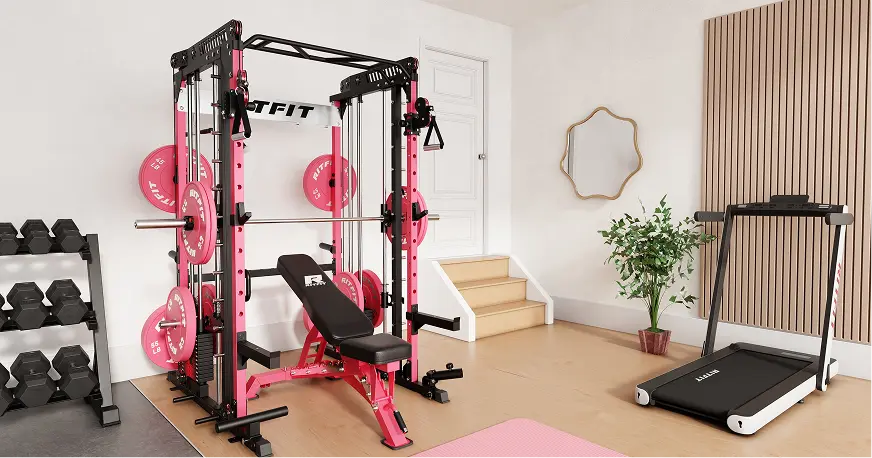
For a home setup, a full-body bench workout can help you identify practical exercise variations.
Workout A: Squat, Horizontal Push, and Pull
The three workouts use squat, hinge, horizontal push, horizontal pull, vertical push, and vertical pull exercises to train the main movement patterns without requiring one specific machine. Workout A pairs a squat pattern with a horizontal press and row so the session trains the lower body and upper body without requiring one specific machine. Use the same variation for several weeks when it is comfortable, then change it only when equipment, pain, or skill requires an adjustment.
- Squat pattern: Goblet squat, barbell squat, or a controlled machine squat, 3 sets of 6 to 10 repetitions.
- Horizontal push: Bench press or dumbbell press, 3 sets of 6 to 12 repetitions.
- Horizontal pull: Chest-supported row, cable row, or one-arm dumbbell row, 3 sets of 8 to 12 repetitions.
- Accessory: Calf raise and a curl variation, 2 sets of 10 to 15 repetitions each.
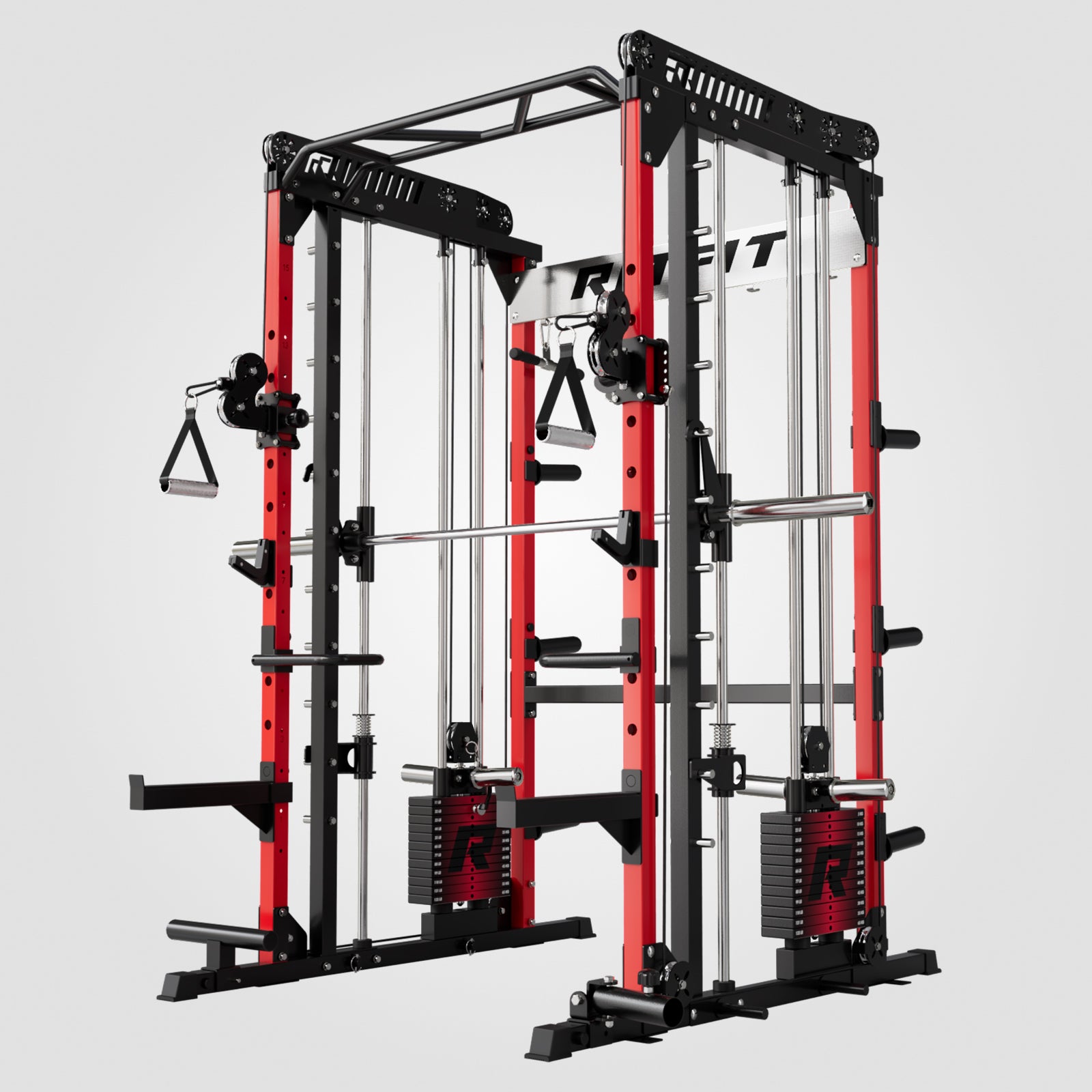
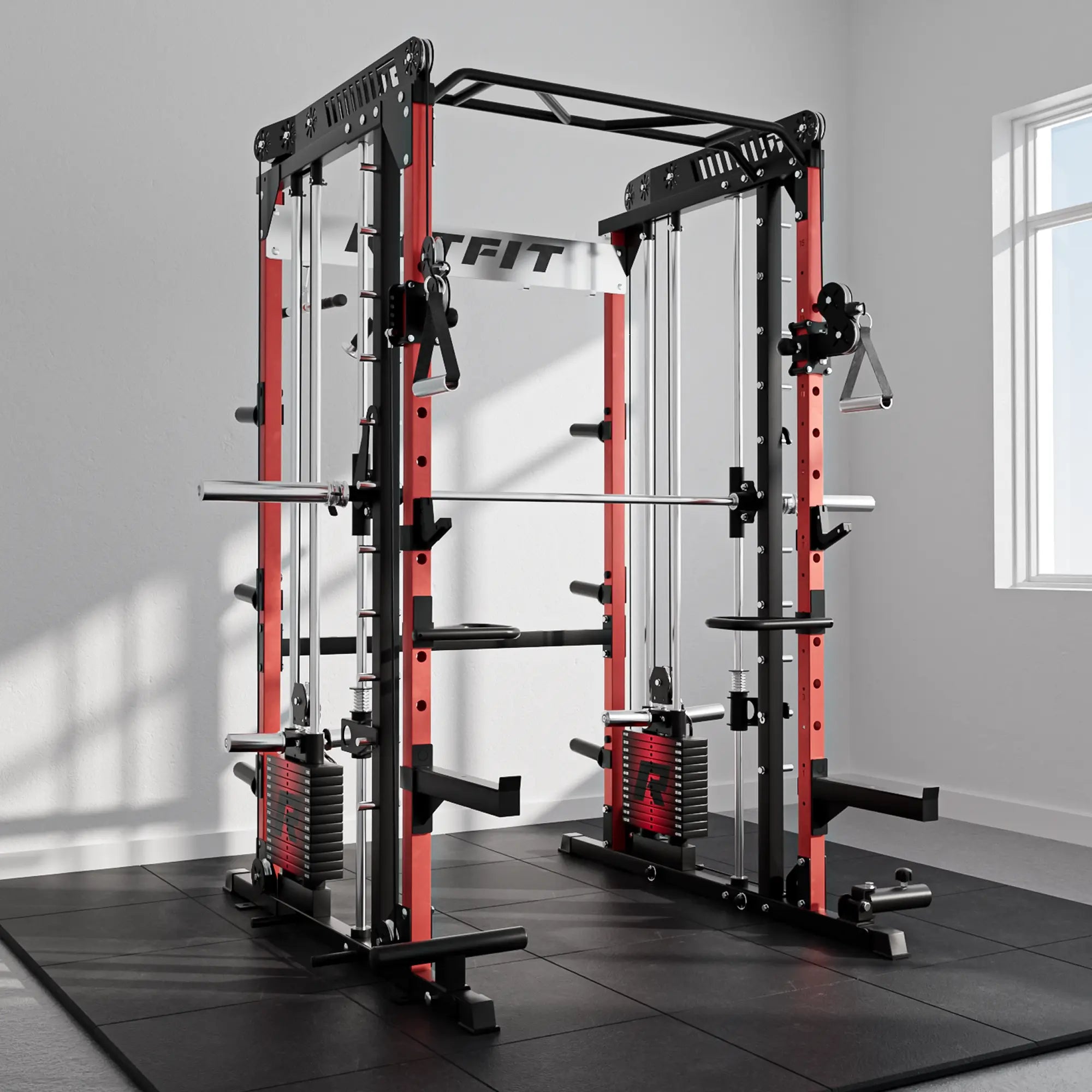
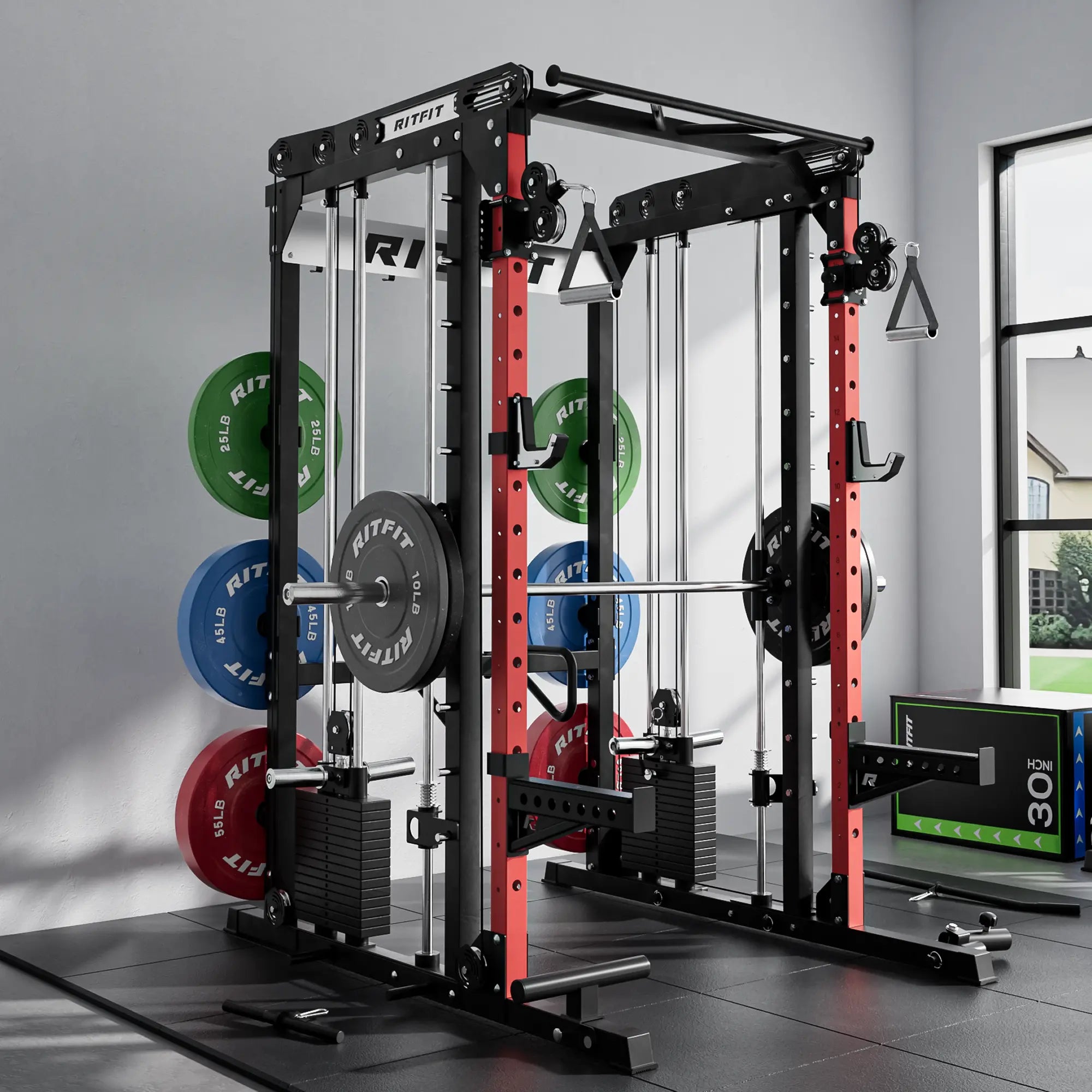
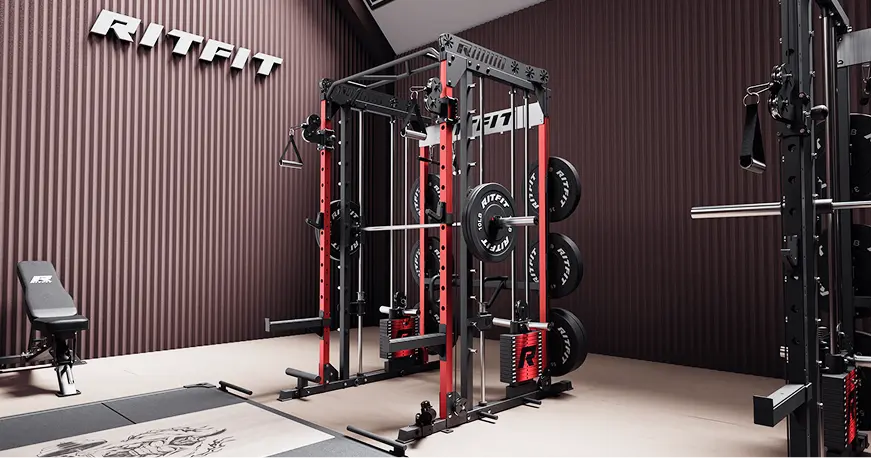
Use a secure rack setup for barbell work and set safety arms before lifting alone. If you train with a Smith machine, this Smith machine exercise guide offers additional movement ideas.
Workout B: Hinge, Vertical Push, and Pull
Workout B emphasizes a hip hinge, an overhead press, and a vertical pull to complement Workout A. Keep the hinge range of motion within the position you can control, and select a pulldown or assisted pull-up option that fits your equipment and current ability.
- Hinge pattern: Romanian deadlift or dumbbell Romanian deadlift, 3 sets of 6 to 10 repetitions.
- Vertical push: Seated dumbbell or standing overhead press, 3 sets of 6 to 12 repetitions.
- Vertical pull: Lat pulldown or assisted pull-up, 3 sets of 8 to 12 repetitions.
- Accessory: Hamstring curl and triceps extension, 2 sets of 10 to 15 repetitions each.
If a barbell hinge is not comfortable, use a lighter dumbbell variation or another pain-free hip-hinge movement rather than forcing a range you cannot control. This overview of full-body training with an all-in-one machine describes an equipment context for adapting movement patterns.
Workout C: Single-Leg Work and Upper-Body Volume
Workout C adds a single-leg movement and another round of upper-body pushing and pulling to round out the weekly pattern coverage. Use support from a wall or rack for balance when needed, and keep the effort challenging without turning each set into a form test.
- Single-leg squat pattern: Split squat or step-up, 3 sets of 8 to 12 repetitions per side.
- Glute and hamstring pattern: Hip thrust or glute bridge, 3 sets of 8 to 12 repetitions.
- Upper-body push: Incline dumbbell press or push-up, 3 sets of 8 to 12 repetitions.
- Upper-body pull: Seated cable row or supported dumbbell row, 3 sets of 8 to 12 repetitions.
- Accessory: Lateral raise and abdominal brace variation, 2 sets of 10 to 15 controlled repetitions.
A full-body Smith machine routine can offer more equipment-specific alternatives, while a beginner full-body circuit workout may help newer lifters compare formats. Keep this plan's rest and progression distinct from a conditioning circuit.
How to Progress Through the Ten Weeks
Progress through the ten weeks by repeating good sessions, building repetitions within a range, and adding a small amount of load only when the current work is controlled. A 2023 systematic review and Bayesian network meta-analysis compared resistance-training prescriptions for strength and hypertrophy in healthy adults; it does not establish that this exact three-day plan is uniquely optimal.[2]
| Weeks | Training focus | How to use the plan |
|---|---|---|
| 1 to 3 | Learn and establish repeatable work | Use the lower end of each rep range, practice the movements, and record loads and reps. |
| 4 to 6 | Build repetitions | Keep loads steady and add repetitions when technique remains consistent. |
| 7 to 9 | Progress selectively | When every set reaches the top of its rep range with controlled form, make a small load increase and build reps again. |
| 10 | Consolidate and review | Repeat the last successful loads or reduce work if fatigue has accumulated, then review the log before choosing the next block. |
This is an original planning framework, not a tested study protocol. The resistance-training volume review published in 2022 evaluates volume and hypertrophy across studies, but it does not identify one universal weekly set target for every person.[3]
"The two largest reasons why people don't get results with their fitness training protocol is number one, adherence, and then number two, some sort of progressive overload."
Andy Galpin, PhD, Professor of Exercise Science and Human Performance, Parker University. "Dr. Andy Galpin: Optimize Your Training Program for Fitness and Longevity," Huberman Lab.
How to Choose Loads, Add Reps, and Substitute Exercises
Choose a load that leaves the planned repetitions in reserve and lets you control the full comfortable range of motion. Add repetitions first, then increase resistance by the smallest available increment after all work sets reach the top of the assigned range with stable technique.
- Too easy: If the final repetitions feel far from challenging and form is stable, add a repetition next session.
- Appropriate: If the set is demanding but you could perform a few more clean repetitions, keep the load and continue building reps.
- Too heavy: If you shorten the range, bounce, or lose position, reduce the load and repeat with controlled movement.
- Substitute: Keep the movement pattern when equipment is missing, such as dumbbell floor press for bench press or a band row for cable row.
Move the exercise to a stable setup before progressing resistance. For a different program structure, readers can compare this template with a beginner 5/3/1 strength program, which serves a different training emphasis.
Common Mistakes, Recovery, and When to Stop for Pain
The most useful correction is usually to make the plan repeatable before adding more work. Avoid changing exercises every session, adding load because the calendar advanced, or treating exhaustion as proof that a workout was productive.
- Keep recovery visible: If performance drops across sessions or soreness disrupts normal movement, repeat a lighter week or reduce accessory work.
- Do not chase failure: Leave repetitions in reserve on most sets, particularly while learning a movement or training without a spotter.
- Stop for concerning pain: End the set if pain is sharp, worsening, changes your movement, or persists after reducing load or range.
- Use a safe setup: Check bench stability, rack safeties, collars, and clear space before loaded work.
Choose a comfortable alternative only when normal movement is pain-free. Persistent symptoms, a significant injury, or uncertainty about returning to training warrant advice from a qualified healthcare professional.
FAQs About a 10 Week Mass Building Program
How can I schedule three full-body workouts each week?
Most lifters can organize this template around three nonconsecutive full body sessions each week, with a rest day between demanding sessions when possible. If your schedule only allows two sessions, alternate the workouts in order and continue the next workout at your next visit. Choose the schedule you can recover from and repeat, rather than adding sessions to chase faster results. A coach or clinician can help adapt training when a health condition or persistent pain changes what you can do.
Can a full body workout build muscle?
Yes. A full body routine can train the major movement patterns across the week and can support muscle growth when exercises, effort, recovery, and progression are appropriate for the lifter. The routine itself does not guarantee a particular amount of muscle gain. Start with loads you can control through a comfortable range of motion, record your sets and repetitions, and adjust the plan when performance or recovery consistently worsens.
How should repetitions and load progress across the ten weeks?
Use a rep range and add repetitions while keeping the same load and technique. When you reach the top of the range on every work set with the planned repetitions in reserve, add the smallest practical load increase at a later session and build repetitions again. If form changes or the final repetitions become uncontrolled, keep the load or reduce it. Progression is earned by repeatable performance, not by a calendar deadline.
Which exercise substitutions work when equipment is limited?
Keep the movement pattern and choose a stable alternative you can perform without pain. A dumbbell squat or split squat can replace a machine squat, a dumbbell floor press can replace a bench press, and a band or supported dumbbell row can replace a cable row. Use a lighter load while learning a new variation and check the setup before adding resistance. If no safe substitute is available, omit that movement and ask a qualified coach for an option.
When should I stop a workout because of pain or poor recovery?
Stop the set when pain is sharp, worsening, changes how you move, or does not settle when you reduce load or range of motion. Do not test through pain by adding weight or forcing repetitions. Choose a pain-free alternative only if normal movement is comfortable, and seek advice from a qualified healthcare professional for persistent symptoms, significant injury, or uncertainty about returning to training.
Conclusion
A 10 week mass building program can give you a clear structure for full-body training, but results depend on the person and cannot be promised by a calendar. Use the log to repeat controlled work, progress gradually, and adjust when recovery or technique calls for it.
Choose a schedule you can sustain, then explore the natural physique program or natural physique training guide for related planning context. See the RitFit discount guide if you are comparing home-gym options.
Disclaimer
This training information is educational and does not diagnose or treat an injury or medical condition. Stop any movement that causes concerning pain and consult a qualified healthcare professional when symptoms persist or you are unsure whether training is appropriate.
References
[1] Currier BS, D'Souza AC, Singh MAF, et al. American College of Sports Medicine Position Stand. Resistance Training Prescription for Muscle Function, Hypertrophy, and Physical Performance in Healthy Adults: An Overview of Reviews. Med Sci Sports Exerc. 2026;58(4):851-872. doi:10.1249/MSS.0000000000003897. PMCID: PMC12965823
[2] Currier BS, Mcleod JC, Banfield L, et al. Resistance training prescription for muscle strength and hypertrophy in healthy adults: a systematic review and Bayesian network meta-analysis. Br J Sports Med. 2023;57(18):1211-1220. doi:10.1136/bjsports-2023-106807. PMCID: PMC10579494
[3] Baz-Valle E, Balsalobre-Fernández C, Alix-Fages C, Santos-Concejero J. A Systematic Review of The Effects of Different Resistance Training Volumes on Muscle Hypertrophy. J Hum Kinet. 2022;81:199-210. doi:10.2478/hukin-2022-0017. PMCID: PMC8884877