Anderson squats on a Smith machine are a bottom up squat variation in which the bar starts on the safety catches at your lowest position and no lowering phase is used.
This guide shows exactly how to set the catches, enter the bar, and stand up from a dead stop, then covers loading, programming, and the mistakes that stall the lift.
Quick Answer: Anderson squats on a Smith machine are a proven and practical variation. Set the safety catches at your bottom squat depth, rest the bar on them, sit under it with your feet slightly forward of the bar, and stand up from a full dead stop without bouncing.
Key Takeaways
- It works on a Smith machine: The safety catches hold the bar at your exact bottom height, so the bar starts on the pins and you stand up from a dead stop.
- No stretch reflex: Every rep begins with no lowering phase, so the quads and glutes must produce force without stored elastic energy helping them.
- Set the catches first: Pin them at a depth you can hold with a neutral spine, usually just below parallel, before you add any weight.
- Load lighter: Start about a plate per side under your normal squat working weight, then add load only when the pause feels controlled.
- Keep it an accessory: Gains are specific to the pin height, so full range squatting has to stay in the program.
What Is an Anderson Squat?
An Anderson squat is a squat variation that starts from the bottom, and every rep begins from a dead stop rather than a lowering phase.
Lifters also call it a pin squat or a bottom up squat, and the height of the pins decides which part of the range gets trained.
- No eccentric phase: The bar never travels down under control first, so the quads and glutes have to produce force from a standing still position.
- No stretch reflex: Coaches describe the removal of the stretch reflex as the reason the lift builds more contractile strength, because the tendons are not preloaded to help the lift.
- Named after Paul Anderson: One strength publication notes that the lift carries the name of Paul Anderson, the American weightlifter, powerlifter and strongman.
- Muscles worked: The quads, glutes, adductors and spinal erectors all contribute, and the exact depth of the pins shifts the emphasis between them.
- Usually supplemental: Coaches often program these after primary squats rather than instead of them.
On a free barbell you have to loosen the bar in a rack, set the pins, and settle the bar onto them, which is why many lifters never try the variation. If the standard version is still new to you, start with how to do a Smith machine squat first.
Can You Do Anderson Squats on a Smith Machine?
A Smith machine is one of the best tools for Anderson squats, because the safety catches hold the bar at your exact bottom height.
The fixed rail also removes the balance problem, so you can settle under a loaded bar without a spotter and without worrying about dumping it.
- The catches are the pins: A Smith machine safety catch sits at a fixed height on the upright, so you can reproduce the same starting depth on every single rep.
- The rail helps this variation: An Anderson squat is a concentric only lift, so the bar has to travel straight up, which is exactly what a fixed guide rail does best.
- No spotter needed: If you cannot stand the bar off the catches, you lower it back down and end the set.
- Depth is adjustable: Move the catches one notch at a time to attack a sticking point at one specific joint angle.
The machine does not change the movement, it only removes the two things that make the movement awkward under a free bar, which are catching the bar at the bottom and holding the bar line while you stand.
"Next, I do Smith machine squats for the quads and glutes. Here I get as deep as I can and explode out of the hole. Doing these on the Smith allows me to push my last set to failure without worrying about dumping the bar."
Jeff Nippard, Science-Based Natural Bodybuilder and Powerlifter, JeffNippard.com, Men's Health UK
How Do You Set the Safety Catches and Get Under the Bar?
Setting up a Smith machine for Anderson squats takes five steps, and the catch height is the one that decides whether the rep is safe.
- Step 1, set both catches level: Pin them at the depth where you can hold the bottom position with a neutral spine, usually just below parallel, and check that both sides sit at the same hole.
- Step 2, test the empty bar: Lower the unloaded bar to the catches and confirm it rests on both sides at once before you add a single plate.
- Step 3, take your foot position: Place your feet slightly forward of the bar at about shoulder width, so your shins stay close to vertical and the bar stays over the middle of your foot.
- Step 4, find your shoulder position: Set the bar across your upper traps or rear delts and grip just outside your shoulders with neutral wrists.
- Step 5, unrack and descend: Straighten your legs to lift the bar off the top hooks, walk your feet into position, then lower the bar under control until it lands on the catches.
That first descent is the only lowering phase in the whole exercise, so take it slowly and treat it as the setup for every rep that follows.
The bar never moves forward or back on the rail, which means your foot position decides your joint angles instead of your balance.
How Do You Perform a Dead Stop Rep?
A dead stop rep starts with the bar parked and motionless on the catches, a full pause, and then a concentric drive with no bounce.
Hold the bottom position for one to two seconds, keep your brace, then push the floor away and stand the bar up in one smooth effort.
- Stay tight on the pins: Do not relax your trunk while the bar rests, because you have to rebuild tension before you can drive.
- No bouncing: Letting the bar drop and rebound off the catches adds a reflex that the variation is designed to remove.
- Drive, do not jerk: Push through the whole foot and keep the bar against the rail instead of lifting your hips first.
- Reset every rep: Return the bar to the catches, let it settle for a beat, and start again from zero.
The dead stop feels so much harder because of energy storage. In one 2015 experiment on twelve healthy men, the stretch-shortening cycle pushed ankle plantarflexor torque to about 329 percent of concentric-only torque in the first half of the movement [1].
A 2022 squatting study of fifteen male participants also found peak vertical ground reaction forces were about 9.5 percent greater in the eccentric phase than in the isometric phase, with wide variation between participants [2].
Both numbers describe force that a rebound rep gets for free, and a rep from the catches has to create it with muscle alone. For the baseline pattern, review the ultimate guide to Smith machine squats before you add a dead stop.
How Are Smith Machine Anderson Squats Different From Box Squats?
A box squat sits you down onto a box, while an Anderson squat removes the descent completely and starts the bar on the catches.
| Feature | Anderson squat | Box squat |
|---|---|---|
| Starting position | Bar resting on the safety catches at the bottom | Sitting on a box with the bar on your back |
| Lowering phase | Only on the first rep, then none at all | Every rep, with a controlled sit back |
| Main goal | Starting strength and rate of force development | Position, control, and sitting back technique |
| Depth control | Catch height sets the exact depth | Box height sets the exact depth |
| Best for | Lifters who stall at the bottom of a squat | Lifters learning to sit back or sparing the lower back |
Both variations use the same machine and the same rail, so the difference is where the rep starts rather than what you load.
Because the box squat keeps a lowering phase, it teaches a skill that the Anderson squat deliberately removes; our guide to the box squat on a Smith machine covers box height selection in detail.
A sumo squat on a Smith machine changes the stance instead of the starting height, so it pairs well with a dead stop block if you want more hip work in the same session.
How Much Weight Should You Use for Anderson Squats?
Smith machine Anderson squats should be loaded lighter than a normal squat, and load only goes up after the dead stop feels controlled.
- Cut about a plate per side: Removing the stretch reflex removes free force, so a working weight that feels easy on a regular squat can feel impossible from the pins.
- Expect fewer reps: Three to five reps is a typical working range, because every rep is a fresh start with no rebound.
- Add weight when the pause is quiet: If you can hold the bar still on the catches for one to two seconds and stand smoothly, add a small jump next session.
- Back off when the bar moves first: If the bar rolls or the catches rattle before you drive, the load is too heavy for a dead stop.
- Do not chase your squat max: A number that looks impressive for a rebound squat is not a target here.
Controlled tempo work gives one reference point. In a 2016 study, ten resistance-trained men squatted 60 percent of their one-rep max with a 2 second lower, a 1 second pause and a 2 second stand, a tempo that keeps every rep under full control [3].
Treat that as a ceiling idea rather than a rule, because your catch height and your leverage change the right number, and the differences between the Smith machine squat compared with the barbell squat show up in loading too.
How Do You Program Anderson Squats?
Smith machine Anderson squats work best as a secondary squat, for three to five sets of three to five reps once or twice a week.
- Frequency: One or two sessions a week is enough, because the lift is heavy on the nervous system and light on total volume.
- Placement: Put them after your main squat on a leg day, or first on a lighter day when you want them fresh.
- Progression: Add a small amount of weight when you can stand every prescribed rep from a clean dead stop at the same catch height.
- Duration: Run them for four to six weeks, then rotate back to full range squatting and revisit the pins later.
- Swaps: A pause squat, a front squat, a box squat or a leg press can take the slot when your hips or lower back need a break.
Keep Anderson squats as an accessory rather than your only squat, because one strength publication explains that strength is angular specific, so gains made at one pin height mostly carry over to that depth.
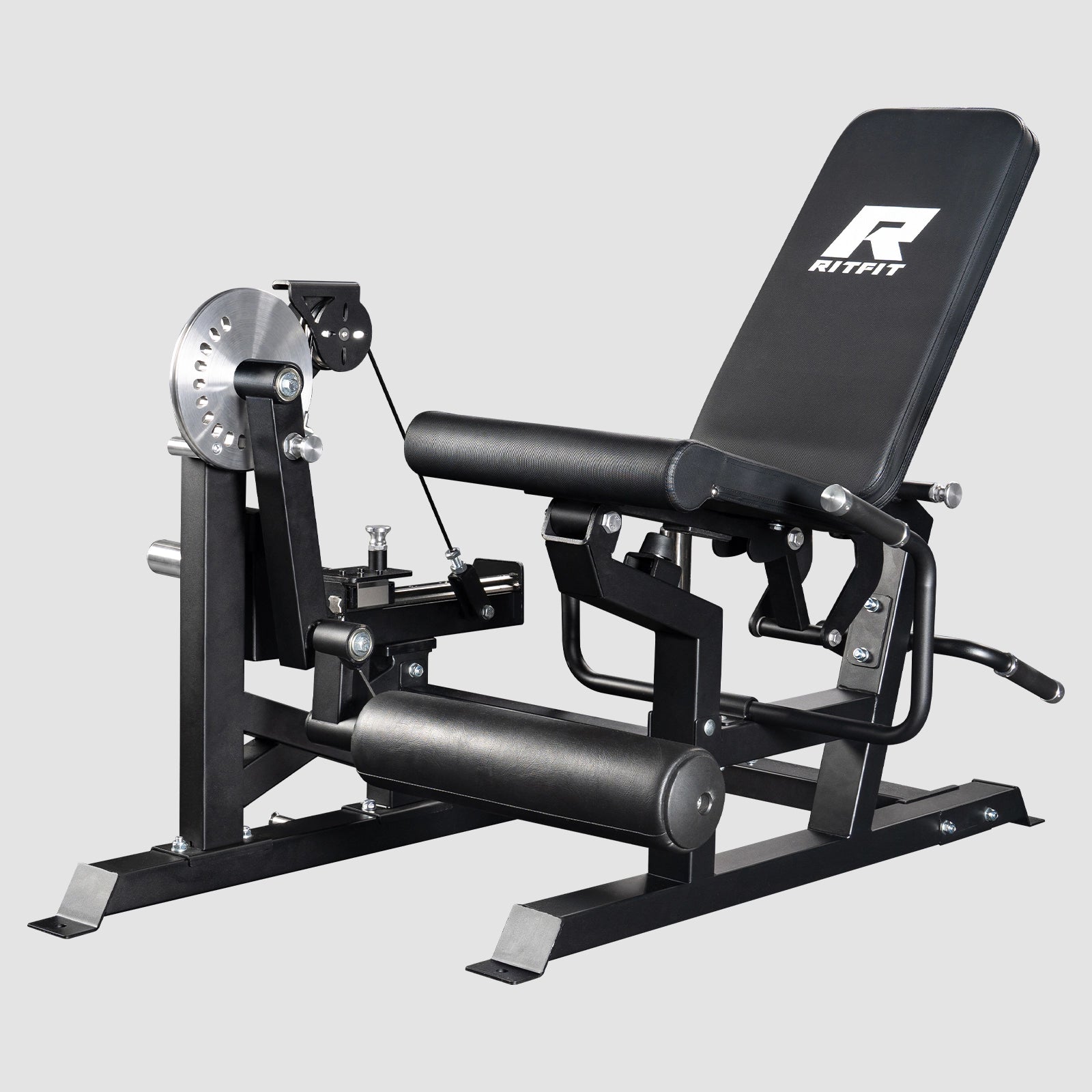
Lifters who cannot tolerate a loaded dead stop can build the same muscles on a RitFit BLP01 leg press and hack squat machine while the joint settles down.
Does the RitFit 3D Smith Machine Work for Anderson Squats?
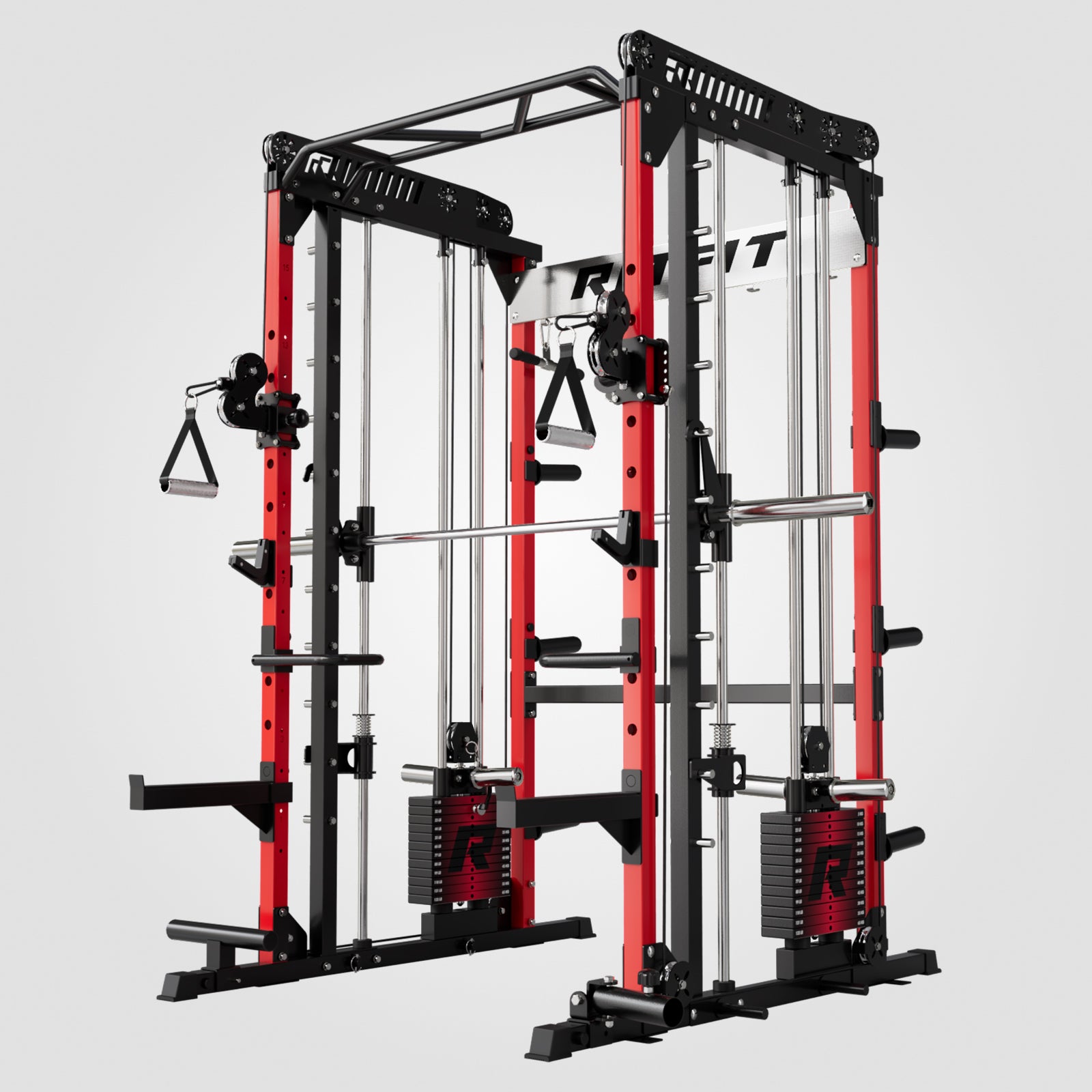
The RitFit 3D Smith bar works well for Anderson squats, because it adds more lock and catch positions plus a low bar height for a loaded bottom start.
- Frame and bar ratings: The RitFit P9 modular power cage carries a 1,600 lb rated frame and a 530 lb Smith bar static rating, which leaves room above the loads a dead stop squat allows.
- Horizontal travel: The 3D Smith bar moves about 20.6 inches front to back, so you can shift the path slightly instead of being locked to one vertical line.
- Six locking positions: You can switch between a fixed vertical path and a freer 3D path for different lifts.
- Low start height: The lowest bar position is 9.0 inches from the floor, which matters when you start loaded at the bottom instead of standing tall.
- Fixed rail alternative: Lifters who want one simple bar path can run the same workout on a RitFit M1 PRO Smith machine package.
- Comparing options: Check the full Smith machines range for fixed rail and 3D frames at different footprints.
Why the RitFit P9 Fits Bottom Up Squats
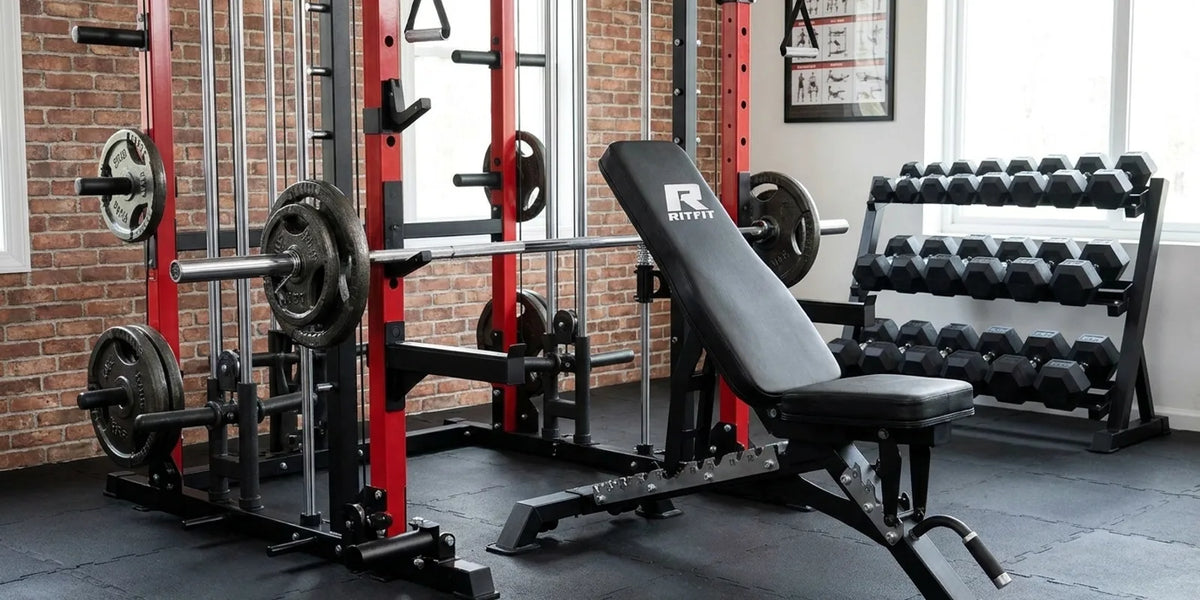
For Anderson squats the useful part is repeatability, because you set the catches once and then every rep starts from the same height on the same bar line.
What Common Mistakes Should You Avoid in Smith Machine Anderson Squats?
The most common mistakes are setting the catches too low, bouncing the bar off the pins, and loading more weight than a dead stop allows.
- Catches too low: If you have to round your lower back to reach the bar, raise the catches one notch.
- Bouncing off the pins: A rebound adds the stretch reflex back in and defeats the purpose of the variation.
- Losing the brace: Rebuilding tension on every rep is the whole skill, so treat the pause as part of the lift.
- Going too heavy: A weight you can rebound out of is not a weight you can stand up cold.
- Making it the only squat: Full range squatting keeps the eccentric phase and the deeper positions in the program.
- Ignoring pain: Sharp knee, hip or lower back pain means stopping the set rather than pushing through it.
Soreness after a new variation is normal, but joint pain that is still there at the next session is a signal to change the catch height, reduce the load or swap the movement.
FAQs About Anderson Squats on a Smith Machine
How do you do Anderson squats on a Smith machine?
Set the safety catches at your bottom squat height, rest the bar on them, sit under it, and stand up from a dead stop. The fixed rail removes the balance problem of starting under a loaded bar, so you can train the variation alone without a spotter.
How low should you set the catches for Smith machine Anderson squats?
Set the catches at the depth you can squat with a neutral spine, usually just below parallel for most lifters. Start one notch higher than your deepest comfortable position, then lower the catches as your bottom position improves. Setting them too low forces a rounded lower back.
How much lighter should Anderson squats be than your normal squat?
Start noticeably lighter than your regular working weight. A common starting point is a plate lighter per side than your usual squat, because no stretch reflex and no bounce are available at the bottom. Add load only when you can pause and still stand smoothly.
What do Anderson squats build, muscle or strength?
They build both, but the main benefit is strength out of the bottom position. Because each rep starts from a dead stop, the quadriceps and glutes have to produce force without help from stored elastic energy. Hypertrophy still depends on total hard sets, so keep regular squats in the program.
What is the difference between Anderson squats and box squats?
A box squat sits you down on a box and teaches you to sit back and control the descent. An Anderson squat rests the bar on the pins at the bottom and removes the lowering phase entirely. Box squats teach position, while Anderson squats train starting strength.
How often should you do Smith machine Anderson squats?
Once or twice a week is plenty for most lifters. Program them as a secondary movement after your main squat, using three to five sets of three to five reps. Keep them in the plan for four to six weeks, then rotate back to full range squats.
Why should Anderson squats not be your only squat?
Strength is angular specific, so gains achieved at one pin height mostly carry over to that depth. You still need full range squatting for the eccentric phase, the stretch reflex and the deeper positions. Use Anderson squats as an accessory that fixes a sticking point.
How safe is it to train Anderson squats alone on a Smith machine?
It is safe when the catches are set level and you stay braced. The catches hold the bar, so you can fail a rep without a spotter. Stop the set if you feel sharp knee, hip or lower back pain rather than ordinary muscle fatigue.
Conclusion
Smith machine Anderson squats are a straightforward way to train starting strength, and the setup is simpler than most lifters expect.
Set the catches at a depth you can hold, start lighter than your normal squat, and treat the movement as an accessory to full range squatting rather than a replacement. Check the RitFit discount guide before you build the setup.
Disclaimer
This article is general fitness information and not medical advice, and the loading suggestions are starting points rather than individual prescriptions. Consult a qualified physician or physical therapist before starting a new strength program, especially if you have a history of knee, hip or lower back injury.
References
1. Fukutani A, Kurihara T, Isaka T. Factors of force potentiation induced by stretch-shortening cycle in plantarflexors. PLoS One. 2015;10(6):e0120579. doi:10.1371/journal.pone.0120579. PMCID: PMC4451763
2. Armstrong R, Baltzopoulos V, Langan-Evans C, et al. Determining concentric and eccentric force-velocity profiles during squatting. Eur J Appl Physiol. 2022;122(3):769-779. doi:10.1007/s00421-021-04875-2. PMCID: PMC8854263
3. Earp JE, Newton RU, Cormie P, Blazevich AJ. Faster Movement Speed Results in Greater Tendon Strain during the Loaded Squat Exercise. Front Physiol. 2016;7:366. doi:10.3389/fphys.2016.00366. PMCID: PMC5005367