The best bar for landmine training is simply a standard barbell with a 2-inch Olympic sleeve, since that is the size almost every landmine attachment is machined to hold. No separate landmine-only bar exists as its own product category.
This guide covers what makes a bar landmine-ready, which RitFit bar fits heavy pressing versus lighter setups, whether a second bar is worth buying, long-term upgrade costs, top exercises, and common mistakes to avoid.
Quick Answer: The best bar for landmine training is any 2-inch Olympic barbell between 5 and 7 feet long that fits your attachment's sleeve, with a shorter bar easier to control for presses and rows and a full 7-foot bar better if you also squat or deadlift with it.
Key Takeaways
- Sleeve size decides fit: A 2-inch Olympic sleeve fits nearly every landmine attachment, so most lifters do not need a special bar.
- Length changes control: Shorter 5 to 6-foot bars are easier to control for landmine presses and rows, while a full 7-foot bar stays more versatile for squats and deadlifts.
- RitFit offers two clear paths: The RitFit 7FT Olympic Barbell suits heavy pressing and rowing, while the RitFit 15kg Olympic Training Barbell suits lighter loads and smaller frames.
- Attachment capacity varies: Consumer landmine attachments are commonly rated in the 300 to 450 pound range, with the mounting surface often the real limiting factor.
- A second bar is optional: Reusing your existing squat or deadlift bar is usually enough; a dedicated bar mainly saves setup time.
What Makes a Barbell 'Landmine-Ready'?
A landmine-ready barbell needs a 2-inch Olympic sleeve, since nearly every landmine attachment on the market is machined to that exact diameter. Length, knurling, and finish matter less for basic compatibility but change how specific exercises feel.
- Sleeve diameter: Confirm 2-inch Olympic, the near-universal standard for landmine pivot cups.
- Bar length: 5 to 6 feet is easier to swing through rotational and pressing arcs; 7 feet keeps the bar useful for squats and deadlifts too, as covered in this 5-foot Olympic bar guide.
- Weight capacity: Match the bar's rated capacity to your heaviest planned landmine load, not just your current working weight.
- Knurling and finish: A durable finish holds up better to the repeated metal-on-metal contact inside a landmine sleeve.
A comparative gear review of seven landmine attachments found typical weight-capacity ratings in the 300 to 450 pound range, with 2-inch Olympic sleeve fit flagged as the main compatibility check. If you are unsure whether your current bar qualifies, this Olympic bar vs standard bar comparison walks through the sleeve and length differences.
Which RitFit Bar Should You Load Into Your Landmine?
Heavy lifters doing landmine rows and presses should reach for a full-length Olympic bar, while lighter or smaller-framed lifters get more control from a shorter, lighter bar. RitFit covers both cases with two dedicated barbells from the bars and plates collection.
| Bar | Specs | Best for |
|---|---|---|
| RitFit 7FT Olympic Barbell | 7 ft, 2-inch sleeve, 500 to 1000 lb capacity options | Heavy landmine presses and rows |
| RitFit 15kg Olympic Training Barbell | Lighter, smaller-frame build, 2-inch sleeve | Lighter loads and space-constrained setups |
Specs drawn from current RitFit product listings; both bars use the same 2-inch sleeve standard.
Best for Heavy Presses and Rows: RitFit 7FT Olympic Barbell
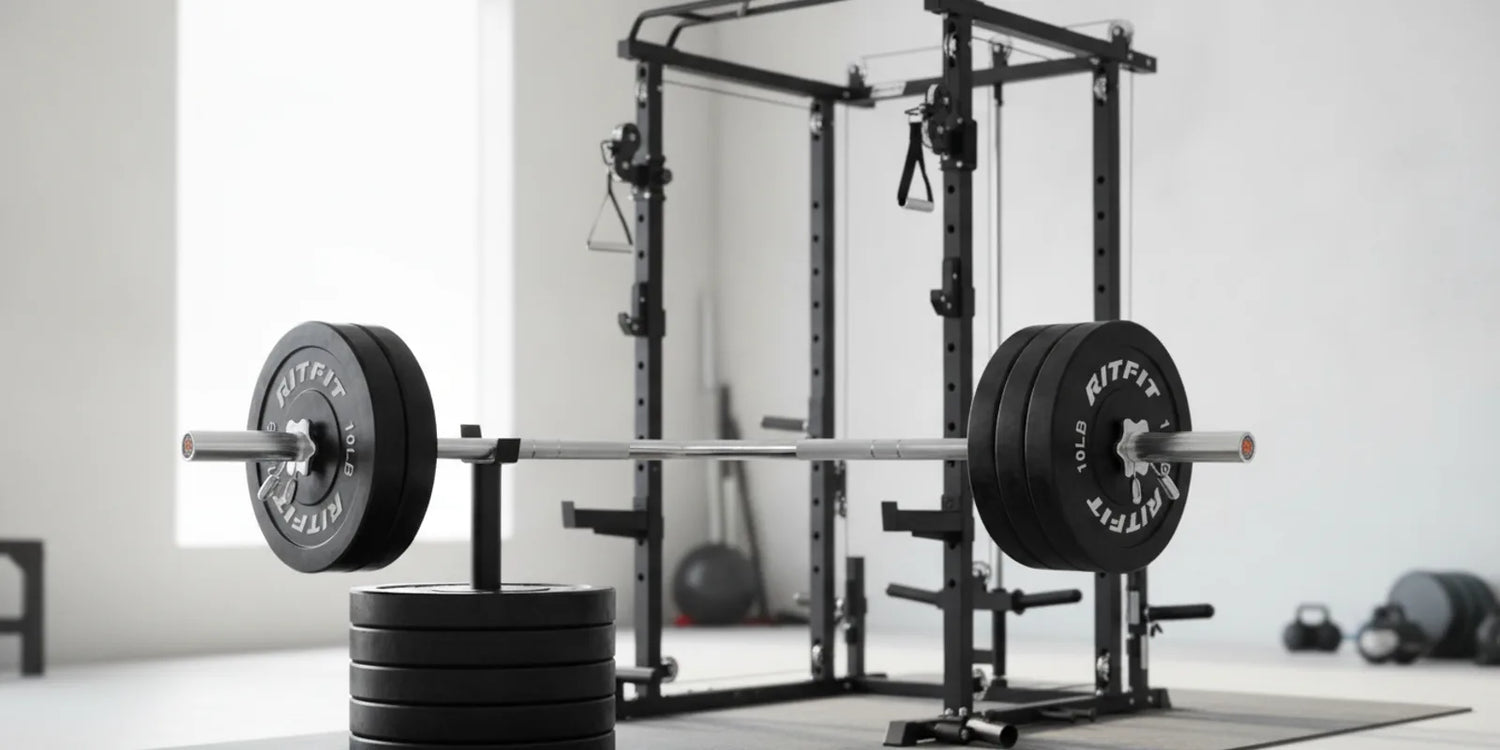
The RitFit 7FT Olympic Barbell gives you the leverage and capacity for heavy landmine rows and presses while still working for standard squats, bench, and deadlifts, so one bar covers both your landmine and barbell days.
Best for Lighter Loads and Smaller Frames: RitFit 15kg Olympic Training Barbell
The RitFit 15kg Olympic Training Barbell is easier for smaller-framed lifters or lighter loads to control through rotational landmine movements, making it a practical second bar if you already own a heavier main barbell.
Is a Dedicated Bar Worth Buying, or Should You Reuse Your Squat Bar?
Reusing your existing squat or deadlift bar is enough for most home gyms, since any 2-inch Olympic bar works in a landmine attachment. A second bar mainly buys convenience, not new capability.
One hands-on gear review found a budget landmine attachment handled loads up to roughly 300 pounds without issue after months of testing, which suggests the attachment itself, not the bar, is usually the weaker link. See how much bar weight you are starting from in this guide to how much an Olympic bar weighs before adding plates to the free end.
A dedicated bar becomes worth it once you want to leave one bar permanently loaded in the landmine so you are not constantly swapping it out of your squat rack between exercises.
What Does It Cost to Upgrade From a Corner Setup to a Rack-Mounted Station?
A free corner setup costs nothing beyond the bar you already own, while a rack-mounted landmine attachment typically adds a modest one-time cost for the pivot piece itself. The main ongoing cost is a second bar only if you decide convenience is worth it.
- Corner setup: $0 extra; wedge your existing bar into a padded corner for light pressing work.
- Rack-mounted attachment: One-time cost for the pivot piece, bolted to your rack or a lifting platform.
- Second dedicated bar: Optional upgrade so one bar can live in the landmine full time.
- Handle attachments: Optional V-grip or T-bar handles add row variations without needing another bar.
Most lifters can stop at the rack-mounted attachment stage and keep rotating their existing bar between the landmine and the rack, saving the cost of a dedicated second bar entirely.
What Exercises Can You Do Once You Pick the Right Bar?
Once your bar fits the attachment, you can run landmine presses, rows, squats, and rotational core work without buying any additional equipment. These movements share a joint-friendly pivoting bar path that many lifters find easier on the shoulders than a straight overhead press.
- Landmine press: Press the free end forward and up from the chest, working shoulders, triceps, and core.
- Landmine row: Hinge at the hips and row the free end to your torso for upper and mid-back work.
- Landmine squat: Hold the free end at chest height and squat, which many lifters find keeps them more upright, as detailed in this guide to squatting with a bar for beginners.
- Rotational core twist: Pivot the free end side to side at hip height to train anti-rotation and core control.
A 2026 study tracking 247 landmine press trials with 20 to 35 kilogram loads found strong correlation, r greater than 0.85, between a markerless motion-tracking system and a commercial velocity transducer, supporting the landmine press as a reliable way to monitor unilateral upper-body push power.[1] For more bar-based movement ideas, see these 12 best weighted bar exercises for beginners.
What Mistakes Should You Avoid When Pairing a Bar With a Landmine Attachment?
The most common mistake is pressing straight overhead instead of at the natural forward angle the pivot creates, which cancels out the shoulder-friendly bar path landmine training is known for. A close second is ignoring the bar's rated capacity once plates start stacking up.
- Pressing straight up: Follow the bar's natural arc forward and up instead of forcing it vertical.
- Overloading the free end: Stay within both the bar's and the attachment's rated capacity.
- Using too long a bar in tight spaces: Check ceiling and wall clearance before swinging a full 7-foot bar through rotational moves.
- Skipping the mount check: Confirm the attachment is bolted down before loading heavy rows, since a loose base is more dangerous than the bar choice itself.
Take these precautions seriously if you have any pre-existing shoulder or lower-back issues, and stop the set if you feel sharp or pinching pain rather than normal training fatigue. A quick look at this bench press bar weight guide also helps you sanity-check your starting load before adding plates.
FAQs About Choosing a Bar for Landmine Training
What size barbell do I need for a landmine attachment?
Most landmine attachments are machined for standard 2-inch Olympic barbell sleeves, so any 2-inch bar between 5 and 7 feet works well. Shorter bars are easier to maneuver during rotational and pressing movements, while a full 7-foot Olympic bar gives more leverage for heavier rows.
Can I use any Olympic barbell with a landmine attachment?
Yes, as long as the bar has a 2-inch sleeve diameter, which fits nearly every Olympic barbell on the market. The main things to check are sleeve fit, overall bar length for your space, and whether the knurling and finish can handle repeated metal-on-metal contact inside the landmine sleeve.
Is a shorter bar better for landmine exercises?
A shorter 5 to 6-foot bar is often easier to control for landmine presses, rows, and rotational core work because there is less leverage fighting your grip. A full-length 7-foot Olympic bar still works well and is the better choice if you also use it for squats, deadlifts, or bench press.
Do I need a special bar just for landmine presses?
No, a dedicated landmine-only bar is not necessary for most home gyms. Your existing Olympic barbell will work fine for landmine presses, rows, and squats, as long as it has a 2-inch sleeve. A second bar only becomes useful if you want to leave one permanently loaded for fast switching.
How much weight can a landmine attachment hold?
Most consumer landmine attachments are rated for roughly 300 to 450 pounds of combined bar and plate weight, according to hands-on gear reviews, though the mounting surface is often the real limiting factor. Bolting the attachment to solid plywood or concrete lets it handle heavier loads than the rated capacity alone suggests.
What is the difference between a landmine bar and a regular barbell?
There is no separate product called a landmine bar; it simply means a standard Olympic barbell used inside a landmine attachment, which pivots one end while you press, row, or rotate the free end. Any 2-inch sleeve barbell becomes a landmine bar once it is loaded into the attachment.
Conclusion
The best bar for landmine training is any 2-inch Olympic barbell you already own, sized 5 to 7 feet depending on whether you value control or versatility. RitFit's 7FT Olympic Barbell and 15kg Olympic Training Barbell cover the heavy and light ends of that range.
Start by testing your current bar in the attachment before buying a second one, then explore current RitFit sales if you decide a dedicated landmine bar is worth adding.
Disclaimer
This article is for general informational purposes only and does not replace professional fitness, medical, or safety guidance for your specific equipment or physical condition. Consult a qualified trainer, coach, or healthcare provider before starting any new exercise or equipment setup, especially if you have an existing injury.
Save on your next RitFit order
Tap the button to copy your code, then paste it at checkout.
References
1. Zhao R, Cong R, Zhou R, et al. Landmine Press Kinematics Measured with an Enhanced YOLOv8 Model and Mathematical Modeling. Sensors (Basel). 2026;26(4). doi:10.3390/s26041161. PMCID: PMC12944738