A strong upper back supports better posture, reduces shoulder strain, and builds a wider, more athletic frame. This guide ranks the best upper back exercises, from face pulls to barbell rows, based on how well they target the rhomboids, trapezius, and rear delts.
You will find sets, reps, and weight guidance for beginners and intermediate lifters, plus equipment free substitutes and clear signs that mean it is time to stop and rest.
Quick Answer: The best upper back exercises are face pulls, barbell bent-over rows, lat pulldowns or pull-ups, and reverse flies, since together they train the rhomboids, trapezius, and rear delts through horizontal and vertical pulling angles. Combining 2 to 3 of these movements 2 to 3 times per week builds visible thickness and improves posture within a few weeks.
Key Takeaways
- Best exercises: Face pulls, barbell rows, lat pulldowns, dumbbell rows, and reverse flies each target the upper back from a different pulling angle.
- Weight guidance: Choose a weight that lets you complete every rep with control, typically 3 to 4 sets of 8 to 12 reps for most rows.
- No equipment needed: Resistance bands and bodyweight inverted rows build real upper back strength without a gym.
- Training frequency: Two to three upper back sessions per week, with a rest day between, allows enough recovery for growth.
- Pain signals: Sharp or radiating pain means stop immediately, since it can point to shoulder impingement or nerve irritation.
What Muscles Make Up Your Upper Back
The upper back is made up of the trapezius, rhomboids, rear deltoids, teres major and minor, and infraspinatus, which together control the shoulder blades and rotator cuff. These muscles work with the latissimus dorsi to pull the arms back and stabilize the spine during almost every pulling motion.
- Trapezius: Spans the neck and mid back, controlling shoulder blade elevation, retraction, and depression.
- Rhomboids: Sit between the shoulder blades and the spine, pulling the shoulder blades together and back.
- Rear deltoids: The back of the shoulder muscle, heavily involved in face pulls and reverse flies.
- Teres major and minor: Small muscles supporting shoulder rotation and stability during rowing movements.
- Infraspinatus: A rotator cuff muscle that controls external rotation and protects the shoulder joint.
- Latissimus dorsi: The broad muscle of the mid and upper back, driving pulling strength in rows and pull-ups.
Every exercise ranked below targets at least two or three of these muscles at once, which is why a well rounded routine only needs a handful of movements.
Why Does Upper Back Strength Matter for Posture and Health
Strong upper back muscles matter because they counteract the forward shoulder rounding caused by sitting and screen use, pulling the shoulder blades back into a more neutral position. A well developed upper back also protects the shoulder joint and supports heavier pulling and pressing lifts elsewhere in a program.
- Posture correction: Stronger rhomboids and rear delts help offset hours spent hunched over a desk or phone.
- Shoulder health: A balanced upper back reduces the internal rotation stress caused by heavy pressing exercises.
- Pulling strength: A stronger upper back directly carries over to deadlifts, rows, and pull-up performance.
- Aesthetics: Thickness and width in the upper back create the visual V taper many lifters train for.
These benefits build gradually with consistent training, and pairing upper back work with balance and stability exercises further reinforces good posture throughout the day.
What Are the Best Upper Back Exercises, Ranked
The most effective upper back exercises combine horizontal pulling, vertical pulling, and shoulder-blade isolation, since each angle challenges the rhomboids, trapezius, and rear delts differently. Face pulls, barbell rows, and lat pulldowns are ranked below along with form cues, sets, and reps.
Face Pull
The face pull targets the rear deltoids and rhomboids using a rope or band pulled toward the face at eye level. Performing the pull with the arms raised closer to overhead increases rhomboid activation while reducing tension in the upper trapezius.[1]
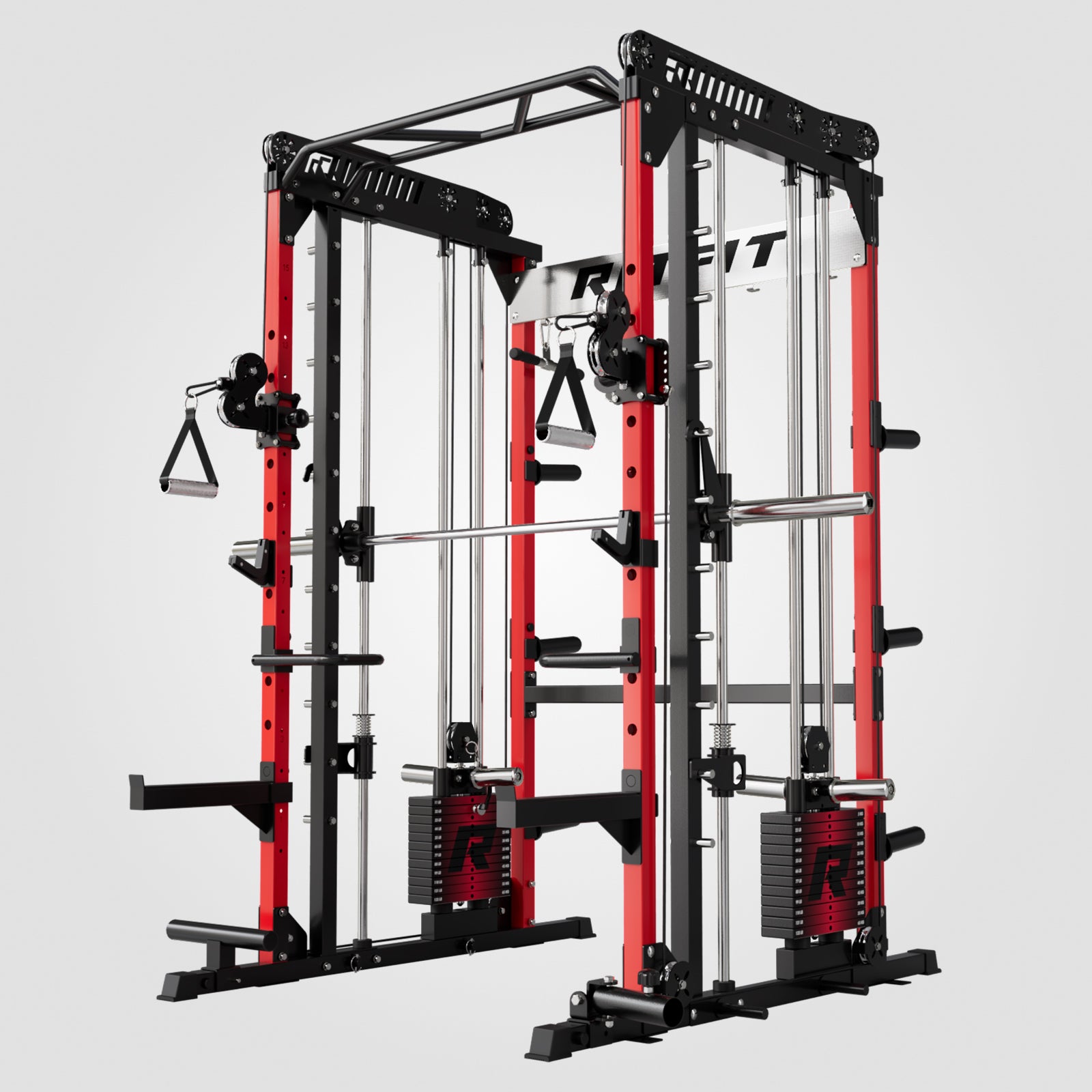
Use light to moderate resistance on a cable machine fitted with RitFit exercise handles for cable machines, and aim for 3 sets of 12 to 15 reps.
Barbell Bent-Over Row
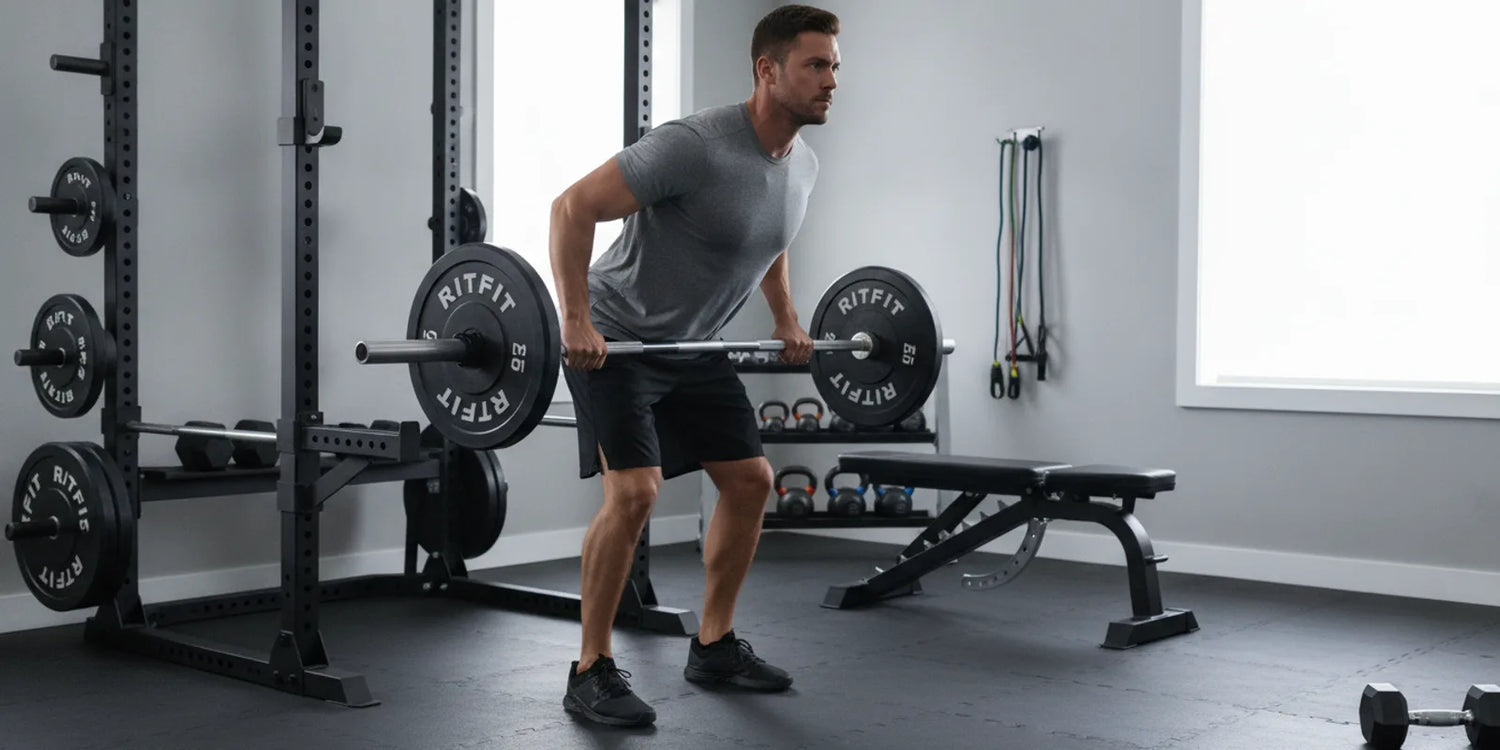
The barbell bent-over row is a compound pull that builds thickness across the entire upper and mid back in a single movement. Hinge at the hips to roughly a 45 degree torso angle, pull the bar toward the upper abdomen, and use 3 to 4 sets of 8 to 10 reps.
Single-Arm Dumbbell Row
The single-arm dumbbell row isolates one side of the upper back at a time, which helps correct strength imbalances between the left and right lats and rhomboids. Support the working side on a bench, row the dumbbell to the hip, and use 3 sets of 10 to 12 reps per arm.
Lat Pulldown and Pull-Up
The lat pulldown and its bodyweight counterpart, the pull-up, build vertical pulling strength through the lats, rhomboids, and biceps. Grip strength built through grip training carries over directly to both movements, so beginners can start with an assisted pulldown before progressing to full bodyweight pull-ups.
Reverse Fly
The reverse fly isolates the rear delts and rhomboids using light dumbbells or a cable, hinging forward and lifting the arms out to the sides. Shoulder external rotation with the elbow extended increases middle trapezius activation while keeping rhomboid involvement lower, so most lifters get the best results with 3 sets of 12 to 15 reps at a lighter weight than the rows above.[2]
Seated Cable Row
The seated cable row combines a strong pulling stimulus with continuous tension throughout the entire range of motion, unlike most free weight rows. Choosing the right cable attachment handle changes which part of the upper back gets emphasized, with a wide bar favoring the upper back and a V-handle favoring the lats.
Inverted Row
The inverted row is a bodyweight pulling exercise performed by hanging under a bar and pulling the chest toward it, making it a useful stepping stone toward strict pull-ups. Adjusting foot position under the bar changes the difficulty instantly, so beginners keep their feet close to the bar while advanced lifters walk their feet further away.
These seven exercises cover every major pulling angle needed for a complete upper back workout, and rotating through 2 to 3 of them each session keeps the training stimulus fresh.
How Much Weight Should You Use for Upper Back Exercises
The right weight for upper back exercises is one that lets you complete every rep of a set with full control and a full range of motion, typically reaching or nearly reaching failure on the last 1 to 2 reps. Compound rows like the barbell row usually allow heavier loads than isolation moves like the reverse fly or face pull.
- Starting point: Pick a weight you can control for 10 clean reps, then adjust up or down after the first working set.
- Compound lifts: Barbell rows and lat pulldowns can typically handle 60 to 80 percent of what you deadlift or squat comfortably.
- Isolation lifts: Face pulls and reverse flies should feel challenging by rep 10 to 12, not by rep 3 or 4.
- Progressive overload: Add small increases in weight or reps every 1 to 2 weeks once a set feels easy to complete.
A set of adjustable dumbbells and weight plates makes it easy to fine-tune load in small increments as you progress through each exercise.
What Are the Best No-Equipment and Home Gym Substitutes
Resistance bands, a sturdy bar or table edge, and bodyweight positioning can replace almost every cable or barbell upper back exercise without a full gym setup. Band face pulls, band rows, and inverted rows under a sturdy bar all train the same muscles as their gym equivalents.
- Band face pull: Anchor a resistance band at chest height and pull it toward your face, keeping elbows high.
- Band pull apart: Hold a light band at shoulder height and pull it apart to work the rear delts and rhomboids.
- Inverted row under a table: Lie under a sturdy table or bar and pull your chest toward it for a bodyweight row.
- Doorway row: Use a towel looped around a door frame edge to mimic a cable row motion.
- Superman hold: Lie face down and lift the chest and arms slightly to build upper back endurance without any equipment.
For a complete session, pair these substitutes with the full back day workout guide or the best back exercises with dumbbells if you have a pair of dumbbells at home.
How Often Should You Train Your Upper Back
Most lifters should train the upper back two to three times per week, spacing sessions at least one day apart so the rhomboids, trapezius, and rear delts can recover. Beginners can start with two sessions weekly, while lifters on a push and pull split may train it three times.
- When to increase weight: Add 5 to 10 percent more load once you can complete every prescribed rep with good form for two sessions in a row.
- When to increase reps instead: If adding weight breaks your form, add 1 to 2 reps per set before increasing the load.
- Deload weeks: Every 4 to 6 weeks, drop the weight slightly for a session to let joints and connective tissue recover.
Varying the training setup can also speed up progress. In one 8-week study, lat pulldown training performed with an unstable cable setup improved pull-up endurance 45.5 percent more than the same training performed with a stable setup.[3]
Rotating upper back day with a stepping exercise routine on off days keeps overall training balanced without overloading the shoulders.
What Are Common Mistakes and When Should You Stop
The most common upper back training mistakes are using momentum instead of controlled tension, shrugging the shoulders up instead of pulling them back, and skipping isolation moves that build shoulder health. Stop any exercise immediately if you feel sharp, shooting, or radiating pain instead of normal muscle fatigue.
- Using momentum: Swinging the torso or yanking the weight reduces tension on the target muscles and raises injury risk.
- Shrugging instead of retracting: Rows and pulldowns should pull the shoulder blades back, not just lift the shoulders toward the ears.
- Flared elbows on rows: Keeping elbows too wide shifts stress toward the shoulder joint instead of the upper back.
- Skipping face pulls and reverse flies: These isolation moves protect the shoulder joint even though they use lighter weight.
- Ignoring warm up sets: One or two light sets before working weight reduces the risk of a strain on cold muscles.
Stop an exercise right away for sharp or radiating pain, numbness or tingling down the arm, or pain that forces you to change your form. Mild muscle soreness the next day is normal, but pain that lingers past a few days should be checked by a healthcare professional before you continue training.
"Not only is the face pull an excellent movement to grow your upper back muscles, it can also improve poor posture. The rear shoulder muscles play a big role in preventing the bad posture so many people get from time spent sitting at desks jobs and hunched over their electronics."
Jeff Cavaliere, MSPT, CSCS, Athlean-X
FAQs About Upper Back Exercises
What is the best exercise for upper back strength?
There is no single best exercise, since face pulls target the rhomboids and rear delts for posture while barbell rows, lat pulldowns, and pull-ups build overall back thickness and width. A balanced routine combines horizontal pulling, vertical pulling, and shoulder-blade isolation movements for complete upper back development.
Can I build a strong upper back with just dumbbells?
Yes, single-arm dumbbell rows, reverse flies, and dumbbell YTW raises effectively target the rhomboids, trapezius, and rear delts without a barbell or cable machine. Progressive overload still matters, so gradually increase weight or reps as the exercises start to feel easier over several weeks.
How many sets and reps should I do for upper back exercises?
Most lifters see good results with 3 to 4 sets of 8 to 12 reps per exercise for hypertrophy, or 4 to 5 sets of 5 to 6 reps for strength focused rows. Isolation moves like face pulls typically work best in a higher 12 to 15 rep range.
How often should I train my upper back each week?
Training the upper back two to three times per week with at least one rest day between sessions allows enough recovery for most lifters. Beginners can start with two sessions weekly, while more advanced lifters splitting push and pull days may train it three times.
Will upper back exercises fix rounded shoulders and poor posture?
Consistent upper back training can improve posture over time by strengthening the rhomboids, trapezius, and rear delts that pull the shoulder blades back and down. Results build gradually over several weeks and work best when combined with reduced sitting time and regular movement breaks.
When should I stop an upper back exercise because of pain?
Stop immediately if you feel sharp, shooting, or radiating pain, numbness, or tingling down the arm, since these can signal nerve or shoulder impingement issues. Mild muscle fatigue or soreness is normal, but pain that changes your form or lingers past a few days needs rest.
Conclusion
The best upper back exercises combine face pulls, rows, and pulldowns to train the rhomboids, trapezius, and rear delts from every pulling angle. Pick 2 to 3 movements per session, train two to three times per week, and progress the weight gradually.
Start with lighter isolation moves to learn proper form, add a core stability day like exercise ball core training for balanced support, and stop immediately if you notice sharp or radiating pain.
Disclaimer
This article is for general fitness education only and does not replace personalized medical or professional training advice. If you have an existing injury, chronic pain, or shoulder condition, consult a qualified healthcare provider or certified trainer before starting any new exercise program.
Save on your next RitFit order
Tap the button to copy your code, then paste it at checkout.
References
1. Fennell J, Phadke CP, Mochizuki G, Ismail F, Boulias C. Shoulder Retractor Strengthening Exercise to Minimize Rhomboid Muscle Activity and Subacromial Impingement. Physiother Can. 2016;68(1):24-8. doi:10.3138/ptc.2014-83
2. Yoo WG. Effects of pulling direction on upper trapezius and rhomboid muscle activity. J Phys Ther Sci. 2017;29(6):1043-1044. doi:10.1589/jpts.29.1043
3. Li Q, Yan J, Qiao M, et al. Eight-week lat pull-down resistance training with joint instability leads to superior pull-up endurance performance and reduced antagonist coactivation in recreationally active male college students. Eur J Sport Sci. 2025;25(1):e12243. doi:10.1002/ejsc.12243