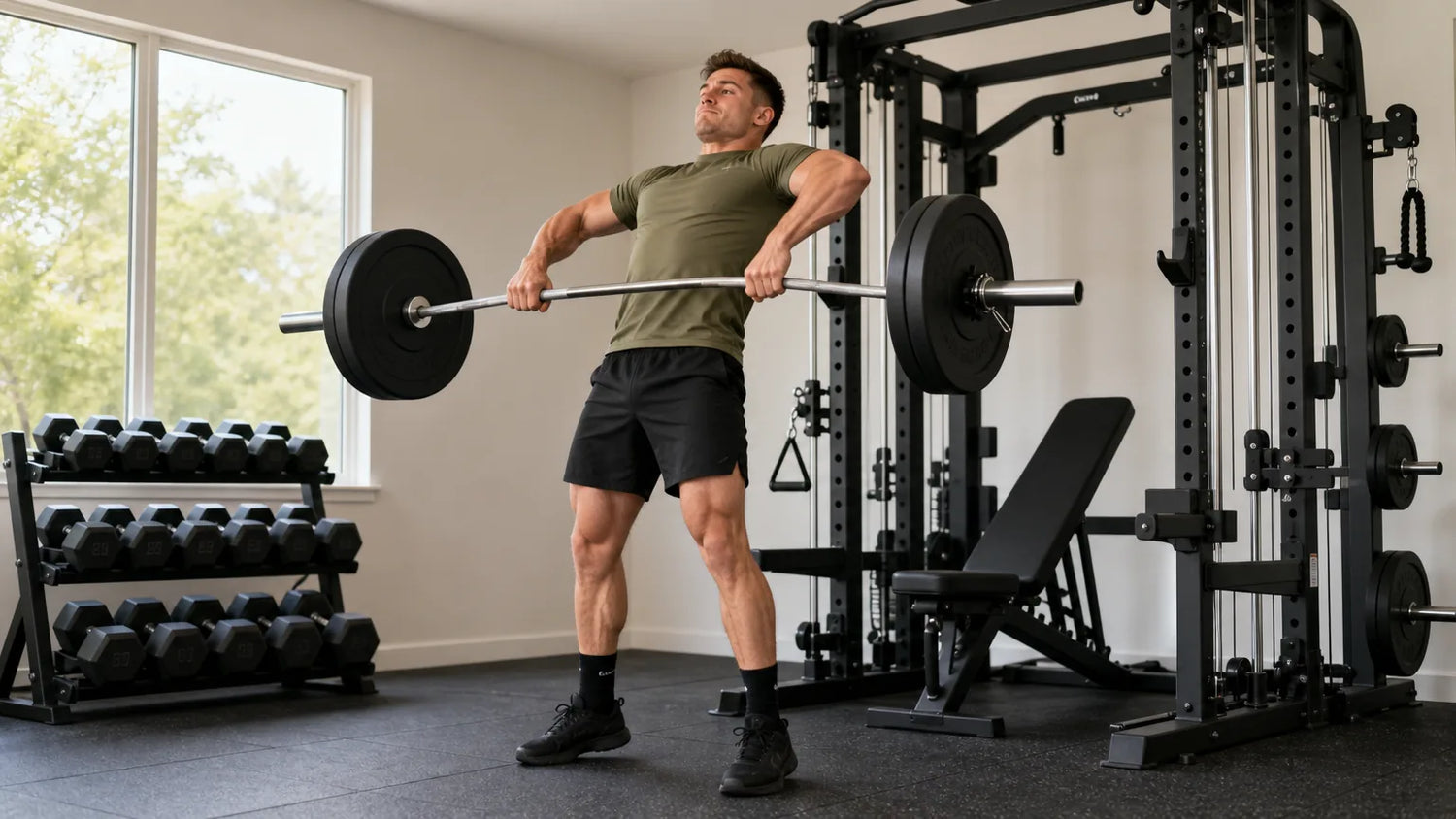
The best weightlifting bars with good whip flex are Olympic bars whose shaft diameter and steel quality let the bar bend and spring back during fast lifts. Whip is a real, buyable property, not marketing.
This guide explains what whip is, which specs create it, how much you actually need for your lifts, and which RitFit bar fits your goals and budget.
Quick Answer: The best weightlifting bars with good whip flex use a thin 28mm shaft and quality 190,000 to 215,000 PSI steel, which lets the bar bend and recoil during snatches and cleans. For a mixed home gym, a versatile all-purpose bar with moderate whip is usually the smarter, better-value choice.
Key Takeaways
- Whip is bending, not bounce: Barbell whip is the flexural bending and recoil of the shaft under dynamic load, most useful in fast Olympic lifts.
- Diameter drives it: A 28mm shaft gives the most whip, 28.5mm is all-purpose, and 29mm or thicker bars are stiff for heavy pressing.
- Steel quality matters: Quality Olympic bars sit around 190,000 to 215,000 PSI so they flex and spring back without taking a permanent bend.
- Match bar to lift: Whip helps the snatch and clean but can feel unstable under heavy squats and bench presses.
- Value beats maximum flex: Most home gym lifters get more from a versatile all-purpose bar than a dedicated competition weightlifting bar.
What Is Barbell Whip (Flex)?
Barbell whip is the flexing and recoil of a bar under dynamic load, described in physics as flexural bending. When you dip and drive during a clean, a whippy bar bends and then springs back to help the lift.
Researchers describe how a lifter can time the bar's oscillation so they drive into the bar as its vibration is already moving the weight upward, adding a small assist to fast lifts. That timing is why whip feels most alive on explosive Olympic movements rather than slow grinds.
- Where you feel it: Whip shows up most during the snatch and the clean, when the bar loads and unloads quickly.
- What creates the spring: A thinner shaft made of quality steel bends further under load and returns to straight without staying bent.
- Why lifters chase it: A well-timed recoil can help accelerate the weight upward at the top of a pull.
In one study, a flexible barbell loaded at 30% of one-rep max produced higher peak ground reaction forces than a rigid steel bar during the back squat in trained football players.[1] If you want the fundamentals first, review these types of weightlifting bars before shopping.
Which Specs Determine Whip?
Three specs together determine how much whip a bar delivers: shaft diameter, steel tensile strength, and the sleeve or coupling design. No single number tells the whole story.
Shaft Diameter
Shaft diameter is the biggest lever on whip, and thinner bars flex more.
- 28mm: The men's Olympic weightlifting standard, with the most whip, built for snatches and cleans.
- 28.5mm: An all-purpose diameter with moderate whip that balances squats, presses, and pulls.
- 29mm and thicker: Stiffer power-style shafts with far less flex, favoring heavy squats and bench pressing.
Tensile Strength
Tensile strength describes how much stress the steel handles before it bends permanently. Most quality Olympic bars sit between 190,000 and 215,000 PSI, which lets them flex and spring back rather than take a set.
- Below the range: Cheaper low-tensile steel can bend permanently under heavy load, ruining usable whip.
- Within the range: Higher tensile steel resists a permanent bend, so diameter and steel quality together give durable, repeatable whip.
Sleeve and Coupling Type
The sleeve design changes how the bar rotates and how the shaft loads during a lift. Bearing sleeves spin fast for Olympic lifts, while bushing sleeves suit slower, heavier work.
- Needle bearings: Fast, smooth spin that lets the plates rotate freely under a snatch or clean.
- Bushings: A solid, quieter option often chosen for slow, heavy lifts.
- Shop by spec: Compare options in the bars and plates collection to match sleeve type to your lifts.
How Much Whip Do You Actually Need?
You need whip in proportion to how much fast, explosive lifting you do. Snatches and cleans reward flex, while heavy squats and bench presses benefit from a stiffer bar.
One comparison of Olympic and safety squat bars during high-intensity back squats found no difference in multi-set peak force at the same absolute load, though the squat mechanics differed between bars.[2] Research on a hexagonal bar likewise showed that changing bar design shifts the mechanical demand of the deadlift.[3]
- Olympic lifters: Prioritize whip with a 28mm shaft and needle bearings for the snatch and clean and jerk.
- Mixed lifters: A 28.5mm all-purpose bar gives enough flex for pulls while staying stable under squats.
- Powerlifting focus: A thicker, stiffer shaft keeps heavy squats and bench presses controlled and predictable.
If space is tight, our 5-foot Olympic bar guide covers shorter options, and you can check how heavy a bench press bar runs before you commit.
Which RitFit Bar Should You Choose?
The right RitFit bar depends on your primary lifts and budget, not on chasing the most flex. Use the matrix below to match a bar to your training goal.
| Lifter Type | Recommended Bar | Why |
|---|---|---|
| Mixed home gym (squat, bench, deadlift, occasional Olympic) | RitFit 7ft Olympic Barbell | Versatile shaft with needle-bearing spin and 500 to 1000 lb capacity options for one bar that does most jobs |
| Value seeker wanting a solid do-it-all bar | RitFit Patriotic Star Olympic Bar 20kg | Standard 20kg Olympic weight with moderate feel for general training on a budget |
Specs vary by capacity option, so confirm details on each product page before buying.
- Choose the 7ft bar if: You want capacity headroom and one bar for squats, presses, deadlifts, and light Olympic work.
- Choose the Patriotic Star if: You want a standard 20kg Olympic bar for general strength training at a friendly price.
For lower-body sessions where bar feel matters most, pair either bar with these good leg workouts.
Featured RitFit Pick
The RitFit 7ft Olympic Barbell is a versatile shaft with needle-bearing spin and 500 to 1000 lb capacity options, making it a strong single-bar choice for mixed home gyms.
See the decision matrix above to compare it with the Patriotic Star Olympic Bar.
Is More Whip Always Better?
No, more whip is not always better, and treating flex as a universal upgrade is the most common buying mistake. Whip helps fast lifts but hurts heavy, slow ones.
- Common mistake 1: Buying a competition 28mm bar for a mostly powerlifting routine, then fighting wobble under heavy squats.
- Common mistake 2: Assuming a cheap thin bar equals good whip, when low-tensile steel can bend permanently instead of springing back.
- Common mistake 3: Ignoring sleeve type, so a fast Olympic lift feels sticky on a bar built for slow work.
Match stiffness to your primary lifts rather than chasing maximum flex, and support heavy sessions with gear like a belt. Learn what a weightlifting belt does before your next heavy pull.
Is a Whippy Bar Worth It for a Home Gym?
A dedicated whippy bar is worth it only if Olympic lifting is your main focus. For most home gyms, a versatile all-purpose bar delivers better long-term value.
- Value angle: A single all-purpose bar handles squats, presses, deadlifts, and light Olympic work, so you buy one bar instead of two.
- Upgrade path: Start with a versatile bar, then add a dedicated competition bar later only if your training shifts toward the snatch and clean.
- Long-term cost: A quality bar within the standard tensile range keeps its whip for years, avoiding replacement from a permanent bend.
Think of a whippy competition bar as a specialist tool and an all-purpose bar as your workhorse. Buy the specialist only when your lifts justify it.
"Weightlifters use the bar's whip to assist in the upward acceleration by timing the oscillation of the bar so that they drive upwards into the bar when the vibration in the bar is already moving the weight upwards."
Joshua Langlois, Graduate Researcher in Acoustics and Vibration, Pennsylvania State University
FAQs About Weightlifting Bar Whip
What is barbell whip?
Barbell whip is the flexing and recoil of a bar under dynamic load, described in physics as flexural bending. When you dip and drive during a clean or snatch, a whippy bar bends and springs back, and skilled lifters time that recoil to help accelerate the weight upward. It is most noticeable on thinner shafts under heavy explosive lifts.
What barbell diameter gives the most whip?
A 28mm shaft is the standard men's Olympic weightlifting diameter and provides the most whip, which is ideal for snatches and cleans. A 28.5mm all-purpose shaft offers moderate whip that balances squats and pulls, while 29mm and thicker power bars are stiffer with far less flex, favoring heavy squats and bench pressing.
Does tensile strength affect barbell whip?
Yes, but not the way many people assume. Most quality Olympic bars fall between 190,000 and 215,000 PSI tensile strength, which lets the bar flex and spring back without taking a permanent bend. Higher tensile steel resists bending under heavy load, so the balance of diameter and steel quality together determines how much usable, durable whip a bar delivers.
Do I need a whippy bar for a home gym?
It depends on your lifts. If you train the snatch, clean and jerk, or explosive Olympic movements, a whippy 28mm bar helps. If you mainly squat, bench, and deadlift, a moderate 28.5mm all-purpose bar is a smarter single-bar choice. Most home-gym lifters get the best value from a versatile bar rather than a dedicated competition weightlifting bar.
Is more barbell whip always better?
No. Whip is an advantage for fast Olympic lifts but a drawback for heavy powerlifting. A very whippy bar can feel unstable and wobble under a heavy squat or bench press, making the lift harder to control. Match the bar's stiffness to your primary lifts rather than chasing maximum flex for its own sake.
Conclusion
The best weightlifting bars with good whip flex combine a thin shaft with quality steel, but the right amount of whip depends on your lifts. Prioritize flex for Olympic work and stability for heavy powerlifting.
Decide which lifts drive your training, then choose your bar such as the RitFit Patriotic Star Olympic Bar 20kg and start training with confidence.
Disclaimer
This article is for general educational purposes only and does not replace professional coaching or medical advice. Consult a qualified trainer or healthcare provider before starting heavy Olympic lifting or changing your training program.
Save on your next RitFit order
Tap the button to copy your code, then paste it at checkout.
References
1. Hutchison RE, Caterisano A. Comparison of Peak Ground Reaction Force, Joint Kinetics and Kinematics, and Muscle Activity Between a Flexible and Steel Barbell During the Back Squat Exercise. J Hum Kinet. 2019;68:99-108. doi:10.2478/hukin-2019-0059
2. Staheli N, Cowley JC, Lawrence MM. Comparison of Olympic and Safety Squat Bar Barbells on Force, Velocity, and Rating of Perceived Exertion During Acute High-Intensity Back Squats in Recreationally Trained Men. Int J Exerc Sci. 2024;17(7):1120-1133. doi:10.70252/QTXB6775
3. Lake J, Duncan F, Jackson M, Naworynsky D. Effect of a Hexagonal Barbell on the Mechanical Demand of Deadlift Performance. Sports (Basel). 2017;5(4):82. doi:10.3390/sports5040082