
The dumbbell pullover on a weight bench is a classic upper body exercise that trains your chest, lats, and serratus anterior through one long arc of shoulder motion. Done well, it builds a bigger stretch through the upper body than most pressing moves.
This guide covers bench setup, both torso positions, the step by step rep, common mistakes, and simple load rules that protect your shoulders. All you need is a flat sturdy bench and one dumbbell.
Quick Answer: The dumbbell pullover on a weight bench works best with the bench set flat and your shoulder blades anchored on the pad. Hold one dumbbell over your chest, lower it behind your head with nearly straight elbows, and pull back to the start while keeping your ribcage down.
Key Takeaways
- Answer first: The dumbbell pullover on a weight bench is a chest and lat builder that only needs a flat pad and one dumbbell.
- Two setups: Lie along the bench for support or across the bench edge for a bigger stretch through the lats and chest.
- Muscle balance: A 2026 narrative review of 23 EMG studies reports the pullover appears to favor the pectoralis major over the latissimus dorsi.
- Load rule: Start with three to four sets of eight to 10 slow reps and add weight only when every rep looks the same.
- Safety line: End the set when shoulder pain shows up or the ribcage flares, and keep the range inside your comfortable overhead position.
What Muscles Does the Dumbbell Pullover Work?
The dumbbell pullover trains the pectoralis major and latissimus dorsi as prime movers, with the serratus anterior and the long head of the triceps assisting the shoulder.
A 2026 narrative review of 23 EMG studies reports that the pullover appeared to preferentially activate the pectoralis major rather than selectively target the latissimus dorsi[1]. The same review maps the lats as contributors to shoulder extension, adduction, and internal rotation.
- Pectoralis major: Drives shoulder extension as the dumbbell arcs overhead, with the sternocostal fibers working hardest near the bottom of the stretch.
- Latissimus dorsi: Shares the arc through shoulder extension, so pullovers still count as lat work even when the chest leads.
- Serratus anterior and triceps long head: Stabilize the scapula and control the elbow while the ribcage stays braced.
EMG data reflects acute activation rather than long term growth, so treat the chest bias as a programming hint and train both roles across your week.
For the pressing side of the picture, read our guide to the muscles the bench press works.
"Great Quality I really like the quality of the pair of 30 lb dumbbells. They are a great compliment to my growing set of workout equipment."
Thomas Mueller, Verified Buyer, RitFit Rubber Hex Dumbbells Pairs and Sets
What You Need for Dumbbell Pullovers
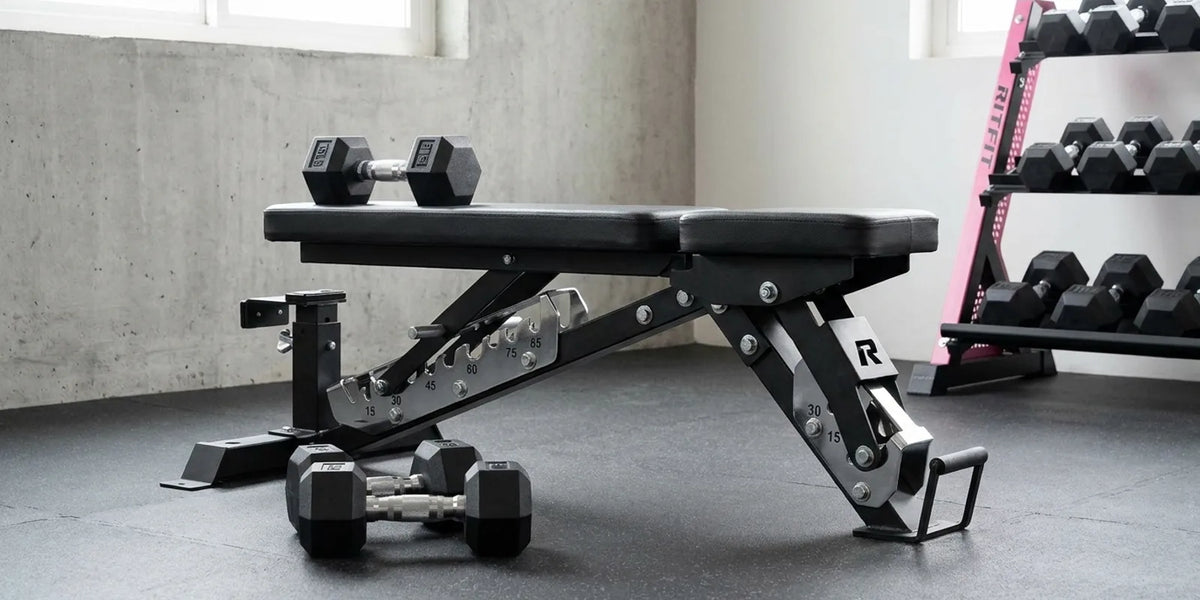
A flat, stable weight bench and one dumbbell are all the equipment a dumbbell pullover needs.
Set the pad to its flat position, pick a dumbbell you can lower behind your head slowly, and clear the space behind the bench before your first set.
- Flat bench with solid footing: The pad must stay still while your hips hang low, so test the bench for wobble before you load it.
- One moderate dumbbell: A single dumbbell held in both hands keeps the load centered and both shoulders even.
- Room behind the pad: The dumbbell travels behind your head, so keep walls, racks, and plate trees out of the arc.
Any flat bench with a solid pad works, and the RitFit 1300LB Adjustable Weight Bench covers the same flat setup in a lighter package. If you are still shopping, our weight benches and dumbbells collections list the full range.
Does the RitFit GATOR Adjustable Weight Bench Work for Dumbbell Pullovers?
Yes. The RitFit GATOR Adjustable Weight Bench covers what pullovers demand, since the official product page lists 10 back pad angles from 0 to 85 degrees that include a true flat position plus a 1600 lb total load capacity.
- Durability for heavy reps: A 50 × 70 mm steel frame rated for 1600 lb in total keeps bodyweight across the pad plus a heavy dumbbell far from the limit in a garage gym.
- Pad geometry for the stretch: The back pad runs 25.9 in long and 11.8 in wide, so your shoulder blades keep full contact when you lie across the bench edge.
- Versatility past the pullover: 21 total adjustment combinations cover flat, incline, and decline pressing and rows, so the same bench handles the rest of an upper body day.
"The gator bench is SOLID! Very sturdy and heavy. You will feel very safe on this bench with any heavy workouts. The wheels make it easy to scoot around the gym when needed. This is money well spent and much better than the basic ritfit bench. Good quality product for the price!"
Christopher O. Verified Buyer, RitFit GATOR 1600LB Adjustable Weight Bench
Set Up the Bench and Your Body
Set the bench flat, anchor your shoulder blades on the pad, and choose one of two torso positions before you ever move the dumbbell.
Men's Health fitness director Ebenezer Samuel cues the cross bench version with the shins perpendicular to the bench and the knees at 90 degrees while the abs and glutes stay squeezed.
- Lying along the bench: Your whole back rests on the pad with hips bent and feet flat, which gives beginners more support and less core demand.
- Across the bench edge: Only the upper back and shoulder blades sit on the pad, the hips drop below shoulder level, and the stretch through the lats and chest grows noticeably.
- Ribcage down, glutes tight: Both positions need a braced trunk, because a flared ribcage turns the move into a lower back arch.
Test your overhead reach first, and if you cannot raise your arms overhead without arching the back, shorten the range or move to the alternatives in the variations section.
How to Do a Dumbbell Pullover on a Weight Bench Step by Step
The dumbbell pullover on a weight bench runs in five steps, from bracing on the pad to pulling the dumbbell back over your chest.
Move slowly, keep the elbows nearly straight, and stop the descent the moment your position breaks.
- Step 1: Sit on the bench with the dumbbell vertical on your thigh, then roll back and press it to a stop over your chest.
- Step 2: Set your shoulder blades into the pad, squeeze your glutes, and lock the ribcage down before the first rep.
- Step 3: Drive the pits of your elbows forward into external rotation to engage the lats, and hold that position for the whole set.
- Step 4: Lower the dumbbell behind your head slowly and only as deep as your shoulder mobility allows, with the elbows nearly straight.
- Step 5: Pull the dumbbell back to a stop over your chest, reset the ribcage, and start the next rep from that same tight position.
A study in 15 recreationally trained men found that shoulder joint position significantly affected peak force and myoelectric activity of the chest, lats, and rear delts during pullover reps[2].
"Take your time as you're doing them and make sure to really squeeze those elbows. Especially if you want to really grow those lats you're gonna have a ton of fun with these."
Ebenezer Samuel, C.S.C.S. Fitness Director, Men's Health, How to Do the Dumbbell Pullover for Stronger Lats
"Very solid weight bench. Quick adjustments, quick to move with sturdy wheels. Adjustments to declines to seated presses in 10 seconds."
Richard S. Verified Buyer, RitFit 1300LB Adjustable Weight Bench BWB01
Common Dumbbell Pullover Mistakes to Avoid
Most dumbbell pullover mistakes come from bending the elbows, flaring the ribcage, or chasing depth the shoulders cannot control.
Each one shifts tension away from the chest and lats, or dumps the load into the lower back and shoulder joints.
- Bending the elbows: Flexed elbows turn the pullover into a triceps move and shorten the lever the lats have to control.
- Flaring the ribcage: A flared ribcage arches the lower back, so keep the abs braced and the ribs down through every rep.
- Going too deep too soon: The stretch position is where the shoulder feels load the most, so descend only as far as your mobility allows.
- Throwing the weight up: Momentum hides weak positions, so pause briefly over the chest before the next rep.
Form breakdown on the first rep means the weight is too heavy, so drop the load and rebuild the position before your next set.
"Bought the 60lb round dumbbells.... they were package much better than other companies I've dealt with...absolutely no smell to the, and they warned about possibly snell and oily... neither one in this pair. They look great and feel even better"
Jonathan B. Verified Buyer, RitFit PVC-Coated Round Dumbbells in Pairs
How Much Weight Should You Use?
Most lifters should start the dumbbell pullover with a light dumbbell, often 10 to 20 pounds, and earn the right to go heavier.
The long lever behind the head makes even modest loads feel heavy, so ownership of every rep matters more than the number on the dumbbell.
- Starting point: Aim for three to four sets of eight to 10 reps with a weight that never forces a bounce or a ribcage flare.
- Rep speed: Lower the dumbbell slowly and pause briefly at the stretch, because the bottom position carries the most shoulder demand.
- Grip: Hold one dumbbell with both hands under the top plate, palms facing each other, and keep the wrists stacked over the elbows.
When to Add Weight
Add a small amount of weight only when every rep of the last set looks identical to the first, and an adjustable dumbbell set makes those small jumps easy in a small space.
When Should You Stop the Exercise to Protect Your Shoulders?
Sharp shoulder pain is the signal to stop the dumbbell pullover, because the loaded overhead arc leaves little room for grinding through discomfort.
A biomechanical study in 20 healthy adults notes that shoulder injuries are common in overhead arm movements and that chest strength training has the potential to protect the shoulder[3].
- Pain over soreness: Sharp or pinching shoulder pain ends the set, while ordinary muscular fatigue is fine to ride out.
- Position loss: A flared ribcage or an arched lower back means the current depth is deeper than the control you have today.
- No load without the test: Lifters who cannot raise the arms overhead without arching should skip the pullover until mobility improves.
- Existing injuries: A qualified professional can tell you whether the pullover belongs in your program at all.
Scaling the range beats quitting, because a shorter arc with clean tension outperforms a deep rep that dumps into the joints.
Dumbbell Pullover Variations and Alternatives
The cross bench dumbbell pullover, the on bench version, the dumbbell fly, and the straight arm cable pullover cover most training goals when the standard pullover does not fit.
Swap movements rather than pushing through joint pain, since each alternative loads the chest and lats through a similar arc.
| Movement | Setup | Best for |
|---|---|---|
| On bench pullover | Back flat on the pad with feet planted | Lifters who want more support |
| Cross bench pullover | Shoulder blades on the bench edge with hips low | A bigger stretch and more core work |
| Dumbbell fly | Lying flat on the bench with arms wide | Chest focus with a shorter lever |
| Straight arm cable pullover | Standing at a cable stack with a rope or bar | Constant tension and easy load changes |
The table compares setup and training focus only; set, rep, and load rules stay the same as the guidelines above.
The dumbbell fly keeps you on the bench with a shorter lever, and our step by step dumbbell fly guide walks through it. For broader pulls and presses, see the best back exercises with dumbbells and the best dumbbell chest exercises roundups.
"My wife wanted some quality dumbbells for a decent price and these hit the mark on both points. She loves them and is happy we ordered them."
Daniel H. Verified Buyer, RitFit Rubber Hex Dumbbells Pairs and Sets
How Often Should You Do Dumbbell Pullovers?
Two to three sessions per week fit most lifters, programmed as accessory work at the end of an upper body day.
Leave at least one rest day between exposures, and progress load before adding extra sets to the week.
- Weekly slot: Run pullovers on two upper body days, or on three when recovery is solid and the load stays light.
- Progression order: First own the range and the ribcage position, then add reps inside that range, then step the load up.
- Pairing: Pullovers follow bench pressing or rows well, and our bench press form guide covers the pressing side.
- Storage between sessions: A dumbbell rack keeps the working weight ready in a small garage gym.
Deload the movement whenever the shoulders feel flat, because pullovers reward consistent tension far more than hero loads.
"Loved the dumbbell definitely a great design and durable"
Julio A. Verified Buyer, RitFit PVC-Coated Round Dumbbells in Pairs
FAQs About Dumbbell Pullovers on a Weight Bench
What muscles does the dumbbell pullover work?
The dumbbell pullover trains the chest, lats, serratus anterior, and the long head of the triceps through shoulder extension and flexion. A 2026 narrative review of 23 EMG studies reports the pullover appears to preferentially activate the pectoralis major rather than selectively isolating the latissimus dorsi.
Can you do a dumbbell pullover on an adjustable bench?
Yes. Set an adjustable bench to its flat position and use it either lying along the bench or perpendicular across the bench edge. A stable bench matters because your shoulders and head support most of your body weight while the dumbbell travels behind you.
How much weight should you use for a dumbbell pullover?
Start with a light dumbbell you can control for 8 to 10 slow reps, often 10 to 20 pounds for beginners. The pullover places a long lever on the shoulder joint, so add weight only when you can keep your ribcage down and lower the dumbbell without pain.
Are dumbbell pullovers bad for your shoulders?
Not when you stay within your comfortable range of motion. Test your overhead position first without weight, keep your ribcage down, and stop the descent as soon as you feel shoulder discomfort. Lifters with existing shoulder injuries should ask a qualified professional before adding pullovers to their program.
How often should you do dumbbell pullovers?
Two to three times per week works well for most lifters, with at least one rest day between sessions. Program them as an accessory for 3 to 4 sets of 8 to 10 quality reps, and progress by adding a small amount of weight once every rep feels controlled.
What can I do instead of a dumbbell pullover?
Good alternatives include the dumbbell fly, the straight arm cable pullover, and the dumbbell bench press. Each trains the chest and shoulders through a longer range of motion while giving you more load options. Pick the variation that matches your available equipment and shoulder comfort.
Does the dumbbell pullover work the lats or the chest?
Both, but the balance depends on your setup and shoulder position. EMG research summarized in 2026 suggests the pullover tends to favor the pectoralis major, while your lats contribute shoulder extension throughout the movement. Adjusting your elbow position can shift some emphasis toward the lats.
Conclusion
The dumbbell pullover on a weight bench earns its place in an upper body program when the bench is flat, the ribs stay down, and the load stays honest. Work the two torso positions, keep reps slow, and progress only when every rep matches.
Start with the setup steps above, film one set to check your ribcage, and add the movement to two sessions this week.
Disclaimer
This article is general fitness information and is not medical advice. Stop any exercise that causes pain and consult a qualified professional before starting a new training program if you have an injury.
References
1. Di Fonza D, Di Claudio G, Colantuono G, et al. Electromyographic Analysis of Latissimus Dorsi Activation During Common Resistance Training Exercises: A Narrative Review. J Funct Morphol Kinesiol. 2026;11(3). doi:10.3390/jfmk11030315. PMCID: PMC13510307
2. Teixeira LFM, Gomes WA, DA Silva JJ, Magalhaes RA, Marchetti PH. Differences Between Pullover and Pulldown Exercises on Maximal Isometric Force and Myoelectric Activity in Recreationally-Trained Men. Int J Exerc Sci. 2022;15(4):797-807. doi:10.70252/SYAL7537. PMCID: PMC9362894
3. Schütz P, Zimmer P, Zeidler F, et al. Chest Exercises: Movement and Loading of Shoulder, Elbow and Wrist Joints. Sports (Basel). 2022;10(2). doi:10.3390/sports10020019. PMCID: PMC8877248