








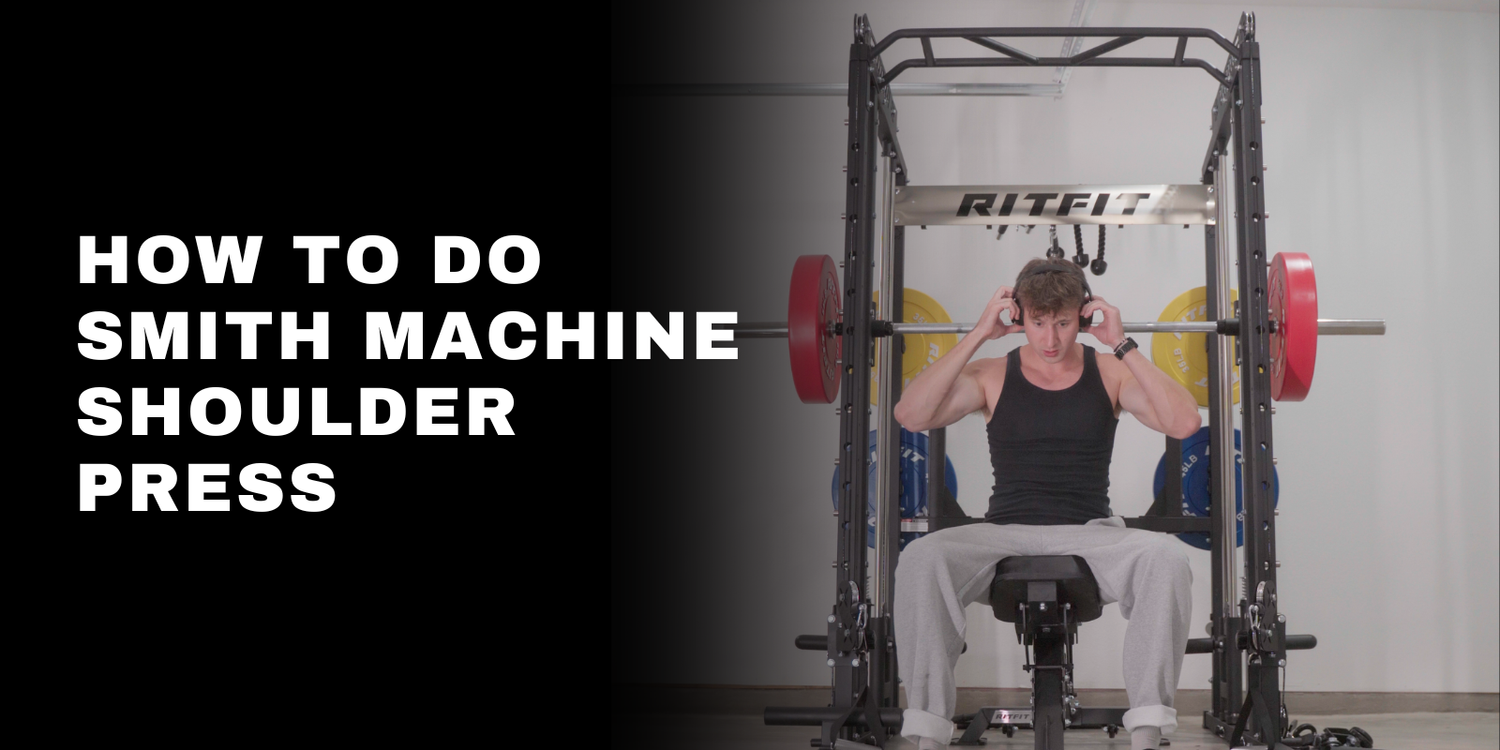
The Smith machine shoulder press is a seated overhead press on a guided bar path that builds stronger deltoids with less balance demand than free weight pressing. The setup comes down to three things: a near upright bench, wrists stacked over the elbows, and a bar path that matches the angle of your rails.
This guide covers the form, the muscles involved, the bench angle that fits most lifters, the seated version, and when a Smith machine press is the wrong tool for your shoulders.
Quick Answer: To do a Smith machine shoulder press, set the bench between 75 and 85 degrees, place it so the bar tracks over your wrists and elbows, unrack with the ribs down, and press to a controlled lockout. Lower only as far as you can stay pain free, then add weight once every rep looks the same.
Key Takeaways
- The Smith machine shoulder press works best when the bench, elbows, and wrists stay stacked under the bar.
- You do not need to lower the bar to your shoulders if a higher bottom position feels more stable and pain free.
- A near upright bench usually keeps the movement more shoulder focused and easier to control.
- The fixed rail helps many lifters train harder alone, but it does not fit every shoulder equally well.
- Progress only when your range of motion, tempo, and lockout all stay consistent from rep to rep.
Benefits of the Smith Machine Shoulder Press
The Smith machine shoulder press is useful because it combines overhead pressing with a guided bar path that many home gym lifters find easier to repeat. It is especially practical for solo training inside a Smith machine setup where unracking and re racking need to feel predictable.
Enhanced Stability and Safer Solo Training
The fixed path reduces some balance demands, so many lifters can focus more on bracing, elbow position, and rep control. That is one reason a Smith machine often pairs well with safe solo workouts at home.
Targeted Shoulder Training
The shoulder press is effective for training the deltoids, and shoulder press variations can produce meaningful activation across the anterior, medial, and posterior deltoid portions.[1] That makes the lift valuable when your goal is not just pressing strength, but fuller shoulder development.
Easier Load Progression
Machine based and free weight training can both support strength and hypertrophy, but performance tends to improve most in the pattern you train most often.[2] That makes the Smith machine shoulder press a smart way to build skill and confidence in a repeatable pressing pattern.
More Consistent Session to Session Setup
Small setup changes can shift how pressing variations feel, so a fixed rack and bench position help you repeat the same motion more accurately week after week. If you already use adjustable weight benches in your home gym, this consistency is even easier to build into your routine.
"Arrived today and took less than an hour to put together. Very good directions! Will be breaking it in tomorrow."
Diane L. Verified Buyer, RitFit Gorilla 2-in-1 Chest and Shoulder Press Machine
How to Do the Smith Machine Shoulder Press With Proper Form
Proper setup matters because the best Smith machine shoulder press form is the one that stays stacked, smooth, and pain free from start to finish. Use the sequence below to build a shoulder focused press that fits your machine instead of forcing your body into one rigid template.
Get Ready
Set the bench close to upright and place it so the bar tracks over your wrists and elbows at the bottom. If your rails are angled rather than vertical, slide the bench until the path feels natural instead of forcing a straight up and down line.
- Bench angle: Start around 75 to 85 degrees so the movement stays shoulder focused without turning into a steep incline press.
- Bar height: Set the hooks so you can unrack without shrugging or losing upper back position.
- Safeties: Place them just below your lowest comfortable bottom position.
- Grip: Use a grip slightly outside shoulder width so the wrists can stay stacked over the elbows.
- Warm up: Do light ramp up sets plus a few face pulls or wall slides before your first work set.
Step 1: Find Your Start Position
Sit tall with your upper back supported, feet flat, and ribs down before you touch the bar. Start with the bar around chin to upper chest level, with your elbows slightly in front of your torso instead of flared straight out.
Step 2: Unrack and Brace
Rotate the hooks, settle the bar into your start position, and brace before the first rep begins. Think glutes lightly tight, rib cage down, and neck neutral so the shoulders can do the pressing instead of your lower back.
Step 3: Press Overhead
Drive the bar up in a controlled path until your arms reach a stable top position over the shoulders. Finish tall, but do not shrug hard or throw the rib cage upward to fake extra range.
Step 4: Lower With Control
Bring the bar down slowly to your lowest pain free position while keeping the wrists stacked and the elbows slightly forward. For many lifters that bottom point is around chin level or slightly below, not necessarily all the way to the shoulders.
Step 5: Progress the Movement
Add load only after your depth, tempo, and lockout look the same on every rep. A simple rule works well here, once you hit the top of your rep range across all sets with clean form, increase the weight the next session.
- Muscle growth: 3 to 4 sets of 8 to 12 reps, resting 60 to 120 seconds.
- Strength focus: 4 to 6 sets of 3 to 6 reps, resting 2 to 3 minutes.
- Beginner option: 2 to 3 sets of 10 to 15 reps, finishing with 1 to 2 reps in reserve.
Where the Elbow Path Should Track
On a seated Smith machine shoulder press, the elbows should travel slightly in front of the torso instead of flaring straight out to the sides. That forward elbow path keeps the wrists stacked over the elbows and takes some of the pinch out of the bottom position.
Seated vs Standing Smith Machine Shoulder Press
A seated Smith machine shoulder press pins the torso against a bench, so the bar path repeats more easily than a standing Smith machine shoulder press. The standing version adds whole body demand and shifts the shoulder line higher, which makes it a useful variation rather than the default choice.
Why the Seated Smith Machine Shoulder Press Is Easier to Repeat
A seated overhead press on a Smith machine removes the step and balance work that standing pressing requires, so more of your attention goes into the bar path and the delts. It also makes the bottom position easier to standardize, which matters when you are trying to track progress across weeks.
When a Standing Smith Machine Shoulder Press Makes Sense
A standing Smith machine shoulder press suits lifters who want the pressing pattern to carry over to standing overhead work, because the trunk and hips still have to help. It usually calls for lighter loads, since the fixed rail does not remove the balance demand entirely.
Which Version You Should Train First
Most lifters should build the seated Smith machine shoulder press first, because the bench gives a stable base for adding load and cleaning up the elbow path. Add the standing version once the seated press holds the same range of motion and tempo across every set.
What Muscles Does the Smith Machine Shoulder Press Work
The Smith machine shoulder press mainly trains the shoulders and triceps while asking the upper back and trunk to keep the pressing path organized. It is not a pure isolation lift, but it is one of the clearest ways to load the overhead pressing pattern inside a guided machine. For a closer look at how much each deltoid portion contributes, read the breakdown of what delt the shoulder press works.
Primary Muscles
The deltoids do most of the work in the shoulder press, and shoulder press variations have been shown to meaningfully recruit the shoulder musculature, especially the anterior and medial deltoid portions.[1] The triceps then help finish the rep through elbow extension.
- Anterior deltoid: Drives shoulder flexion and helps move the bar from the bottom into the mid range.
- Medial deltoid: Supports shoulder abduction and contributes to the rounded look many lifters want from pressing work.
- Triceps: Extend the elbows and help lock the bar out under control.
- Upper chest: Assists the press, especially if the bench angle becomes slightly less upright.
Secondary Support Muscles
Stable pressing does not come only from the shoulders, because the upper back, rotator cuff, and trunk still organize the bar path and body position. The movement may feel more stable than free weights, but it still rewards good scapular control and steady bracing.
- Rotator cuff: Helps keep the shoulder centered and controlled during the press.
- Upper back: Creates a strong base against the bench and helps keep the chest lifted without over arching.
- Core: Resists excessive rib flare and lumbar extension during the hardest part of the set.
- Forearms and grip: Help keep the wrist and bar position organized throughout the range.
What Is the Best Bench Angle for a Smith Machine Shoulder Press?
The best bench angle for a Smith machine shoulder press sits between 75 and 85 degrees, because that range keeps the bar tracking over the shoulder joint instead of drifting toward the upper chest. An angled Smith machine usually needs a small bench shift rather than a different bench angle, so the bar still stacks over the wrists and elbows.
Why a Near Upright Bench Beats a Steep Incline
A near upright bench keeps the press centered on the shoulders, because the arms stay closer to the line of the joint through the whole rep. Push the backrest much past 70 degrees and the movement starts behaving like a steep incline press, where the upper chest takes a larger share of the work.
How to Adjust the Bench on an Angled Smith Machine
Angled rails move the bar forward or back as it travels, so slide the bench until the bar stacks over your wrists and elbows instead of forcing a straight up and down line. On a frame fixed machine such as the RitFit M1 PRO Smith Machine home gym package, that bench position is the main adjustment you have, so retest the unrack after every small change.
Is the Smith Machine Shoulder Press Effective?
The Smith machine shoulder press is effective for building deltoid and triceps size when the setup matches your joint structure and you keep progressing the load. The guided path removes some balance demand, so the press is easiest to repeat for lifters who train alone or want a simpler progression target.
What the Guided Path Changes
Removing the balance demand changes what the muscles have to do, and implement stability has been shown to alter muscle activity during the overhead press.[3] That does not make the set easier, because a guided path usually lets the same lifter handle more load with a cleaner rep standard.
When a Smith Machine Press Is the Wrong Choice
A Smith machine press rewards lifters whose shoulders line up with the rail, but it can fight anyone whose structure does not match. If the bottom position pinches no matter where you set the bench, a dumbbell or cable press lets you move the arms where your joint wants them.
"Few pieces of equipment in the home exercise industry are as comprehensive and versatile as this all-in-one gym system. The robust system provides a natural, centered bar path for compound lifts like squats, presses, and rows, and incorporates a dual cable crossover station with a full rack of precision-engineered attachments."
Tom Eskey, CF-L1, CPT, Home Gym Equipment Reviewer, Garage Gym Revisited, RitFit M1 Multi-functional Smith Machine Review
Common Mistakes to Avoid
Most Smith machine shoulder press problems come from trying to fit your body to the machine instead of fitting the setup to your body. Fixing a few technical errors usually improves comfort, consistency, and delt tension right away.
Arching the Back Too Much
Too much back arch usually means the load is too heavy or the bench and elbow position are off. Keep the ribs down and the torso stacked so the press stays on the shoulders instead of turning into a standing incline pattern.
Flaring the Elbows Too Wide
Elbows flared straight out often make the bottom position feel rougher and less stable than it needs to. A slightly forward elbow angle usually helps the wrists, elbows, and bar stay better aligned.
Lowering the Bar Too Deep
Going lower is not always better if the last few inches force you out of your strongest joint position. Lifter discussions repeatedly show that many people confuse deeper with better, even when consistency and comfort clearly get worse.
Pressing Through Pinching or Joint Ache
A sharp pinch, a deep ache in the joint, or pain that lingers after the set is a sign to stop forcing the current setup. Adjust the bench, grip, or depth first, and switch exercises if the fixed path still feels wrong.
Adding Weight Before the Reps Match
Progress becomes hard to measure when every set uses a different range or tempo. Keep the rep standard the same from week to week, then earn the next load jump.
Technique Tips for an Effective Smith Machine Shoulder Press
The best technique cues are the ones that make the bar path feel stacked and repeatable, not the ones that force everyone into the same screenshot perfect shape. Use these tips to fine tune the lift around your structure, your machine, and your training goal.
Understand What Stability Changes
Overhead press variations change their muscular demands when the implement becomes more stable.[3] That is why the Smith machine shoulder press should be treated as its own training pattern, not as a free weight overhead press with training wheels.
Keep the Wrist Over the Elbow
Your hands should stay directly over the forearms through most of the range so force can travel cleanly into the bar. If the wrists fold back hard, adjust your grip slightly and squeeze the bar harder.
Breathe Through the Sticking Point
Brace before the rep, then exhale as the bar passes the hardest portion of the press. A controlled breath helps you finish strong without throwing the chest up for fake momentum.
Smith Machine Shoulder Press vs Smith Machine Overhead Press
The Smith machine shoulder press and the Smith machine overhead press describe two related setups rather than one identical lift. In this guide, shoulder press refers to the seated upright bench version, while overhead press refers to the more vertical, often more whole body, pressing style.
Bar Path and Pressing Angle
The seated Smith machine shoulder press usually feels more controlled and more shoulder focused because the bench helps lock in torso position. Machine overhead press research also shows that variation choice changes how the deltoids and pectorals contribute, so setup is not just semantics.[4]
Body Demand
The seated shoulder press reduces how much the lower body and trunk need to contribute, which makes it easier to keep the work centered on the shoulders. If you want a more global pressing challenge, a standing pattern or a free weight option may feel more athletic.
Range of Motion
The seated shoulder press often uses a slightly more conservative bottom position because the goal is stable delt loading, not forcing maximal depth. The overhead press style may tolerate a different path, but it still should not be pushed through pain.
Smith Machine Front Press vs Shoulder Press
A front press on a Smith machine and a Smith machine shoulder press share the same rack and bench, and the difference is where the bar finishes. The front press stops around chin or eye level with the elbows held in front of the torso, while the shoulder press continues to an overhead lockout.
Best Use Cases
Use the seated version when you want cleaner hypertrophy work, more repeatable solo training, or a simpler progression target inside your rack. If you want to compare that pattern with related options, read the Smith machine overhead press form guide, the Smith machine upright row guide, the what is a Smith machine guide, the Smith machine vs power rack comparison, and the chest press vs shoulder press breakdown.
FAQs About the Smith Machine Shoulder Press
Is the Smith machine shoulder press good for beginners?
Yes. The Smith machine shoulder press is a strong beginner option because the fixed path reduces balance demands and makes setup more repeatable. It still requires good bench position, stacked wrists and elbows, and a pain free range of motion, so lighter loads and controlled reps are the best place to start.
What bench angle works best for a Smith machine shoulder press?
A near upright bench usually works best for the Smith machine shoulder press because it keeps the movement shoulder focused without turning it into a steep incline press. Most lifters do well around 75 to 85 degrees, then fine tune the bench until the bar tracks comfortably over the wrists and elbows.
How low should you lower the Smith machine shoulder press?
Lower the Smith machine shoulder press only as far as you can stay stacked and pain free, which is often around chin level or slightly below. You do not need to force the bar to the shoulders if that changes your joint position, shortens control, or creates pinching at the bottom.
Why does the Smith machine shoulder press hurt my shoulder?
The Smith machine shoulder press often hurts when the bench is set in the wrong place, the elbows flare too far out, or the range of motion goes past your comfortable bottom position. A fixed rail can also clash with your structure, so changing bench position, grip width, or exercise choice may help.
Should you lock out the Smith machine shoulder press at the top?
Yes. A stable lockout on the Smith machine shoulder press is fine if you keep the rib cage down and do not jam the shoulders upward. The goal is to finish with control, not to slam into the top, so smooth reps and a stacked bar path matter more than aggressively snapping the elbows straight.
Can the Smith machine shoulder press build bigger delts?
Yes. The Smith machine shoulder press can build bigger delts when you use a repeatable setup, train close enough to failure, and progress load or reps over time. It works especially well when paired with lateral raises, upright rows, or rear delt work, so the shoulders get both compound and isolation volume.
How often should you do the Smith machine shoulder press for bigger shoulders?
Training the Smith machine shoulder press once or twice a week is usually enough for shoulder growth when each session carries three to four hard sets. Extra frequency only helps if your recovery keeps up and your other pressing work is not already loading the same pattern.
What should you do if the Smith machine shoulder press feels too heavy at the bottom?
Reduce the load or raise your bottom position when the Smith machine shoulder press feels too heavy at the bottom, because that usually means the range has moved past what your shoulders can control. Dropping the weight by one small step and rebuilding the same rep standard beats grinding through partial reps.
Conclusion
The Smith machine shoulder press is a practical way to train the delts and triceps with more repeatability than many free weight overhead options. Set the bench to match your rail angle, lower the bar only as far as you can stay stacked and pain free, and progress only when every rep looks the same.
Start with the seated version, build a bar path you can repeat, then add the standing variation once your overhead pressing feels stable.
Disclaimer
This guide is for general education, not medical diagnosis or personal rehabilitation advice. If shoulder pain is sharp, persistent, or worsening, stop the movement and consult a qualified clinician or physical therapist before continuing overhead pressing.
References
1. Campos YAC, Vianna JM, Guimarães MP, Oliveira JLD, Hernández Mosqueda C, da Silva SF, Marchetti PH. Different shoulder exercises affect the activation of deltoid portions in resistance-trained individuals. J Hum Kinet. 2020;75:5-14. doi:10.2478/hukin-2020-0033. PMCID: PMC7706677.
2. Haugen ME, Vårvik FT, Larsen S, Haugen AS, van den Tillaar R, Bjørnsen T. Effect of free-weight vs. machine-based strength training on maximal strength, hypertrophy and jump performance: a systematic review and meta-analysis. BMC Sports Sci Med Rehabil. 2023;15(1):103. doi:10.1186/s13102-023-00713-4. PMCID: PMC10426227.
3. Dicus JR, Holmstrup ME, Shuler KT, Rice TT, Raybuck SD, Siddons CA. Stability of resistance training implement alters EMG activity during the overhead press. Int J Exerc Sci. 2018;11(1):708-716. PMCID: PMC6033506.
4. Coratella G, Tornatore G, Longo S, Esposito F, Cè E. Front vs back and barbell vs machine overhead press: an electromyographic analysis and implications for resistance training. Front Physiol. 2022;13:825880. doi:10.3389/fphys.2022.825880. PMCID: PMC9354811.





