Choosing the right powerlifting bar for bench press is one of the most consequential equipment decisions a competitive lifter makes. Shaft diameter, stiffness, knurling pattern, and sleeve rotation all interact to affect grip security, bar path, and carry-over to the competition platform.
This guide covers every specification that matters for intermediate-to-advanced powerlifters training and competing in the bench press, from IPF-mandated standards to practical home gym selection criteria.
Quick Answer: A powerlifting bar for bench press should have a 28-29mm shaft diameter, a stiff shaft with minimal whip, aggressive knurling with IPF grip marks at 81cm spacing, and bronze bushings for controlled sleeve rotation. According to the IPF Technical Rules Book (2023), competition barbells must weigh 25kg total and measure no more than 2.2m in length.
Key Takeaways
- IPF Spec: A competition bench press bar must have a 28-29mm shaft diameter, weigh 25kg total, and measure no more than 2.2m in length, per the IPF Technical Rules Book (2023).
- Stiffness Wins: Powerlifting bench press demands a stiff bar with minimal whip because predictable bar path and stability at maximal loads are more critical than the elastic rebound a deadlift bar provides.
- Diameter Matters: Lifting on a 29mm shaft versus a 25mm bar produces a distinct grip-feel difference, especially for lifters with smaller hands, which directly affects wrist alignment and bar control.
- Knurling Purpose: IPF-certified bars use an aggressive power knurling pattern with no chrome on the grip surface, plus a center knurl and grip marks at 81cm to match competition conditions.
- Bushings, Not Bearings: Bronze bushings provide slower, more controlled sleeve rotation suited to powerlifting bench press and squat, whereas needle bearings are designed for the fast spin of Olympic lifts.
What Makes a Bar a Powerlifting Bar for Bench Press?
A powerlifting bar for bench press is defined by its compliance with IPF equipment standards: a shaft diameter of 28-29mm, a total length not exceeding 2.2m, a distance between collar faces of 1.31-1.32m, and a bar-plus-collar weight of 25kg. According to the IPF Technical Rules Book (2023), a competition powerlifting bar must meet all four of these criteria to be approved for sanctioned competition and world record attempts.
IPF Specification Summary
The IPF defines every measurable parameter for a legal competition bar, leaving nothing to interpretation.
- Shaft diameter: 28-29mm (most approved bars are manufactured at exactly 29mm)
- Total bar length: No more than 2.2 meters
- Collar face distance: Between 1.31m and 1.32m
- Combined weight: 25kg including collars
- Knurling: No chrome on the grip area; aggressive power knurling pattern required
- Grip marks: IPF-mandated marks at 81cm spacing between marks
- Center knurl: Required (primarily serves the back squat, not the bench press)
- Approval list: Must appear on the official IPF approved equipment list for world championships and world record attempts
How Does a Power Bar Differ from an Olympic Weightlifting Bar?
Power bars and Olympic weightlifting bars serve fundamentally different movements, so their engineering priorities diverge at nearly every spec point.
- Shaft diameter: Power bars use 29mm shafts; Olympic bars use 28mm shafts to accommodate faster wrist rotation during the snatch and clean and jerk
- Sleeve rotation: Power bars use bronze bushings for slow, controlled rotation; Olympic bars use needle bearings for rapid spin that protects the wrists during overhead movements
- Shaft stiffness: Power bars are engineered to be stiff with minimal whip; Olympic bars have moderate flex engineered to assist the clean and jerk pull
- Knurling: Power bars have more aggressive knurling, often without chrome coating, to grip bare skin or a lifting shirt; Olympic bar knurling is typically less aggressive to allow hand repositioning
- Center knurl: Power bars include a center knurl for low-bar squat grip on the upper back; Olympic bars typically have a passive or absent center knurl
Training your bench press on an Olympic weightlifting bar is technically possible but creates a grip-feel mismatch versus competition conditions, particularly because the needle bearings allow sleeve movement that can destabilize heavy loads during the bench press.
Which Four Specs Actually Matter for Your Bench?
Four bar specifications directly affect bench press performance and competition readiness: shaft diameter, shaft stiffness, knurling aggressiveness and pattern, and sleeve spin mechanism. A peer-reviewed EMG study found that at 90% of 1RM, the standard bar produced significantly higher pectoralis major and triceps brachii long head activation compared to the cambered bar, confirming that bar geometry directly influences muscle recruitment patterns during the bench press.[1]
Shaft Diameter: How Does 28-29mm Change Your Grip?
Shaft diameter is the most immediately noticeable spec difference between a powerlifting bar and a standard gym bar, and it has real consequences for wrist mechanics and grip security.
As powerlifting coach Meier explains via BarBend, "Lift on a 15-kilogram bar, which usually has a 25-millimeter shaft, and then lift on a 20-kilo bar with a 29-millimeter shaft. You'll notice a distinct difference in the grip, especially if you have smaller hands." For bench press specifically, the wider 29mm diameter changes how the bar sits in the palm, affecting where the wrist joint loads and how much flexion occurs at peak force.
- Hand size consideration: Lifters with smaller hands may find the 29mm shaft forces a wider grip aperture, which can affect elbow path and bar control
- Wrist loading: A 29mm bar distributes contact across more palm surface area, which reduces point loading on the wrist joint compared to a 25mm bar under heavy loads
- Competition carry-over: Training consistently on a 29mm shaft ensures your grip calibration matches IPF competition conditions exactly
Why Does Stiffness Matter More Than Whip for Bench Press?
Stiffness is the most important flex-related spec for bench press, and experts at BarBend note that "a good powerlifting bar is designed to be stiff, providing more stability and predictability through the lifts." Unlike the deadlift, where a flexible bar delays plate lift-off and can reduce perceived effort at the start of the pull, the bench press depends on a consistent, predictable bar path from chest to lockout.
Excessive whip introduces lateral oscillation that disrupts bar control near lockout, particularly at near-maximal training loads. A stiff shaft eliminates this variable and makes every rep behave identically whether you are training at moderate intensity or competing at full effort.
What Knurling Aggressiveness and Pattern Should a Competitive Bencher Look For?
IPF-certified bars feature an aggressive power knurling pattern with no chrome on the grip area, according to Eleiko's guide to powerlifting bars. The absence of chrome allows the raw steel knurling to bite into the lifter's palm, which is critical for maintaining a secure grip during competition-intensity bench press sets.
- Knurling depth: Aggressive "volcano" pattern cuts provide grip security even when hands are chalked or sweaty; less aggressive knurling on commercial gym bars slips under maximal loads
- Center knurl function: The center knurl is designed for the back squat, not the bench press; for bench-only training, a bar with a passive or absent center knurl can reduce skin irritation without affecting grip or performance
- IPF grip marks: Marks at 81cm spacing define the maximum legal hand width in competition; training with your index fingers on these marks replicates the widest allowable grip position
- Chrome-free zone: No chrome on knurling means no slippery coating between the steel and your palm, which is the single biggest contributor to grip security under heavy loads
Greg Nuckols, MA, strength researcher and coach at Stronger By Science, notes: "Pointer fingers on the grip rings is the widest you're allowed to go in a powerlifting meet. Around 1.5-2x shoulder width is the strongest and most comfortable for most people." Training with your hands at the grip rings from day one eliminates any guesswork about legal hand placement on competition day.
Why Are Bushings Correct for Powerlifting and Not Bearings?
Bronze bushings provide the controlled, slow sleeve rotation that powerlifting bench press and squat require, while needle bearings are engineered for the rapid wrist-over-bar spin of the snatch and clean and jerk.
During a heavy bench press, the sleeves need to rotate only slightly as you unrack and re-rack the bar under load. Needle bearings over-rotate in this scenario, allowing the loaded plates to swing or wobble laterally when you apply force asymmetrically. Bronze bushings resist this over-rotation and keep the loaded sleeve stable, which is particularly important when pressing above 315 lb.
How Do You Choose the Right Bar for Your Bench Press Goals?
The right powerlifting bar for bench press depends on three variables: your competition timeline, your training environment, and your budget. A decision matrix based on these three factors covers the full range of intermediate-to-advanced powerlifters purchasing a dedicated bench press bar for home gym or club training.
Competition-Bound Lifters (IPF/USAPL)
Competition-bound IPF or USAPL lifters need a bar that matches every dimension they will encounter on the platform, not just the diameter.
- Shaft diameter: Must be 29mm; avoid 28mm variants if your federation approves only 29mm
- Knurling: Prioritize bars with IPF-style aggressive power knurling and no chrome; your grip on the competition bar should feel identical to every training session
- Tensile strength: Competition-grade powerlifting bars typically specify 200,000 PSI or higher; this ensures the bar stays straight under repeated loading above 400-500 lb without permanent deformation
- Approval status: If you plan to compete at nationals or pursue world records, confirm the bar appears on the current IPF approved equipment list
- Sleeve loadable length: Verify the sleeve can accommodate the plates you use for top-end training sets; most competition bars offer 16-17 inches of loadable sleeve
Pair your bar with a powerlifting bench built to competition dimensions so your setup and unrack mechanics replicate the platform exactly.
Serious Home Gym Trainers Not Yet Competing
Home gym powerlifters who are not yet on a competition timeline need competition-caliber specs without necessarily paying for an approved-list bar.
- Spec parity: Choose a 29mm, stiff-shaft, bronze-bushing bar to build habits that transfer cleanly when you do step on the platform
- Knurling tolerance: A slightly less aggressive knurling is acceptable if you train without a lifting shirt; aggressive bare-steel knurling can be harsh on higher-rep accessory work
- Tensile strength: 190,000 PSI and above is adequate for training loads up to 500 lb; premium 200,000 PSI steel provides additional peace of mind if you load the bar heavy regularly
- Value consideration: A mid-range powerlifting bar at this spec level costs significantly less than an approved-list competition bar while delivering near-identical training specificity
Browse the full selection of bars and plates to compare specifications and find the right combination for your training setup.
Budget-Conscious Intermediate Lifters
Intermediate lifters who bench press 135-250 lb and are building their first home gym can get significant spec upgrades over standard commercial gym bars without spending competition-bar prices.
- Minimum spec floor: Prioritize 29mm diameter and bronze bushings as the two non-negotiable specs; stiffness and knurling quality follow from these choices
- Tensile strength at this stage: 150,000-180,000 PSI is adequate for loads under 300 lb; upgrade tensile strength when your training maxes approach that ceiling
- Skip the approved list: An approved-list bar costs a premium that intermediate lifters recoup only if they compete at the national or world level; save that investment for when your total justifies the expense
- Long-term value: A well-made entry-level powerlifting bar at 29mm and 190,000 PSI will outlast your intermediate phase without requiring replacement when you advance
Understanding the weight difference between bench bars helps you factor bar weight accurately into your training loads as you select your first dedicated powerlifting bar.
What Mistakes Do Lifters Make When Choosing a Powerlifting Bar?
The most common mistake lifters make when choosing a powerlifting bar for bench press is optimizing for the wrong spec, typically prioritizing price or brand reputation over the four specifications that directly affect competition carry-over and training safety.
- Using an Olympic weightlifting bar: Olympic bars have needle bearings and 28mm shafts designed for the snatch and clean and jerk; training bench press on one means your grip feel, sleeve rotation behavior, and wrist loading will all differ from competition conditions
- Assuming all 45 lb bars are equivalent: A standard commercial gym bar weighing 45 lb has a 28mm or 25mm shaft, bearings instead of bushings, and often chrome over the knurling; none of these match IPF competition specs
- Buying a deadlift bar for bench press: Deadlift bars have thinner 27mm shafts and engineered whip to delay plate lift-off; that flex is a liability rather than an asset during the bench press, where a stable, predictable bar path is required
- Ignoring tensile strength ratings: Bars below 150,000 PSI can develop a permanent bow over time under repeated loading above 400-500 lb; a permanent bow affects bar path consistency and can create lateral bar drift during heavy sets
- Selecting based on center knurl preference alone: The center knurl is irrelevant to bench press performance; choosing a bar specifically because it has a passive center knurl for comfort is acceptable, but not if that choice sacrifices shaft diameter, stiffness, or knurling aggressiveness in the grip area
- Buying a multi-purpose "utility bar" instead of a true power bar: Multi-purpose bars compromise on shaft diameter, stiffness, and knurling to serve multiple use cases; a dedicated powerlifting bar optimized for the squat, bench press, and deadlift triad will outperform a generalist bar in every powerlifting-specific metric
Check how your current setup compares by reading about how to choose the best barbell for bench press for a broader home gym perspective, and see how these same principles apply to the full dumbbell vs barbell bench press decision.
How Should You Train With a Powerlifting Bar for Maximum Carry-Over?
Training carry-over from the gym to the competition platform is maximized when every training session replicates the exact equipment, grip mechanics, and bar behavior you will encounter on meet day. A 2020 study found that the cambered bar produced significantly greater power output and range of motion versus a standard bar in the bench press, confirming that bar type directly changes the biomechanical demands of the movement.[2]
Consistent equipment specificity is therefore essential for competition preparation. A peer-reviewed study of competitive powerlifters also found that arched-back bench press produced a higher 1RM than flat-back technique, highlighting that bar setup and technique are interdependent factors in competition performance.[3]
How Should You Set Up Your Grip on a Competition Power Bar?
Grip setup on a powerlifting bar is one of the first technique points to standardize, because any variation in hand position between training and competition will affect your bar path, pec activation, and lockout mechanics.
- Index fingers on the grip marks: Placing your index fingers at the IPF grip marks (81cm spacing) establishes the widest legal grip position and serves as a reliable anchor for consistent hand placement across every training cycle
- Grip width range: Most intermediate-to-advanced powerlifters bench press between 1.5-2x shoulder width, which typically falls between the grip marks and two to three fingers inside them
- Bar path with a stiff shaft: A stiff powerlifting bar follows your intended bar path exactly; any lateral drift you notice in training is a technique issue, not a bar-flex artifact that you can dismiss
- Unrack mechanics: Practice your unrack from the exact rack height you use on competition day; bushing-equipped sleeves behave differently than bearings when you pull the bar off J-hooks under load
For a comprehensive look at best bench press form principles that apply whether you use an arched or flat-back technique, pair that reading with an understanding of what muscles the bench press works to understand why bar spec and bar path interact with muscle recruitment.
Why Should You Train the Competition Bar on All Three Powerlifting Movements?
A powerlifting bar is purpose-built for the squat, bench press, and deadlift triad, and training all three movements with the same bar builds bar-specific feel across the entire competition session.
- Squat-to-bench transition: The center knurl that digs into your upper back during low-bar squats is neutral during the bench press; knowing exactly how the bar feels in your hands in both positions builds confidence across the full meet day
- Consistent knurling wear: Rotating the same bar through all three lifts wears the knurling evenly, maintaining consistent grip security for every movement rather than having one fresh-knurl bar and one worn bar
- Tensile strength under cumulative loading: A high-tensile powerlifting bar maintains a straight shaft even after years of heavy loading across squat, bench, and deadlift sessions; a lower-grade bar loaded to near-max regularly may develop a subtle bow that affects bench press bar path
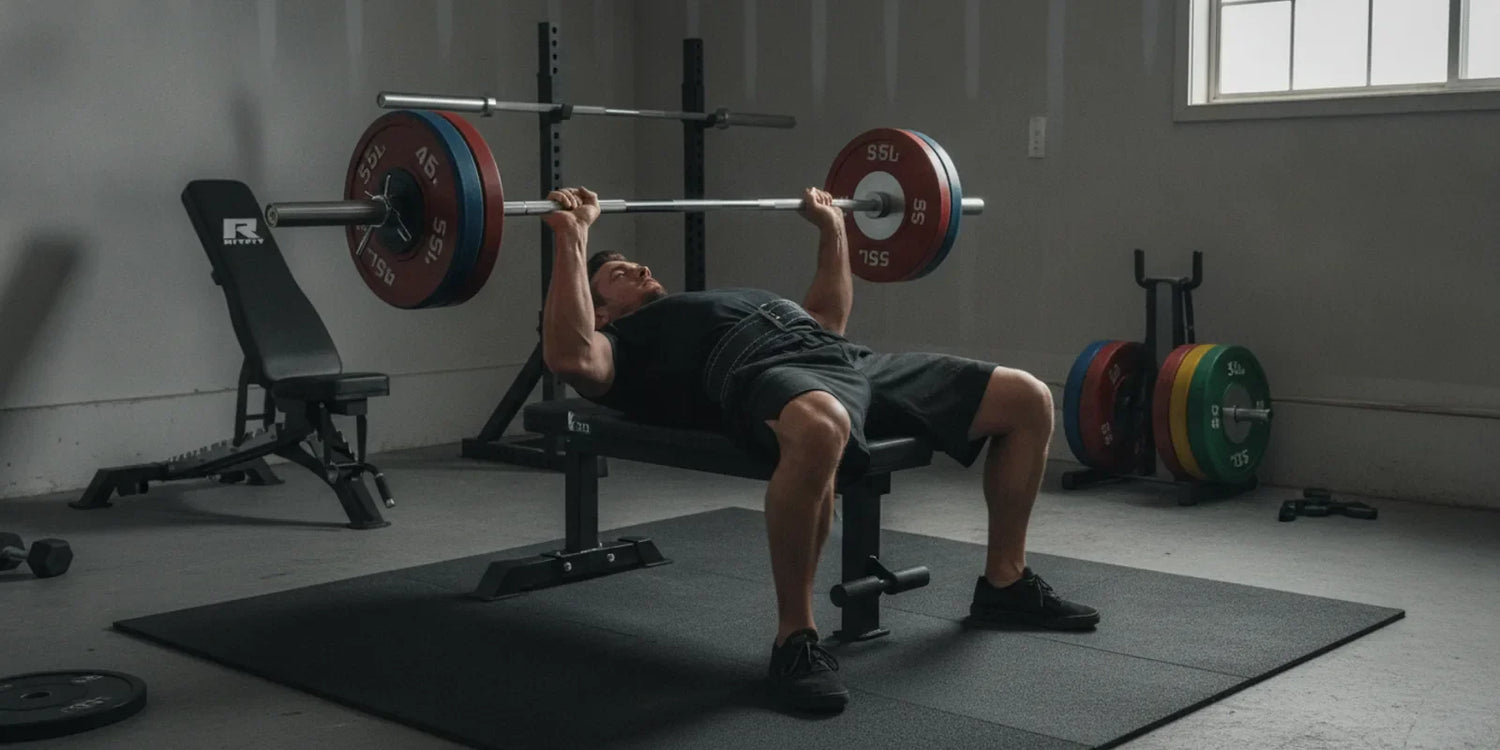
The video below covers bar path mechanics and setup for the bench press, demonstrating how a stiff power bar behaves from unrack through lockout.
How Does Bar Choice Affect Long-Term Bench Press Development?
Long-term bench press development is significantly influenced by equipment consistency because your nervous system adapts to the specific proprioceptive feedback of the bar you train with most frequently.
- Grip specificity: Training your grip on a 29mm power bar for months or years builds specific hand strength and callus distribution that transfers directly to the competition bar; switching to a 25mm or 28mm bar for high-rep accessory work creates a detectable grip-feel transition that takes several sessions to recalibrate
- Incline press considerations: When you incorporate accessory work such as best incline for your bench press angles, use the same powerlifting bar rather than switching to a lighter utility bar; the grip and shaft feel should be constant across the full upper body pressing program
- Strength standards context: Knowing your bench press relative to population standards helps you calibrate training intensity; the average bench press for men data provides useful benchmarks for intermediate lifters selecting their first competition-spec bar
For home gym lifters who also want to understand how the bench press compares to machine-based alternatives, comparing the smith machine bench press to the free-bar powerlifting bench press clarifies why competition-specific bar training is irreplaceable for meet preparation.
"Pointer fingers on the grip rings is the widest you're allowed to go in a powerlifting meet. Around 1.5-2x shoulder width is the strongest and most comfortable for most people."
Greg Nuckols, MA, Strength Researcher and Coach, holder of multiple powerlifting world records, Stronger By Science
FAQs About Powerlifting Bar for Bench Press
What is the correct bar diameter for an IPF competition bench press?
The IPF Technical Rules Book specifies a shaft diameter of 28 to 29mm for all competition barbells, with most approved bars manufactured at exactly 29mm. Training consistently on a 29mm power bar ensures your grip mechanics, hand placement, and wrist alignment match what you will face on the competition platform.
Does bar whip help or hurt the bench press?
For the bench press, a stiff bar with minimal whip is the correct choice. Unlike the deadlift, where a flexible bar delays plate lift-off, the bench press relies on predictable bar path and stability at near-maximal loads, and excessive whip introduces lateral oscillation that disrupts bar control near lockout.
Can I use an Olympic weightlifting bar for powerlifting bench press training?
Technically yes, but it is not ideal for competition preparation. Olympic bars have 28mm shafts with needle bearings designed for fast sleeve rotation during the snatch and clean and jerk, while powerlifting bars use bronze bushings and 29mm shafts, meaning your grip mechanics and bar feel will differ from competition conditions.
Why does a powerlifting bar have a center knurl?
The center knurl on a powerlifting bar is primarily for the back squat, gripping the lifter's upper back and preventing the bar from sliding during low-bar squats. For the bench press, a center knurl makes no direct performance difference, but IPF-approved bars include it because they are designed for all three powerlifting movements.
What tensile strength should a powerlifting bench press bar have?
Competition-grade powerlifting bars typically specify 200,000 PSI or higher tensile strength, ensuring the bar stays straight under repeated heavy loading without permanent deformation. Bars below 150,000 PSI can develop a permanent bow over time with consistent loading above 400 to 500 pounds, which affects bar path consistency during competition-intensity bench press sessions.
How do I know if my barbell is IPF-legal for competition?
An IPF-legal bench press bar must have a shaft diameter of 28 to 29mm, total length no more than 2.2 meters, collar face distance of 1.31 to 1.32 meters, combined weight of 25kg, no chrome on the knurling, and grip marks at 81cm. It must also appear on the official IPF approved equipment list for world championships or world record attempts.
Conclusion
Selecting the right powerlifting bar for bench press means prioritizing four specs above all others: 29mm shaft diameter, stiff construction, aggressive power knurling without chrome, and bronze bushing sleeves. These four characteristics define competition-legal bars and determine how well your training translates to the platform.
Start with the bar spec that matches your current training loads and competition timeline, then browse the RitFit 7ft Olympic Barbell as a starting point for competition-caliber spec at an accessible price.
Disclaimer
The information in this article is intended for general educational purposes and reflects publicly available equipment specifications and training guidance. Consult a qualified strength coach or sports medicine professional before beginning or modifying a powerlifting training program, particularly if you have pre-existing injuries or medical conditions.
Save on your next RitFit order
Tap the button to copy your code, then paste it at checkout.
References
1. Krzysztofik M, Wilk M, Wojdala G, Golas A. A Comparison of Muscle Activity Between the Cambered and Standard Bar During the Bench Press Exercise. J Hum Kinet. 2020;73:181-189. doi:10.2478/hukin-2019-0141
2. Krzysztofik M, Wilk M, Wojdala G, Golas A. Can the Cambered Bar Enhance Acute Performance in the Bench Press Exercise? Front Physiol. 2020;11:576729. doi:10.3389/fphys.2020.576729
3. Bartolomei S, Caroli E, Coloretti V, Rosaci G, Cortesi M, Coratella G. Flat-Back vs. Arched-Back Bench Press: Examining the Different Techniques Performed by Power Athletes. J Strength Cond Res. 2024;38(7):1200-1205. doi:10.1519/JSC.0000000000004803