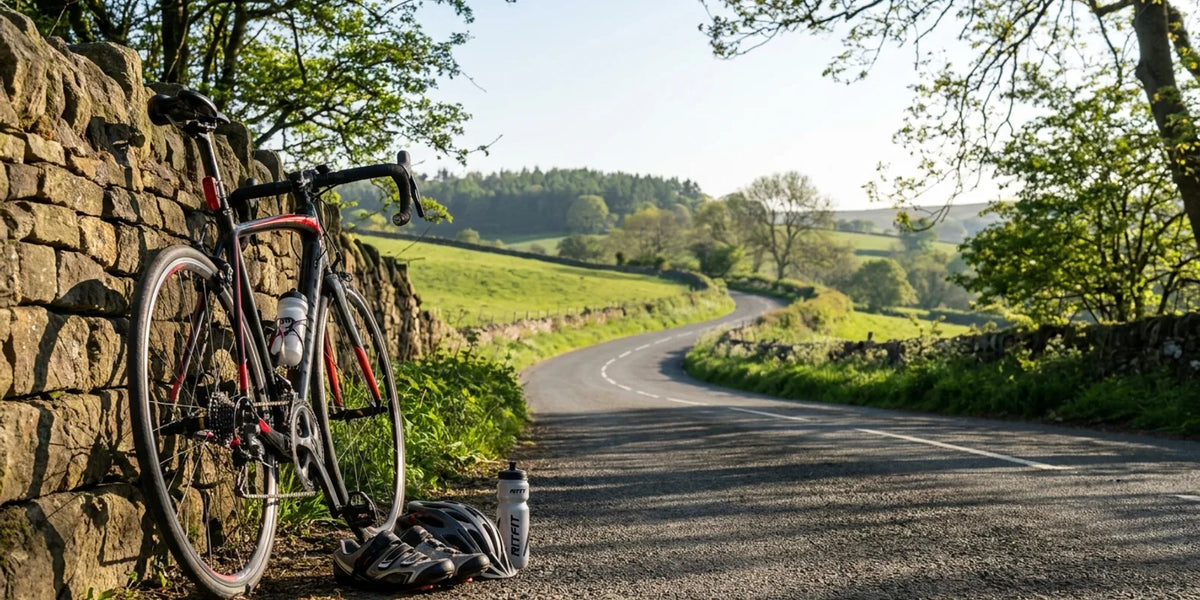
A cycling workout is a low-impact cardio session, on a stationary bike or outdoors, that drives power through your legs while your core and upper body keep you stable. This guide explains exactly which muscles it trains and what full-body benefits to expect.
You will also learn how to set up your bike, structure a beginner ride, and progress safely. The advice suits general fitness riders, not injury rehab.
Table of Contents
Key Takeaways
- Lower body leads: Quads and glutes are the prime movers, with hamstrings and calves assisting stability.
- Core and arms stabilize: Your core, lower back, and shoulders keep you balanced and efficient on the bike.
- Endurance over size: Cycling builds muscular endurance and preserves leg muscle more than it adds bulk.
- Whole-body health: Regular riding supports cardiovascular fitness, joint mobility, and mental well-being.
- Start light, progress slowly: Begin with short, conversational rides and add time, resistance, or intervals gradually.
What Muscles Does a Cycling Workout Work?
A cycling workout works the lower body the most, driven mainly by the quadriceps and glutes as the prime movers on each pedal stroke. The hamstrings, calves, core, lower back, and arms all act as supporting stabilizers.
Which Muscles Are the Prime Movers?
The quads and glutes produce most of the power as your knee extends and your hip drives the pedal down, while the hamstrings and calves manage knee and ankle stability through the upstroke.
- Quadriceps: Extend the knee on the downstroke and generate the bulk of your pedaling power.
- Gluteus maximus: Drives hip extension and stabilizes the pelvis for efficient force transfer.
- Hamstrings: Assist the upstroke and support knee stability across the pedal cycle.
- Calves: Steady the ankle so force passes cleanly through the pedal, especially at higher cadence.
According to Cleveland Clinic, a physician notes that indoor cycling activates the hamstrings at about 17 percent, the quadriceps at about 17 percent, and the glutes at about 15 to 17 percent. If leg strength is your goal, the leg press muscles worked overlap closely with cycling.
Which Muscles Are the Stabilizers?
Your core and erector spinae steady the pelvis and spine, while the arms, shoulders, and lats control the handlebars and absorb road vibration.
- Core and lower back: Provide a stable platform so leg power is not lost to wasted movement.
- Shoulders and arms: Hold riding posture and steer, working harder on rough or standing efforts.
Balancing this upper-body demand is smart, so pairing rides with a shoulder press or lateral raises form routine helps posture.
Is Cycling Full-Body or Lower-Body?
Cycling is primarily a lower-body activity, since your legs generate nearly all the power, but it engages the full body because the core and upper body stabilize you throughout the ride.
Standing climbs and outdoor terrain recruit the core and arms more than steady seated indoor riding. A bench workout and dips for upper body round out the muscles cycling under-trains.
What Full-Body Benefits Does Cycling Deliver?
Cycling delivers strong cardiovascular and joint-friendly benefits while training your legs with minimal impact. Its low-impact nature makes it suitable across age groups and fitness levels.
What Are the Cardiovascular and Joint Benefits?
Cycling is associated with better cardiovascular fitness, muscle strength, joint mobility, proprioception, and mental health, and regular participation can significantly reduce the risk of cardiovascular diseases, metabolic diseases, and certain cancers[1].
- Low impact: Smooth pedaling spares the knees and ankles compared with running.
- Heart and lungs: Sustained riding strengthens the heart, blood vessels, and aerobic capacity.
For recovery between harder sessions, see what soreness after a workout calls for.
Does Cycling Preserve Muscle Mass?
Cycling appears to help preserve leg muscle composition over the long term. An MRI study found that trained midlife recreational cyclists had lower gluteal fat infiltration than inactive peers[2].
- Gluteus maximus: Median fat infiltration was 14.8 percent in cyclists versus 21.6 percent in inactive men.
- Gluteus medius: Median fat infiltration was 11.4 percent versus 16.0 percent, with larger gluteal muscles overall.
Adding interval conditioning such as MetCon conditioning workouts can complement the steady aerobic base cycling builds.
Does Cycling Build Muscle or Endurance?
Cycling builds muscular endurance far more than it builds large amounts of muscle. Gains in size are modest and region-specific, so dedicated resistance training is still needed for noticeable hypertrophy.
A study of older men found that 12 weeks of progressive cycle training increased the vastii muscles about 7 percent and the sartorius about 6 percent, while all 7 lower-leg muscles were unchanged[3].
- Endurance first: Expect better stamina and fatigue resistance rather than bigger legs.
- Pair with lifting: Squats and leg presses a few times weekly add the size cycling alone will not.
The good news is that adding cardio does not have to compromise your strength work.
"Zone 2 cardio, you have almost no ability to block your hypertrophy. There is strong reason to think that is not going to influence hypertrophy for the overwhelming majority of people."
Andy Galpin, PhD, Professor of Exercise Science and Human Performance, Parker University
To build the strength that supports your riding, the strength training equipment collection covers the basics.
How Do You Set Up and Structure a Cycling Workout?
You set up a cycling workout by adjusting seat height, dialing in light resistance, and holding a steady cadence before adding intensity. A simple beginner ride alternates warm-up, steady effort, and short pushes.
How Should You Set Up the Bike?
Set the saddle so your knee is only slightly bent at the bottom of the pedal stroke, keep your core engaged, and start with enough resistance to feel light push-back rather than spinning freely.
- Seat height: A slight knee bend at the lowest point protects the knees and improves power.
- Cadence: Aim for a smooth, controlled rhythm you can sustain and talk through.
An RitFit exercise bikes setup gives you precise control over resistance and cadence indoors.
What Is a Simple Beginner Workout Structure?
A beginner ride runs about 10 to 20 minutes split into a warm-up, a few steady or tempo blocks, optional short sprints, and a cool-down. The video below walks through this foundation.
You can vary efforts with seated tempos, standing climbs, and short sprints to keep sessions engaging. Light hand weights or adjustable dumbbells can add upper-body work between blocks.
How Do You Select Resistance and Progress?
Choose resistance you can pedal smoothly while breathing hard but still under control, then add a notch only once the current level feels easy. Progress by adding minutes, resistance, or intervals one variable at a time.
- Starting load: Light enough to hold a conversation during steady blocks.
- When to add: Increase resistance once you can finish your ride without strain.
Avoid jumping levels and forcing heavy resistance while seated, which can strain the knees.
How Often Should You Cycle and When Should You Stop?
Beginners can ride about three short sessions per week, always warming up and cooling down. Stop or reduce intensity if you feel sharp knee or joint pain rather than normal muscle fatigue.
- Frequency: Three rides weekly, adding volume as fitness improves.
- Stop signal: Sharp or persistent joint pain means rest and reassess setup or seek advice.
What Common Mistakes Should You Avoid?
The most common cycling mistakes are a poorly set seat, riding with too little or too much resistance, and skipping the warm-up or cool-down. Each one reduces results or raises injury risk.
- Wrong seat height: Too low strains the knees, too high rocks the hips and wastes power.
- No resistance: Spinning freely with no push-back limits the training effect.
- Skipping cool-down: Stopping abruptly skips recovery and flexibility benefits.
- Only cycling: Neglecting upper-body and strength work leaves muscles cycling cannot reach.
Fixing these makes every ride more effective and comfortable over time.
FAQs About Cycling Workouts
What muscles does a cycling workout work the most?
A cycling workout works your lower body the most, with the quadriceps and glutes acting as the main power producers on each pedal stroke. Your hamstrings and calves assist with knee and ankle stability, while your core, lower back, arms, and shoulders work as stabilizers to keep you balanced and efficient on the bike.
Is cycling a full-body or lower-body workout?
Cycling is primarily a lower-body workout because your legs generate nearly all the power. However, it engages the full body to a degree, since your core stabilizes your pelvis and spine and your arms and shoulders control the handlebars. Outdoor and standing riding recruit the core and upper body more than steady seated indoor riding.
Does cycling build muscle or just endurance?
Cycling mainly builds muscular endurance rather than large amounts of muscle. In one trial of older men, twelve weeks of cycle training increased certain thigh muscles modestly, around six to seven percent. For noticeable size and strength, pair your riding with dedicated resistance training such as squats and leg presses a few times each week.
How often should a beginner do a cycling workout?
Beginners can start with three short sessions per week of about ten to twenty minutes, keeping resistance light enough to hold a conversation. As your fitness improves, gradually add minutes, increase resistance, or introduce intervals. Always include a warm-up and cool-down, and rest or reduce intensity if you feel sharp knee or joint pain.
Is cycling good for losing belly fat?
Cycling can support fat loss because it burns calories and improves cardiovascular fitness, but spot reduction of belly fat is not possible. Combine regular rides with a balanced diet and some resistance training for the best body composition results. Consistency over weeks and months matters far more than any single session for visible change.
Conclusion
A cycling workout is a low-impact way to train your quads, glutes, hamstrings, and calves while your core and upper body stabilize the ride. It builds endurance, supports heart health, and helps preserve leg muscle.
Start with short, conversational rides three times a week, add resistance or intervals gradually, and pair cycling with strength training to round out the muscles it cannot fully reach.
Disclaimer
This article is for general educational purposes only and does not replace personalized medical or fitness advice. Consult a qualified healthcare or training professional before starting a new exercise program, especially if you have existing injuries or health conditions.
References
1. Mosser N, Norcliffe G, Kruse A. The impact of cycling on the physical and mental health, and quality of life of people with disabilities: a scoping review. Frontiers in Sports and Active Living. 2024;6:1487117. https://pmc.ncbi.nlm.nih.gov/articles/PMC11743510/
2. Belzunce MA, Henckel J, Laura AD, Horga LM, Hart AJ. Mid-life cyclists preserve muscle mass and composition: a 3D MRI study. BMC Musculoskeletal Disorders. 2023;24(1):209. https://pmc.ncbi.nlm.nih.gov/articles/PMC10026522/
3. Naruse M, Vincenty CS, Konopka AR, Trappe SW, Harber MP, Trappe TA. Cycle exercise training and muscle mass: A preliminary investigation of 17 lower limb muscles in older men. Physiological Reports. 2023;11(16):e15781. https://pmc.ncbi.nlm.nih.gov/articles/PMC10442866/