








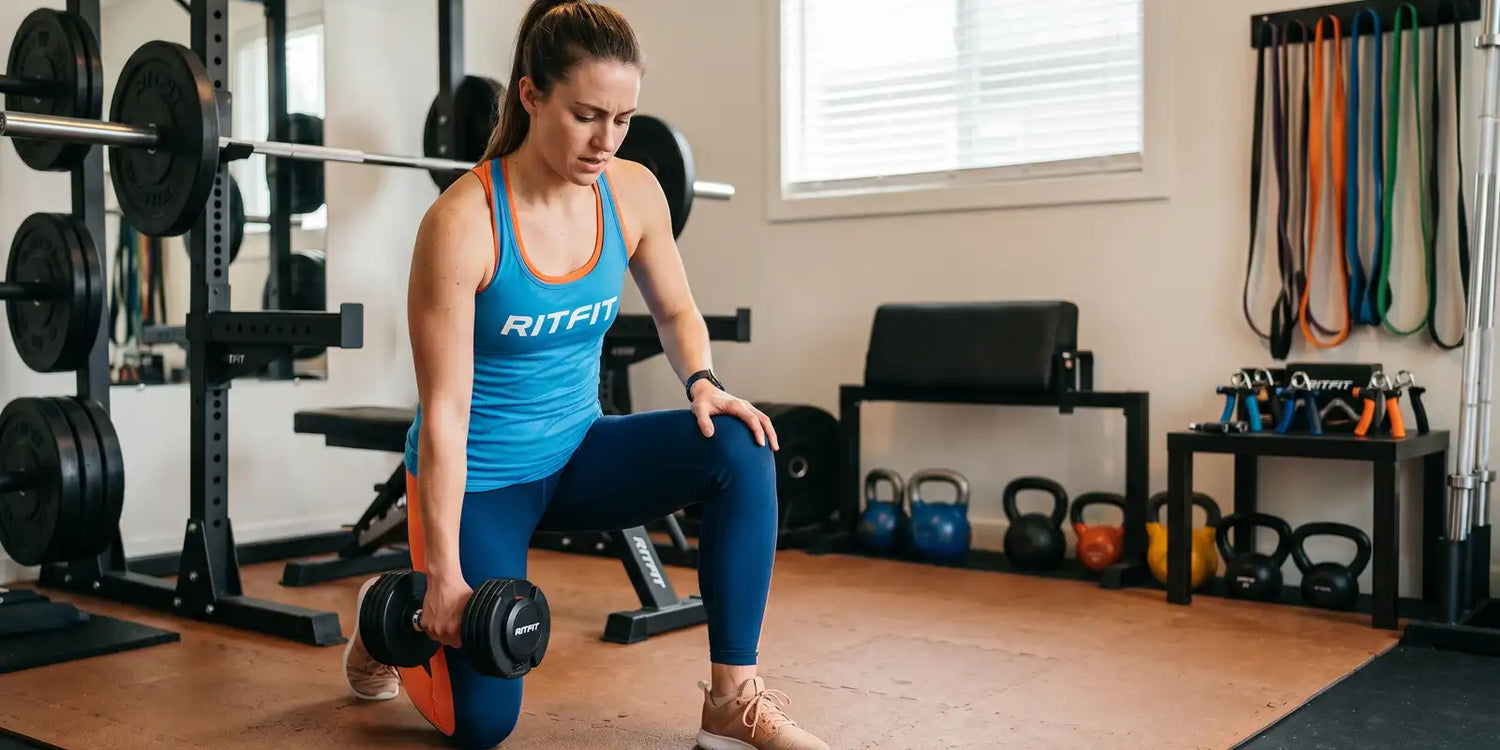
DOMS stands for delayed onset muscle soreness, the stiff, achy feeling that shows up a day or two after a hard or unfamiliar workout. This guide explains what it is, why it happens, and what actually helps.
You will learn how to tell normal soreness apart from injury, whether you should train while sore, and evidence based ways to ease and prevent it.
Table of Contents
Key Takeaways
- What it is: DOMS is delayed onset muscle soreness, a normal response to new or intense training, not a sign you did something wrong.
- Timing: It usually appears 12 to 24 hours after exercise, peaks around 24 to 72 hours, and fades within a few days.
- Cause: It is linked to microscopic muscle damage and a sensory recovery response, not lactic acid buildup.
- Not injury: DOMS is a dull, even ache that eases with gentle movement, while injury is sharp, sudden, and localized.
- Relief and prevention: Light movement, sleep, and gradual training progression help most; there is no instant cure.
What DOMS Means
DOMS means delayed onset muscle soreness. It is the tender, stiff feeling that develops in your muscles a day or two after a tough or unfamiliar workout.
The word delayed is the key part. Unlike the burn you feel during a set, this soreness shows up later, often when you least expect it.
- Delayed: The discomfort builds hours after training, not during the session itself.
- Onset: It begins gradually and tends to feel worse on the second day than the first.
- Muscle soreness: It affects the muscles you worked, feeling achy, tight, and tender to the touch.
For most people DOMS is a normal, expected part of getting stronger, and it eases on its own as the muscle adapts.
Why DOMS Happens
DOMS is tied to tiny amounts of damage inside your muscle fibers and the repair response that follows. It is most common after movements your body is not used to.
A study links DOMS to microscopic muscle damage and altered sensory signalling in the affected muscle, rather than to lactic acid[1]. Eccentric movements, where the muscle lengthens under load, tend to trigger it most.
- Eccentric loading: Lowering a weight slowly, running downhill, or controlling a stretch places extra stress on muscle fibers.
- The lactic acid myth: Lactic acid clears within about an hour of finishing exercise, long before soreness sets in, so it is not the cause.
- New stimulus: Trying a new exercise or sharply increasing intensity is a common reason DOMS appears.
Once your muscles adapt to a given workout, that same session usually produces far less soreness next time.
DOMS Timeline: Onset and Duration
DOMS follows a fairly predictable pattern. It typically starts about 12 to 24 hours after exercise and feels worst a day or two later.
Research describes DOMS as peaking roughly 24 to 72 hours after exercise, then easing over the following days as the muscle recovers and adapts[2]. Most cases resolve within a few days.
- 0 to 12 hours: You may feel fine or only slightly tight right after training.
- 12 to 24 hours: Soreness begins to set in and tends to build overnight.
- 24 to 72 hours: Discomfort usually peaks, then gradually fades as recovery continues.
If soreness lasts far longer than a few days or keeps getting worse, treat it as a possible injury rather than ordinary DOMS.
DOMS vs Injury: How to Tell the Difference
DOMS and injury feel different, and learning to spot the difference protects you. DOMS is a dull, widespread ache, while an injury tends to be sharp and sudden.
The simplest test is how the discomfort behaves with gentle movement. Normal soreness eases as you warm up, but injury pain often worsens with use.
- DOMS feels like: A broad, even ache that appears the day after training and affects both sides fairly evenly.
- Injury feels like: A sharp, stabbing, or pinpointed pain that may come with swelling, bruising, or weakness.
- The movement check: Soreness improves with light activity, while injury pain tends to get worse the more you move.
When in doubt, treat persistent, sharp, or one sided pain as a potential injury and learning how to get rid of muscle soreness safely is a good next step.
Should You Work Out With DOMS
Light training while sore is usually fine and can even help you feel better. The goal is gentle movement, not another all out session on the same muscles.
Active recovery increases blood flow without adding heavy stress, which can ease stiffness. Managing your intensity, such as keeping a few what RIR means in fitness reps in reserve, helps you avoid digging a deeper recovery hole.
- Good options: Walking, easy cycling, light mobility work, and gentle stretching all support recovery.
- Train smart: Work a different muscle group or drop the load if you want to keep lifting while sore.
- Stop signals: Sharp pain, swelling, or noticeable weakness means rest, not pushing through.
If the soreness is severe enough to change your form, give that muscle group more time before training it hard again.
How to Relieve DOMS
There is no instant cure for DOMS, but several approaches can make you more comfortable while your muscles recover. Gentle movement and good basics matter most.
Tools like a roller can help too, and you can use a roller stick to maximize workout recovery on the muscles that feel tightest. For a fuller routine, see what helps sore muscles after a workout.
- Move gently: Light activity, easy stretching, and mobility drills ease stiffness better than total rest.
- Recover well: Adequate sleep, hydration, and sensible what to eat after a workout choices all support the repair process.
- Self massage: The benefits of using a massage body stick roller include relieving tension in sore muscles.
A meta-analysis found vibration therapy may reduce DOMS[2], and a systematic review examined blood flow restriction for managing DOMS[3], though results vary from person to person.
How to Prevent DOMS Before It Starts
You cannot avoid DOMS entirely, but you can keep it mild. The biggest lever is how quickly you ramp up new or harder training.
Trainers often recommend progressing load gradually to limit soreness, easing into new exercises rather than jumping straight to maximum effort. A proper warm up also prepares muscles for the work ahead.
- Progress gradually: Add weight, reps, or new movements in small steps rather than all at once.
- Warm up first: A few minutes of light movement raises muscle temperature and readiness.
- Stay consistent: Regular training keeps muscles adapted, so the same workout causes less soreness over time.
Severe soreness after every session is often a sign you are progressing too fast, so scaling back can keep training sustainable.
When to See a Professional
Most DOMS resolves on its own and needs no medical care. Certain warning signs, however, deserve a clinician rather than self treatment.
Pay attention if soreness is extreme, does not improve, or comes with symptoms that go beyond ordinary muscle ache. These can point to something more serious than DOMS.
- Severe swelling: Marked swelling or a muscle that feels hard and very tender warrants assessment.
- Dark urine: Cola colored urine with intense soreness can signal a rare but serious condition and needs urgent care.
- No improvement: Pain that persists well beyond a few days or worsens should be checked by a professional.
When symptoms feel unusual or alarming, it is always safer to consult a qualified healthcare provider.
FAQs About DOMS
What does DOMS stand for in fitness?
DOMS stands for delayed onset muscle soreness. It is the stiff, achy, tender feeling that shows up in your muscles a day or two after a hard or unfamiliar workout. It is a normal part of how muscles respond and adapt to new training stress, and it usually fades on its own within a few days.
How long does DOMS usually last?
DOMS typically begins about twelve to twenty four hours after exercise, peaks somewhere around twenty four to seventy two hours, and then eases over the following days. Most cases resolve within roughly three to five days. If soreness lingers far longer or feels sharp and disabling, treat it as a possible injury rather than normal DOMS.
Is DOMS caused by lactic acid?
No, that is a common myth. Lactic acid clears from your muscles within roughly an hour of finishing exercise, long before DOMS sets in. Research links DOMS instead to microscopic muscle damage and the sensory and repair response that follows, especially after eccentric movements where muscles lengthen under load.
Should I work out again while I have DOMS?
Light movement is usually fine and may even help you feel better. Gentle active recovery such as walking, easy cycling, or mobility work can ease stiffness. Avoid hammering the same sore muscle group at full intensity until it recovers, and stop if you feel sharp pain, swelling, or weakness rather than ordinary tenderness.
How can I relieve DOMS faster?
There is no instant cure, but several approaches can help you feel better. Gentle movement, light stretching, foam rolling or a massage stick, adequate sleep, hydration, and good post workout nutrition all support recovery. Studies have also examined vibration therapy and blood flow restriction as ways to ease soreness for some people.
How do I tell DOMS apart from an injury?
DOMS is a dull, widespread ache that appears the day after training, affects both sides fairly evenly, and improves with gentle movement. An injury tends to come on suddenly, feels sharp or stabbing, may swell or bruise, is often localized to one spot, and gets worse with use. Persistent or severe symptoms deserve a clinician visit.
Conclusion
DOMS is your body adapting to new training, not a setback. It arrives a day or two after a workout, peaks within a few days, and fades as your muscles get stronger.
Treat soreness as feedback, ease into harder sessions gradually, and use gentle movement and rest to recover, while watching for the red flags that call for a professional.
Disclaimer
This article is for general educational purposes only and is not medical advice, diagnosis, or treatment. If your soreness is severe, persistent, or accompanied by warning signs, consult a qualified healthcare professional before continuing to train.
References
1. Sonkodi B, Hegedus A, Kopper B, Berkes I. Significantly Delayed Medium-Latency Response of the Stretch Reflex in Delayed-Onset Muscle Soreness of the Quadriceps Femoris Muscles Is Indicative of Sensory Neuronal Microdamage. Journal of Functional Morphology and Kinesiology. 2022;7(2). https://pmc.ncbi.nlm.nih.gov/articles/PMC9224667/
2. Lu X, Wang Y, Lu J, et al. Does vibration benefit delayed-onset muscle soreness?: a meta-analysis and systematic review. The Journal of International Medical Research. 2019;47(1):3-18. https://pmc.ncbi.nlm.nih.gov/articles/PMC6384495/
3. Rodrigues S, Forte P, Dewaele E, et al. Effect of Blood Flow Restriction Technique on Delayed Onset Muscle Soreness: A Systematic Review. Medicina (Kaunas, Lithuania). 2022;58(9). https://pmc.ncbi.nlm.nih.gov/articles/PMC9505400/





