Seated sit ups on a leg extension curl machine are possible, but the machine was not built for them. The seat and ankle pad give you a fixed anchor for spinal flexion, and that anchor is the only reason the drill works.
This guide covers the setup, the rep, the load, and the cases where a floor or cable crunch is the better call. It also lists the situations where the machine should stay a leg machine.
Quick Answer: Yes, you can do seated sit ups on a leg extension curl machine, but only as an unloaded spinal flexion drill. Set the back pad fairly upright, rest your shins under the ankle pad, hold the handles lightly, and curl your rib cage toward your pelvis without adding plates.
Key Takeaways
- Good anchor, wrong machine: The seat and ankle pad hold you still, but the PLC01 and similar units are built for knee extension and leg curls, not trunk flexion.
- No load by default: Plates on this frame feed resistance through your legs and seat, so the drill only stays useful while the machine is unloaded.
- Hip flexors steal the rep: Braced shins make it easy to hinge at the hips, which shifts work from the rectus abdominis to the iliopsoas and rectus femoris.
- Progress elsewhere: A floor crunch, cable crunch, reverse crunch, or hanging leg raise is easier to load and easier to measure.
- Skip it when: Low back or neck pain, a recent meal, or a seat that will not lock all make the bench version the safer choice.
Can You Do Seated Sit-Ups on a Leg Extension Curl Machine?
Yes, you can do seated sit ups on a leg extension curl machine, but only as an unloaded drill with your hips anchored and your spine doing the work.
The machine is designed for knee extension and leg curls, so the seat works as a bench and the ankle pad works as a brace. What you get is a stable anchor that removes the two things that make floor sit-ups sloppy, which are sliding feet and a pelvis that rolls.
- Unloaded: No plates on the storage rod and no pin in the weight stack.
- Anchored, not clamped: Your shins rest under the pad, and you never hook your feet to pull against it.
- Spinal flexion only: The rib cage moves toward the pelvis while the hips stay still.
- Short range: Stop when your ribs approach your thighs instead of sitting all the way up.
If any of those conditions cannot be met, the drill stops being core training and becomes loaded spinal flexion. What sit-ups actually train is worth reading before you decide the machine is enough.
What the Machine Is Actually Built For
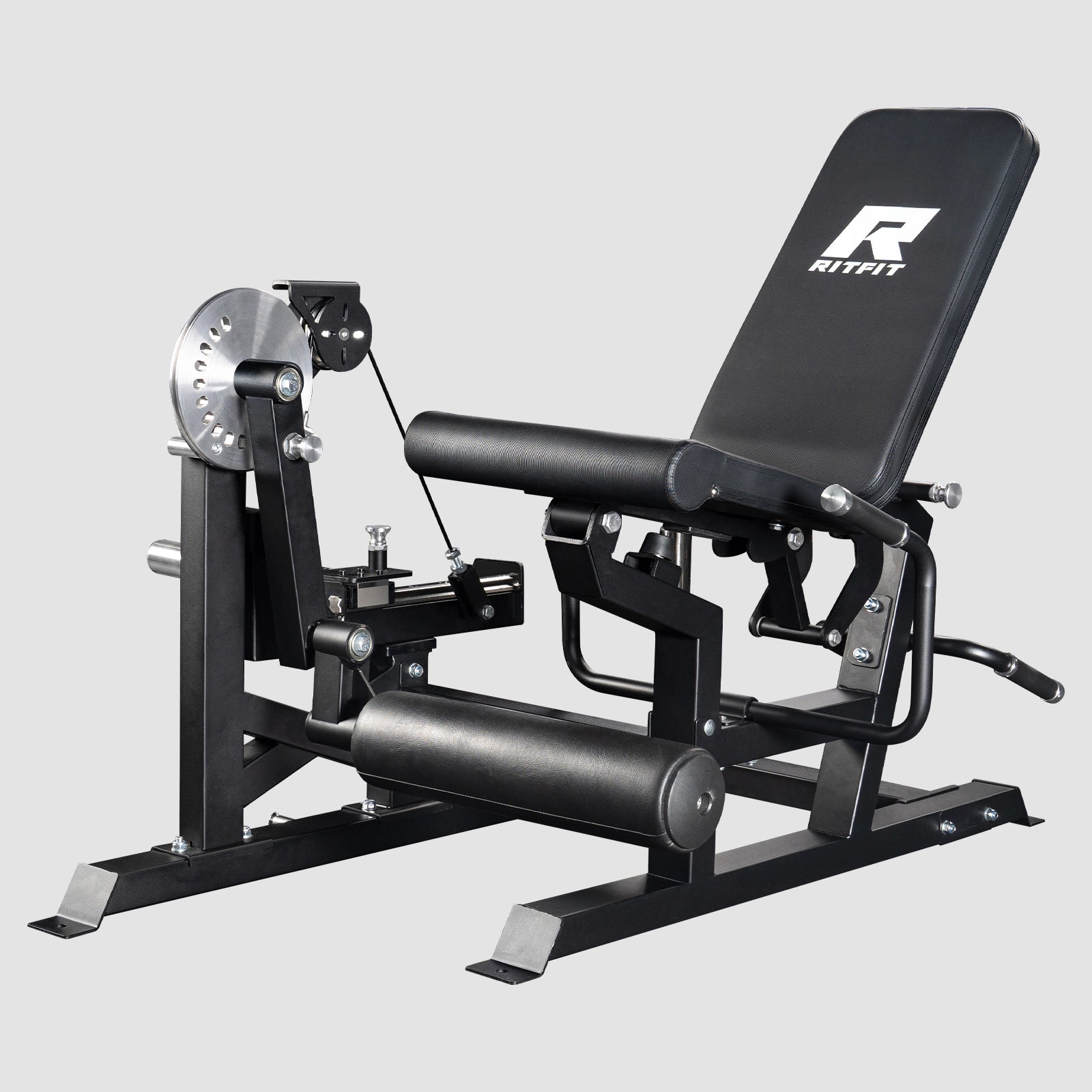
A leg extension curl machine is built to isolate the quadriceps and hamstrings while your hips stay still.
The seat, back pad, and ankle roller exist to position your legs for that job, not to brace your torso for a curl.
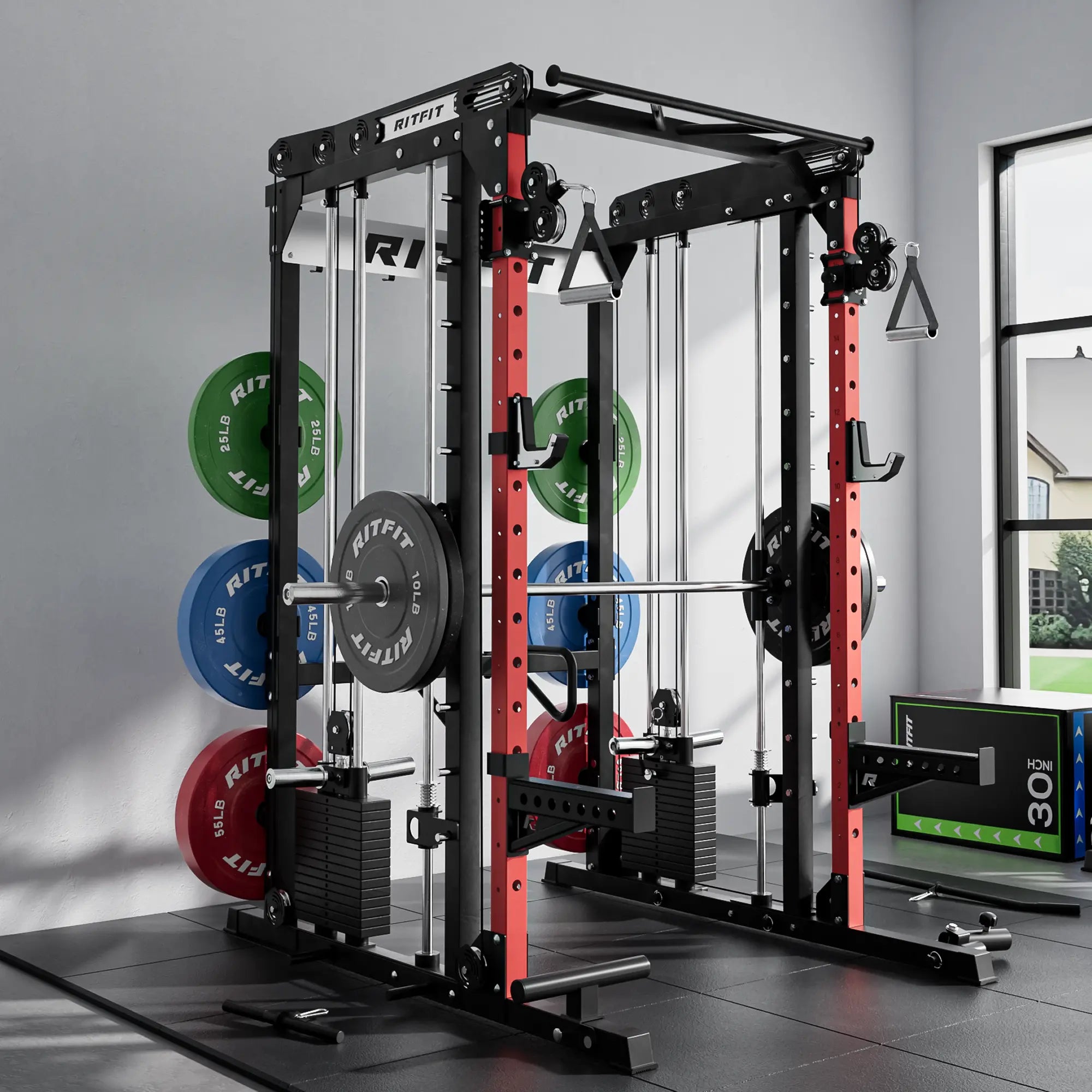
- Frame and footprint: The RitFit PLC01 leg extension curl machine weighs 109 lbs and covers 15.37 sq ft, with an overall length of 50.9 inches.
- Plate storage: Two-inch Olympic plates hang on a rear rod, so the load path runs through the leg arm rather than through your torso.
- Leg stop: The pad is non-fixed and can sit slightly higher than your ankle, which is why your shins can act as a stop.
- Handles: They keep your upper body neutral during leg work, and they were never meant to be a pulling handle for a crunch.
The prone leg curls on the same machine show what the ankle pad is actually for, and the full PLC01 review covers the frame in more detail.
That is why the machine makes a passable sit-up station by accident, since it holds your lower legs and torso in place. It is still a leg machine, and the pad was never meant to take a hard push from your shins.
"If maximum quad growth is the goal, do squats and also do exercises such as front squats, leg press, lunges, and leg extensions."
Bret Contreras, PhD, Contreras Strength Institute, Do More than "Just Squat"
How Do You Set the Seat and Back Pad?
Set the back pad close to upright and slide the seat so your knee joint lines up with the machine pivot.
A pad that reclines too far turns the drill into a decline sit-up, which adds range at the exact point where your low back is most exposed.
Step 1, seat height: Your knee should sit level with the pivot point, the same reference used in a proper leg extension setup.
Step 2, back pad: Start near upright and recline no more than a notch or two, then stop as soon as your low back lifts off the pad.
Step 3, ankle pad: Rest it just above your ankles so your shins can press back lightly, and keep the stop snug rather than clamped.
Step 4, hands: Hold the handles with a light grip or cross your arms over your chest, and either way your arms do not pull.
Step 5, machine state: Take the plates off the storage rod and leave the load arm free, because a loaded arm will fight the position you just built.
If the back pad will not lock or the seat rocks under you, stop and use a flat bench instead. A moving anchor is worse than no anchor at all.
How to Perform the Rep Without Pulling Weight
Curl your rib cage toward your pelvis, keep your low back against the pad, and let your shins rest quietly under the roller.
Think of shortening the space between your sternum and your pubic bone, then reversing that motion slowly.
Step 1, start tall: Stack your ribs over your pelvis, tuck your chin slightly, and let your shoulders stay relaxed.
Step 2, exhale and round: Round your upper back one segment at a time and stop when your ribs approach your thighs.
Step 3, pause: Hold the top for about one second without pulling on the handles.
Step 4, return: Lower over two to three seconds and keep your low back in contact with the pad the whole way.
Step 5, end the set: Do 8 to 15 reps and stop when your hips start to roll or your shins press forward.
Time under tension is the only variable worth chasing here, and a slow return gives you more of it than a fast, bouncy rep. If your hips slide back or the pad pushes against your legs, you are hip flexing rather than curling.
What Load Should You Use on a Leg Extension Machine?
Use no load at all, because plates on this machine feed resistance through your legs and seat rather than through your abs.
Hanging a plate on the arm does not make the curl harder in a useful way, since it adds spinal compression while your torso barely moves.
- No plates: Leave the storage rod empty and keep the load arm free.
- Stack machines: On a pin-loaded version, pull the pin or set the stack to its lowest setting so the cam never engages.
- Progression: Add reps first, then slow the lowering phase, then extend the range by a few degrees.
- Ceiling: Once 15 clean reps feel easy, the drill has given you what it has, and a cable crunch is the next step.
Loading a torso curl is a different exercise with a different risk profile, and this frame is the wrong place to explore it.
How Often Should You Train It?
Train it two or three times per week for two or three sets of 8 to 15 controlled reps, and treat it as a finisher rather than a main lift.
Leave about 48 hours between sessions that include heavy spinal flexion, and place the drill after your main lifts so fatigue does not wreck your position.
Progress in this order: reps, then tempo, then range, and stop short of external load. A core workouts by level plan gives you more room to grow than a single anchored curl on a leg machine.
If you train core every session, rotate this drill with a plank or a reverse crunch so the same tissue is not asked to flex under fatigue four days in a row.
What It Costs You: Quads, Hip Flexors, and Low Back
The setup invites hip flexor work and adds lumbar flexion load, which is why this is a limited drill and not a core solution.
None of this makes the drill dangerous for a healthy lifter, but it does explain why the machine version rarely replaces a floor crunch.
- The flexion trade: A peer-reviewed EMG study found that a curl-up built on spine flexion alone produced isolated abdominal activation above 50% of MVC, while adding hip flexion raised peak activation [1].
- Hip flexor share: That same hip flexion brings the iliopsoas and rectus femoris into the rep, and one comparison cautions that excess hip flexor contraction during sit-ups can stress the lumbar spine [2].
- Low back cost: Across 18 men and women and 10 exercises, the crunch and bent-knee sit-up produced high rectus abdominis activity, and the authors note that high core activity is associated with high spinal compressive loading [3].
- Pelvis drift: Any anterior pelvic tilt that shows up as your hips rolling back means the anchor is doing the work your abs should be doing.
Read those four points as a trade rather than a ban, because you get a stable and convenient curl in exchange for more hip flexor involvement than a floor version.
What Works Better Than the Machine?
A floor crunch, cable crunch, reverse crunch, and hanging leg raise each beat the machine at one specific job, so choose by your limiting factor.
The machine wins only on convenience, which matters when the seat is already set and your time in the garage is short.
| Movement | Best at | Pick something else if |
|---|---|---|
| Floor crunch | Pure spinal flexion with no anchor | You want measurable load, so use a cable crunch |
| Cable crunch | Loading spinal flexion with a stable hip | Kneeling flexion bothers your knees or low back |
| Reverse crunch | Pelvic control and a lower ab focus | You cannot keep your pelvis from rocking |
| Hanging leg raise | A hip flexor and grip challenge | Your grip or shoulders quit before your abs do |
| Machine sit-up | Convenience when the frame is already set up | You want load or a number to progress against |
Table note: the rows compare setup demands and progression options for a home gym, not effectiveness rankings.
Start with the crunch form guide if you only want spinal flexion, and read the cable crunch handle comparison when you are ready to load the movement.
The lower ab exercises at home covers the reverse crunch in more detail, and the leg machines collection is the place to compare frames if the machine itself is the question.
Common Mistakes That Turn This into a Bad Idea
The mistakes that matter most are pulling with your arms, hinging at the hips, adding plates, over-reclining the pad, cranking your neck, and pushing into the ankle pad.
Each one moves the work away from your abs, and most of them also move load into your low back.
- Pulling with the arms: Your hands are a reference point, and a hard pull turns the rep into a lat and arm exercise.
- Hinging at the hips: A forward lean from the hip is a full sit-up, and the point of this setup is to keep the pelvis still.
- Adding plates: Extra load on this frame compresses the spine without challenging the abs through a longer range.
- Over-reclining the pad: A flat pad turns the drill into a decline sit-up and adds low back exposure you did not ask for.
- Cranking the neck: Lead with the rib cage and keep a fist of space under your chin.
- Pushing the ankle pad: If the pad moves, your legs are driving the rep and your abs are along for the ride.
Fix the first two and the rest usually disappear, because a still pelvis makes arm pulling and shin pushing feel pointless.
When Should You Skip It Entirely?
You should skip the machine if you have low back or neck pain, ate within the last hour or two, or cannot lock the seat and back pad.
A review of abdominal training concluded that a foot-fixed sit-up can compound hip muscle imbalance and both hyperextend and hyperflex the lumbar spine, which is exactly the position a braced shin creates [4].
- Low back symptoms: Sharp pain, pinching, or pain that runs down a leg means stop, and training with lower back pain covers the general boundaries.
- Neck pain: A craned neck under any load is a strain waiting to happen, and a floor crunch with a supported head is easier to control.
- Recent meal: Fullness plus trunk flexion is a recipe for reflux and sloppy bracing, so wait an hour or two.
- Unstable seat: If the pad angle drifts or the frame rocks, the anchor is gone and the drill is not safe to load.
None of these are medical diagnoses, and persistent symptoms deserve a clinician rather than a machine workaround.
FAQs About Seated Sit Ups on a Leg Extension Curl Machine
Can you do seated sit ups on a leg extension curl machine?
Yes, you can do seated sit ups on a leg extension curl machine, but only as an unloaded drill with your shins braced and your hips still. Keep the back pad close to upright, curl your rib cage toward your pelvis, and skip plates entirely. The machine gives you an anchor, not useful resistance.
Should you add weight when doing sit ups on a leg extension machine?
No, adding plates is the wrong progression for this setup. The load enters through your legs and the seat, so extra plates raise compression on your spine far more than they challenge your abs. Add reps, slow the lowering phase, or extend the range by a few degrees instead.
Does this exercise work your abs or your hip flexors?
It works both, and the split depends on how still your hips stay. Pure spinal flexion keeps the work on the rectus abdominis, while any forward lean or shin push brings in the iliopsoas and rectus femoris. If you feel it in your hip crease, you are hip flexing.
How many seated sit ups should you do on the machine?
Start with two sets of 8 to 12 controlled reps and stop one or two reps before your form changes. Two or three sessions per week is plenty for a finisher. More reps do not fix a setup that lets your hips move.
Is it hard on your lower back?
It can be harder than a floor crunch, because the setup holds your legs while your spine flexes, and high abdominal effort is linked to higher spinal compression. If you feel pinching or ache in your low back, stop and use a floor crunch or a cable crunch instead. This is general training information, not medical advice.
What should you use instead of the leg extension machine for abs?
Use a floor crunch for pure spinal flexion, a cable crunch when you want measurable load, a reverse crunch for pelvic control, or a hanging leg raise for a harder hip flexor challenge. Each one is easier to progress than a machine sit-up.
Conclusion
Seated sit ups on a leg extension curl machine work as an unloaded anchor drill, not as a core station. Set the pad upright, keep your shins quiet, curl the rib cage, and leave the plates off the load arm.
If you want progress you can measure, move to a floor crunch, a cable crunch, or a reverse crunch, and let the machine do the leg work it was built for. Check the RitFit discount guide before you add anything else to the garage.
Disclaimer
This article is general training information and not medical advice. If you have low back or neck pain, or a diagnosed spinal condition, talk with a qualified clinician before adding loaded spinal flexion to your routine.
References
1. Konrad P, Schmitz K, Denner A. Neuromuscular Evaluation of Trunk-Training Exercises. J Athl Train. 2001;36(2):109-118. PMCID: PMC155519
2. Kim K, Lee T. Comparison of muscular activities in the abdomen and lower limbs while performing sit-up and leg-raise. J Phys Ther Sci. 2016;28(2):491-4. doi:10.1589/jpts.28.491. PMCID: PMC4792997
3. Escamilla RF, Lewis C, Pecson A, Imamura R, Andrews JR. Muscle Activation Among Supine, Prone, and Side Position Exercises With and Without a Swiss Ball. Sports Health. 2016;8(4):372-9. doi:10.1177/1941738116653931. PMCID: PMC4922527
4. Norris CM. Abdominal muscle training in sport. Br J Sports Med. 1993;27(1):19-27. doi:10.1136/bjsm.27.1.19. PMCID: PMC1332101