








Sit-ups are one of the most recognizable core exercises, but most people are unsure which muscles they actually train or how to perform them without straining the neck and lower back. This guide answers exactly that.
You will learn the muscles worked, correct step by step form, the most common mistakes, beginner to advanced variations, and how to program sit-ups into a balanced weekly routine.
Table of Contents
- What Do Sit-Ups Work? The Muscles Behind the Movement
- How Do You Do a Sit-Up With Proper Form?
- Common Sit-Up Mistakes to Avoid
- Which Sit-Up Variations Should You Try?
- How Should You Program Sit-Ups Into a Routine?
- Sit-Ups vs Crunches: Which Should You Choose?
- How Do You Build a Stronger Core Beyond Sit-Ups?
Key Takeaways
- Primary muscle: Sit-ups mainly train the rectus abdominis, with the obliques, transverse abdominis, and hip flexors assisting.
- Form first: Move slowly, drive with the abs, and keep the neck neutral to protect the spine.
- Common fix: Avoid yanking the torso with the hip flexors or craning the neck forward.
- Programming: Aim for 2 to 3 sets of 10 to 15 controlled reps, 3 to 5 days per week.
- Not spot reduction: Sit-ups strengthen muscles but do not selectively burn belly fat.
What Do Sit-Ups Work? The Muscles Behind the Movement
Sit-ups primarily work the rectus abdominis, the long front muscle that forms the six-pack, while several supporting muscles assist the movement. According to exercise references, the hip flexors and obliques work as synergists and stabilizers throughout the lift.
- Rectus abdominis: The main mover that flexes the spine and pulls the torso toward the knees.
- Obliques: The internal and external obliques on the sides of the torso help with rotation and trunk stability.
- Transverse abdominis: The deepest core layer that braces and supports the spine and organs.
- Hip flexors: The iliopsoas and rectus femoris assist as you raise the trunk from the floor.
Because the movement recruits this whole group, the sit-up builds general core strength rather than isolating a single ab muscle. For more bench-based core work, see this bench ab workout.
How Do You Do a Sit-Up With Proper Form?
A proper sit-up starts lying on your back with knees bent and feet flat, then curls the torso upward using the abs in a slow, controlled motion. The key is to let the abdominals drive the movement instead of swinging or pulling with the neck and hips.
- Set up: Lie face up, bend your knees, and rest your feet flat on the floor or mat.
- Hand position: Cross your arms on your chest or rest fingertips behind your ears without pulling the head.
- Lift: Engage the core and exhale as you raise your chest toward your knees, curling one vertebra at a time.
- Lower: Inhale and lower slowly with control, keeping tension in the abs rather than dropping back down.
The video below walks through five simple steps for a clean, effective sit-up.
Practicing on a soft mat and keeping each rep deliberate protects your spine and makes the abs do the work.
Common Sit-Up Mistakes to Avoid
The most common sit-up mistakes are craning the neck forward, using the hip flexors instead of the abs, and rushing the movement. These errors reduce results and can lead to neck or lower-back strain over time.
- Forward head posture: Cranking the neck toward the knees can cause neck and upper-back aches, so keep the neck aligned with the spine.
- Hip flexor dominance: If your hip flexors are tight, they may pull the torso up instead of the abs, reducing core recruitment.
- Anchored feet: Hooking the feet under a bar lets the hip flexors take over, so keep feet unrestrained but planted.
- Using momentum: Swinging up fast removes tension from the abs, so move slowly in both directions.
Breathing and hip angle also matter. A study found that hip position and breathing pattern affect abdominal muscle activation during curl-up variations, with 90 degrees of hip flexion and forceful exhalation increasing oblique activity in the 20 healthy male volunteers tested.[1]
Which Sit-Up Variations Should You Try?
Sit-up variations let you scale the exercise from beginner to advanced and shift emphasis between muscle groups. Choosing the right version keeps the movement challenging while protecting your form as you progress.
- Tuck-up: Draw your knees to your chest while peeling the torso off the floor, a manageable entry variation.
- Oblique sit-up: Rotate the torso toward the opposite knee on the way up to engage the obliques more.
- Straight-leg sit-up: Keep the legs extended to reduce hip flexor reliance and recruit more abdominal fibers.
- Decline sit-up: Use a bench set to a decline so gravity makes the curl harder.
- V-up: Lift the straight legs and torso together into a V shape, an advanced core builder.
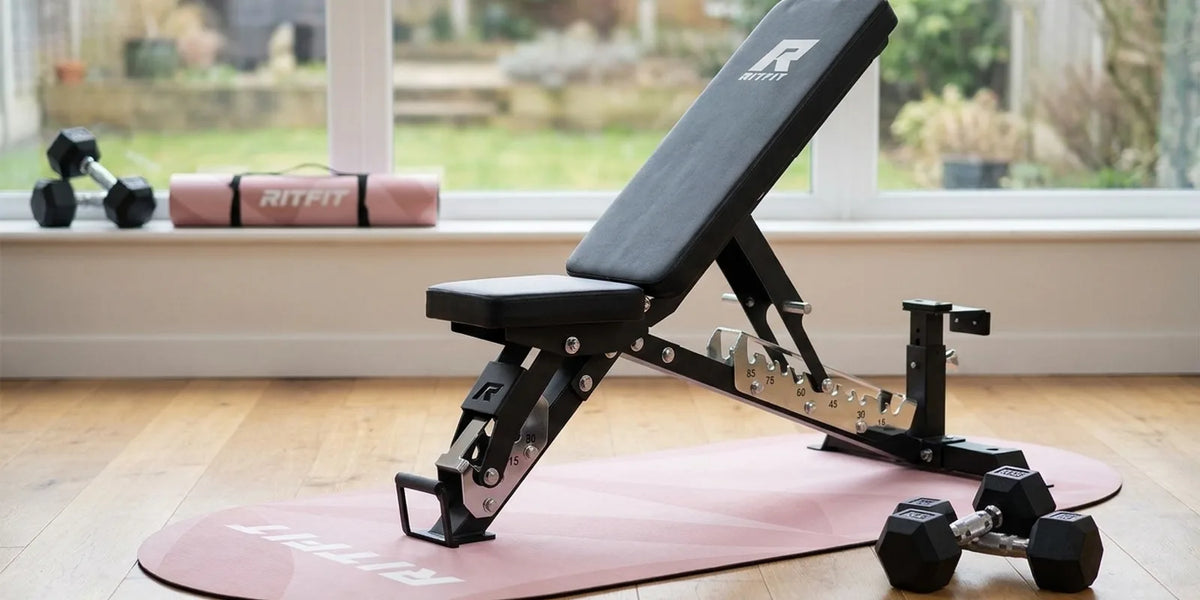
For a controlled decline or incline angle, an adjustable RitFit adjustable weight bench lets you progress safely. You can also rotate in ab roller exercises for variety.
How Should You Program Sit-Ups Into a Routine?
A practical starting point is 2 to 3 sets of 10 to 15 controlled reps, 3 to 5 days per week, built up gradually. Quality always beats quantity, so end a set when your form breaks down rather than chasing a rep count.
When Should You Add Load or Progress?
Add resistance only after you can complete 2 to 3 sets of 15 clean reps with bodyweight, then hold a 5 to 10 lb plate on your chest or move to a decline angle. A RitFit Gator adjustable bench supports both weighted and decline progressions.
When Should You Stop Because of Pain?
Stop immediately if you feel sharp lower-back or neck pain rather than normal muscle fatigue. Persistent back discomfort usually signals that your core is not yet strong enough, so switch to planks or crunches and build up first.
Sit-Ups vs Crunches: Which Should You Choose?
Sit-ups and crunches both train the abdominals, but crunches use a shorter range of motion and place less load on the spine. Electromyographic research has compared rectus abdominis activation across popular abdominal exercises, giving useful context for choosing between them.[2]
- Sit-up: Raises the full torso toward the knees and recruits the hip flexors along with the abs.
- Crunch: Lifts only the shoulder blades, isolating the rectus abdominis with less spinal stress.
People managing back sensitivity often prefer crunches, while those wanting a fuller movement pattern may keep sit-ups. Both can coexist in a varied core plan, and the best weight bench exercises for abs mix several movements.
How Do You Build a Stronger Core Beyond Sit-Ups?
A stronger core comes from pairing sit-ups with anti-movement and full-body exercises rather than relying on one move. Surface EMG research has measured rectus abdominis and external oblique activation across isometric and dynamic exercises, supporting a varied core program.[3]
- Planks: A safer isometric option that strengthens the deep core with less spinal compression.
- Compound lifts: Pair core work with push-up workouts for beginners for total-body strength.
- Deep core focus: Add deep core and pelvic floor work to support the transverse abdominis.
Browse adjustable benches and broader functional training equipment to round out a complete home core setup.
FAQs About Sit-Ups
What muscles do sit-ups work?
Sit-ups mainly train the rectus abdominis, the long muscle that forms the six-pack. They also recruit the internal and external obliques, the deep transverse abdominis, and the hip flexors such as the iliopsoas and rectus femoris. Because so many muscles assist, sit-ups build overall core strength rather than isolating just one area of the abdomen.
Are sit-ups bad for your lower back?
Sit-ups are not inherently bad, but poor form can strain the lumbar spine. Letting the hip flexors yank the torso up or arching the lower back adds pressure. Keeping the movement slow, driving with the abs, and exhaling on the way up reduces risk. People with back issues should choose crunches or planks first.
How many sit-ups should I do per day?
A common starting point is two to three sets of ten to fifteen controlled reps, three to five days per week. Quality matters far more than quantity, so stop a set when your form breaks down rather than chasing a high number. Build volume gradually and pair sit-ups with other core moves like planks for balanced development.
Do sit-ups burn belly fat?
No single exercise burns fat from one spot, and sit-ups are no exception. Spot reduction is a myth, so sit-ups strengthen and tone the muscles underneath but will not selectively remove abdominal fat. Visible abs come from lowering overall body fat through diet, regular cardio, and full-body strength training combined with consistent core work.
What is the difference between sit-ups and crunches?
A crunch lifts only the shoulder blades off the floor through a short range of motion, mostly isolating the rectus abdominis. A sit-up raises the entire torso toward the knees, recruiting the hip flexors and a larger movement pattern. Crunches place less load on the spine, so they are often preferred for people managing back sensitivity.
Conclusion
Sit-ups train the rectus abdominis along with the obliques, transverse abdominis, and hip flexors, making them a solid all-round core exercise when done with slow, controlled form. Focus on technique over rep counts to protect your neck and lower back.
If you are new, start with bodyweight sets, master the movement, then progress to decline or weighted variations and pair sit-ups with planks and full-body training for the best results.
Disclaimer
This article is for general educational purposes only and does not replace professional medical or fitness advice. Consult a qualified healthcare provider or certified trainer before starting any new exercise program, especially if you have existing back, neck, or hip conditions.
References
1. Kim SH, Park SY. Effect of hip position and breathing pattern on abdominal muscle activation during curl-up variations. Journal of Exercise Rehabilitation. 2018;14(3):445-450. https://pmc.ncbi.nlm.nih.gov/articles/PMC6028217/
2. Piering AW, Janowski AP, Wehrenberg WB, Moore MT, Snyder AC. Electromyographic analysis of four popular abdominal exercises. Journal of Athletic Training. 1993;28(2):120-126. https://pmc.ncbi.nlm.nih.gov/articles/PMC1317695/
3. Mandroukas A, Michailidis Y, Kyranoudis AE, Christoulas K, Metaxas T. Surface electromyographic activity of the rectus abdominis and external oblique during isometric and dynamic exercises. Journal of Functional Morphology and Kinesiology. 2022;7(3):67. https://pmc.ncbi.nlm.nih.gov/articles/PMC9505236/





