Table of Contents
The Smith machine bent over row is a controlled back exercise that helps you train the lats, rhomboids, traps, rear delts, and arm flexors with a repeatable bar path. It works best when you hold a strong hip hinge, brace your core, and pull with your elbows instead of yanking with your hands.
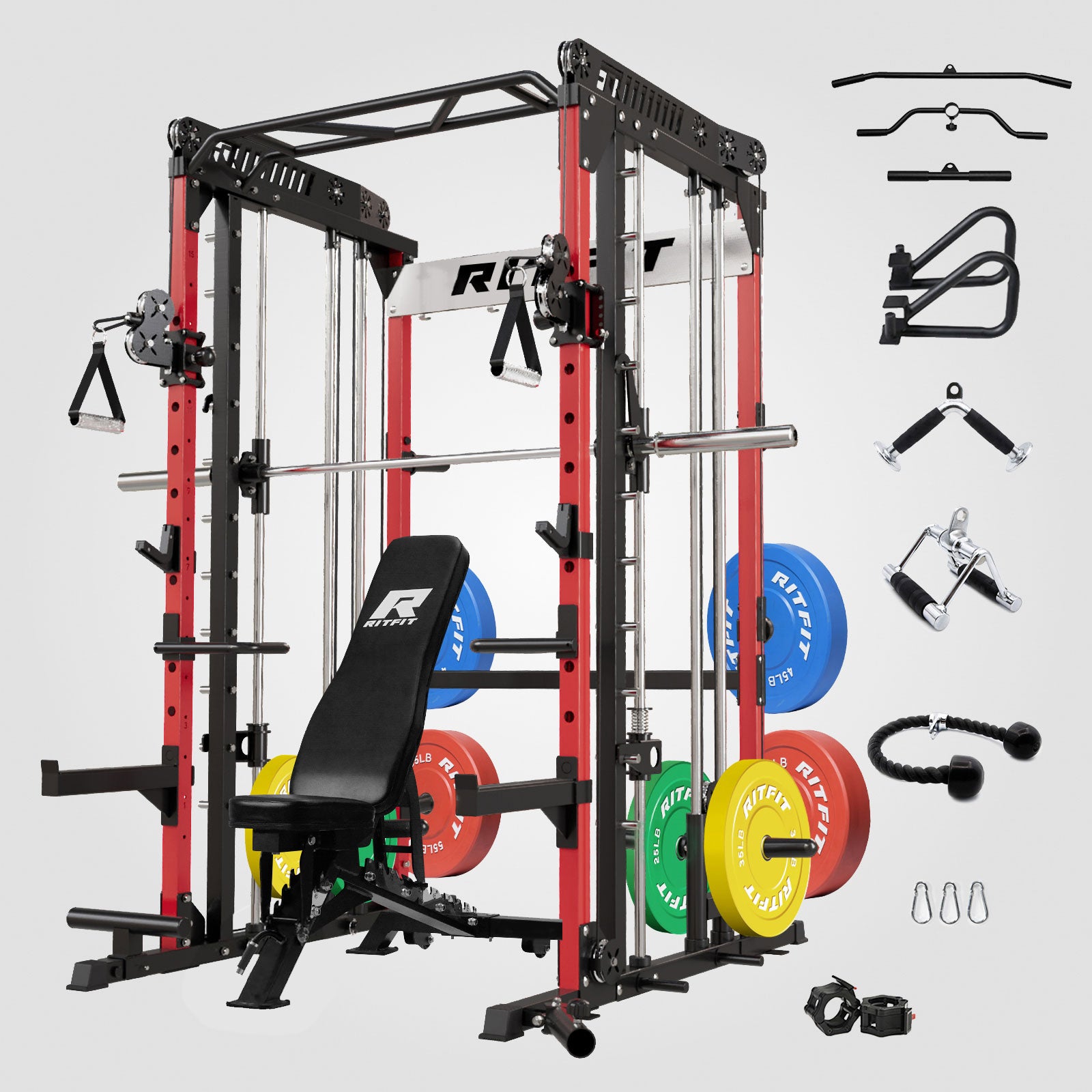
If you want more machine context, start with what a Smith machine is, or browse the RitFit Smith machine collection to compare different home gym setups.
Key Takeaways
- The Smith machine bent over row is a practical way to train back size and pulling strength with a fixed, repeatable bar path.
- Your hinge, brace, and elbow path matter more than the machine itself if you want the movement to feel like a back exercise.
- Most lifters get the best line of pull by rowing toward the lower ribs or upper waist, not the chest.
- A little lower back work is normal because you are holding a hinge, but sharp pain and spinal rounding are not.
- The Smith machine row and the barbell row can both belong in a smart program, because each one solves a slightly different training problem.
Benefits of the Smith Machine Bent Over Row
The biggest benefit is repeatable back training with less balance demand, which helps many lifters keep tension where they want it. Machine based and free weight training can both build strength and muscle when programming is solid, so the Smith machine is a valid tool rather than a compromise.[1]
Why lifters keep it in the program
The fixed track can make setup, reracking, and rep standardization easier, especially in solo home gym training or late set fatigue.
- More repeatable reps: The bar path stays predictable, so it is easier to compare one set, one session, and one block of training to the next.
- Better focus on elbow drive: Many lifters find it easier to think about pulling with the back when they do not also have to steer a free bar.
- More controlled loading: The Smith machine can be useful when you want smooth setup, safer reracking, and less wasted motion between reps.
- Good fit for home gyms: It pairs well with other guided movements in a full setup, especially if you already use a Smith machine exercise plan for muscle building.
Smith Machine Bent Over Row Muscles Worked
The Smith machine bent over row mainly trains the lats, mid back, rear delts, biceps, forearms, and the trunk muscles that hold your hinge. Different row patterns can shift muscle emphasis, which is why grip width, elbow path, and pull height change how the exercise feels from set to set.[4]
Primary and secondary muscles
Your back should lead the movement, while your arms and trunk support the pattern and help you stay strong through the full set.
- Latissimus dorsi: The lats help extend the shoulder and pull the elbows back, especially when you keep the bar close and avoid flaring too hard.
- Rhomboids and middle traps: These muscles support scapular retraction and give the row its thick mid back feeling.
- Rear delts: The posterior deltoids assist the pull and often light up when you control the top position instead of rushing it.
- Biceps and forearms: They help flex the elbow and secure the bar, but they should not dominate the set.
- Spinal erectors, abs, glutes, and hamstrings: These muscles work isometrically to hold your torso angle and stop the hinge from collapsing.
How to Do the Smith Machine Bent Over Row
The goal is to hinge once, stay locked in, and row the bar toward the lower ribs or upper waist without letting your torso rise. If your Smith machine is angled instead of vertical, adjust your foot position until the bar still tracks close to your body.
Quick setup checklist
Set the bar around mid thigh, plant your whole foot, and place the safeties just below your lowest rep position.
- Bar height: Start where you can unrack without rounding your back.
- Stance: Use a stable hip width to shoulder width base, and keep pressure through the whole foot.
- Grip: A pronated grip is the default for most lifters, while an underhand grip can increase arm involvement for some people.
- Track check: Test one unloaded rep first if your machine has an angled rail.
Step by step form
Good resistance training technique balances stable joint positions, a controlled range of motion, and consistent execution, which is exactly what you want from a row you plan to progress over time.[2]
- Step 1. Set your grip and brace: Grip the bar a little wider than shoulder width, unlock the bar, and take a full breath into your trunk.
- Step 2. Hinge into position: Push your hips back, keep a soft knee bend, and settle into a torso angle you can hold without rounding.
- Step 3. Start from a dead hang: Let the arms extend fully while keeping your chest set, neck neutral, and shoulders controlled.
- Step 4. Row with the elbows: Pull the bar toward the lower ribs or upper waist, and think about driving the elbows back instead of curling with the hands.
- Step 5. Lower under control: Return the bar smoothly, keep it close to your body, and hold the same hinge until the set is over.
If you want a second tutorial angle, see how to do a Smith machine row for another variation built around the same pulling pattern.
Simple programming options
A controlled lowering phase helps you keep position, maintain tension, and stop the set from turning sloppy under fatigue, and tempo can influence the training stimulus when the rest of the program is well designed.[3]
- Hypertrophy: Do 3 to 4 sets of 8 to 12 reps, and stop with 1 to 3 reps in reserve.
- Strength biased work: Do 3 to 5 sets of 5 to 8 reps with longer rest periods and a stricter hinge.
- Beginner option: Do 2 to 3 sets of 10 to 12 reps, and prioritize position, bar path, and feel before adding load.
- Progression rule: Add reps until you hit the top of your target range, then add a small amount of weight and repeat.
Common Smith Machine Bent Over Row Mistakes
The most common mistakes are losing the hinge, rowing with the arms first, and using a load you cannot control. Small setup errors become big technique leaks once fatigue shows up.
What to fix first
Most lifters improve quickly when they clean up torso position and pull height before worrying about heavier plates.
- Standing too upright: If your torso angle gets too high, the movement stops looking like a row and starts acting like a shruggy pull.
- Rounding the low back: This usually happens when the load is too heavy or the hinge was never stable to begin with.
- Pulling too high: Rowing toward the chest often shifts the lift away from the lats and makes the top position messier.
- Letting the bar drift forward: A drifting bar increases leverage demands and usually makes the set feel worse in the arms and low back.
- Dropping the eccentric: Fast lowering often breaks position and turns a good rep into two bad half reps.
- Using momentum to finish: If your torso pops up to complete the lift, the weight is winning the rep.
Smith Machine Bent Over Row Form Tips
The best form tips are simple, because the exercise works when you repeat a clean hinge and a clean pull. If the movement feels wrong, the fastest fix is usually less load, more brace, and a cleaner elbow path.
Practical cues that improve the lift
These cues usually help lifters feel the row in the back instead of the wrists, biceps, or low back.
- Hands are hooks: Hold the bar firmly, but think about moving the elbows rather than squeezing the rep up with your arms.
- Elbows to your hips: This cue often helps people find the lats and stop pulling too high.
- Chest stays set: Keep your sternum proud without overextending the spine.
- Keep the bar close: A close bar path usually feels stronger, smoother, and more back focused.
- Pause briefly at the top: A short squeeze can improve feel, especially if you usually rush the peak contraction.
- Use the right tool for the day: If you are new to guided lifting, read whether a Smith machine is good for beginners before you push load too fast.
Smith Machine Bent Over Row vs. Barbell Row
The Smith machine row is usually better for repeatability and setup control, while the barbell row is usually better for freedom of movement and self stabilization. Neither is automatically better for every lifter, because the best choice depends on your goal, skill level, fatigue state, and setup.
When each option makes more sense
Choose the version that solves the training problem you actually have, not the one that sounds tougher on paper.
- Choose the Smith machine row if: You want a more predictable setup, easier reracking, and cleaner reps in solo or home gym training.
- Choose the Smith machine row if: Your main goal is hypertrophy and you want to standardize bar path across weeks.
- Choose the barbell row if: You want more self stabilization, more bar path freedom, and more skill transfer to free bar pulling.
- Choose the barbell row if: You already own the hinge pattern and want a less constrained row.
- Use both if: You want one lift for strict, repeatable back work and one lift for broader free weight practice.
For a wider equipment comparison, read Smith machine vs. power rack. If you want a bodyweight friendly pulling partner for this lift, pair it with the Smith machine inverted row.
FAQs About the Smith Machine Bent Over Row
What muscles does the Smith machine bent over row work?
The Smith machine bent over row mainly trains the lats, rhomboids, middle traps, rear delts, biceps, and forearms. Your spinal erectors, glutes, hamstrings, abs, and obliques also work isometrically to hold the hinge, which is why clean bracing matters as much as the pull itself.
How do you feel the Smith machine bent over row in your back instead of your arms?
Lower the weight, keep your chest set, and think about driving your elbows back toward your hips instead of curling the bar with your hands. A stable hinge, a bar path close to the body, and a short squeeze at the top usually improve back engagement fast.
Is the Smith machine bent over row good for beginners?
Yes. The fixed bar path can make setup and reracking easier, which helps many beginners practice bracing, hinging, and elbow drive with less balance demand. It is still important to use a manageable load, keep a neutral spine, and stop if the lower back rounds or aches sharply.
Should you pull the Smith machine bent over row to your waist or chest?
Pulling toward the lower ribs or upper waist works best for most lifters because it keeps the elbows tracking in a strong rowing path without turning the lift into a shrug. Pulling too high often shifts tension away from the lats and makes shoulder position harder to control.
Why does the Smith machine bent over row hurt my lower back?
Low back discomfort usually means the hinge is drifting, the load is too heavy, or your trunk is losing tension before the set ends. Reset your stance, brace harder, shorten the set, and use a lighter load until you can hold the same torso angle from the first rep to the last.
Can the Smith machine bent over row replace the barbell row?
Yes. It can replace the barbell row when your goal is controlled hypertrophy work, solo training, or a more repeatable setup. A free bar row still offers more self stabilization demand, so many lifters keep both movements and use each one where it fits best.
Final Thoughts
The Smith machine bent over row is a useful back builder when you want more setup control, cleaner rep repeatability, and an easier way to focus on elbow driven pulling. Keep the hinge honest, keep the bar close, and let progression come from better reps before heavier plates.
Disclaimer: This article is for general educational purposes only and is not medical advice. If you have current shoulder, neck, elbow, wrist, or back pain, or any recent injury or surgery, speak with a qualified clinician before training, and stop any exercise that causes sharp or worsening pain.
References
- Haugen ME, Vårvik FT, Larsen S, Haugen AS, van den Tillaar R, Bjørnsen T. Effect of free weight vs machine based strength training on maximal strength, hypertrophy and jump performance: a systematic review and meta analysis. BMC Sports Sci Med Rehabil. 2023;15:103. doi:10.1186/S13102-023-00713-4
- Androulakis Korakakis PA, Wolf M, Coleman M, Burke R, Piñero A, Nippard J, Schoenfeld BJ. Optimizing resistance training technique to maximize muscle hypertrophy: a narrative review. J Funct Morphol Kinesiol. 2024;9(1):9. doi:10.3390/jfmk9010009
- Wilk M, Zając A, Tufano JJ. The influence of movement tempo during resistance training on muscular strength and hypertrophy responses: a review. Sports Med. 2021;51(8):1629-1650. doi:10.1007/S40279-021-01465-2
- Lehman GJ, Buchan DD, Lundy A, Myers N, Nalborczyk A. Variations in muscle activation levels during traditional latissimus dorsi weight training exercises: an experimental study. Dyn Med. 2004;3:4. doi:10.1186/1476-5918-3-4