








The best glute isolation exercises are single joint hip abduction and hip extension movements, not smaller versions of squats and deadlifts. They load one action at a time, which is why they feel so different from anything you do under a barbell.
This guide ranks ten of them for a home or garage gym, then covers the cues that make the glutes actually fire, how much weight to use, how often to train, and when to stop. Every movement here adds to your compound work rather than replacing it.
Quick Answer: The best glute isolation exercises are the seated hip abduction machine, standing cable hip abduction, side lying hip abduction, banded clamshell, banded lateral walk, cable glute kickback, quadruped hip extension, banded fire hydrant, glute bridge, and reverse hyperextension. Train two or three of them for two to four sets of ten to twenty controlled reps after your compound lifts.
Key Takeaways
- One Joint Only: Glute isolation means the hip moves while the knee stays still.
- Measured Values: A progressed clamshell reached 77% MVIC of the gluteus medius and a side plank abduction reached 103% MVIC in an EMG trial.
- Two or Three Is Enough: Isolation work adds targeted volume after compounds and never replaces them.
- Leave Reps in Reserve: Most isolation sets should end one or two clean reps short of failure.
- Stop on Compensation: End the set when the low back, the hip flexors, or a drifting knee takes over.
What Are Glute Isolation Exercises?
Glute isolation exercises move the hip joint while the knee stays still. A systematic review of dynamic hip abduction and hip external rotation work groups mean gluteal activation from very high above 60% MVIC to low at 0-20% MVIC, and puts the minimum stimulus for strengthening at roughly 40-60% MVIC, with readings under 25% MVIC reflecting endurance work rather than strengthening.[1]
- Hip abduction: the leg travels away from the midline of the body, which is the gluteus medius action.
- Hip extension: the leg travels behind the body, which is the gluteus maximus action.
- Hip external rotation: the thigh turns outward, shared between the glutes and the tensor fascia latae.
- Not isolation: squats, lunges, and deadlifts bend the knee and hip together, which makes them compound movements with a different job.
An EMG study reports that the gluteus medius is the major abductor of the hip and, with the gluteus maximus, performs most of the hip external rotation.[2] The gluteus maximus is the major hip extensor and also assists abduction, which is why the abduction and extension patterns in this list feel like separate exercises.
10 Best Glute Isolation Exercises for Glute Activation and Strength
The ten movements below cover every hip action the glutes control. Each one works with a machine, a cable, or a band, and the activation values quoted here come from an EMG study of rehabilitation exercises in which the researchers treated anything above 70% MVIC as acceptable for enhancing strength.[3]
Seated Hip Abduction Machine
The seated hip abduction machine fixes the torso and isolates hip abduction, which makes it the easiest of the ten to feel. Sit tall with the pads just above the knees and push the legs apart without letting the torso rock.
- Setup: pad contact above the knee, never on the kneecap.
- Reps: 2 to 4 sets of 12 to 20 reps with a one second pause at the end range.
- Load: light enough that you can hold the end position for a full second.
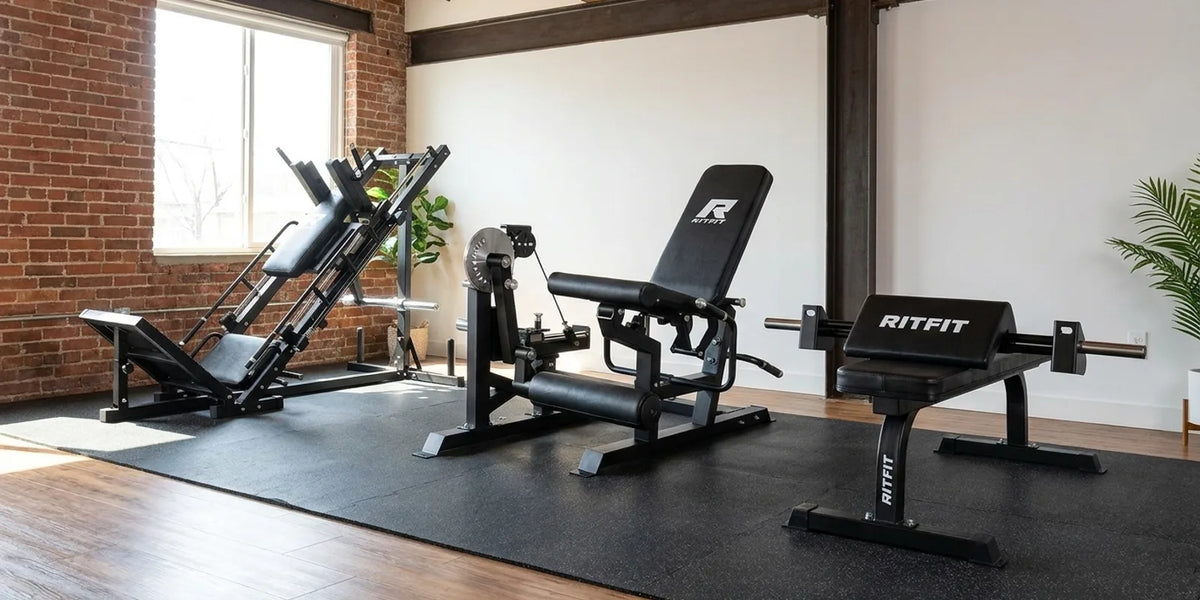
- Home pick: the RitFit Panther hip abductor and adductor machine covers abduction and adduction in one footprint.
"I love this machine. My instructions were missing 2 pages so I had to look up the final steps but other than that it's great."
Nichole S. Verified Buyer, RitFit Panther Home Hip Abductor and Adductor Machine
Standing Cable Hip Abduction
Standing cable hip abduction trains the same action through a longer range with the standing leg doing the balancing. Clip an ankle strap to a low pulley and stand side on to the machine.
- Setup: strap on the ankle nearest the pulley, one hand on the frame for balance only.
- Reps: 2 to 3 sets of 12 to 15 reps per side.
- Watch: a leaning torso turns this into a hip hike, so keep the ribs stacked over the pelvis.
Side-Lying Hip Abduction
Side lying hip abduction needs no equipment and loads the gluteus medius hard, with the side plank version producing 103% MVIC in an EMG trial. Lie on your side with the hips stacked and lift the top leg without rotating the pelvis backward.
- Setup: bottom knee bent for stability, top leg straight and slightly behind the hip line.
- Reps: 2 to 3 sets of 15 to 20 reps per side.
- Watch: rolling onto your back means the range has gone past what the hip can control.
Banded Clamshell
The clamshell adds hip external rotation to abduction, and a progressed clamshell reached 77% MVIC of the gluteus medius in the same trial. Loop a band above the knees, keep the feet together, and open the top knee against the band.
- Setup: band above the knees, hips stacked, ribs pulled down.
- Reps: 2 to 3 sets of 15 to 20 reps per side with a one second hold at the top.
- Watch: if the pelvis rolls back, the range has gone too far.
Banded Lateral Walk
The banded lateral walk keeps tension on the gluteus medius for the whole set because the band never fully unloads. Step sideways with a short stride and keep the toes pointing forward.
- Setup: band above the knees or around the ankles, quarter squat stance.
- Reps: 2 to 3 rounds of 10 to 15 steps in each direction.
- Watch: dragging the trailing foot kills the tension the band is there to create.
Cable Glute Kickback
The cable glute kickback isolates hip extension, which is the gluteus maximus action. Attach an ankle strap to a low pulley and drive the leg back without arching the low back.
- Setup: ankle strap on a low pulley, slight forward lean, hands on the frame.
- Reps: 2 to 3 sets of 12 to 15 reps per side.
- Watch: if the low back tightens, the range is coming from the spine rather than the hip.
Quadruped Hip Extension
Quadruped hip extension supports the torso, which makes the gluteus maximus easy to feel without loading the spine. The harder plank version of the same pattern reached 106% MVIC of the gluteus maximus, the highest gluteus maximus reading in the trial.
- Setup: hands under the shoulders, knees under the hips, neutral spine.
- Reps: 2 to 3 sets of 12 to 15 reps per side.
- Progress: lift into a front plank and extend the hip from there once 15 clean reps feel easy.
Banded Fire Hydrant
The fire hydrant combines hip abduction with external rotation and needs only a band. Stay on all fours, keep the knee bent, and lift the working leg out to the side without shifting weight onto the other hip.
- Setup: band above the knees or around the thighs.
- Reps: 2 to 3 sets of 12 to 15 reps per side.
- Watch: a tilting torso means the hip flexors are doing the lifting.
Glute Bridge
The glute bridge trains hip extension with the back supported, and the simple gluteal squeeze was measured at 81% MVIC of the gluteus maximus in the same study. Press through the heels and stop the lift when the hips are in line with the knees and shoulders.
- Setup: heels roughly a hand length from the glutes, ribs down.
- Reps: 2 to 4 sets of 12 to 15 reps with a two second hold at the top.
- Watch: if the low back arches first, move the feet closer and reduce the range.
Reverse Hyperextension
The reverse hyperextension isolates hip extension with the torso locked against a pad, so the glutes work through a long range without spinal loading. Set the pad under the hips and lift the legs to hip height only.
- Setup: pad under the hips, hands on the handles, neutral spine.
- Reps: 2 to 3 sets of 12 to 15 reps.
- Watch: lifting past hip height turns it into a low back movement.
These ten are the working list, and the order is not a ranking of effectiveness for growth. Use the values above as a guide to whether a movement loads the target at all, then pick by the equipment you actually own.
How Do You Know Your Glutes Are Actually Working?
You know the glutes are working when the target muscle fatigues before the low back or the hip flexors do. In 26 high performance field hockey players, the single leg squat produced 125.65% MVIC of the gluteus maximus and 126.30% MVIC of the gluteus medius, which is higher than any isolation drill, so raw activation numbers alone never tell you whether an isolation movement is doing its job.[4]
- Burn location: the glute should give out before the low back or the hamstrings do.
- Tempo: slow the lift to two seconds and pause one second at the end range.
- Tension: keep constant band or cable tension instead of letting the load rest between reps.
- Position: stop the rep the moment the pelvis rotates or the low back arches.
- Practice: treat the first few sessions as rehearsal, because feeling the muscle work is a skill.
Glute activation exercises done before a session are the fastest way to build that feel, and the cable leg machine exercises in a home rack cover the same patterns with real resistance once the drill feels easy.
How Much Weight Should You Use for Glute Isolation Work?
Use the heaviest load that still lets you pause at the end range without the torso helping. If the machine or cable pulls you out of position, the weight is above your control rather than above your strength.
- Starting point: a load you can control for 12 clean reps with a one second hold at the end range.
- Progression: add reps first, then add the smallest increment the stack allows.
- Feel over numbers: a lighter load with a hard squeeze beats a heavy load you swing.
- Fixed path machines: a guided hip abduction machine lets you chase tension instead of balance.
- Bands: step further from the anchor to add tension before you add endless reps.
"Many gyms have machines that allow for this. If you find one that feels right, then go really hard on these and make them a staple movement and go for progressive overload over time. The 4-way hip machine can work well."
Bret Contreras, PhD, Sports Science researcher known as The Glute Guy, Do More Than Just Squat
How Often Should You Train Glutes to See Results?
Train glutes two or three times a week and place isolation work at the end of those sessions. Two or three movements per session is enough, and isolation exercises for glutes recover quickly enough to repeat without extra rest days.
- Frequency: two or three sessions a week, with at least one easy day between them.
- Placement: after squats, hip thrusts, or deadlifts, never before them.
- When to add load: once you hit the top of your rep range with a clean one second pause on every rep, add the smallest increment and drop back to the bottom of the range.
- When to add volume: add a set before you add a fourth exercise.
- Deload signal: if the same load feels heavier two sessions in a row, take a lighter week.
Keep the compound work as the anchor of the session and let the isolation movements fill in behind it. That is the same sequencing used in a Smith machine hip thrust glute workout and in the hip thrust setup guide for home racks.
What Can You Do Instead When You Lack Equipment?
Resistance bands can replace nearly every machine in this list. A rack attachment can also turn a power rack into a hip extension station, and an adjustable bench opens up glute bridges and reverse hypers with no dedicated machine at all.
- No hip abduction machine: use a side lying hip abduction or a banded lateral walk with a short loop band.
- No cable machine: anchor a long loop band low for glute kickbacks, or follow a banded hip thrust setup for the extension side.
- No reverse hyperextension bench: use a single leg hip thrust or a quadruped hip extension.
- No bands at all: a stretch band leg routine covers abduction and external rotation in a small space once you buy a single loop.
- Building out a home gym: the leg machine collection covers the machine based options, and the RitFit 2 in 1 hip thrust attachment adds hip extension to a cage you already own.
Substitutions work as long as the hip action stays the same, so match the joint action rather than the exact equipment. If a swap changes the action to something else, it is a different exercise with a different purpose.
When Should You Stop a Glute Isolation Exercise?
Stop the set as soon as the low back or a shifting knee takes over the movement. Hip muscle activation during weight bearing exercise is tied to knee frontal plane motion, so a knee that drifts inward is a sign the hip has stopped controlling the position.[5]
- Low back instead of glute: end the set and reduce the range.
- Knee collapse: a knee drifting inward means the hip has given up control of the leg.
- Pinch at the front of the hip: stop the movement and try a smaller range or a different hip angle.
- Lingering low back soreness: drop the load and check that the ribs stay down.
- Sharp pain: end the session and have a qualified professional look at it.
These are the same signals that end a compound session, which is why the stop rules matter more than exercise selection once the load climbs.
Common Mistakes That Kill Glute Isolation Work
Most failed glute isolation work comes down to a few habits rather than a bad exercise choice. Fixing them is usually faster than adding another movement to the list.
- Going too heavy too soon: swinging a load you cannot pause turns the movement into momentum.
- Chasing a burn in the wrong place: a low back or hip flexor burn means the target muscle is not carrying the set.
- Adding exercises instead of resistance: once you own the pattern, progress the load rather than the exercise count.
- Skipping the end range pause: the hold is where the target muscle does the most work.
How Do You Build a Glute Isolation Workout at Home?
Build the session from one hip abduction movement, one hip extension movement, and one external rotation drill. Run the glute isolation workout twice a week after your main lifts and add one set at a time rather than one exercise at a time.
- Warm up: banded lateral walk, 2 rounds of 12 steps in each direction.
- Block A: seated hip abduction machine, 3 sets of 15 reps.
- Block B: cable glute kickback, 3 sets of 12 reps per side.
- Block C: banded clamshell, 2 sets of 20 reps per side.
- Finisher: glute bridge with a one second pause, 2 sets of 15 reps.
Scale the whole session by the equipment you own. Read the parent guide on leg exercises if you want the compound work that should come first.
FAQs About Best Glute Isolation Exercises
How many glute isolation exercises should be in one workout?
Two or three is enough for most lifters. Pick one hip abduction movement and one hip extension movement, then add a third only if you still have energy for quality reps. Isolation work sits after your compound lifts, so it should never crowd out squats, hip thrusts, or deadlifts.
How well can isolation exercises for glutes build muscle on their own?
You can build some glute size with isolation work alone, but it is rarely the fastest route. Isolation exercises for glutes target one joint and usually carry lighter loads, so total tension stays modest. Most lifters get better results pairing heavy compounds with two or three isolation movements at the end.
What is the best glute isolation exercise for beginners?
The seated hip abduction machine is the easiest starting point because the path is fixed and you can focus on the squeeze. The glute bridge is the best bodyweight option if you train at home. Start with two sets of twelve to fifteen controlled reps and add a third set once the last rep still feels strong.
How close to failure should glute isolation exercises go?
Leave one or two clean reps in reserve on most sets. Isolation movements are small, single joint actions, so training every set to failure adds fatigue without much extra stimulus. Save true failure for the final set, and only after your form has held together for the earlier ones.
What is the difference between glute activation exercises and glute isolation exercises?
Glute activation exercises are light, low load drills used before a workout to wake the muscle up. Glute isolation exercises use real resistance and are trained for strength or size. The two overlap, since a banded clamshell can serve as either, but only the loaded version builds meaningful tension over time.
How long does it take to feel glute isolation exercises working?
Most people feel a clearer glute contraction within two to four sessions once they slow the tempo and pause at the top. Visible size changes take longer, usually several weeks of consistent training. Feeling the muscle work is a skill, so treat the first few sessions as practice rather than a test.
What is the best glute isolation workout with resistance bands only?
Bands cover hip abduction, hip external rotation, and hip extension well, which is the whole isolation menu. Anchor a long loop band low for kickbacks and place a short loop above the knees for lateral walks and clamshells. Add a pause at the end range so band tension does real work.
What can replace a machine or cable you do not own?
Bands replace the cable work, and bodyweight versions replace the machines. A long loop band anchored low covers glute kickbacks, while a short loop above the knees covers lateral walks and clamshells. For hip extension you can use a single leg hip thrust or a quadruped hip extension with no equipment at all.
Conclusion
The best glute isolation exercises keep the knee still and let the hip do the work. Pick two or three, load them honestly, and judge them on control rather than on the number printed on the stack.
Start with the movements above, run them after your compounds twice a week, and let the feel improve before the load does. If you are still building the gym itself, the current RitFit discount guide is the cheapest way to add a machine to your setup.
Disclaimer
This article is general fitness information and not medical advice. Speak with a qualified healthcare professional before starting a new training program, especially if you have hip, back, or knee pain.
References
1. Macadam P, Cronin J, Contreras B. AN EXAMINATION OF THE GLUTEAL MUSCLE ACTIVITY ASSOCIATED WITH DYNAMIC HIP ABDUCTION AND HIP EXTERNAL ROTATION EXERCISE: A SYSTEMATIC REVIEW. Int J Sports Phys Ther. 2015;10(5):573-91. PMCID: PMC4595911
2. Bishop BN, Greenstein J, Etnoyer-Slaski JL, Sterling H, Topp R. Electromyographic Analysis of Gluteus Maximus, Gluteus Medius, and Tensor Fascia Latae During Therapeutic Exercises With and Without Elastic Resistance. Int J Sports Phys Ther. 2018;13(4):668-675. PMCID: PMC6088126
3. Boren K, Conrey C, Le Coguic J, Paprocki L, Voight M, Robinson TK. Electromyographic analysis of gluteus medius and gluteus maximus during rehabilitation exercises. Int J Sports Phys Ther. 2011;6(3):206-23. PMCID: PMC3201064
4. Coetzee D, Coetzee FF, Schall R, Sinclair C. Gluteal muscle activation during rehabilitation exercises in female field hockey players. S Afr J Physiother. 2021;77(1):1578. doi:10.4102/sajp.v77i1.1578. PMCID: PMC8603190
5. Lubahn AJ, Kernozek TW, Tyson TL, Merkitch KW, Reutemann P, Chestnut JM. Hip muscle activation and knee frontal plane motion during weight bearing therapeutic exercises. Int J Sports Phys Ther. 2011;6(2):92-103. PMCID: PMC3109897





