The best lower glute exercises train hip extension, not the top of the glutes. The gluteus maximus is one muscle that runs from the pelvis to the thigh, so the part people call the lower glutes is the inferior section that sits under the gluteal fold and shows up last in most training plans.
This guide explains why squats and flat glute bridges leave the bottom flat, ranks seven lower glute exercises by how well they load hip extension, and sets out the load, frequency and substitution rules you can run at home.
Quick Answer: The best lower glute exercises are the hip thrust, single leg hip thrust, bent knee hip extension, kickback, Romanian deadlift and reverse lunge, because each one loads hip extension through a long range. Add load before you add reps, and train them twice a week.
Key Takeaways
- Lower glutes are a region, not a separate muscle: the inferior fibers of the gluteus maximus sit under the gluteal fold and own hip extension with the hip flexed.
- Flat bridges run out of range: a systematic review of 39 studies measured a single leg bridge at 54.2% MVIC gluteus maximus excitation against 106.2% MVIC for a plank with bent leg hip extension.
- Horizontal hip extension carries the load: a biomechanical analysis of the barbell hip thrust found the greatest bilateral extensor demand at the hip joint rather than at the knee or trunk.
- Load beats reps for the lower glutes: add weight to a hip thrust or a Romanian deadlift before you add another set of high rep band work.
- Two sessions a week is the working number: train lower glutes twice weekly with at least 48 hours between sessions, and end the set when the low back takes over.
What Are the Lower Glute Muscles and Why Do They Matter?
The lower glute muscles are the inferior fibers of the gluteus maximus, the section that finishes hip extension. Those fibers run from the lower pelvis to the gluteal tuberosity of the femur, placing them under the gluteal fold where the bottom curve people call low glutes sits.
- One muscle, different regions: the gluteus maximus is a single muscle, so a lower glute workout shifts emphasis across the muscle rather than switching on a hidden lower muscle.
- The lower glute muscle is built for extension: its fibers are oriented to complete hip extension, especially when the hip starts flexed at the bottom of a bridge or a thrust.
- The lower butt muscle is not the hamstring: the hamstrings begin below the gluteal fold, so tension there does not prove the lower glutes did the work.
Treat the lower glutes as hip extension work rather than as a finishing pump at the end of leg day. The rest of this guide keeps returning to one rule, which is that range of motion and load decide whether the bottom of the glutes gets trained at all.
Why Do Standard Glute Bridges Miss the Bottom of Your Glutes?
Standard glute bridges miss the bottom of the glutes because the rep ends too early. The range stops just as the inferior fibers come under load, and a floor bridge finishes with the hip barely past neutral.[1]
A systematic review of 39 studies of bodyweight hip extension exercises reported average gluteus maximus excitation of 33.4% MVIC in the vertical force vector, 32.8% MVIC in the horizontal anteroposterior vector and 30.4% MVIC in the horizontal posteroanterior vector.[1] The highest values inside that review came from single leg and bent leg positions most people never try, including 86% MVIC for the single leg wall squat and 106.2% MVIC for a plank with bent leg hip extension.[1]
What Changes When You Switch to Single-Leg and Bent-Leg Variations?
Single leg and bent leg positions raise lower glute demand because they change leverage rather than adding weight. Twice the load lands on one hip, and the free side has to hold extension instead of sharing it.
- Single leg stance: the working hip carries the whole load, which is why the single leg bridge reached 54.2% MVIC in the same review.[1]
- Bent knee, feet close: shortening the hamstrings leaves the glutes to finish the rep on their own.
- Feet elevated: a bench under the feet buys extra range before you buy extra plates.
One exercise for the bottom of the glutes changes the pattern fastest, and that is the single leg hip thrust. If the exercises for the bottom of the glutes feel harder than a flat bridge, that is the point, and the hip thrust technique breakdown shows how to keep the ribs down and finish the rep at the hip.
7 Best Lower Glute Exercises for a Full Lower Glute Workout
The best lower glute exercises load hip extension through the longest range the lifter can control. The list below orders the moves by how directly they hit the inferior gluteus maximus and by how easily you can add load at home.
The lower glutes respond to exercises that allow a long range and real load, not to the hardest variation you can survive. If you only have one piece of equipment, start at number one and build from there.
1. Barbell Hip Thrust for the Lower Gluteus Maximus
The barbell hip thrust anchors any list of lower gluteus maximus exercises because it loads horizontal hip extension at peak glute tension. A comprehensive biomechanical analysis found the movement places the greatest bilateral extensor demand at the hip joint rather than at the knee or the pelvic trunk joints.[2]
- Bench height: one glute training guide recommends around 16 inches, with a workable range of 13 to 19 inches. A bench that is too high turns the rep into a back extension.
- Range: start with the ribs down and finish with the hips level rather than hyperextended.
- Load: begin with a weight you can pause for one second at the top of every rep.
Follow the barbell hip thrust progression once the setup feels automatic.
2. Single-Leg Hip Thrust to Expose One Side at a Time
The single leg hip thrust is the strongest bodyweight option for the lower glutes. Working one side also removes the option of hiding a weak hip behind a stronger one.
- Setup: plant the working foot 12 to 14 inches from the bench and keep the pelvis level.
- Cue: drive through the whole foot and stop the moment the hips rotate.
- Load: add a dumbbell across the hip once 12 clean reps per side feel easy. Here is the full single leg hip thrust setup.
3. Bent-Knee Hip Extension and Frog Pumps
Bent knee hip extension keeps the knees out and the feet close to the glutes, so the hip never fully straightens and the lower fibers stay loaded. The plank version of the same idea recorded the highest single value in the review at 106.2% MVIC.[1]
- Volume: use 15 to 20 controlled reps, since the range is short by design.
- Feel: tension should sit under the gluteal fold, not in the hamstrings.
- Progression: lift the shoulders onto a bench to lengthen the range.
4. Cable or Band Kickbacks
Kickbacks are a genuine single joint exercise for lower glutes rather than a hamstring move. In a study of 15 trained women working at 75% of estimated 1RM, the leg curl produced the lowest gluteus maximus activation of the six movements tested, which included kickbacks and hip extensions.[3]
- Range: finish the hip fully extended without arching the low back.
- Cue: push the floor away instead of lifting the leg.
- Home swap: a band anchored low does the same job when you have no cable.
5. Romanian Deadlift for the Lower Glute and Hamstring Line
The Romanian deadlift is the best loaded hip hinge for the lower glute and hamstring line. In 15 resistance-trained women lifting 6RM loads, the Romanian deadlift and the Roman chair back extension activated the gluteus maximus 94 to 140 percent more than a seated machine back extension.[4]
- Start position: soft knees, weight close, hips traveling back rather than down.
- Stop point: stop the descent the moment the low back rounds.
- Dose: start with 3 sets of 8 to 10 reps.
A sound set of banded hip thrust or hinge work twice a week is the foundation for the exercises to build lower glutes you can actually progress.
6. Deficit Reverse Lunge and Step-Up
Lunges and step-ups hold the hip flexed under load, which is where the lower glutes do their heaviest work. A small deficit lengthens the range without adding weight to the bar.
- Start weight: bodyweight or a pair of dumbbells until the front knee stays steady.
- Tempo: lower for three seconds and keep the torso tall.
- Volume: 2 to 3 sets of 8 to 12 reps per leg.
7. 45-Degree Back Extension with a Round Back
The 45 degree back extension is a free torso hip hinge, so the glutes have to hold extension without a pad taking the work. The trained-women study found the Roman chair version beat the seated machine back extension for gluteus maximus activation by that same 94 to 140 percent margin.[4]
- Round back variation: a slight rounded upper back keeps tension on the glutes instead of the erectors.
- Load: bodyweight for high reps first, then a plate or band once 15 reps are easy.
- Stop: end the set if the work moves into the low back.
The exercises to lift lower glutes are not exotic, they are ordinary hip extension moves loaded harder each month. If you want the best workout for lower glutes in one sentence, it is a heavy hip thrust, a single leg variation and one hinge taken close to failure.
How to Target Lower Glutes with Cues, Angles, and Load
Lower glute targeting is an angle problem rather than a burn problem. Three cues do most of the work, and they are ribs down, hips level, and a rep that finishes at the hip instead of the lower back.
- Ribs down: a flared ribcage turns hip extension into a back extension and takes the glutes out of the hardest part of the rep.
- Knee angle: bending the knee more shortens the hamstrings and hands the finish to the glutes.
- Foot position: a slightly wider stance with the toes turned out adds hip external rotation demand.
- Angle before load: raising the feet or using a bench lengthens the range before a single plate goes on the bar.
Hip exercises at home for strength and mobility are worth pairing with this work if you want the mobility side in the same session. Any lower glute exercise that lets you feel the stretch at the bottom and the squeeze at the top is doing its job.
How to Build Lower Glutes with Progressive Overload
How to build lower glute strength starts with a load you can control, because growing lower glutes is a loading problem rather than a variety problem. Use double progression: add reps inside a range first, then add load and drop back to the bottom of that range.
- Starting load: pick a weight that leaves two clean reps in reserve on the first set.
- Rep range: keep the heavy hip extension work between 6 and 15 reps.
- No barbell: slow the eccentric to three seconds and switch to single leg positions.
- Tracking: log load and reps so building lower glutes becomes a decision rather than a guess.
The exercises that target lower glutes best share one trait, which is that you can add weight to them for months without changing the movement. Loaded hip extension through a long range matters more than the name printed on the exercise.
Common Lower Glute Exercise Mistakes to Avoid
Three mistakes keep the lower glutes out of the rep, and all three are easy to spot on video. Fixing them usually adds more stimulus than adding another exercise.
- Chasing the burn with high reps: light band work stops driving progress once the load never changes.
- Finishing with the low back: an arched finish means the erectors took over the final degrees of hip extension.
- Skipping the range: a partial rep at the top hides the bottom position where the lower glutes are most loaded.
- Training lower glutes every day: daily work leaves nothing in the tank for the heavy hip extension sessions that actually grow the muscle.
"Based on what I'm seeing, the hip thrust would probably be best for mean glute activation, but I suspect that the back extension might elicit the greatest peak upper glute activity and the pendulum quadruped hip extension might elicit the greatest peak lower glute activity."
Bret Contreras, PhD, PhD in Sports Science, Contreras Strength Institute, What Are the Best Glute Exercises?
How Often Should You Train Lower Glutes and When Do You Add Weight?
Lower glute training twice a week with at least 48 hours between sessions is enough for most lifters. Frequency matters less than the load you can progress, so protect those two sessions instead of adding a third you cannot recover from.
Six weeks is long enough for the numbers to move. In an in-season study of female high school soccer players, the hip thrust group improved hip thrust 3RM by 34.0 percent while the back squat group improved 23.8 percent, with no significant differences between the two groups.[5]
When to Add Load and When to Back Off
Adding load is the right call when you reach the top of the rep range with two reps still in reserve on every set, for two sessions in a row. Backing off is the right call when the low back finishes the rep instead of the hips.
- Add weight: make a small jump, then drop back to the bottom of the rep range and climb again.
- Hold steady: if your form breaks above five reps, the weight is ahead of the pattern.
- Stop the session: sharp hip, knee or low back pain means stopping and getting it checked before you load again.
- Deload: cut the sets in half for one week after four to six hard weeks.
How to work lower glutes into a busy week is a volume question rather than a calendar question. If you are wondering how to workout lower glutes without adding a day, split the sets instead, and run your lower glutes workout on the two leg days you already train.
Workouts for lower butt and lower glute training follow the same template, so you can change the exercise order instead of adding extra sessions. Keep the plan to two sessions per week and slot it after the main lift using the leg day workout structure that already works for you.
Which Lower Glute Exercises Should You Swap In When a Move Is Not Available?
Movement pattern swaps keep the training effect when equipment is missing. Every lower glute exercise below has a band, dumbbell or bodyweight stand in that keeps hip extension loaded.
| Missing equipment | Swap in | What changes |
|---|---|---|
| Barbell and bench | Banded hip thrust on the floor | Less load, similar range if you pause at the top |
| Cable machine | Band kickback anchored low | Tension drops at the end range |
| Leg press machine | Deficit reverse lunge | Adds single leg stability to the same hip extension |
| 45 degree bench | Frog pump with feet elevated | Shorter range, so slow the lowering phase |
Swaps follow movement pattern and load, not brand or machine model.
- No weights: low glute exercises still work with a single leg bridge, a frog pump and a step up if you slow the lowering phase.
- Band only: exercises for lower butt training with one band are anchored low and drive hip extension rather than the leg.
- Lower butt exercises travel well: the same patterns work in a hotel room because none of them need a bench.
- One dumbbell: the best exercise for lower glutes with a single dumbbell is a single leg hip thrust with the weight across the hip.
- Last in line: exercises for lower glute isolation belong at the end of the session, once the heavy hip extension work is done.
- Long game: the best exercises for lower glutes are the ones you can load and progress, not the hardest ones to survive.
The exercises that hit the lower bottom of the glutes are the same ones that build the rest of the area. If you like working from a bar rather than a machine, the lower body body bar glute exercises give you a second weekly template.
Is a Hip Thrust Machine Worth It for a Home Lower Glute Workout?
A hip thrust machine earns its floor space when horizontal hip extension is your main lower glute lift. It is not worth it if a barbell and an adjustable bench already fit your space and your budget.
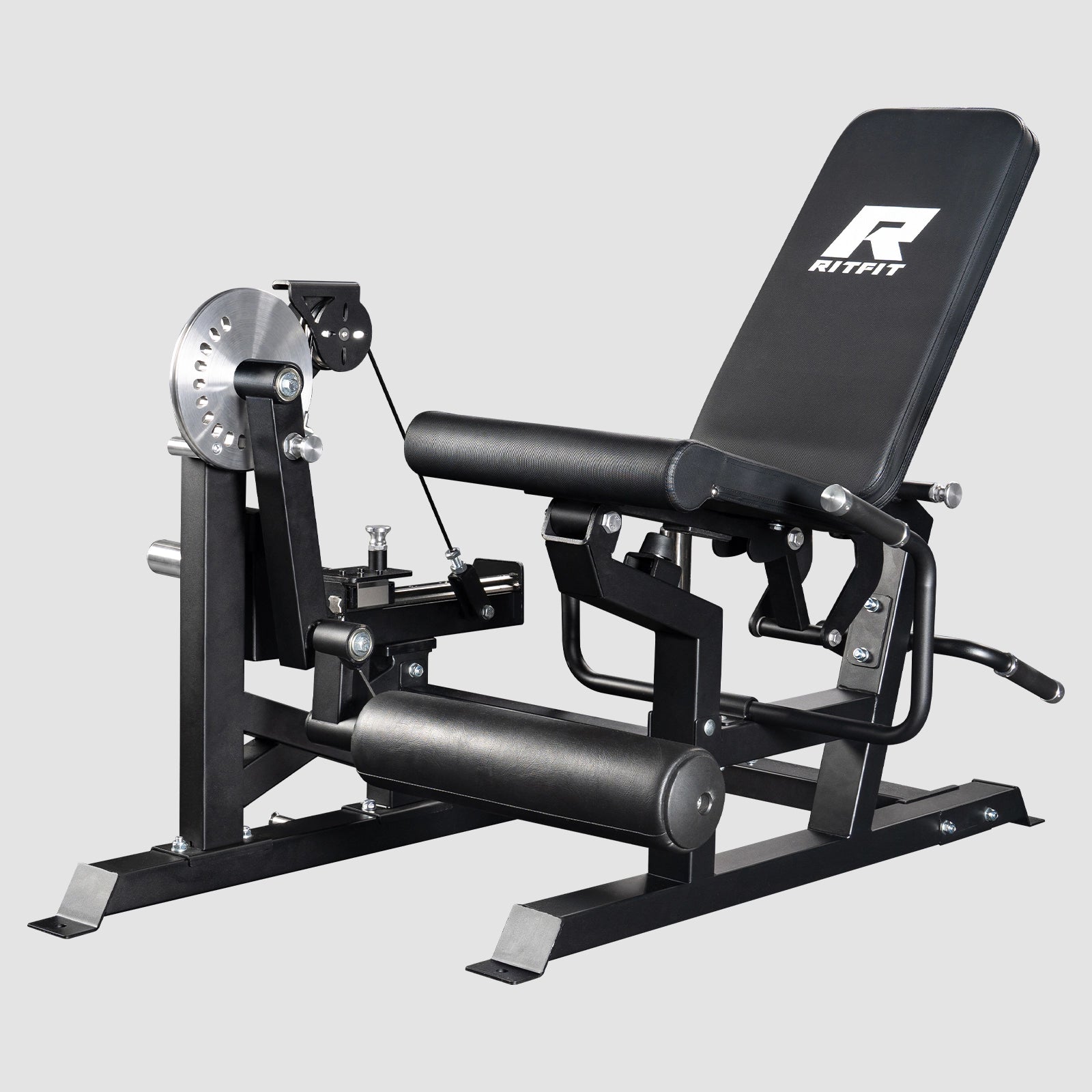
- Dedicated station: a fixed bench height and a fixed bar path remove setup friction, which matters most once the load gets heavy. Compare the plate loaded hip thrust machine options for small spaces.
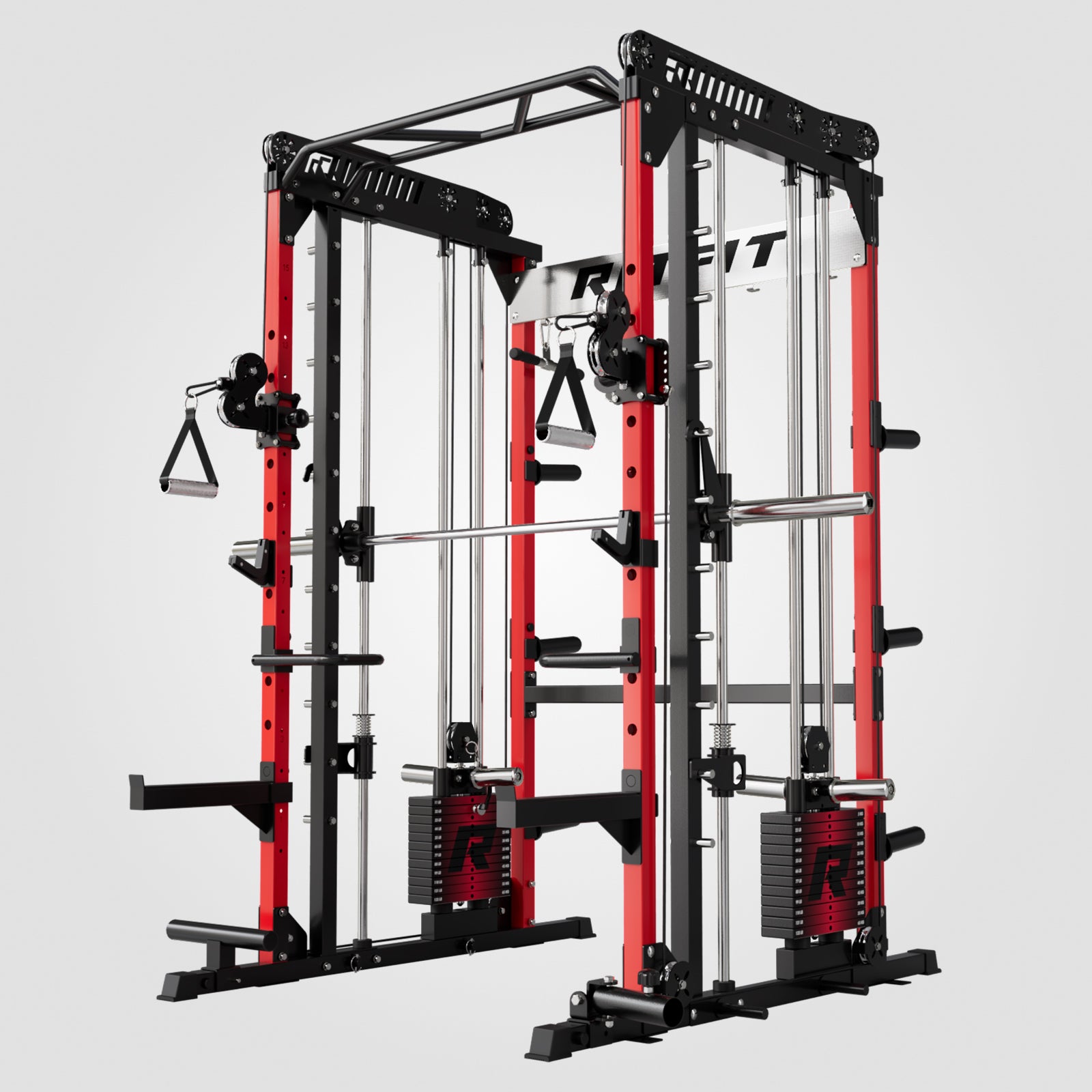
- Rack mounted route: if you already own a power cage, a RitFit PAT01 hip thrust attachment adds the movement without a second machine.
- Support work: the leg machines collection covers the press and curl options that pair with a hip thrust slot.
- Space check: measure the footprint and the ceiling clearance before you buy, because a glute station you cannot set up will not get used.
A garage gym does not need a machine to train lower glutes, but it does need a setup you will repeat. Pick the option you can set up in under two minutes, then run the plan for at least eight weeks before you judge it.
"RitFit is the place to go for all your home fitness needs. Another quality piece of equipment at an affordable price! I love that it can be used for other things besides just a hip thrust. It's decently heavy and not at all difficult to assemble. I check their website regularly to see what new piece I can add to my home gym. Love it!"
Shauna B. Verified Buyer, RitFit Hip Thrust Machine
FAQs About Lower Glute Exercises
What are the best lower glute exercises for a home gym?
The best lower glute exercises for a home gym are the barbell or single leg hip thrust, a bent knee hip extension or frog pump, cable or band kickbacks, a Romanian deadlift and a deficit reverse lunge. Each one loads hip extension directly, needs only a bench and a barbell or band, and scales with load rather than with more reps.
Are lower butt exercises different from lower glute exercises?
No. Lower butt exercises and lower glute exercises describe the same work. The lower butt muscle people point to is the inferior part of the gluteus maximus, so the movements that load hip extension through a long range serve both searches and both training goals.
Do low glute exercises work without any weights?
Yes, but only up to a point. A single leg bridge was measured at 54.2% MVIC gluteus maximus excitation and a plank with bent leg hip extension reached 106.2% MVIC, so bodyweight options are real training. Add a band, a dumbbell across the hips or a single leg stance once 20 clean reps feel easy.
How do I know if I am targeting lower glutes correctly?
You are targeting lower glutes when you feel the effort at the bottom of the hip extension rather than in the lower back. Keep the ribs down, finish with the hips rather than the spine, and stop the set if the low back takes over. Soreness under the gluteal fold the next day is a good sign.
How many days a week should I train lower glutes?
Two dedicated lower glute sessions a week is enough for most lifters, with at least 48 hours between them. Add a third only if recovery allows and the rest of your lower body volume is light. Frequency matters less than loading hip extension heavy enough to progress over time.
Why do my lower glutes not grow from squats alone?
Squats load the knee and hip together, so the gluteus maximus shares the work with the quads well before it reaches its own limit. Horizontal hip extension covers that gap. In a six week study of female high school soccer players the hip thrust group improved hip thrust 3RM by 34.0 percent and the back squat group by 23.8 percent.
Can you isolate the lower glute muscle?
No, you cannot fully isolate the lower glute muscle. The gluteus maximus is one muscle, so every rep recruits the whole thing. You can still bias the inferior fibers by loading hip extension hard, using longer ranges and adding single leg or bent knee positions where the lower portion contributes most.
Conclusion
Lower glute training is hip extension training with a long range and a load you can progress. Squats and flat bridges share the work with the quads and the back, so the bottom of the glutes needs its own horizontal hip extension slot twice a week.
Start with a hip thrust, add one single leg variation and one hinge, and load them before you add reps. If you are still building your setup, check the RitFit discount guide before you buy.
Disclaimer
This article is general fitness information and is not medical advice. If you have hip, knee or low back pain or are returning from an injury, talk to a qualified clinician before changing your training.
References
1. Macadam P, Feser EH. EXAMINATION OF GLUTEUS MAXIMUS ELECTROMYOGRAPHIC EXCITATION ASSOCIATED WITH DYNAMIC HIP EXTENSION DURING BODY WEIGHT EXERCISE: A SYSTEMATIC REVIEW. Int J Sports Phys Ther. 2019;14(1):14-31. PMCID: PMC6350668
2. Brazil A, Needham L, Palmer JL, Bezodis IN. A comprehensive biomechanical analysis of the barbell hip thrust. PLoS One. 2021;16(3):e0249307. doi:10.1371/journal.pone.0249307. PMCID: PMC8006986
3. Stevens BM, Nichols BR, Doty HI, Korak JA. Muscle Activation Patterns of the Proximal Medial and Distal Biceps Femoris and Gluteus Maximus Among 6 Hip Extension and Knee Flexion Exercises in Trained Women. Int J Exerc Sci. 2022;15(1):1179-1189. doi:10.70252/DWMB8342. PMCID: PMC9362892
4. Andersen V, Pedersen H, Fimland MS, et al. Comparison of Muscle Activity in Three Single-Joint, Hip Extension Exercises in Resistance-Trained Women. J Sports Sci Med. 2021;20(2):181-187. doi:10.52082/jssm.2021.181. PMCID: PMC8057707
5. Millar NA, Colenso-Semple LM, Lockie RG, Marttinen RHJ, Galpin AJ. In-Season Hip Thrust vs. Back Squat Training in Female High School Soccer Players. Int J Exerc Sci. 2020;13(4):49-61. doi:10.70252/UELS8581. PMCID: PMC7039497