
Rear delt flys on a Smith machine train the posterior deltoid, the small muscle at the back of your shoulder that pressing and chest work leaves untouched. The guided bar path removes the balance demand, so you can go light and chase the squeeze exactly where it belongs.
This guide covers the setup, the rep range that keeps your traps quiet, the mistakes that turn the movement into a neck exercise, and when to add weight or stop. It assumes a healthy shoulder and a home rack, not a rehab plan.
Quick Answer: Rear delt flys on a Smith machine are a light, high-rep isolation for the posterior deltoid. Set the bar near chest height, lean forward slightly, keep a soft bend in your elbows, and sweep the bar outward to shoulder level for 12 to 20 controlled reps. End the set when your shoulders start shrugging.
 Click the image to visit the RITFIT Black Friday Deals page.
Key Takeaways
- Target muscle: Rear delt flys isolate the posterior deltoid, the rear head of the shoulder that pressing and chest flys barely touch.
- Load light: Use a load you can control for 12 to 20 reps, because heavier sets hand the work to the traps and upper back.
- Setup first: Bar at chest height, body angled about 10 to 20 degrees forward, soft elbows, and shoulder blades pulled down and back.
- Progress by reps: Work from 12 reps to 20 at the same load before adding the smallest plate or stack increment.
- Stop signal: End the set when your shoulders shrug, and stop the exercise for sharp or pinching joint pain.
What Do Smith Machine Rear Delt Flys Work?
Smith machine rear delt flys work the posterior deltoid, the rear head of the deltoid that pulls your upper arm backward and outward. A study of 13 resistance-trained men found that the lateral raise produced the highest posterior deltoid activation at 24% MVIC, while the bench press and dumbbell fly produced only 3.5% and 2.5% MVIC.[1] A second study of 17 trained men confirmed that a horizontal fly loads the chest, front delt, and triceps rather than the rear shoulder.[2]
- Posterior deltoid: the target, responsible for taking the upper arm backward and outward at the shoulder.
- Upper back helpers: the rhomboids, middle trapezius, and rear fibers of the deltoid retract and steady the shoulder blades.
- Not the chest: a chest fly crosses the arms over the front of the body, unlike a dumbbell fly that squeezes the pecs.
- Not a face pull: a face pull pulls toward your face with a high elbow and heavy trap involvement, which is a different job.
That gap is why the rear delt is a common weak point even in lifters who press and row every week, because the muscle rarely gets direct work unless you program it. You can read more about why rear delts lag behind other muscles before you build a session around them.
"Not only is the face pull an excellent movement to grow your upper back muscles, it can also improve poor posture. The rear shoulder muscles play a big role in preventing the bad posture so many people get from time spent sitting at desks jobs and hunched over their electronics."
Jeff Cavaliere, MSPT, CSCS, Physical Therapist and Strength Coach, Athlean-X, Upper Back Workout
How to Set Up Rear Delt Flys on a Smith Machine
A Smith machine rear delt fly setup starts with the bar around chest height and your torso angled slightly forward away from the rails. Standing too close to the bar forces the movement behind your body, where your shoulder has no room to work.
- Step 1: Set the bar at roughly chest height and lock the hooks so it cannot drop.
- Step 2: Stand about an arm's length in front of the bar with your feet shoulder width apart.
- Step 3: Hinge forward about 10 to 20 degrees and let your arms hang with a slight elbow bend.
- Step 4: Grip the bar overhand with your hands slightly wider than your shoulders.
- Step 5: Sweep the bar outward and up to shoulder level, pause, then lower it under control.
Keep your shoulder blades pulled down and back through every rep so the rear delt, not the trap, owns the movement. If your machine runs on a fixed vertical path, the standing distance does most of the work; on rails that travel forward and back, you can fine tune with the torso angle instead.
Any guided rack can host this pattern, so start with the Smith machine lineup if you are still choosing one.
How Much Weight Should You Use for Rear Delt Flys?
Most lifters should use a load they can control for 12 to 20 reps on rear delt flys, which is usually far lighter than their pressing weight. The posterior deltoid is a small muscle with a short range of motion, so extra plates buy trap involvement rather than extra growth.
- Starting point: Begin with an empty bar or the lightest stack setting and treat the first session as a rehearsal.
- Working range: Two to four sets of 12 to 20 reps, stopping one or two reps short of failure at first.
- Error signal: If your shoulders rise toward your ears, the load is already too heavy.
- Tempo: Take about two seconds to sweep out and two seconds back, with a short pause at the top.
Pair this light isolation work with heavier overhead pressing in the same session rather than asking one movement to do both jobs. The Smith machine shoulder exercises roundup shows how the pieces fit together across a full week.
Common Mistakes That Turn Rear Delt Flys Into a Trap Exercise
The most common mistake is loading too heavy, which lets the upper traps and neck take over before the rear delt ever reaches fatigue. Fixing the weight and the torso angle solves most of these errors at once.
- Shrugging: The shoulders creep toward the ears, so the upper trapezius dominates the rep.
- Bending the elbows too much: A deep bend turns the fly into a row and shifts work to the lats and mid back.
- Standing too upright: An almost vertical torso shortens the path and kills tension at the start of the rep.
- Pulling with the hands: Leading with the hands instead of the back of the shoulders makes it an arm movement.
- Rushing the return: Dropping the bar back fast removes most of the tension the muscle just built.
It also helps to know what this movement is not. A horizontal Smith machine cable fly for chest growth trains the pecs and front delts, so it will never replace rear delt work.
Rear Delt Fly Alternatives and Variations for Home Gyms
Dumbbell reverse flys, cable reverse flys, and band reverse flys all train the posterior deltoid when a Smith machine is not the best fit. A cross-over study of 29 men and women found that bands produced slightly lower posterior deltoid activity than dumbbells in reverse flyes while raising middle deltoid and upper trapezius activity.[3]
- Dumbbell reverse fly: The closest free weight match, and the best option when you want your stabilizers involved.
- Cable reverse fly: Set the pulleys at shoulder height and use a light ratio setting for constant tension through the rep.
- Chest supported reverse fly: Lie face down on an incline bench to take the lower back out of the equation.
- Band reverse fly: Portable and useful for warm ups, though the middle delt and upper trap help more as you fatigue.
- Prone Y raise: A bodyweight option for posture work and warm ups when no load is needed.
Free weights hit the same posterior deltoid from a different angle, so the dumbbell shoulder exercises for all three delt heads guide is a useful companion if you train without a rack.
How Often Should You Train Rear Delts and When Should You Add Weight?
Train rear delts two or three times a week with a moderate number of sets, and add reps before you add load. The posterior deltoid recovers quickly because the loads stay light, so frequency is usually a better lever than extra weight.
- Frequency: Two to three sessions a week, which can mean adding two sets to the end of an existing push or pull day.
- Weekly volume: Six to twelve sets in total is a reasonable starting range for most home lifters.
- Add reps first: Work from 12 reps up to 20 at the same load before you touch the weight.
- Add load next: When 20 reps feel controlled with a two second squeeze, add the smallest increment your rack allows.
- Reassess monthly: If pressing strength stalls, trim rear delt volume rather than adding more.
This isolation work supports the rest of your shoulder training, so it belongs in the same plan as a pressing day. The breakdown of the deltoid head the shoulder press works explains which section of the shoulder each pressing angle hits.
Should You Choose the RitFit P9 3D Smith Machine Power Cage for Rear Delt Flys?
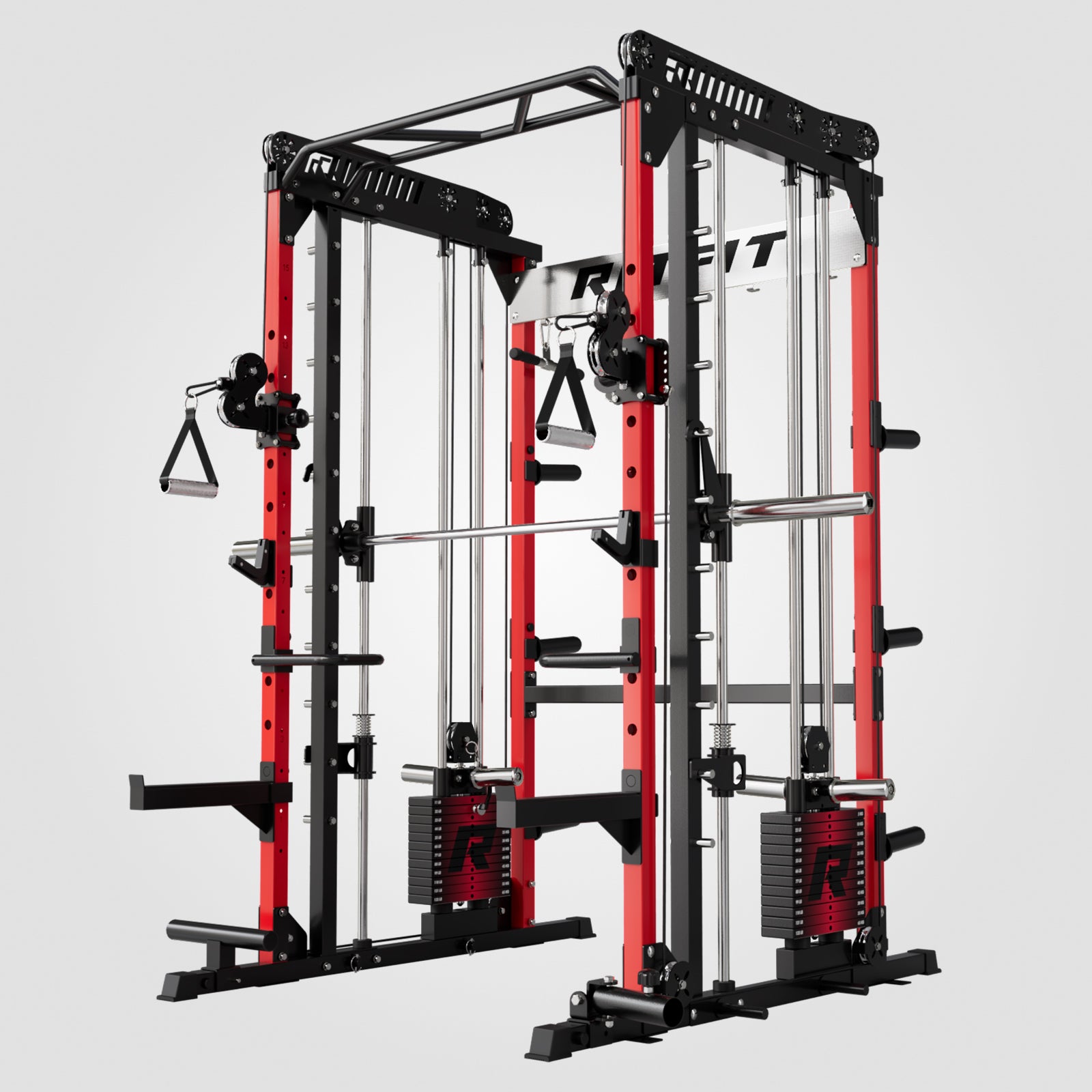
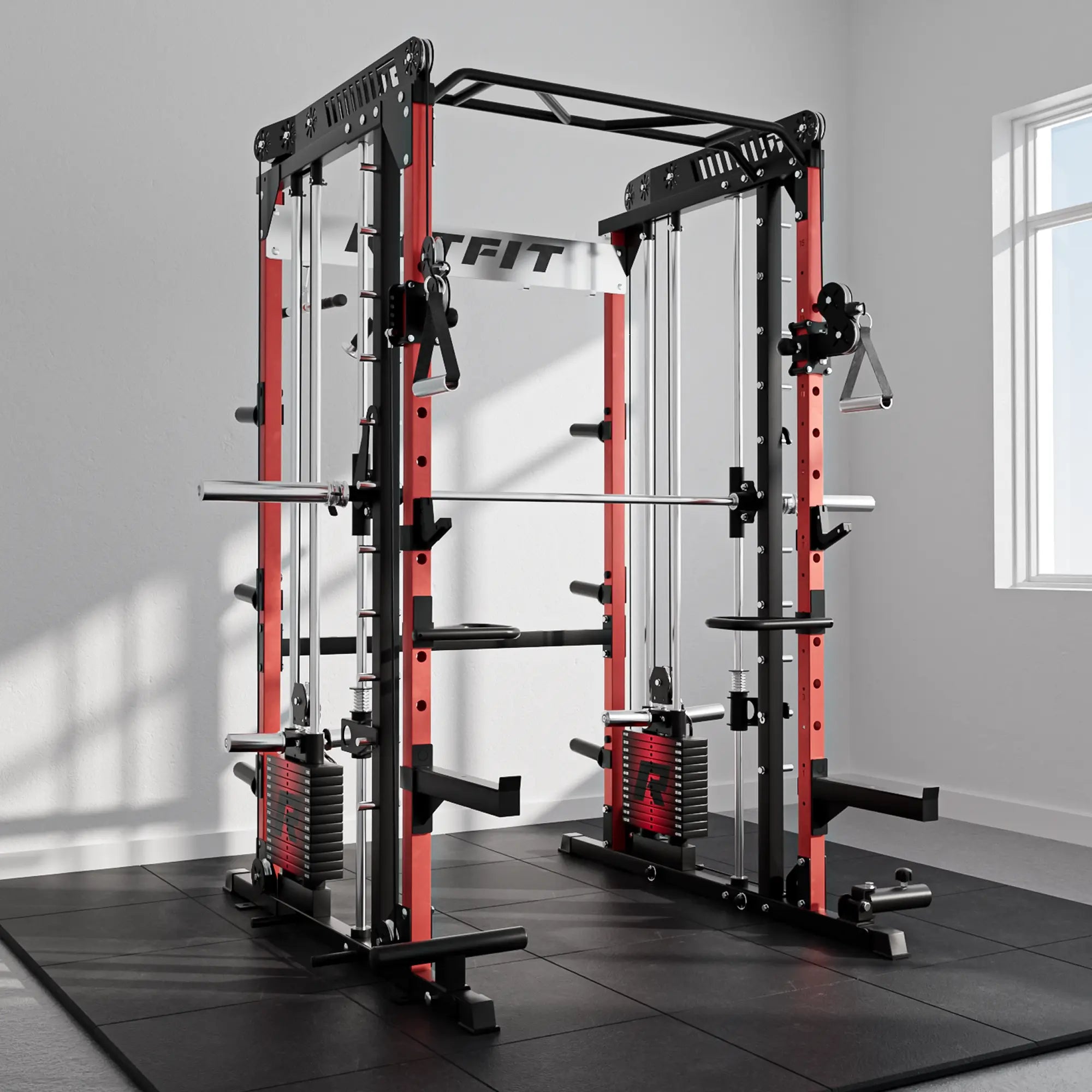
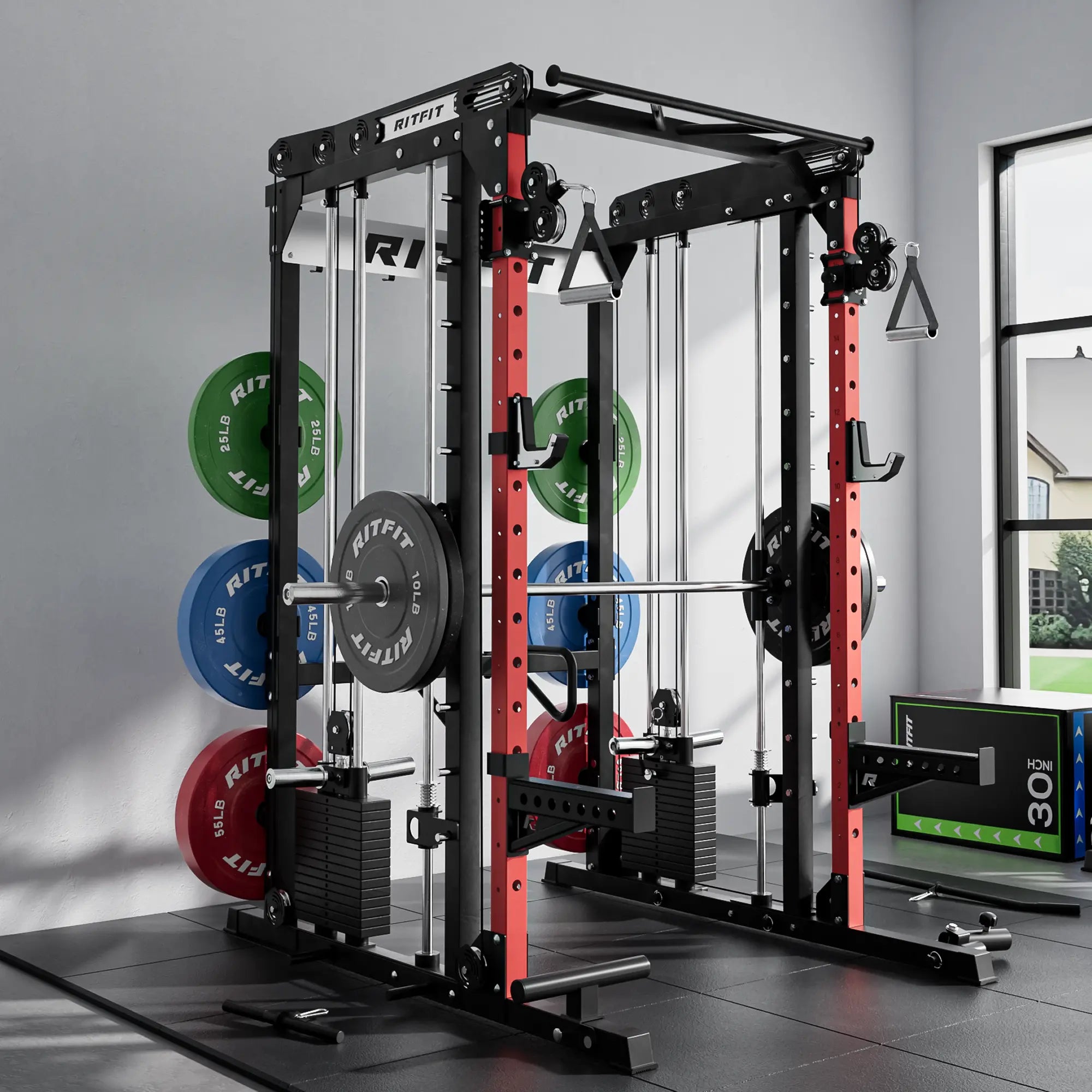
The RitFit P9 suits rear delt flys because its 3D Smith bar travels sideways as well as up and down. That horizontal path lets you set the bar in front of your shoulders instead of behind them, with 20.6 inches of forward and back travel and a lowest position of 9.0 inches across six locking positions, according to the RitFit P9 product page. The frame carries a 1,600 lb rating, stands 85.2 inches tall, and covers a 19.8 square foot footprint.
- Bar path: The 3D rail moves horizontally, which matters for any movement that is not a straight press or squat.
- Low start position: The 9.0 inch lowest setting puts the bar near chest height for a standing fly.
- Cable system: The dual slider switches between 1:1 and 2:1 ratios for lighter isolation work.
- Footprint: 19.8 square feet keeps a full cage inside a single garage bay.
- Who it is not for: Lifters who only want a basic vertical Smith and never train cables.
If a horizontal bar path is the deciding factor, read what a 3D Smith machine changes before you commit. Readers comparing the wider range can also review the multifunctional Smith machine and the full RitFit P9 3D Smith Machine specification sheet.
"Loving the pro smith machine. Cables and smith are very smooth and stable. Bang for buck ritfit is an amazing option. Installation was easy, quality is great. Looking forward to buying other ritfit machines."
Brian H. Verified Buyer, RitFit M1 PRO Multi-Functional Smith Machine with Cable Crossover System and Squat Rack for Home Gym
When to Stop: Pain Signals and Safe Loading on Guided Rails
Stop the set when your shoulders start shrugging and stop the exercise entirely if you feel a sharp or pinching pain in the joint. Muscle fatigue that stays in the back of the shoulder is expected, while joint pain is not.
- Trap takeover: End the set once the shrug starts, even if you have reps left in the tank.
- Joint pain: Stop the movement if you feel pinching at the front of the shoulder or a sharp catch.
- Neck tension: Persistent neck tightness means the load and the shoulder position both need to change.
- Range cuts: If you cannot reach shoulder level without pain, shorten the range instead of forcing it.
- Persistent symptoms: See a qualified professional if pain lasts more than a week or limits daily activity.
The rear delt fly overlaps with other pulling work, so compare it with Smith machine face pulls if you are choosing between the two for a shoulder health slot.
FAQs About Rear Delt Flys on a Smith Machine
How many sets of Smith machine rear delt flys should you do?
Two to four sets of 12 to 20 reps is plenty for the rear delts. These muscles are small and respond well to lighter loads, so three sets to near failure once or twice a week covers most lifters. Add volume only if you recover easily and your pressing is not suffering.
Can you do rear delt flys on any Smith machine?
Most Smith machines work, but the fixed bar path matters. A machine with horizontal travel at the bar lets you place the bar in front of your shoulders instead of behind your torso. Straight rail machines still work if you stand far enough forward and adjust your torso angle.
Are Smith machine rear delt flys better than dumbbell reverse flys?
Neither is strictly better, and both build the posterior deltoid. The Smith machine removes the balance demand, so you can chase a controlled squeeze with steady tension. Dumbbells ask more of your stabilizers and let your hands travel naturally. Rotate between them based on which one you feel in the rear delts.
Should you go heavy on rear delt flys?
No, heavy loads usually shift the work to the traps and upper back. Loads you can control for 12 to 20 reps keep tension on the posterior deltoid, which is a small muscle with a short range of motion. Add reps before you add plates, and stop the set when your shoulders start shrugging.
How long does it take to see rear delt growth?
Give it eight to twelve weeks of consistent shoulder work before judging visible change. The posterior deltoid is a small muscle, so shape changes slowly even when strength climbs faster. Track reps and control at a set load rather than mirror changes, and keep your weekly shoulder volume steady during that window.
Why do I feel rear delt flys in my neck?
Feeling them in your neck means your upper traps are taking over. Drop the load, pull your shoulder blades down and back before you start, and keep your elbows slightly bent with your hands traveling outward rather than upward. Think about leading with the back of your shoulders, not your hands.
Conclusion
Rear delt flys on a Smith machine fix a common gap in home gym training: 12 to 20 controlled reps, light enough that your traps stay quiet and your posterior deltoid does the work. Add reps before load, train the movement two or three times a week, and stop the set when your shoulders start to shrug.
Put the movement at the end of a push or pull day so it does not compete with your pressing. If you are building a home gym around a guided rack, check the RitFit discount guide before you order.
Disclaimer
This article provides general fitness information about training the posterior deltoid on a Smith machine and is not medical advice. Consult a qualified physician or physical therapist before starting a new program, and seek professional care for shoulder pain that persists or limits daily activity.
References
1. Campos YAC, Vianna JM, Guimarães MP, et al. Different Shoulder Exercises Affect the Activation of Deltoid Portions in Resistance-Trained Individuals. J Hum Kinet. 2020;75:5-14. doi:10.2478/hukin-2020-0033. PMCID: PMC7706677
2. Solstad TE, Andersen V, Shaw M, Hoel EM, Vonheim A, Saeterbakken AH. A Comparison of Muscle Activation between Barbell Bench Press and Dumbbell Flyes in Resistance-Trained Males. J Sports Sci Med. 2020;19(4):645-651. PMCID: PMC7675616
3. Bergquist R, Iversen VM, Mork PJ, Fimland MS. Muscle Activity in Upper-Body Single-Joint Resistance Exercises with Elastic Resistance Bands vs. Free Weights. J Hum Kinet. 2018;61:5-13. doi:10.1515/hukin-2017-0137. PMCID: PMC5873332