Table of Contents
A 5 day workout routine works best for intermediate lifters who want more weekly training volume without losing recovery quality. This guide gives you a practical weekly split, daily exercises, sets, reps, progression rules, home gym substitutions, and recovery basics so you can train with more structure and less guesswork.
Key Takeaways
- This 5 day workout routine is best for intermediate lifters with consistent training experience and controlled form on basic lifts.
- The plan combines early week strength work with later week hypertrophy work to support both load progression and muscle growth.
- Most sessions take 60 to 80 minutes and can be adapted for a commercial gym or a well equipped home gym.
- Progress comes from adding reps, load, or better control over time, not from changing exercises every week.
- Recovery is part of the program, so two rest days, enough protein, quality sleep, and planned deloads stay built into the routine.
Quick Start
This 5 day split is designed for lifters who can already perform squats, presses, rows, hinges, and curls with stable technique. If you are a true beginner or returning after pain, injury, or a long layoff, start with a simpler 3 day full body plan first.
- Best for: Intermediate lifters with roughly 6 plus months of consistent training.
- Time commitment: 5 sessions per week, about 60 to 80 minutes each.
- Training goal: Build muscle, increase strength, and improve weekly training structure.
- Effort target: Most working sets should end with 1 to 3 reps in reserve.
- Core equipment: Power rack, barbell, plates, adjustable bench, dumbbells, and optional cable pulley.
- Not ideal for: True beginners, lifters with unresolved pain, and anyone who cannot recover from 5 weekly sessions.
Why Choose a 5 Day Split?
A 5 day workout routine helps intermediate lifters spread weekly volume across more sessions instead of cramming too much work into 3 days. That makes each workout more focused while still leaving room for two real recovery days.
- Better volume management: More weekly sets can support hypertrophy when they are programmed well and recovered from. Research in trained men suggests higher resistance training volume can increase muscle hypertrophy, although strength still depends heavily on load, skill, and progression.[1]
- Clearer training focus: Each day has a specific job, such as upper body power, lower body power, back and biceps, chest and triceps, or shoulders and legs. This structure reduces random exercise selection and makes progress easier to track.
- Improved recovery control: Training 5 days does not mean training at maximum effort every day. The plan uses heavy days, moderate rep days, and rest days so fatigue stays manageable.
- Home gym compatibility: A strong setup built around a power rack, barbell, bench, dumbbells, and plates can cover most exercises in this routine.
Important note on expectations: This plan is a general training template, not a medical or rehabilitation program. The best routine is the one you can execute consistently with good form, adequate sleep, and a nutrition approach you can sustain.
The Schedule: Structuring Your Week

The best weekly structure places heavy compound work early, hypertrophy work later, and rest days where they protect performance. This schedule gives your legs, pressing muscles, pulling muscles, and joints time to recover before they are trained hard again.
- Monday: Upper Body Power
- Tuesday: Lower Body Power
- Wednesday: Back and Biceps, Hypertrophy Focus
- Thursday: Rest
- Friday: Chest and Triceps, Hypertrophy Focus
- Saturday: Shoulders and Legs, Volume Focus
- Sunday: Rest
How This Plan Was Built
This routine uses progressive overload, balanced push and pull work, repeated lower body exposure, and planned recovery. It avoids daily max effort because muscle growth and strength depend on training stress that you can repeat and recover from.
- Compound lifts: Squats, presses, rows, and hinges come first because they need the most focus and coordination.
- Accessory lifts: Curls, triceps work, lateral raises, calf raises, and core work add targeted volume without replacing the big lifts.
- Rest times: Use 2 to 3 minutes for heavy compound lifts and 60 to 90 seconds for accessories.
- Progression model: Use double progression, add reps first, then add load when you reach the top of the rep range with clean form.
The Workout Blueprint
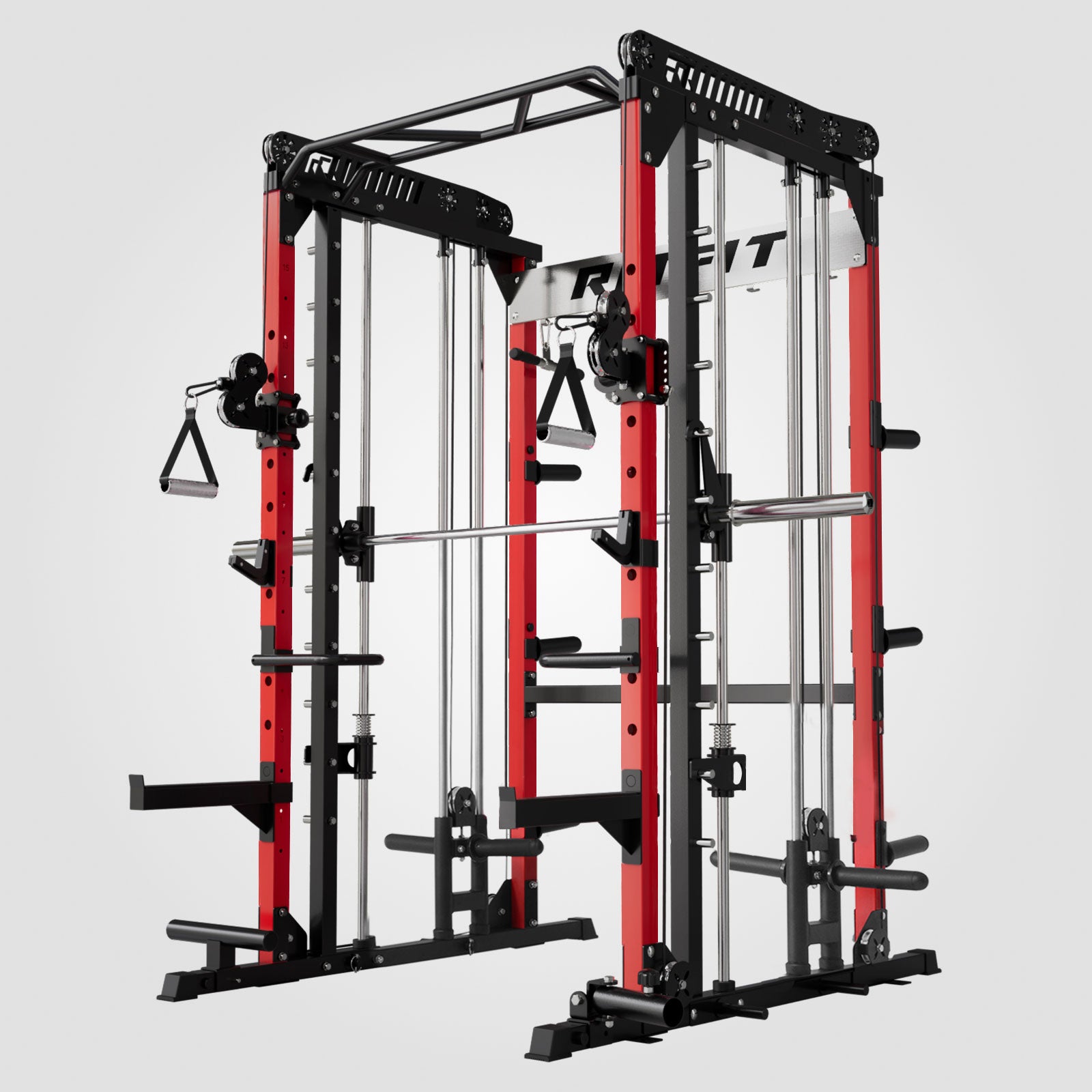
This 5 day workout routine uses standard strength equipment found in most commercial gyms and serious home gyms. If you train at home, a Smith machine home gym, rack, barbell, bench, dumbbells, and plates can cover most of the plan.
Day 1: Upper Body Power

The goal of Day 1 is to build pressing and pulling strength with heavy compound movements. Keep every rep controlled and stop most sets before form breaks.
- Barbell Bench Press: 4 sets of 5 to 6 reps. Use a Smith machine bench press variation if you train without a spotter and want a fixed bar path.
- Bent Over Barbell Row: 4 sets of 6 to 8 reps. Keep your spine braced and pull toward the lower ribs or hips.
- Standing Overhead Press: 3 sets of 6 to 8 reps. Brace your core and avoid turning the lift into a standing incline press.
- Weighted Dips: 3 sets of 8 to 10 reps. Lean forward slightly if your goal is more chest emphasis.
- Barbell Curls: 3 sets of 8 to 10 reps. Keep your elbows steady and avoid swinging the weight.
Day 2: Lower Body Power

The goal of Day 2 is to train heavy lower body patterns with enough volume to build strength without destroying recovery. Use controlled depth, stable bracing, and a load you can repeat with confidence.
- Barbell Back Squat: 4 sets of 5 reps. Heavy loading is most useful when technique, depth, and bracing stay consistent.
- Romanian Deadlift: 4 sets of 8 reps. Hinge from the hips and focus on the hamstring stretch.
- Walking Lunges: 3 sets of 10 reps per leg. Use dumbbells or a Smith machine lunge variation based on balance and space.
- Standing Calf Raises: 4 sets of 15 reps. Pause at the top and bottom to reduce bouncing.
- Plank: 3 sets of 60 seconds. Keep the ribs down and avoid letting the hips sag.
Day 3: Back and Biceps Hypertrophy

The goal of Day 3 is to add pulling volume with moderate reps and better muscle control. On Wednesday, the plan shifts from heavy strength work to back width, back thickness, rear delts, and biceps.
- Pull Ups: 4 sets close to technical failure. Use a band if you cannot complete clean reps.
- One Arm Dumbbell Row: 4 sets of 10 to 12 reps. Support your body on a bench to reduce low back fatigue.
- Lat Pulldowns: 3 sets of 12 to 15 reps. Use a cable system or bands and pull the elbows down toward the ribs.
- Face Pulls: 3 sets of 15 reps. Keep the movement smooth and focus on rear delts and upper back control.
- Incline Dumbbell Curls: 3 sets of 12 reps. Let the arm stretch fully without losing shoulder position.
- Hammer Curls: 3 sets of 12 reps. Use a neutral grip to train the brachialis and forearms.
When performing curls, it helps to understand how arm structure can change exercise feel. If you want to adjust curl variations based on anatomy, read this guide to long vs short biceps.
Day 4: Chest and Triceps Hypertrophy

The goal of Day 4 is to add chest, triceps, and lateral delt volume without repeating the same stress as Day 1. Use a controlled tempo and choose joint friendly angles.
- Incline Dumbbell Press: 4 sets of 8 to 10 reps. Use a stable adjustable bench and stop before shoulder position breaks.
- Flat Dumbbell Flys: 3 sets of 12 reps. Keep the range controlled and avoid forcing a painful stretch.
- Close Grip Bench Press: 3 sets of 10 reps. Keep the elbows tucked enough to load the triceps without wrist discomfort.
- Overhead Tricep Extension: 3 sets of 12 reps. Use a dumbbell, cable, or band based on elbow comfort.
- Lateral Raises: 4 sets of 15 reps. Use light weight and stop the set when momentum takes over.
Day 5: Shoulders and Legs Volume

The goal of Day 5 is to add moderate rep leg work, shoulder work, and core training before the second rest day. This session should feel productive, not like another max effort lower body day.
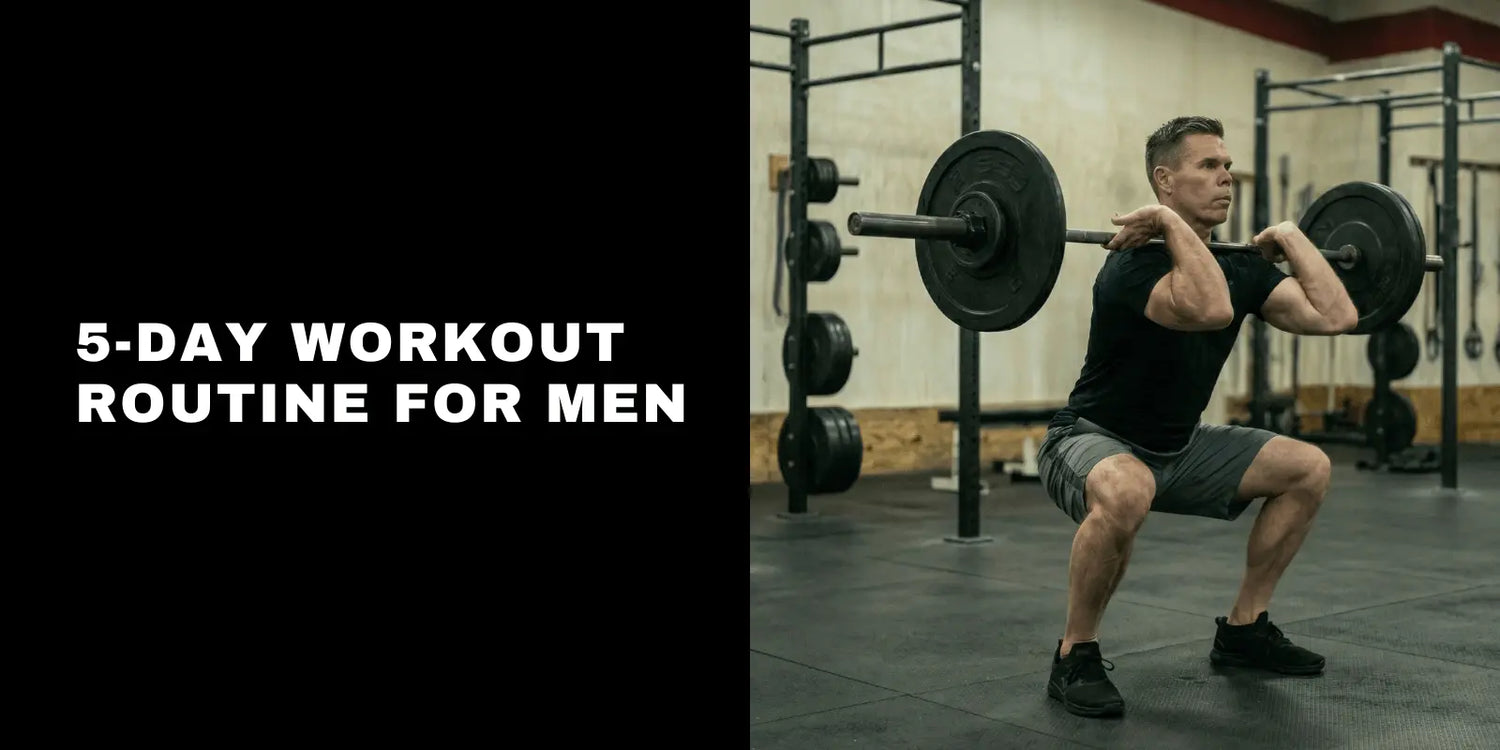
- Front Squats: 3 sets of 10 to 12 reps. Use goblet squats if front rack mobility limits your position.
- Leg Press: 3 sets of 12 to 15 reps. Use step ups if you do not have access to a leg press.
- Seated Dumbbell Shoulder Press: 3 sets of 10 to 12 reps. Keep the torso tall and avoid over arching.
- Upright Rows: 3 sets of 12 to 15 reps. Use a wider grip and stop if the movement causes shoulder pinching.
- Hanging Leg Raises: 3 sets of 12 to 15 reps. Control the lowering phase and avoid swinging.
Home Gym Equipment and Substitutions
You can run this 5 day gym routine at home if your equipment covers pressing, pulling, squatting, hinging, and loaded carries. A compact setup with a rack, barbell, bench, dumbbells, plates, and bands can replace many commercial gym machines.
- Rack setup: Use a stable home gym rack for squats, presses, rows, and safety catches.
- Bench work: Use an adjustable weight bench for incline press, seated shoulder press, chest supported rows, and dumbbell work.
- Dumbbell training: Use dumbbells for rows, curls, lunges, lateral raises, flys, and shoulder presses.
- Barbell and plates: Use barbells and weight plates for progressive overload on the main lifts.
- Cable substitutions: Use rack attachments or bands for pulldowns, face pulls, and triceps extensions.
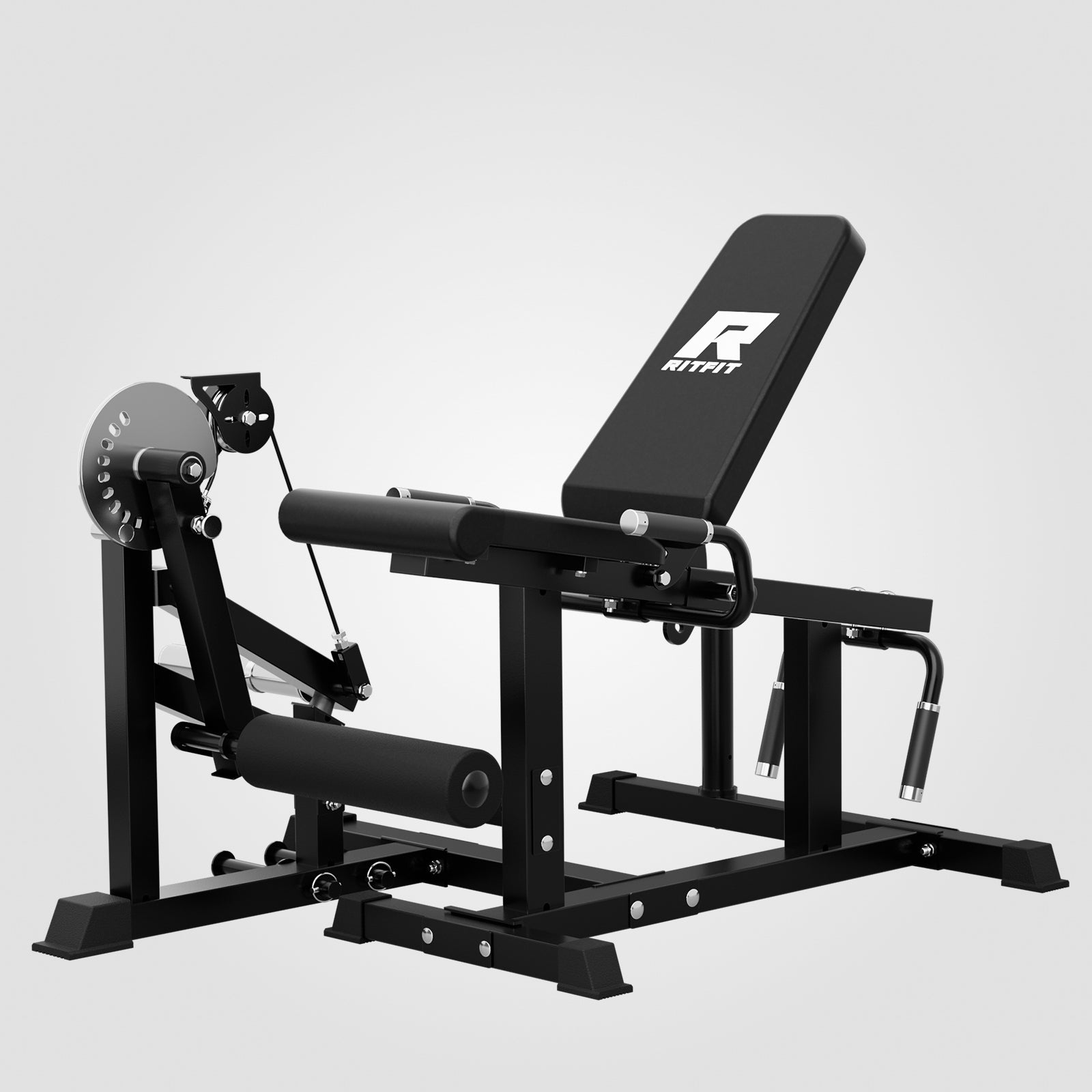
- Machine alternatives: Use strength machines when you want extra stability, fixed movement paths, or targeted lower body work.
Rules for Success
A 5 day lifting routine only works when you can repeat it for months without joint irritation, performance crashes, or constant exercise swapping. These rules help you turn the plan into measurable progress.
Progressive Overload Is Nonnegotiable
Progressive overload means your body must face a gradually higher training demand over time. That can come from more reps, more load, better range of motion, better control, or more total quality work.
- Step 1: Pick a load that lets you hit the low end of the rep range with 1 to 3 reps in reserve.
- Step 2: Add reps week by week until every set reaches the top end of the range.
- Step 3: Add load next week and repeat the same process.
- Typical jumps: Add 2.5 to 5 pounds for upper body lifts and 5 to 10 pounds for lower body lifts when form is stable.
- If you stall: Keep the load the same for 2 sessions and try to add one total rep before reducing weight.
- Deload timing: Every 4 to 8 weeks, reduce total sets by about 30 to 50 percent for one week while keeping movement quality high.
Use The Right Rep Ranges
Lower reps with heavier loads are useful for strength, while moderate and higher reps can build muscle when sets are hard enough. Reviews on loading recommendations show that different rep ranges can support hypertrophy, but heavier loads remain especially useful for maximal strength development.[2]
- Strength focus: Use 4 to 6 reps for heavy compound lifts when technique is consistent.
- Hypertrophy focus: Use 8 to 15 reps for most accessory and muscle building work.
- Isolation work: Use 12 to 20 reps when the joint feels better with lighter loads and cleaner control.
Warm Up Properly
A good warm up prepares the joints, muscles, and nervous system for the lifts that follow. Spend 5 to 10 minutes on light movement, ramp up sets, and exercise specific practice before heavy work.
- Upper body days: Use arm circles, band pull aparts, light rows, push ups, and ramp up pressing sets.
- Lower body days: Use bodyweight squats, hip hinges, glute bridges, calf raises, and ramp up squat or hinge sets.
- Heavy lifts: Do several lighter sets before your first working weight.
Keep Technique Repeatable
Good technique is the form you can repeat under fatigue without losing control. If range of motion, bracing, or joint position changes every rep, reduce the load and rebuild.
- Pressing: Keep shoulder blades controlled and wrists stacked over the forearms.
- Rows: Brace your torso and pull with the elbows instead of jerking with the lower back.
- Squats: Use a depth that you can control without knee cave or hip shift.
- Hinges: Keep the spine braced and move through the hips instead of the low back.
Nutrition and Recovery
You cannot recover from a demanding 5 day workout plan without enough protein, calories, hydration, and sleep. Training creates the signal, but recovery determines how well your body adapts to that signal.
- Protein: Aim for roughly 0.7 to 1 gram of protein per pound of body weight each day. A large meta analysis found that protein supplementation can enhance resistance training gains, with benefits leveling off around higher total daily intakes.[3]
- Calories: Use a slight calorie surplus for muscle gain and a slight deficit for fat loss. Avoid aggressive dieting if performance and recovery are already declining.
- Sleep: Aim for 7 to 9 hours when possible. Sleep quality and duration influence physical performance, recovery, injury risk, and mental performance in athletes.[4]
- Hydration: Drink enough fluids so training quality does not drop from preventable fatigue or cramping.
- Consistency: A good plan followed for 12 weeks beats a perfect plan followed for 10 days.
Commitment Over Motivation
Motivation changes, but a written training plan gives you a decision making system when energy is low. Use the schedule, track your lifts, and adjust only when performance, recovery, or pain signals show that a change is needed.
- Shoulder discomfort on pressing: Use neutral grip dumbbell presses, reduce range of motion, and increase rows and face pulls.
- Low back fatigue on rows or hinges: Use chest supported rows, reduce load, and prioritize bracing.
- Knee sensitivity on lunges or squats: Swap to step ups, split squats with shorter range, or leg press with controlled depth.
- No cable station: Use bands for pulldowns, face pulls, triceps work, and light isolation training.
- Progress stalls: Reduce training volume for one week, improve sleep, then rebuild with cleaner form.
Advanced techniques like drop sets, rest pause training, and supersets can help experienced lifters add intensity, but they should not replace the basics of volume, load, technique, and recovery.[5]
FAQs
What is the best 5 day workout routine for muscle growth?
The best 5 day workout routine balances heavy compound lifts, moderate rep hypertrophy work, and planned rest days. This plan trains upper body power, lower body power, back and biceps, chest and triceps, then shoulders and legs so weekly volume stays high without turning every session into max effort.
Is a 5 day workout routine good for beginners?
No. A 5 day workout routine is usually better for intermediate lifters who already know basic lifting form. Beginners often progress faster with a 3 day full body plan because it gives more recovery, more skill practice, and less total fatigue while technique is still developing.
Can I do this 5 day workout routine at home?
Yes. You can do this 5 day workout routine at home if you have a power rack, barbell, plates, adjustable bench, and dumbbells. A cable pulley is helpful for pulldowns, face pulls, and triceps work, but resistance bands can cover many cable based substitutions.
How long should each 5 day workout routine session take?
Most sessions should take about 60 to 80 minutes when warm ups and rest periods are included. Heavy compound lifts need longer rest, while accessories can move faster, so rushing the main lifts usually reduces performance and increases the chance of sloppy reps.
Should I train to failure on every set?
No. Most working sets should stop with 1 to 3 reps in reserve so performance stays consistent across the week. Isolation exercises can sometimes move closer to failure, but heavy squats, presses, rows, and hinges should prioritize clean technique and repeatable progress.
What should I do if I miss one workout day?
Move the missed session to the next available day and keep the order of the plan the same. Do not double two hard workouts into one day, because that usually lowers training quality and can interfere with recovery for the next session.
How much protein do I need on a 5 day lifting routine?
Most lifters should aim for roughly 0.7 to 1 gram of protein per pound of body weight each day. Total daily intake matters more than perfect timing, and a consistent protein target supports recovery when training volume is higher.
When should I deload on a 5 day workout plan?
Deload when performance drops for several sessions, joints feel irritated, or motivation stays unusually low despite normal sleep and nutrition. A practical deload reduces total sets by about 30 to 50 percent for one week while keeping movement quality sharp and controlled.
Conclusion
A 5 day workout routine can build muscle and strength when it balances hard training with planned recovery. Start with the schedule above, track your lifts, use clean technique, and progress only when your reps, joints, and recovery show that you are ready.
Disclaimer: This article is for general educational purposes only and is not medical advice. If you have pain, recent injury or surgery, numbness, tingling, unexplained weakness, dizziness, or a medical condition, consult a qualified clinician before starting. Stop any exercise that causes sharp pain.
References
- Schoenfeld BJ Contreras B Krieger J Grgic J Delcastillo K Belliard R Alto A. Resistance training volume enhances muscle hypertrophy but not strength in trained men. Med Sci Sports Exerc. 2019;51(1):94-103. doi:10.1249/MSS.0000000000001764
- Schoenfeld BJ Grgic J Van Every DW Plotkin DL. Loading recommendations for muscle strength, hypertrophy, and local endurance: a re-examination of the repetition continuum. Sports. 2021;9(2):32. doi:10.3390/sports9020032
- Morton RW Murphy KT McKellar SR Schoenfeld BJ Henselmans M Helms E Aragon AA Devries MC Banfield L Krieger JW Phillips SM. A systematic review, meta-analysis and meta-regression of the effect of protein supplementation on resistance training-induced gains in muscle mass and strength in healthy adults. Br J Sports Med. 2018;52(6):376-384. doi:10.1136/bjsports-2017-097608
- Charest J Grandner MA. Sleep and athletic performance: impacts on physical performance, mental performance, injury risk and recovery, and mental health. Sleep Med Clin. 2020;15(1):41-57. doi:10.1016/j.jsmc.2019.11.005
- Krzysztofik M Wilk M Wojdała G Gołaś A. Maximizing muscle hypertrophy: a systematic review of advanced resistance training techniques and methods. Int J Environ Res Public Health. 2019;16(24):4897. doi:10.3390/ijerph16244897