21s on a Smith machine pack a full curl workout into one 21-rep set: 7 bottom-half reps, 7 top-half reps, and 7 full reps without racking the bar. The fixed vertical bar path keeps your elbows pinned and your rep count honest, so the machine suits this classic biceps finisher better than most lifters expect.
This guide covers the three rep ranges, grip and setup, weight selection, and the mistakes that ruin 21s. You will also see how the scheme differs from drag curls and cable curls, and which machine features make the count easier.
Quick Answer: 21s on a Smith machine work because the guided bar travels a fixed vertical line close to your body, keeping your elbows pinned while you count 7 bottom-half, 7 top-half, and 7 full reps. Load lighter than your usual curls and treat the set as a workout finisher.
Key Takeaways
- Rep scheme: A set of 21s counts 7 bottom-half, 7 top-half, and 7 full curl reps without racking the bar.
- Machine fit: The Smith machine's fixed vertical bar path tracks a standing curl, so partial ranges stay consistent and the elbows stay pinned.
- Load: Use about 50 to 70 percent of your strict curl weight and keep 21s for the end of the session.
- Evidence: Arm curl data favors the initial range of the lift, and trained lifters still grow from partial work.
- Variation: 21s change the rep count rather than the bar path, unlike drag curls that pull the elbows back.
What Are 21s for Biceps?
21s are a biceps curl rep scheme that counts 7 bottom-half reps, 7 top-half reps, and 7 full-range reps in one uninterrupted set of 21.
The name simply reflects the total rep count, and the three segments run back to back with no rest. One fitness guide lays out the classic order as bottom half first, top half second, and full reps last.
That structure stretches a light set into serious time under tension, which is why lifters treat 21s as a biceps finisher instead of a main exercise.
Can You Do 21s on a Smith Machine?
21s work on a Smith machine because a standing curl rises close to the body in a near-vertical line that matches the fixed guide rails. Stand close to the bar and the guided path removes the two things that ruin free-bar 21s: the bar swinging away from your body and the elbows drifting forward to steal the load.
With your elbows pinned at your sides, the bar travels from mid-thigh to chest height in a tight arc that never leaves the rail line. The machine turns that arc into a straight vertical trip, which is exactly the movement a standing curl already wants.
- Consistent mid-points: Every bottom-half rep stops at the same height because the rails allow only one line of travel.
- Honest elbows: A guided bar cannot drift forward as you fatigue, so the biceps keep the load through all 21 reps.
- Countable segments: The fixed line makes the 7-7-7 scheme measurable, since rep 1 and rep 21 cover identical ranges.
- Safe solo training: Rotate the wrists to hook the bar at any height when the set ends, which matters when no spotter stands nearby.
The one adjustment to expect: at the very top of a free curl the bar arcs back toward your shoulders, but the guided bar stops when your forearms are vertical. Keeping the bar stacked over the rails is part of the discipline, not a limitation.
Even bodybuilding champions keep Smith machine work in their routines.
"Don't be afraid to work some Smith machine exercises into your routines to switch things up a little bit!"
Jay Cutler, Four-time Mr. Olympia, Jay Cutler on Incorporating Smith Machines Into Your Training
Set Up the Smith Machine for 21s
The right 21s setup is a mid-thigh bar height, a shoulder-width underhand grip, and a stance close enough that the bar clears your thighs on every rep.
- Bar height: Unrack around mid-thigh so every bottom-half rep starts from full elbow extension.
- Grip width: Take a shoulder-width underhand grip and keep the wrists stacked over the forearms, since a very wide grip shortens the top of the range.
- Elbows: Pin your upper arms against your ribs for the whole set so only the forearm travels.
- Stance: Stand close to the bar with soft knees and a braced core, and resist the urge to lean back as the set burns.
- Stops and hooks: Set the safety stops or hook positions before rep 1 so the set can end with a simple wrist rotation.
If any of this feels unfamiliar, our explanation of what a Smith machine is walks through the guided bar and the hook system first.
Perform the 7-7-7 Sequence Step by Step
A set of 21s runs 7 bottom-half reps from full stretch to forearm parallel, 7 top-half reps from parallel to the top, and 7 full reps through the entire range.
Step 1: Bottom half (7 reps): Curl from full elbow extension up to forearm parallel to the floor, then lower to a full stretch. A study in 19 young women found training this initial 0 to 68 degrees of elbow flexion produced greater distal biceps growth and full-range strength than training only the final range.[1]
Step 2: Top half (7 reps): Curl from forearm parallel up to the highest point the fixed path allows, with forearms vertical and the bar at upper chest height. Do not chase the very top by leaning back, because the guided bar cannot travel behind the rail line.
Step 3: Full reps (7 reps): Take the bar through the complete trip from stretch to top for the final 7 reps. Keep the same tempo and the same landmarks you used in the first two segments.
Run all three segments back to back without racking the bar. If the bar path wanders or the elbows drift, end the set early instead of forcing sloppy reps.
Choose the Right Weight, Sets, and Progression
A 21s set on the Smith machine works best at about 50 to 70 percent of your strict full-range curl weight, because 21 unbroken reps punish form before strength.
One training guide prescribes 1 to 2 sets with 90 seconds to 3 minutes of rest, performed at the end of a strength workout because the protocol pairs lighter loads with high volume.
- Starting load: Pick a weight you can curl for 12 to 15 clean reps and expect the final full-range reps to grind.
- When to add weight: Move up only after all 21 reps finish with the same elbow position and the same mid-point on every partial.
- Progression options: One guide recommends adding load each session, raising the segment counts from 7 toward 8 or 10 reps, or running timed sets of 20 seconds per segment with 5 to 10 seconds added over time.
- Frequency: Run 21s 1 to 2 times per week, always after your heavy curling or pulling work.
- Why a finisher: The format raises time under tension and metabolic stress at the expense of load, so heavy pulls and strict curls still deserve the fresh sets.
For baseline curl numbers by gym level, see our guide to how much weight you should curl.
What Muscles Do Smith Machine 21s Work?
Smith machine 21s train both heads of the biceps brachii plus the brachialis and brachioradialis through the full elbow flexion arc.
The standing curl position keeps the long head and short head working together, while the partial ranges stress the same muscles from stretch to squeeze.
In 30 resistance-trained adults, lengthened partial repetitions produced hypertrophy similar to full range repetitions over 8 weeks.[2]
Another arm study in 13 resistance-trained lifters found partial reps at long muscle lengths matched full range training for elbow flexor growth, with modest regional advantages near the stretch.[3]
A systematic review covering 135 participants across 6 studies concluded that upper-body range of motion evidence remains limited and conflicting, so partial ranges are a useful tool rather than a proven shortcut.[4]
Our guide to the long and short heads of the biceps covers the anatomy in more depth.
How Are 21s Different From Drag Curls and Cable Curls?
21s change the rep count while drag curls change the bar path and cable curls change the resistance curve.
| Variation | What Changes | Elbow Position | Best Used For |
|---|---|---|---|
| 21s | Rep count runs 7-7-7 | Pinned at your sides | Finisher volume on any curl |
| Drag curls | Bar path drags up the body | Drift behind the torso | Long head emphasis |
| Cable curls | Resistance curve stays constant | Fixed and machine-loaded | Constant tension with lighter loads |
Comparison of the standard execution pattern of each curl variation.
21s vs Drag Curls on a Smith Machine
Drag curls on a Smith machine pull the elbows behind the torso so the bar drags up the body, shifting emphasis toward the long head of the biceps. 21s keep the elbows pinned at your sides like a standard curl and vary only how the reps are counted.
21s vs Cable Curls
Cable bicep curls on a Smith machine station load every inch of the arc through the pulley, so tension never drops out of the biceps. 21s use a plate-loaded guided bar instead, where the hardest point sits near the middle of the range.
What Can Replace 21s in an Arm Program?
If 21s irritate your grip or elbows, replace them with straight sets of dumbbell bicep curls, drop sets on the cable stack, or any movement from our best Smith machine biceps exercises roundup.
Which head you emphasize depends on where the upper arm sits during the curl.
"Exercises such as preacher curls and concentration curls (where the upper arm is positioned in front of the torso) work more in the short head, as do exercises such as cross cable curls on a high pulley apparatus."
Brad Schoenfeld, PhD, Exercise Science Researcher, CUNY Lehman College, The Science of Biceps Training
Does the RitFit BUFFALO Smith Machine Work for 21s?
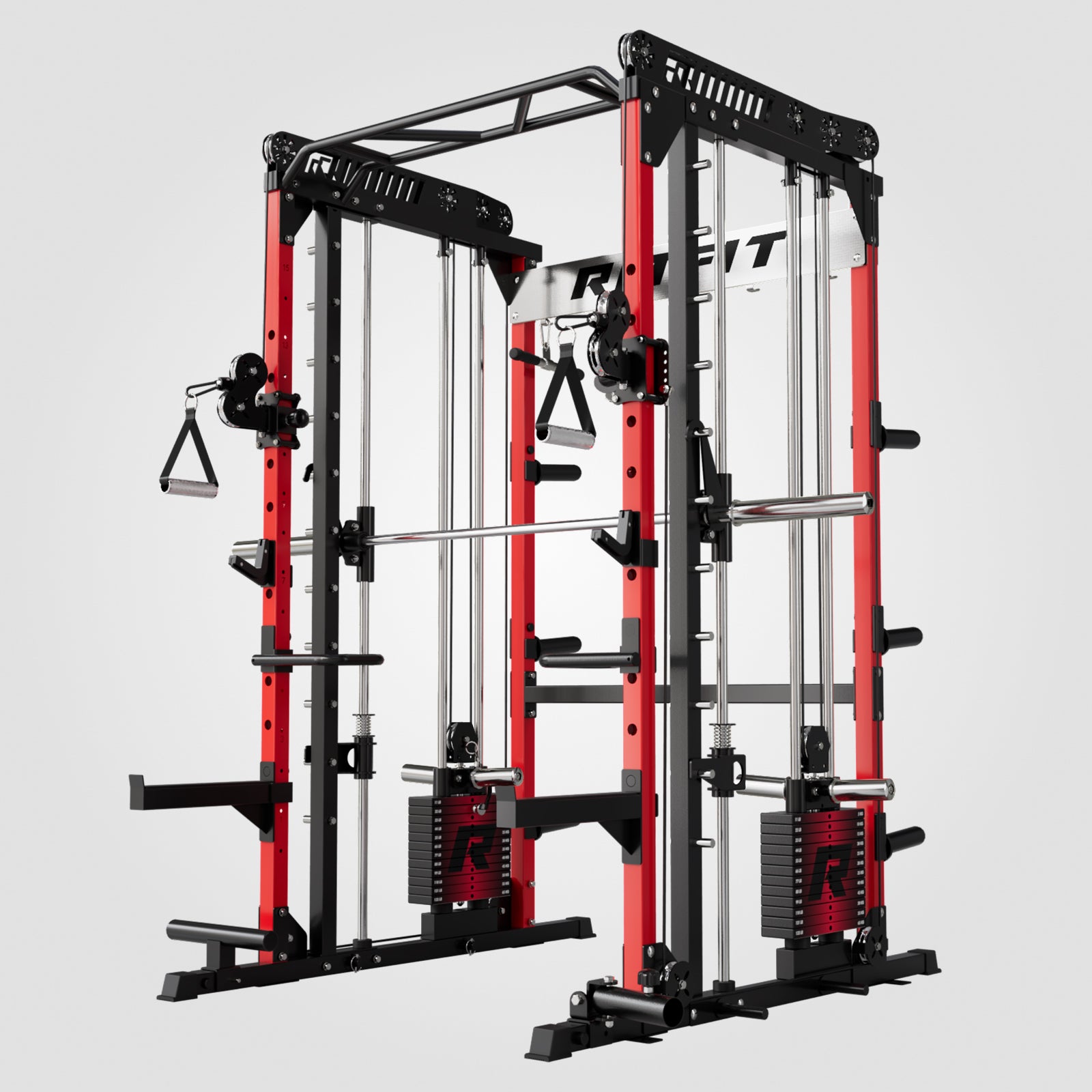
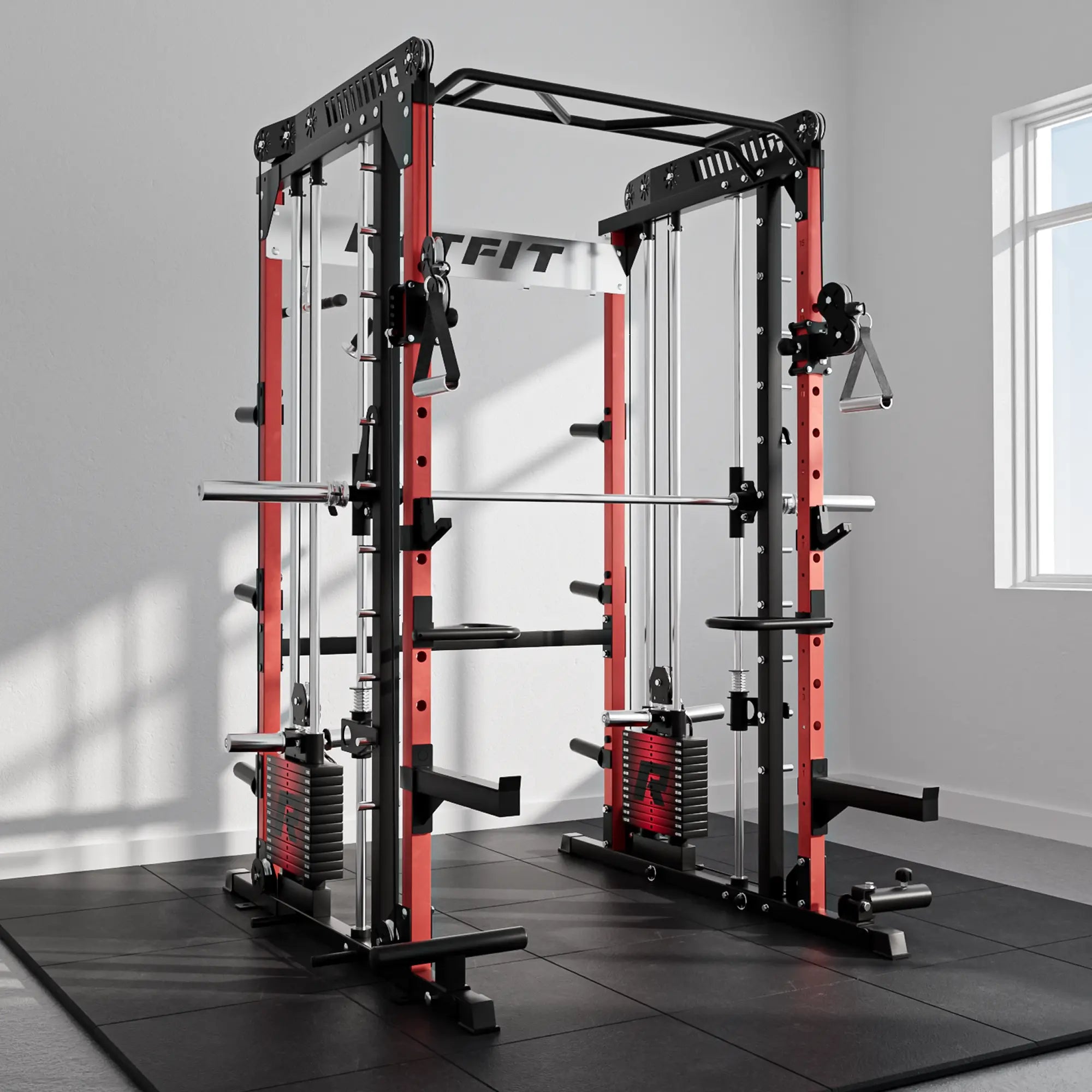
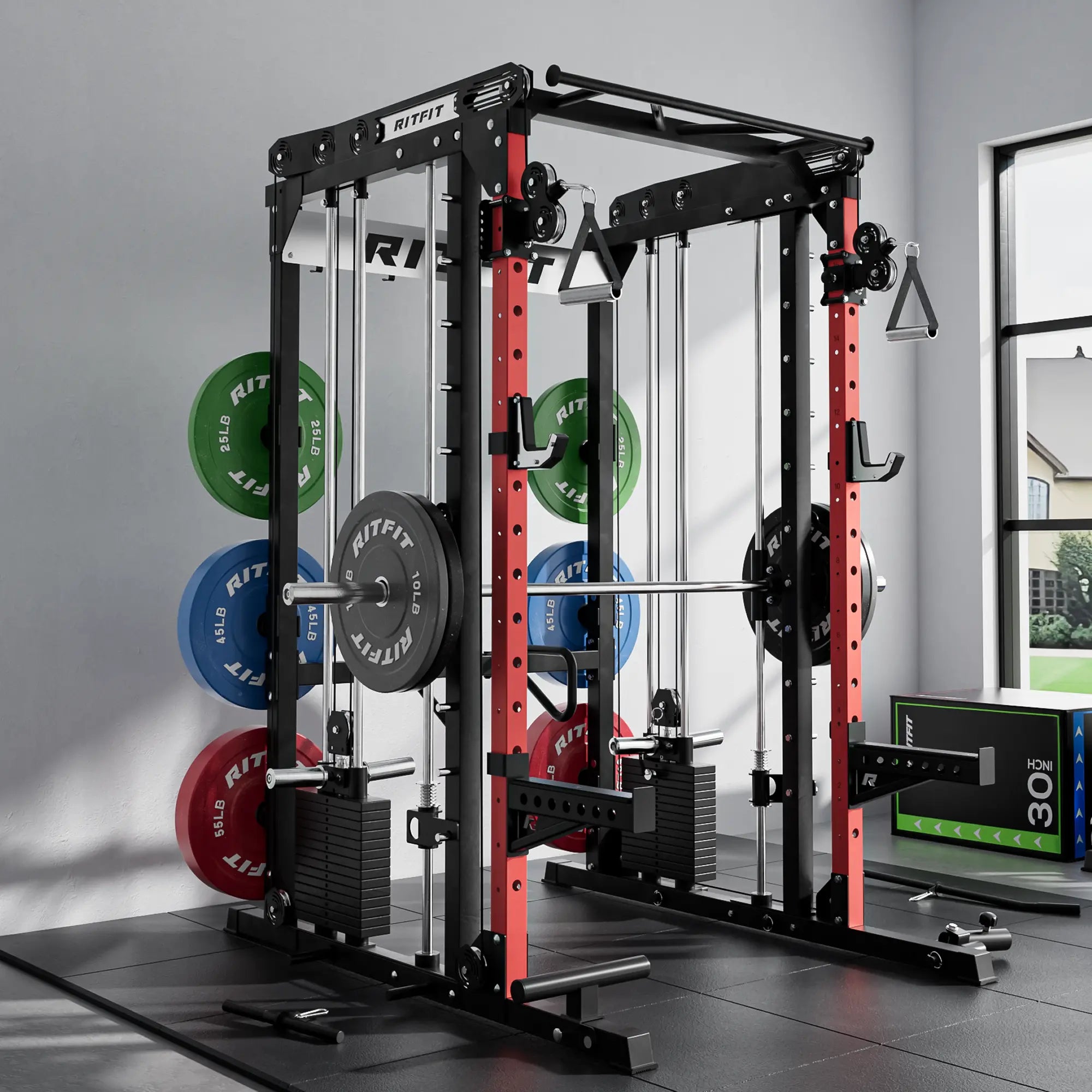
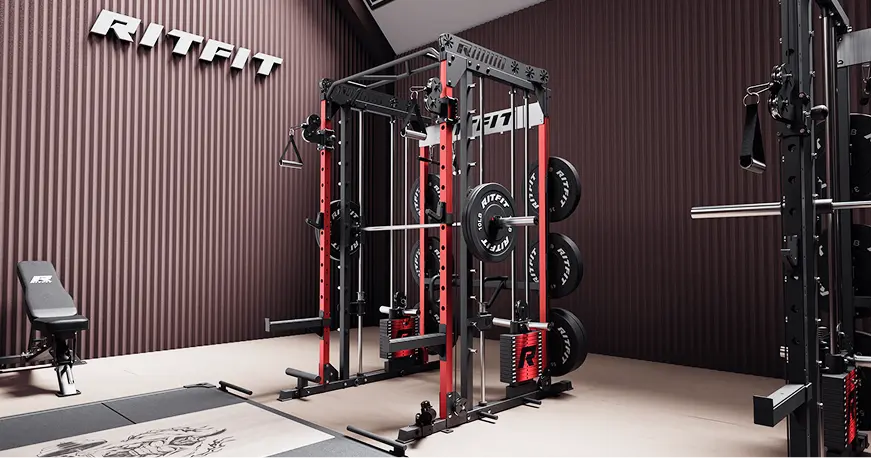
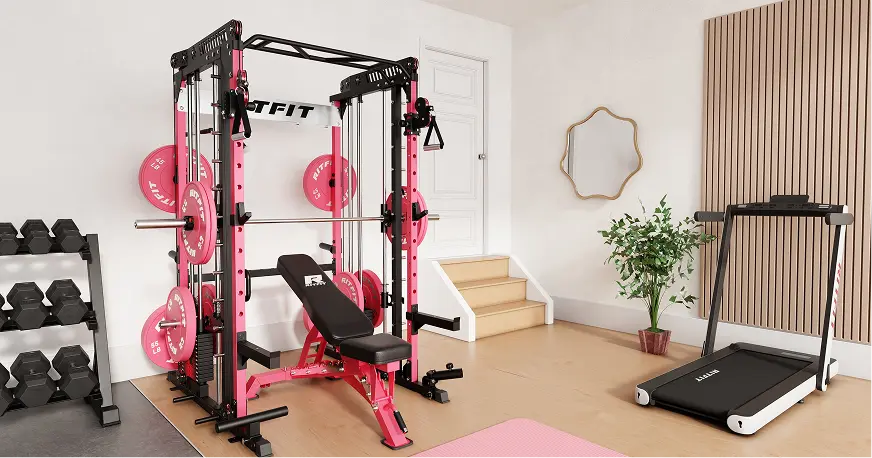
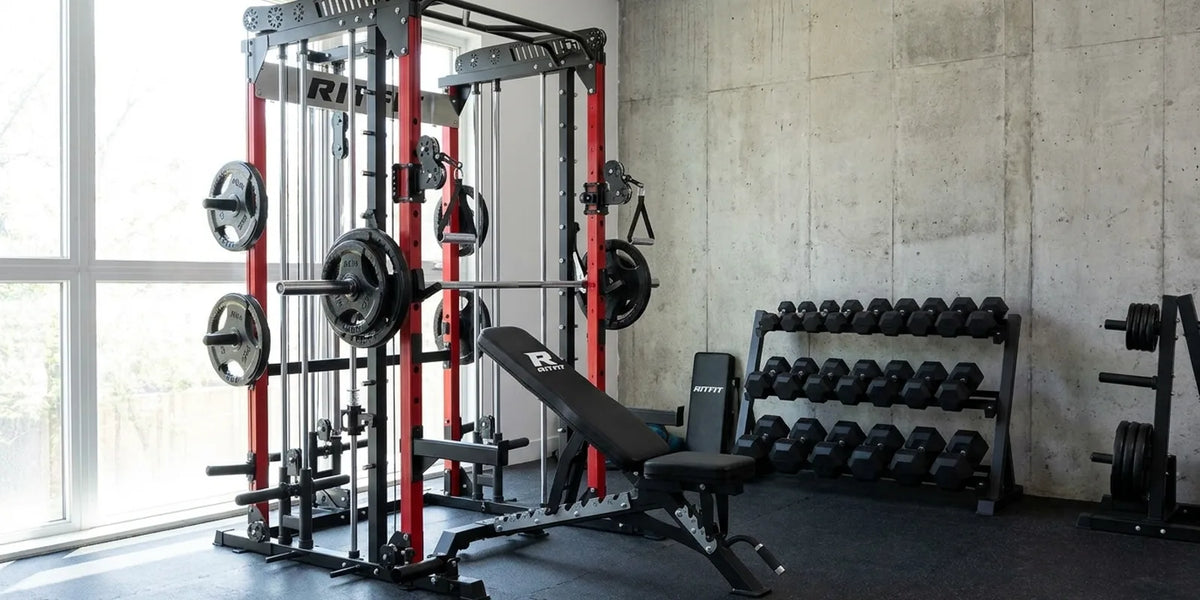
The RitFit BUFFALO Multifunctional Smith Machine suits 21s with a 30.75 lb guided bar, 9 adjustable safety settings, and a frame that holds firm while you grind partial reps.
The 2 by 3 inch 13-gauge steel uprights and 478 lb rack weight keep the guide rails aligned under a full set, and the Smith bar carries a 352 lb rating that no honest 21s load will approach.
The same footprint packs a lat pull down, a 2 to 1 pulley cable crossover, and a power rack, so arm finishers can follow heavy pulls without walking to another station.
The machine lists at $1,899.99 without weight stacks or $2,579.99 with the weight stack set, ships free in 4 boxes, and carries 35-day returns with lifetime support.
"The build quality of the RitFit BUFFALO is exceptional. The robust steel construction feels incredibly sturdy and secure, providing the confidence needed for intense workouts. The attention to detail in its design and finish is evident, rivaling the best commercial gym equipment I've ever used."
Tyrone C. Verified Buyer, RitFit BUFFALO Multifunctional Smith Machine with Lat Pull Down and Cable Crossover for Versatile Strength Training
Avoid These Common Mistakes and Know When to Stop
The most common 21s mistake is swinging the bar with hip drive instead of keeping the elbows pinned, which turns the set into a back exercise and hides weak spots.
- Ego weight: Loading your usual curl weight turns rep 15 into a shrug contest, so drop the load until all 21 reps stay strict.
- Wandering elbows: Elbows that drift forward shorten the range and move the work off the biceps.
- Broken landmarks: Changing the mid-point between segments turns the count into a random burnout set.
- Skipping the stretch: Half-stretch starts remove the lengthened position the bottom-half segment exists to train.
- 21s as the main lift: The scheme works best as a finisher after heavy curls or rows, not as the first biceps exercise of the day.
Muscle burn is the point of the set, but sharp elbow, wrist, or shoulder pain ends it immediately. If joint pain appears on every curl variation, rest the arms and see a qualified professional before loading them again.
FAQs About Smith Machine 21s
Can you do 21s on a Smith machine?
Yes. A Smith machine suits 21s because the guided bar travels a fixed vertical line close to your body, which keeps your elbows pinned and makes the three partial ranges easy to count. Set the bar at mid-thigh height, use a shoulder-width underhand grip, and keep the load lighter than your usual curl weight.
How much weight should you use for Smith machine 21s?
Start with roughly 50 to 70 percent of the weight you use for strict full-range curls, then adjust so all 21 reps finish with clean form. The long unbroken set taxes grip and the biceps far beyond a normal set of ten, so ego loading turns the exercise into a swinging back movement. Add load only when you complete every rep with the same elbow position.
How many reps are in a set of 21s?
One set of 21s totals 21 reps, split into 7 bottom-half reps from full stretch to forearm parallel, 7 top-half reps from parallel to the top, and 7 full reps through the entire range. The three segments run back to back without racking the bar. Some lifters vary the count to six or eight reps per segment, but the 7-7-7 version is the classic scheme.
Where should you do 21s in your workout?
Place 21s at the end of arm training, after heavy curls, rows, or pull-ups, because the high-rep fatigue protocol works best when the biceps are already warm and partly tired. One to two sets with 90 seconds to 3 minutes of rest is a common prescription. Avoid opening a workout with 21s if heavy pulling work still lies ahead.
Do 21s build bigger biceps?
21s can support bicep growth when they follow a program that already includes heavy curling, and the partial ranges add training volume in the stretched position. An 8-week study in trained adults found lengthened partial reps produced similar hypertrophy to full-range reps, and other research links initial-range curl training to distal biceps growth. Treat 21s as a finisher, not the foundation of your arm training.
What is the difference between 21s and drag curls?
21s change how you count reps while keeping the standard curl bar path with elbows pinned at your sides, but drag curls change the movement itself by pulling the elbows back and dragging the bar up the body. Drag curls shift emphasis toward the long head of the biceps, while 21s hit both heads through partial and full ranges. You can run 21s on drag curls as an advanced variation.
Are 21s better with free weights or a Smith machine?
Neither option is universally better, but a Smith machine makes the 21s count more reliable because the guided bar cannot swing away from your body. Free weights demand more stabilizer work and let the bar drift once you fatigue. If your goal is strict partials with consistent ranges, the Smith machine version is the easier skill to learn and the safer choice without a spotter.
Conclusion
21s on a Smith machine deliver 21 honest reps in one set, and the fixed bar path is exactly what keeps the three ranges countable. Load light, pin the elbows, and finish arm day with the 7-7-7 scheme.
Start with one set this week and add reps before weight. When you want more arm work on the same station, browse the Smith machine collection and plan your build with the RitFit discount guide.
Disclaimer
This article provides general fitness information and is not medical advice. Stop any exercise that causes sharp pain and consult a qualified professional for joint, tendon, or rehabilitation questions.
References
1. Pedrosa GF, Simões MG, Figueiredo MOC, et al. Training in the Initial Range of Motion Promotes Greater Muscle Adaptations Than at Final in the Arm Curl. Sports (Basel). 2023;11(2). doi:10.3390/sports11020039. PMCID: PMC9960616
2. Wolf M, Androulakis Korakakis P, Piñero A, et al. Lengthened partial repetitions elicit similar muscular adaptations as full range of motion repetitions during resistance training in trained individuals. PeerJ. 2025;13:e18904. doi:10.7717/peerj.18904. PMCID: PMC11829627
3. Havers T, Wagner N, Held S, Geisler S, Wiewelhove T. Partial Range, Full Gains? The Effect of 8 Weeks of Partial Range of Motion Training at Long Muscle Lengths on Elbow Flexor Hypertrophy and Strength in Trained Individuals. Eur J Sport Sci. 2025;25(12):e70087. doi:10.1002/ejsc.70087. PMCID: PMC12621570
4. Schoenfeld BJ, Grgic J. Effects of range of motion on muscle development during resistance training interventions: A systematic review. SAGE Open Med. 2020;8:2050312120901559. doi:10.1177/2050312120901559. PMCID: PMC6977096