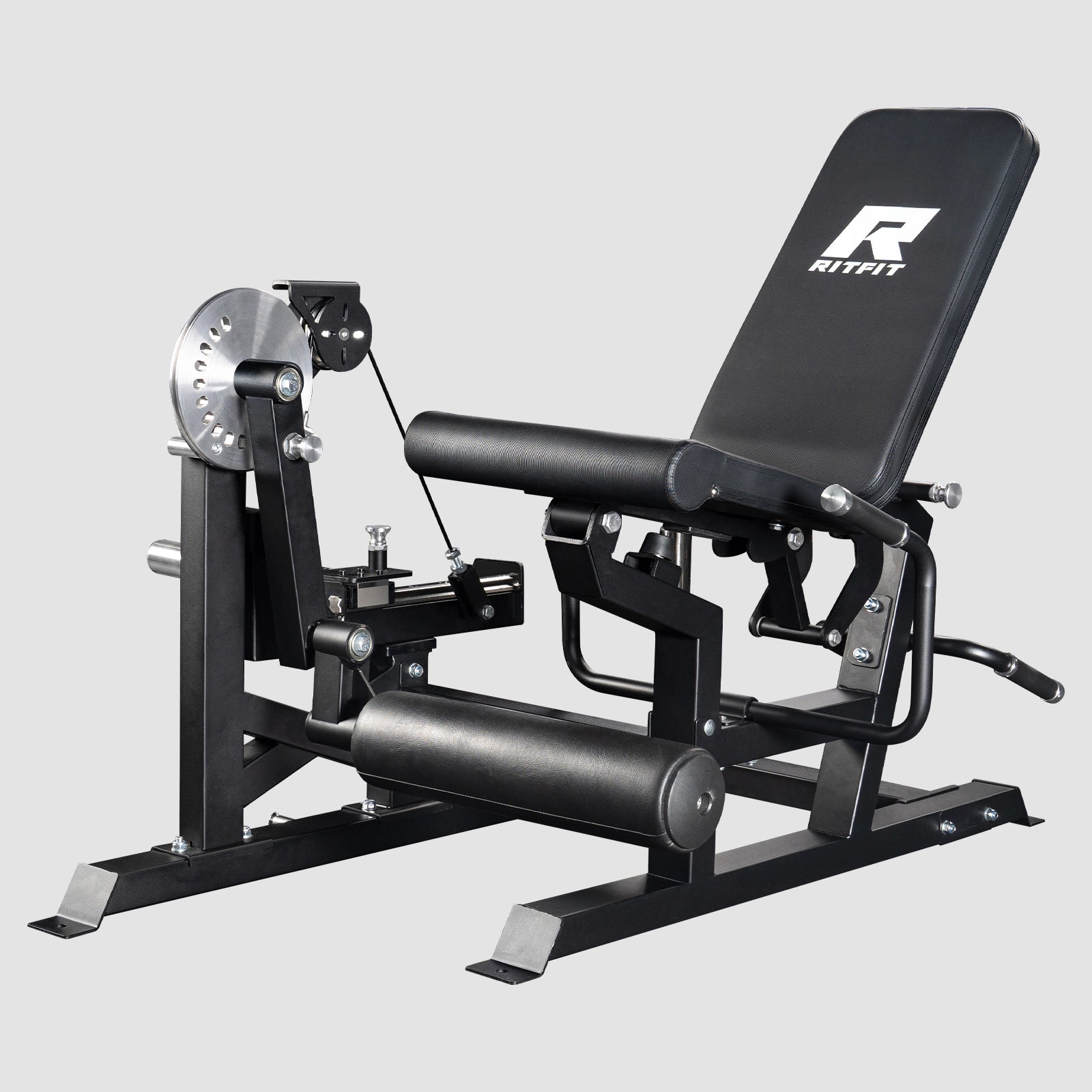

The PLC01 weight conversion chart exists because the number of plates you load is not the resistance your legs move. RitFit lists the PLC01 at a 3:2 cable ratio, which means the machine converts roughly two thirds of the loaded plate weight into resistance at the handle.
This guide covers the difference between loaded weight and actual resistance, a ratio-based conversion table, how 3:2 compares with 1:1, 2:1 and 4:1 machines, and what the 375 lb capacity means for real training weight.
Quick Answer: A PLC01 weight conversion chart shows that RitFit rates the PLC01 at a 3:2 cable ratio, so 45 lb of loaded plates produces roughly 30 lb of resistance at the handle. A fully loaded 375 lb works out to about 250 lb of felt resistance, and every figure is a ratio estimate rather than a measured force reading.
 Click the image to visit the RITFIT Black Friday Deals page.
Key Takeaways
- Loaded weight is not resistance: the plates you hang on the PLC01 and the force you meet at the handle are two different numbers.
- Official ratio: RitFit lists the PLC01 at 3:2, about 0.67x, on its technical specification page.
- Quick math: 45 lb of plates works out to roughly 30 lb of resistance, and 90 lb works out to roughly 60 lb.
- Capacity ceiling: a fully loaded 375 lb converts to roughly 250 lb of resistance at the handle.
- Buying note: a 3:2 machine needs more plates than a 1:1 machine to reach the same felt load.
What Is the Difference Between Loaded Weight and Actual Resistance?
Loaded weight is the mass you hang on the machine, while actual resistance is what you overcome at the handle. On a cable machine the two numbers differ because the cable ratio sets how the load is routed through the pulleys. A leg press machine shows a similar gap for a different reason, since the carriage adds load that never appears on the plate.
- Loaded weight: the plates and any add-on weight physically hanging on the machine.
- Actual resistance: the force your muscles overcome at the handle, which a pulley system can raise or lower.
- Cable ratio: the gearing between cable travel and plate travel, written as two numbers such as 3:2 or 2:1.
- Felt load: the training weight your body registers, which is the figure you program sets and reps around.
Resistance on a plate-loaded machine always starts from the plate number, but the ratio decides the final figure. The plates tell you what you carried, not what you lifted.
"The size of the external flexor moment you have to overcome to lift a weight depends on two things: the load itself and the length of the moment arm. This is why lifting heavier weights is harder than lifting lighter weights."
Greg Nuckols, MA, Strength Researcher and Coach, Stronger By Science
RitFit PLC01 Weight Conversion Chart: Loaded Weight vs Actual Resistance
Loaded plate weight on the RitFit PLC01 converts to roughly two thirds of its value in resistance at the handle. RitFit publishes a 3:2 cable ratio for the RitFit PLC01 Leg Extension Curl Machine, and multiplying the plates you load by 0.67 gives the estimated load your legs move. The table below covers the plate weights most home gyms already own.
| Loaded Plate Weight | Approx. Resistance at the Handle |
|---|---|
| 10 lb | about 6.7 lb |
| 25 lb | about 16.7 lb |
| 45 lb | about 30 lb |
| 90 lb | about 60 lb |
| 180 lb | about 120 lb |
| 375 lb | about 250 lb |
Converted from the 3:2 cable ratio published on the RitFit PLC01 Technical Specification page, not from a measured force reading. Treat every figure as an approximate starting point and fine-tune by feel.
Plate Hole Sizes and Which Plates Fit the Weight Horn
The PLC01 weight horn takes 2 inch Olympic plates, and RitFit also lists a 1 inch plate hole option on the specification page. Plate thickness changes how much loaded weight fits on the horn, and the bumper plate guide covers the plate types that hang cleanly on it.
"The family loves this machine. It is heads and shoulders above the "old" add-on leg apparatus to the end of a bench. Super easy to change positions, add or remove weight. Wish we had bought this years ago"
Robert R. Verified Buyer, RitFit PLC01 Leg Extension Curl Machine
How Does the 3:2 Cable Ratio Compare to 1:1, 2:1 and 4:1?
A 3:2 cable ratio sits between a 1:1 strength machine and a 2:1 functional trainer, so 45 lb feels lighter than on a 1:1 machine. A pulley ratio guide describes this as the relationship between cable travel and plate travel. The buying implication follows from that single number.
| Cable Ratio | Loaded 45 lb Feels Like | What It Means for Buyers |
|---|---|---|
| 1:1 | 45 lb | Highest felt load per plate, no reduction |
| 3:2, the PLC01 | about 30 lb | Needs more plates to match a 1:1 machine |
| 2:1 | 22.5 lb | Half the felt load, smaller steps between plates |
| 4:1 | about 11.3 lb | Lowest felt load, longest cable travel |
The 3:2 row is converted from RitFit's published PLC01 cable ratio. The 1:1, 2:1 and 4:1 rows follow the standard pulley ratio definitions used across the fitness industry, so read them as ratios rather than measured loads.
If you already train on a 1:1 cable ratio Smith machine, expect to add plates on the PLC01 to match the same effort. A ratio below 1:1 also narrows the resistance gap between plates, which helps when you want finer load steps.
What Does the 375 lb Capacity Mean in Actual Resistance?
A fully loaded 375 lb on the PLC01 works out to roughly 250 lb of resistance at the handle at the published 3:2 ratio. That figure is the rated ceiling of felt load rather than a target for every session.
- Overall capacity: RitFit rates the PLC01 for 375 lb overall on the specification page.
- Maximum user weight: the same page lists a 325 lb maximum user weight.
- Converted ceiling: 375 lb of plates equals roughly 250 lb of resistance at the handle.
- Practical read: that ceiling covers heavy two-leg leg extensions and leg curls for most home gym lifters.
If you want more than that ceiling, the limit becomes the machine rather than your legs, and adding more weight to a cable machine is not always the answer. Extra plates also have to fit the horn, and the Bumper Plates collection shows the sizes that suit it.
How Do Unilateral and Bilateral Loading Change the Conversion?
Unilateral loading does not change the 3:2 conversion, because the same plates still produce the same resistance at the handle. What changes is how much of that resistance each leg meets.
Loading one side at a time gives that leg the full converted resistance instead of sharing it with the other leg. A knee extension machine loaded for two legs splits the work, while a single-leg set does not.
A meta-analysis of unilateral strength training reported contralateral effects on the untrained limb [1], and a study comparing bilateral and unilateral leg extensions reported different fatigue and neuromuscular responses between the two [2].
The PLC01 base is widened and lengthened so it stays steady with a single side loaded, which is what makes the one-leg version practical. The curl side uses the same setup as any prone leg curl on a leg extension curl machine.
How Should You Choose Training Weight on a 3:2 Cable Machine?
Choose your starting plates on the PLC01 by feel rather than by the number, then progress in small steps. Because 3:2 scales every plate down, a jump that looks large on the horn is a smaller jump in resistance.
- Step 1: start with a plate weight you can control through a full range of motion for 10 to 12 reps.
- Step 2: convert that plate weight once with the chart, so you know roughly what resistance it represents.
- Step 3: add plates only when the final two reps of every set still look controlled.
- Step 4: keep single-leg sets lighter in loaded weight than two-leg sets, since the ratio applies either way.
Researchers have built load-velocity profiles for machine-based single-joint lower body exercises in both bilateral and unilateral versions [3], which is one reason the same plate weight can feel different when you switch to one leg.
Beginners can start from a simpler frame of reference, and the leg extension curl machine guide for beginners walks through setup. If you are building a full leg day, the leg press and leg extension bundle under $1000 pairs this machine with a leg press.
FAQs About the PLC01 Weight Conversion Chart
What is the cable ratio on the RitFit PLC01?
RitFit lists the PLC01 at a 3:2 cable ratio, which works out to about 0.67 times the loaded weight. In practice, 45 lb of plates feels closer to 30 lb of resistance at the handle, so the number on the plate is not the load your legs actually move.
How much resistance does a 45 lb plate produce on the PLC01?
With the PLC01's 3:2 ratio, 45 lb of loaded plates produces roughly 30 lb of resistance at the handle, because 45 multiplied by two thirds equals 30. Treat that figure as a ratio-based estimate rather than a measured number, then adjust the pin by feel.
What is the maximum resistance on the PLC01?
RitFit rates the PLC01 for an overall capacity of 375 lb. At the published 3:2 ratio, a fully loaded 375 lb works out to roughly 250 lb of resistance at the handle. Never exceed the rated capacity, and keep loading within the range the machine is designed to hold.
Is a 3:2 cable ratio the same as 1:1?
No. On a 1:1 machine, 45 lb of plates feels like 45 lb. On the PLC01's 3:2 ratio, the same 45 lb feels like about 30 lb, so a 3:2 machine needs more loaded plates to match the felt resistance of a 1:1 machine.
Can I train one leg at a time on the PLC01?
Yes. The PLC01 base is widened and lengthened so it stays steady during unilateral loading, which lets you work one leg at a time. The conversion stays the same, so a single 45 lb plate still produces about 30 lb of resistance at the handle.
What plates fit the RitFit PLC01 weight horn?
The PLC01 weight horn takes 2 inch Olympic plates, and RitFit also lists a 1 inch plate hole option on the specification page. Because resistance scales by the 3:2 ratio, thicker plates change how much loaded weight you can hang, not the ratio itself.
Conclusion
The PLC01 weight conversion chart comes down to one published number. RitFit rates the machine at a 3:2 cable ratio, so roughly two thirds of the plate weight becomes resistance at the handle.
A 45 lb plate feels like about 30 lb, and the full 375 lb capacity tops out near 250 lb. Check the RitFit discount guide before you buy, then set your training weight by feel.
Disclaimer
This article is general information about how plate-loaded cable resistance works and is not medical or training advice for any individual. Consult a qualified professional before starting a new strength program or training through an existing condition.
References
1. Cirer-Sastre R, Beltrán-Garrido JV, Corbi F. Contralateral Effects After Unilateral Strength Training: A Meta-Analysis Comparing Training Loads. J Sports Sci Med. 2017;16(2):180-186. PMCID: PMC5465979
2. Anders JPV, Keller JL, Smith CM, et al. Performance fatigability and neuromuscular responses for bilateral and unilateral leg extensions in men. J Musculoskelet Neuronal Interact. 2020;20(3):325-331. PMCID: PMC7493446
3. Balsalobre-Fernández C, Cardiel-García M, Jiménez SL. Bilateral and unilateral load-velocity profiling in a machine-based, single-joint, lower body exercise. PLoS One. 2019;14(9):e0222632. doi:10.1371/journal.pone.0222632. PMCID: PMC6746367